OF THE
TIMES
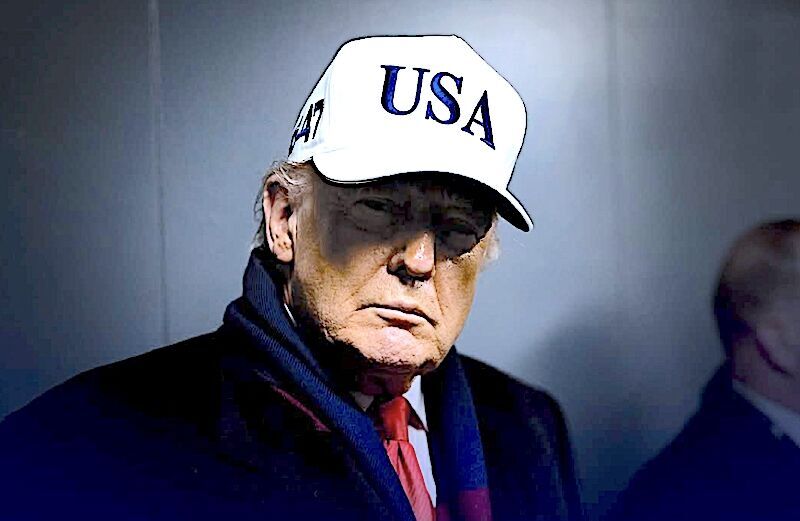
"The oil companies are going to go in. They're going to spend money. They're going to — we're going to take back the oil that, frankly, we should have taken back a long time ago."Mondoweiss U.S. correspondent Michael Arria spoke with the educator and writer Geo Maher about the kidnapping, Trump's wider foreign policy vision, and the administration's potential designs for the region.

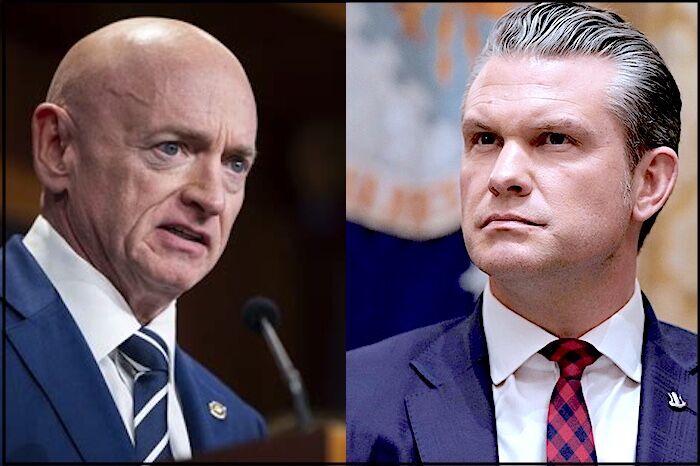
"Six weeks ago, Senator Mark Kelly — and five other members of Congress — released a reckless and seditious video that was clearly intended to undermine good order and military discipline. As a retired Navy Captain who is still receiving a military pension, Captain Kelly knows he is still accountable to military justice. And the Department of War — and the American people — expect justice.
Therefore, in response to Senator Mark Kelly's seditious statements — and his pattern of reckless misconduct — the Department of War is taking administrative action against Captain Mark E. Kelly, USN (Ret). The department has initiated retirement grade determination proceedings under 10 U.S.C. § 1370(f), with reduction in his retired grade resulting in a corresponding reduction in retired pay.
To ensure this action, the Secretary of War has also issued a formal Letter of Censure, which outlines the totality of Captain (for now) Kelly's reckless misconduct. This Censure is a necessary process step and will be placed in Captain Kelly's official and permanent military personnel file.
Captain Kelly has been provided notice of the basis for this action and has thirty days to submit a response. The retirement grade determination process directed by Secretary Hegseth will be completed within forty-five days.
Captain Kelly's status as a sitting United States Senator does not exempt him from accountability, and further violations could result in further action.
These actions are based on Captain Kelly's public statements from June through December 2025 in which he characterized lawful military operations as illegal and counseled members of the Armed Forces to refuse lawful orders. This conduct was seditious in nature and violated Articles 133 and 134 of the Uniform Code of Military Justice, to which Captain Kelly remains subject as a retired officer receiving pay." (SOURCE)
Summary of the January 8, 2026 broadcast: "Introduction and Overview of the Current Geopolitical Situation" by Alexander Mercouris 🧭 1. Context and Framing
Mercouris opens by describing the world as standing on the "cusp of very important and interesting developments" involving:He sets the stage for an analysis of a specific maritime incident that he believes could shape U.S.-Russian strategic behavior moving forward.
- U.S.-Russia relations
- The Ukraine situation
- Broader U.S. foreign policy under the Trump administration (and possibly beyond).
🚢 2. Overview of the Marinara Incident ("Bella 2")
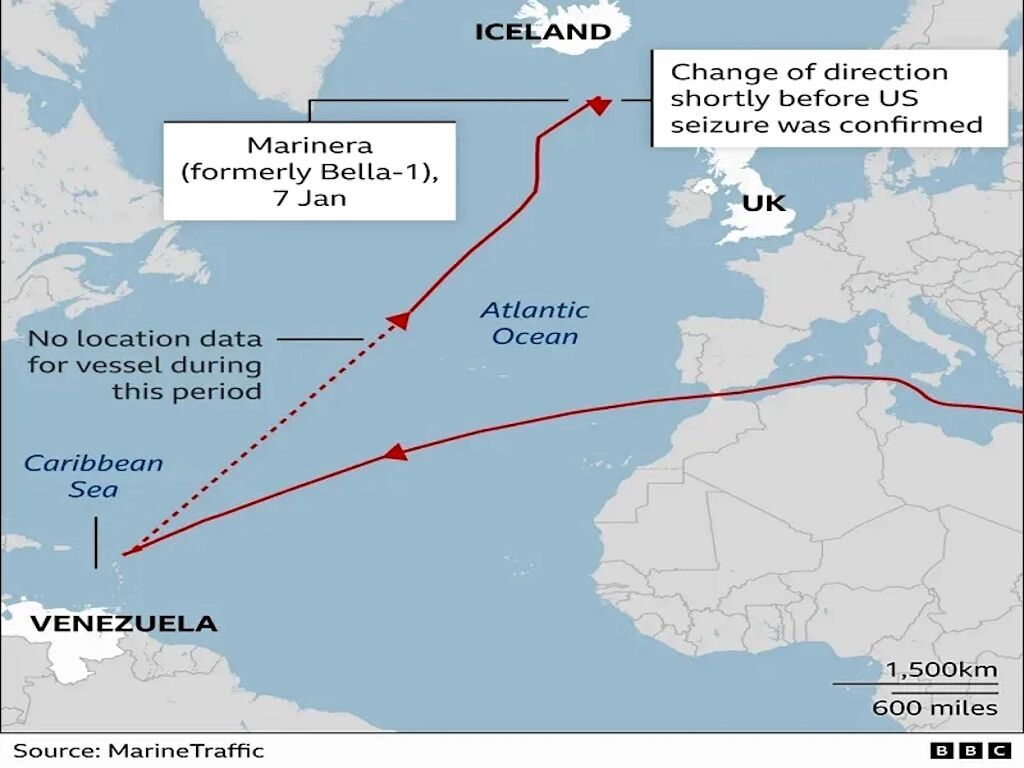
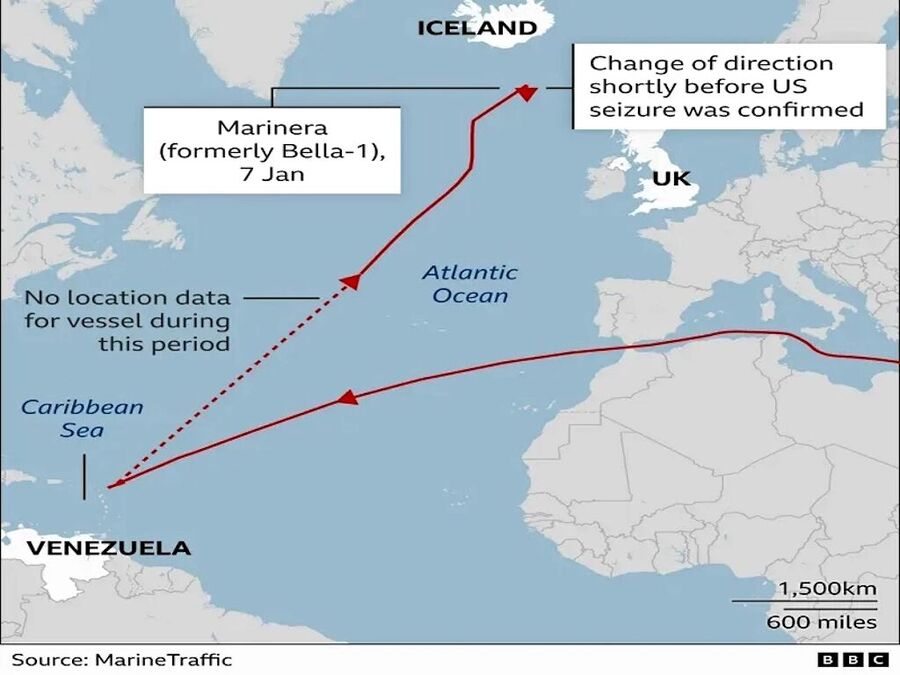
The central case discussed is the seizure of a tanker originally known as the Bella 2, later renamed the Marinara.
Key facts he presents:Mercouris highlights that:
- The Marinara left the Caribbean (likely involved in oil shipments connected to Venezuela).
- It repainted itself with the Russian flag, claiming Russian registration and intended to head towards Murmansk, Russia.
- Reports (mainly Western) alleged that Russian naval units, possibly including a submarine, were dispatched to escort and protect the vessel.
⚖️ 3. Competing Narratives: U.S. vs. Russia
- U.S. and British forces intercepted and seized the Marinara off the coast of Scotland, apparently in international waters but with British assistance.
- The British media reported conflicting versions of events, downplaying any Russian naval involvement.
- The U.S. denied the ship was genuinely Russian, calling the Russian flag a "false flag" operation.
The U.S. narrative:The Russian narrative (via Foreign Ministry statement):
- The tanker had no legitimate Russian ownership.
- It was engaged in illicit oil trading with Venezuela (and possibly Iran).
- The Russian flag was raised as a deception.
- The seizure was lawful enforcement of sanctions, not a political provocation.
Mercouris quotes this Russian statement extensively to show that Moscow is taking an unusually hard diplomatic line and positioning itself as a defender of international maritime law.
- The ship was temporarily registered under the Russian flag legally in accordance with international law.
- The U.S. Navy and Coast Guard violated maritime law, seizing a civilian vessel in international waters.
- The crew (Russian citizens) were unlawfully detained and must be released immediately.
- The U.S. justification based on sanctions is illegitimate unilateralism.
- Russia accused the U.S. of "neo-colonialist tendencies" seeking to control Venezuela's natural resources.
⚔️ 4. Mercouris's Analysis
His key analytical points:He predicts that:
- The Russians knew they couldn't stop the U.S. seizure in time but acted symbolically by deploying naval forces, signaling red lines for future incidents.
- This was a "hasty improvisation", not an organized convoy, because the Marinara fled on its own initiative.
- The U.S. moved preemptively to seize the tanker before the Russian ships arrived.
- Now, Washington is backpedaling — publicly denying the Russian link — precisely because Moscow demonstrated both readiness and anger, which the U.S. wants to downplay.
🇬🇧 5. British Involvement
- Future Russian commercial ships will likely sail with armed escort from their navy.
- The message to Washington is that interfering with Russian-flagged civilian vessels will have serious consequences next time.
Mercouris draws attention to a slight divergence between London and Washington:🧩 6. Broader Geopolitical Implications
- The U.S. seems eager to de-emphasize confrontation with Russia, portraying the incident as Venezuela-related.
- The British Defence Secretary, John Healey, by contrast, made threatening statements about Russian merchant shipping, implying the U.K. is more hawkish on naval enforcement.
- Mercouris interprets this as Britain overplaying its hand — "talking up" its participation while the U.S. tries to contain escalation.
Mercouris connects the Marinara episode to a broader shift in U.S. foreign policy:🧠 Interpretive Commentary
- The Trump administration's current posture toward Russia is transitional and complex — balancing deterrence with a waning appetite for overseas confrontation.
- He expects the Marinara incident will accelerate Russia's naval assertiveness and serve as a warning shot against Western maritime interference.
- At a symbolic level, it echoes Cold War-style power politics, but with asymmetric diplomacy — a conflict of legitimacy and narrative rather than direct combat.
Mercouris's deeper message is this:He sees this as another marker in the slow dissolution of the old U.S.-led maritime order, akin to Suez in 1956 — a moment when established powers act beyond legitimacy and unintentionally expose their decline.
- The West is stretching international law under the pretext of sanctions.
- Russia is signaling it will no longer tolerate "lawfare at sea" — the use of sanctions to justify armed actions.
- The broader world (especially non-Western nations trading with Russia, Iran, or Venezuela) will interpret the U.S. actions as piracy cloaked in legalism
🧭 Summary in One Sentence
The Marinara affair, in Mercouris's analysis, crystallizes a turning point in global geopolitics: the erosion of Western maritime dominance, Russia's resolve to assert its commercial sovereignty, and Washington's quiet recognition that it went a step too far.
Comment: Complexity is a temporary disguise. How long will it hold?