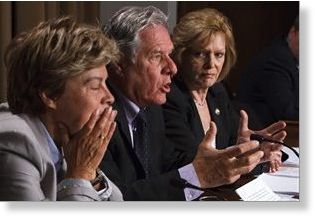
© The Canadian Press / Clement AllardLouise Beaudoin, left, Pierre Curzi, centre, and Lisette Lapointe, right, appear at a news conference in Quebec City on Monday, June 6, 2011. The Parti Quebecois experiened one of the darkest days in its history, with three of the most influential members of the pro-independence party announcing their departure Monday.
The Parti Quebecois experienced one of the darkest days in its history as three of the pro-independence party's most influential members quit the caucus Monday.
The bombshell announcement included: the wife of the party's most beloved living figure; an actor-turned-politician considered the PQ's most popular current member; and an ex-cabinet minister who has served the PQ since 1970 and acted as the party's international envoy, building relationships with foreign governments and other nationalist movements.
Lisette Lapointe, Pierre Curzi and Louise Beaudoin all vowed to continue fighting for sovereignty while sitting as independents.
Lapointe is the wife of Jacques Parizeau, revered by the party's grassroots as the premier who led Quebec to within a few votes of independence in 1995. He continues to wield considerable influence within the party.
The departing members cited a variety of reasons for their disaffection. The final straw, they said, was the party's breathless championing of the Quebec City arena project without pausing to reflect on it.