Puppet MastersS


Putin

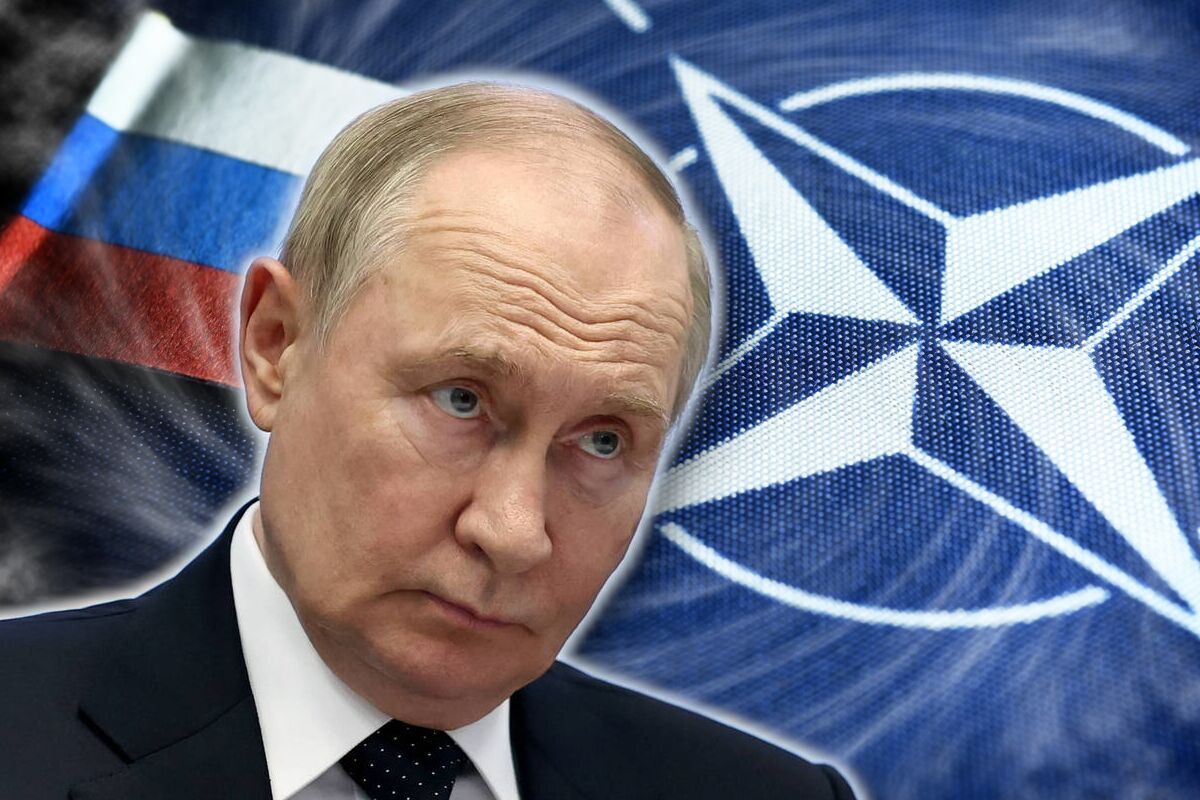
Putin powerfully rebuffed the hawks who want him to attack NATO

putin nato russia flags
© IMAGO/ChristianOhde, IMAGO/ZUMA Press
In his words, talk about Russia attacking NATO "is not simply nonsense; it is a provocation."

Several top "Non-Russian Pro-Russians" (NRPR) influencers rang the alarm last month about Russia's alleged plans to attack NATO, which were inspired by top hawk Sergey Karaganov and then Russian Ambassador to the OSCE Dmitry Polyanskiy ominously channeling his rhetoric. Readers can review examples of their warnings here, here, here, here, and here. Casual NRPRs therefore braced themselves for what would have in that scenario almost certainly been the start of World War III had it come to pass.

It obviously hasn't and it likely won't ever, however, judging by Putin's response when he was recently asked about these alleged plans during a meeting with foreign journalists. In his words,
"Why would Russia attack Europe or go to war with NATO? What would be the purpose? As I have said before, these claims are not merely nonsense. In my view, they are a deliberate provocation designed to create the impression of a threat that does not actually exist."

Comment: Even six months ago, Ex-CIA Station Chief Michael Scheuer recognized Putin's strategic forbearance:


Warning

Ground attack on Iran and the role of Kurdish militia

Kurds for action
© RostaniKurds ready for action
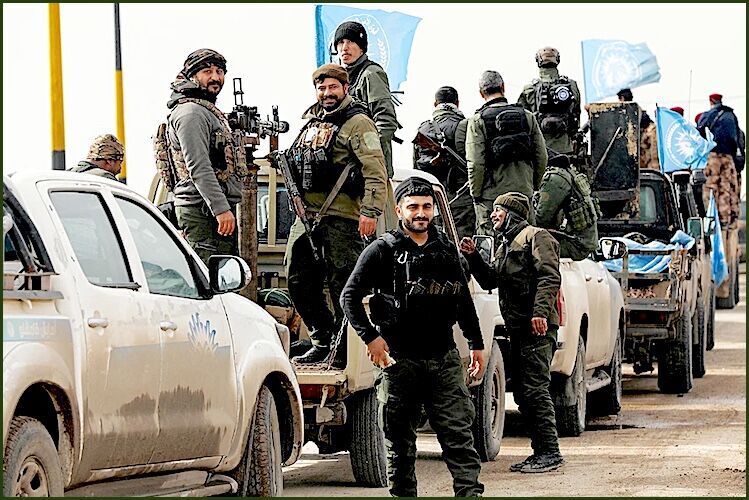
Iraqi Kurdistan, at the center of rising tensions in the Middle East and bordering Iran, Turkey, and Syria, is becoming a potential source of conflict due to the armament of Kurdish groups and their ties to the US and Israel, which is causing concern in Iran and threatening regional stability.

The Iraqi Kurdistan region, bordering Turkey, Iran, and Syria, with three provinces of Dohuk, Erbil, and Sulaymaniyah, and a population of about 5 million, has been governed autonomously since 1991.

Iranians and Kurds have many common cultural, linguistic, historical, and ethnic similarities. Kurdish leaders have repeatedly said that they will not allow and do not want the Kurdistan Region to be a launching pad for attacking Iran. However, Iraqi Kurdistan could become a major point of tension.

Comment: Ending the war is not in Israel's decades-long interest. It was USA's best chance at exit and Trump blew it. The way forward promises no mercy.

See also:
United States launches renewed attacks on Iran


Attention

Israel's intelligence overreach is becoming a problem for everyone

Spies flags broken alliance
© CopyrightSpy versus Spy • Flags • Broken Alliance
Reports that U.S. officials are increasingly concerned about Israeli intelligence activity inside the United States should not be dismissed as a minor diplomatic embarrassment. If accurate, they point to a deeper strategic problem: Israel's security doctrine is now pressing so aggressively outward that it is beginning to step on the toes of nearly everyone around it, including Washington.

Spy Versus Spy

According to reporting summarized by TASS from The New York Times, U.S. intelligence warned American leadership that Israel had stepped up efforts to monitor senior U.S. officials involved in Iran policy, including Special Envoy Steve Witkoff and Under Secretary of War for Policy Elbridge Colby. The same report said Israel was particularly interested in President Donald Trump's strategy in negotiations with Tehran. Israel and the United States have long spied on each other, the report noted, but the concern was that Israeli efforts had crossed a line during sensitive Iran talks.

Explosion

US begins aother round of attacks on Iran

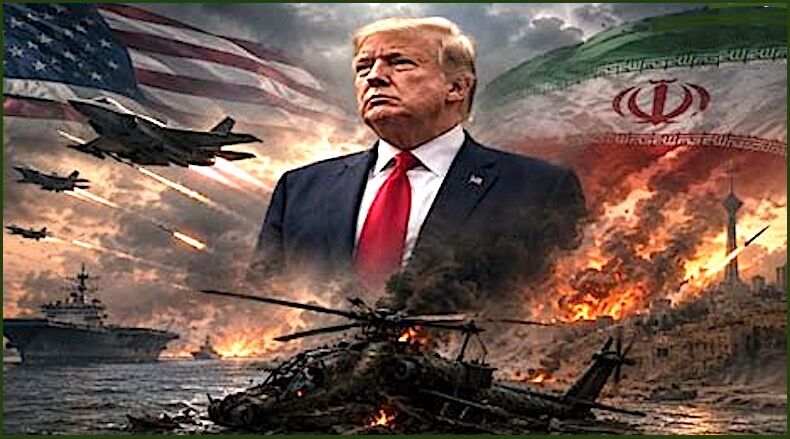
Trump war on Iran
© OIFUS President Donald Trump • War on Iran
On Wednesday night, US Central Command (CENTCOM) announced it was launching a round of attacks on Iran for the second night in a row as Iranian media began reporting blasts across the southern part of the country.

In response to the US attacks, Iran's military said that it would fully close the Strait of Hormuz. Iran's Khatam al-Anbiya Central Headquarters said in a statement:
"From this moment, due to insecurity in the region, the Strait of Hormuz is declared closed to the passage of all vessels, including oil tankers and commercial ships, and any traffic will be targeted."
CENTCOM then claimed that the Iranian statement was false and that ships were still transiting the strait, but the denial came just a short while after Iran's announcement. President Trump had earlier claimed that over the past month, the US military was conducting a "secret mission" to allow tankers to exit the Strait of Hormuz. He claimed the US helped bring 100 million barrels out of the strait, which, if true, is still a fraction of the oil that was transiting through the waterway before he launched the war.

After the start of the US strikes, Iranian media reported blasts across Iran's southern Hormozgan province and said that at least two residents of the city of Kargan were wounded by shrapnel. Iran appears to be striking back as air raid sirens were sounded in Bahrain and the IRGC said it was targeting 18 US military installations across the region.

Comment: What did Trump expect? Under same circumstances would the US roll over? Trump's mouth war is not without consequences.


Drought

Military weather modification: Has Iran disrupted a prolonged drought by undermining US-Israel weather weapon?

Drought weather systems Iran
© infobricsDrought weather system • Iran
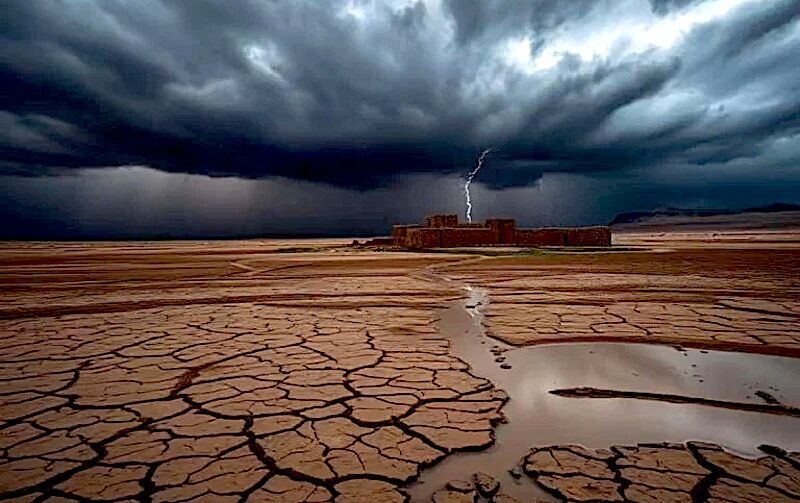
The recent end of a prolonged drought in Iran is triggering controversy across West Asia: Iranian and Iraqi authorities claim that the unusually heavy rainfall following Iranian strikes against certain American facilities in the Gulf indicate that Tehran in fact disrupted a covert weather-modification program - allegedly operated by the US and Israel.

Iraqi MP Al-Kaikhani in turn has claimed that Washington and Tel Aviv had been "stealing clouds", causing droughts regionally.

Some analysts have dismissed the claims as "conspiracy". The broader issue however deserves serious consideration: the question is not whether Iran has proven the existence of a US-Israeli weather weapon (so far it has not). It is whether such weather modification can be weaponized, whether great and regional powers have explored these possibilities in the past, and whether modern geoengineering technologies could eventually become instruments of geopolitical competition.

Military weather modification is no science fiction: the clearest documented case remains Operation Popeye during the Vietnam War (1967-1972) involving "cloud-seeding" missions to trigger landslides and disrupt North Vietnamese supply lines.

Attention

Escalation Blues

MAGA balloon
© Strategic Culture Foundation
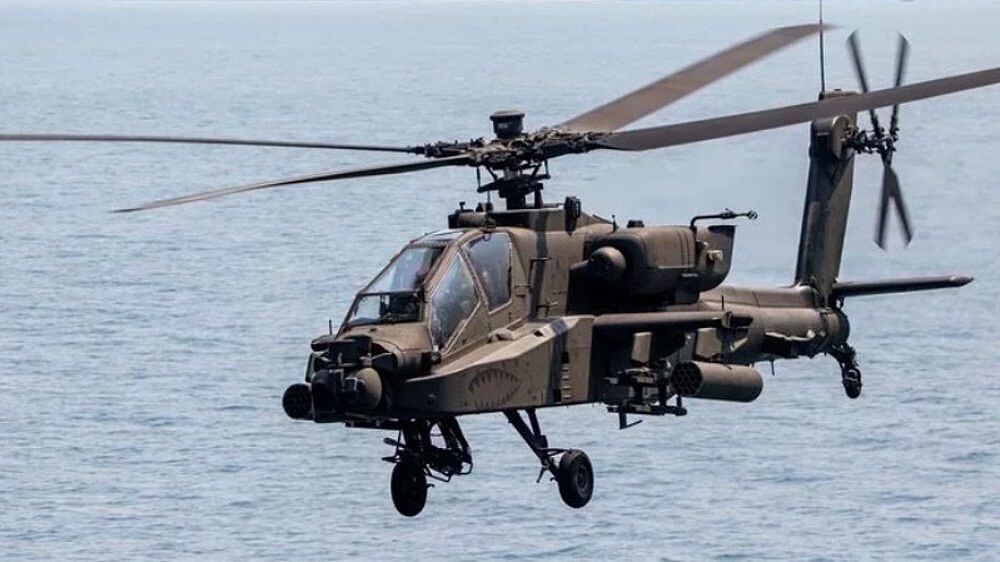
So a $40 million U.S. Apache helicopter was targeted by a $20k Shaheed drone just over the Strait of Hormuz only one day after Iran and the death cult in West Asia were trading blows, making a mockery of that wobbly fiction, the "ceasefire".

Talk about a massive cost benefit for Tehran: no less than 2000 to 1.

Tehran by principle does not deny military attacks. Yet in this particular case they have explicitly denied the downing of the Apache, pointing to a possible accident or technical failure. If the Shaheed had really struck the combat helicopter, the pilots would be dead - and not rescued by a U.S. unmanned boat.

Former U.S. Navy intel officer Malcolm Nance argues, "You don't have mid-air collisions with FPV drones in the middle of the Strait of Hormuz, and it's not intentional."

This would mean that a drone under fiber optic guidance was able to disrupt the whole, humongous American electronic warfare apparatus - revealing a naked Pentagon incapable of articulating any response.

So even if this was not an accident, why did the IRGC deny it? Because that might have been a strategic test - not only of Iran's dissuassive capability but also the degree of discombobulation to be inflicted on the enemy.

Predictably, under the guidance of the Emperor of Barbaria, the Empire of Piracy got back to bombing, leading to the inevitable Iranian response.

Within minutes of the start of the American attack, the IRGC struck an array of U.S. military bases across West Asia.

Al-Azraq Airbase in Jordan.

Ali Al Salem Air Base in Kuwait.

The Fifth Fleet Base in Bahrain.

Isa Air Base in Bahrain.

Al-Azraq was hit by several long-range, solid fuel missiles pointing to four targets, including F-35 hangars and the Command and Control Center. The IRGC informed that 70% of all targets in those bases were successfully hit.

Al-Azraq - also known as Muwaffaq Salti - is a joint U.S.‑Jordan base about 100 km east of Amman. Only four months ago, satellite imagery revealed it was hosting more than 60 U.S. jets - including 30 F‑35s and 36 F‑15s. The base hosts the 332nd Air Expeditionary Wing (F‑15Es, MQ‑9 Reapers), with F‑35s rotating in. For all practical purposes, Jordan is now a legitimate target for the IRGC.

Attention

Shoot the Dog

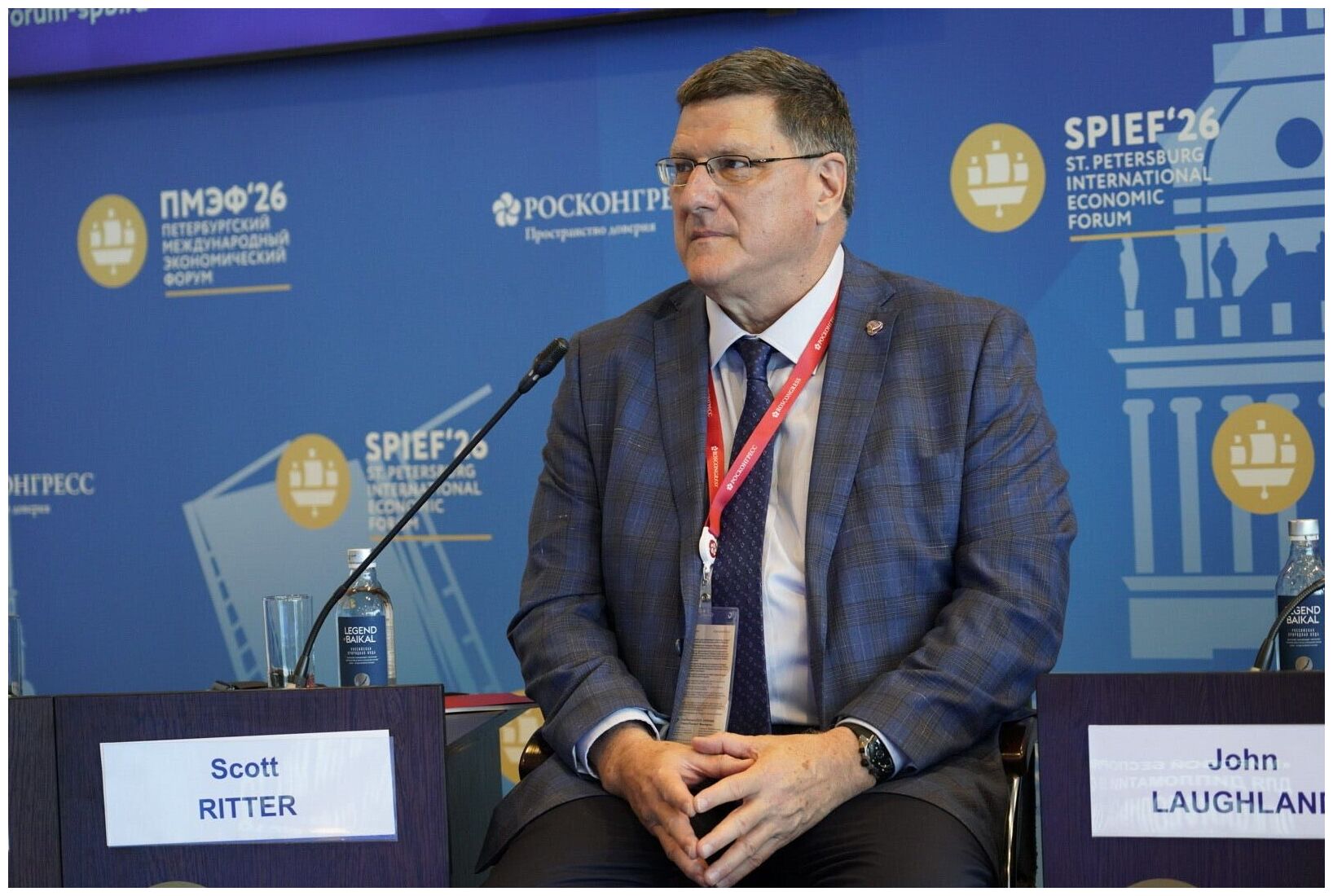
My presentation at the Saint Petersburg International Economic Forum was supposed to be the epitome of diplomatic finesse. Instead, I went off script. I am the better for it.
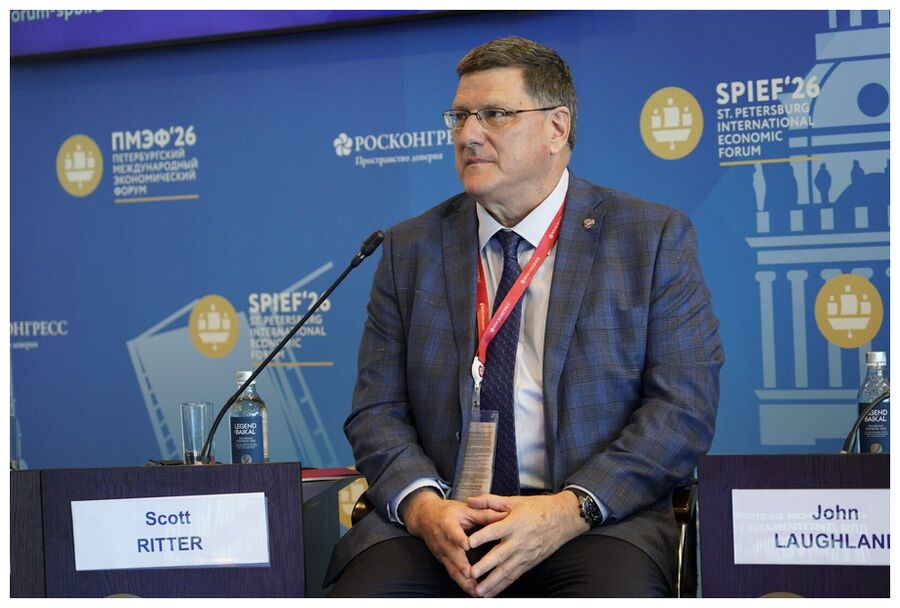
Scott Ritter
© Real Scott Ritter
On June 4, 2026, I was honored with the opportunity to participate as a member of a panel discussion scheduled to take place as part of the 2026 Saint Petersburg International Economic Forum, or SPIEF, an annual gathering of Russian business and political leadership that has been ongoing since 1997. Over the years this event has grown to the point that it overshadows its European-based counterpart, the World Economic Forum, held in Davos, Switzerland. In 2026, Davos attracted some 3,000 attendees from 136 countries; SPIEF pulled in nearly 25,000 from over 100 nations and territories. At a time when the collective West, led by Europe, seeks the diplomatic and economic isolation of Russia, SPIEF proves the folly of that effort — the only geopolitical group missing from SPIEF were the Europeans (note: there were hundreds of delegates and business leaders from European companies present — it seems Russia is a good place to do business, as SPIEF 2026 saw some $84 in contracts signed during its 4-day run.) SPIEF is where the world outside the isolated rarified air of Davos gathers — the real world, not an artificial fantasy constructed on the artifice of European relevance and influence. More recently, SPIEF has become renown for its plenary session, where Russian President Vladimir Putin delivers a much anticipated address, and then takes questions in a hours-long exchange that never disappoints and always makes headline news.

Like I said, it was a distinct honor and privilege to be invited to participate is such an august event.

The panel I was to participate in was entitled "The World Disorder": Is There Any Room for Diplomacy in Contemporary International Relations." The event was moderated by Dmitry Stolkov, an Associate Professor at MGIMO, the Russian government's school of international relations, where the next generation of Russian diplomats are trained.

The heaviest hitter on the panel was Aleksandr Pankin, a Deputy Foreign Minister of the Russian Federation. A1985 graduate of MGIMO, Mr. Pankin's career focused on international organizations, with tours of duty New York and Geneva working with the United Nations.

Coming in close second was Anatoly Torkunov, the Rector of MGIMO; Mr. Torkunov is considered to be one of the leading experts on Russian diplomacy.

Also present were Sergey Pospelov, the Executive Secretary of the Parliamentary Assembly of the Collective Security Treaty Organization, Michele Geraci, a former Deputy Minister of Economic Development of Italy, and John Laughland, a Eurosceptic who currently is a professor at ICES, the Catholic Institute of the Vendée in La Roche-sur-Yon in Western France, where he lectures on political science, political philosophy and history.

I prepared my presentation in advance, having scribbled down a few notes on a piece of paper to help collect my thoughts. As anyone who has done public speaking knows, the best laid plans often get cast to the side once the green light goes on and it is your turn to speak. My actual presentation at SPIEF was well received, but I feel like the audience and the panelists were taken aback by my pronouncement at the conclusion of my address that the best solution for Russia when it came to a rogue European collective was to "shoot the dog", drawing on my analogy of Europe behaving like a rabid dog.

I offer the following as a means of expanding on this concept, drawing upon the very notes I was supposed to refer to during my address, but which slipped my mind when the spotlight was turned on.

Star of David

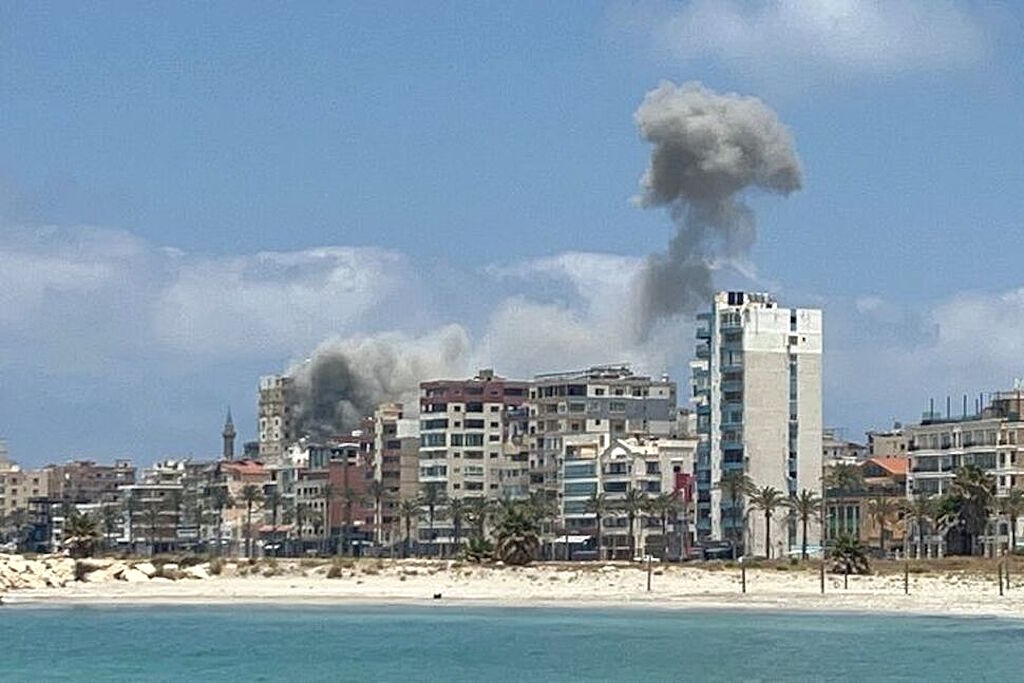
Israel attacks ancient Lebanese city mentioned in Bible

israel bomb ancient city tyre lebanon
© REUTERS/StringerSmoke billows following an Israeli strike in Tyre, Lebanon, June 9, 2026. Picture taken with a mobile phone.
The deadly strike on Tyre comes amid concerns that the Israeli military wants to control sites sacred to Christians and Muslims

Israel has struck the historic city of Tyre in Lebanon, targeting the Christian quarter for the first time after ordering a partial evacuation. The attack has heightened local concerns over the fate of the city's revered Biblical heritage sites.

According to Reuters, eight people were killed in a single strike on Tyre's eastern edge on Tuesday.

The Christian quarter, located in the city's northwest, had been excluded from previous Israeli warnings and had sheltered people displaced from elsewhere.

Comment:


Not just Tyre:


Skull

Peacefire . . . .

apache helicopter
A single Boeing AH-64E Apache attack helicopter costs about $35 million to $52 million for the bare airframe. However, the total flyaway cost—which includes spare engines, weapons systems, initial training, and logistical support—averages $52 million to $100+ million per aircraft
Welcome to the 'peacefire'. After Israel and Iran were pulled back from the brink of new war by Trump on Monday, Wednesday morning Asia time saw him then strike Iran, and it fire at US bases in the Gulf, in response to Tehran downing a US Apache helicopter. It appears the US hit radar and missile/drone facilities around and in the Strait of Hormuz while Iran didn't hit anything due to its missiles being intercepted.

It seems both sides can now attack each other on a limited/proportional scale under a 'ceasefire' while peace negotiations continue... which Trump says are now in the "final throes", and cynics point out such finality is always thrown further into the future.

Pirates

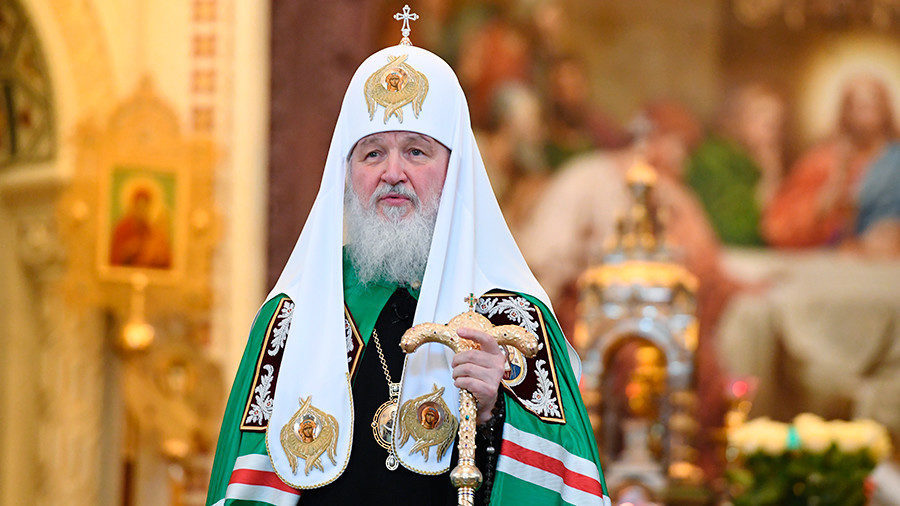
Unhinged: Russophobic EU targets head of Russian Orthodox Church with sanctions

Patriarch Kirill
© Sergey Pyatakov / SputnikPatriarch Kirill of Moscow and All Russia
What is there left to sanction in Russia? Apparently the European Union still sees plenty of opportunity to punish Russia over the Ukraine war, and is set to go after even religious leaders, now in year five of the conflict and many sanctions packages later.

The head of the Russian Orthodox Church, Patriarch Kirill, is among many names to be targeted in the EU's latest anti-Moscow sanctions proposal. Kirill has long been accused of justifying the war based on his several patriotic-themed sermons over the years.

Brussels first tried to impose individual sanctions on the patriarch in 2022, but Hungary under PM Viktor Orban had exercised veto power over the move.