Puppet MastersS


Telephone

'You're f***ing crazy!' Trump yelled at Netanyahu for derailing Iran talks - Axios

Trump on phone
© Drew Angerer/File/Getty ImagesUS President Donald Trump
Tehran has warned it could resume direct confrontation if Israel continues its campaign in Lebanon.

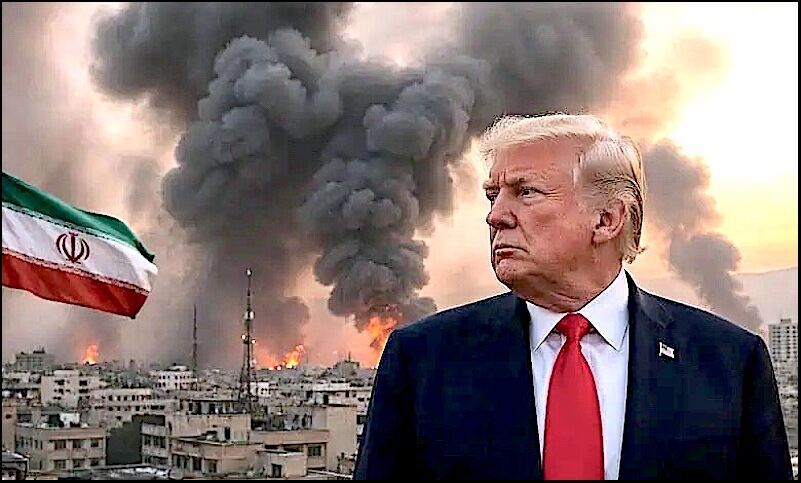
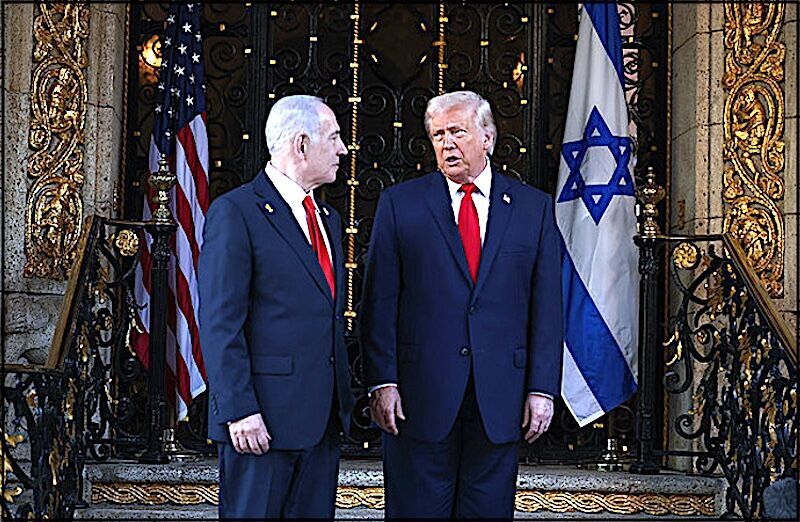
US President Donald Trump has lashed out at Israeli Prime Minister Benjamin Netanyahu over Israel's escalation in Lebanon, Axios reported on Monday, citing two American officials and a third source briefed on the call.

Trump allegedly accused Netanyahu of endangering US negotiations with Iran and demanded that Israel halt a planned strike on Beirut, in what Axios described as one of the worst calls between the two leaders since Trump returned to office.

"You're f***ing crazy. You'd be in prison if it weren't for me. I'm saving your ass. Everybody hates you now. Everybody hates Israel because of this," one official summarized Trump's remarks to Netanyahu. A second source briefed on the call said Trump was "pissed" and yelled at Netanyahu: "What the f*** are you doing?"

No Entry

Will Trump sideline Israel in order to make a deal with Iran?

Trump takes questions
© Patrick B. Ruddy/Official White House photoUS President Donald Trump takes questions • South Lawn • White House
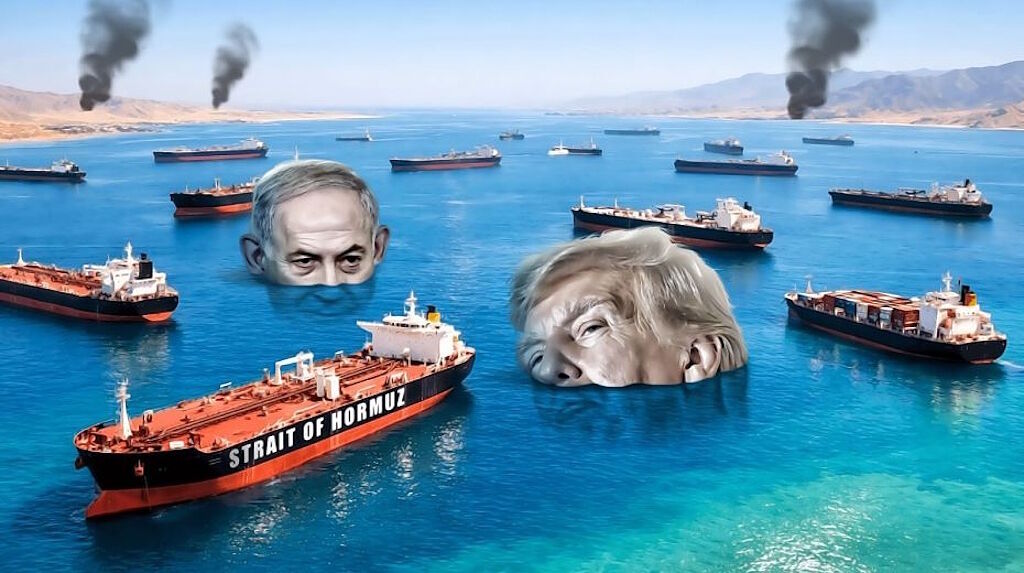
Donald Trump reportedly has a deal on the table to suspend fighting and begin negotiations to end the Iran war and the resulting global economic crisis. But Israel and Iran hawks see it as a disaster and are working to undermine it. Who will win out?

According to available reports, the purported agreement on a Memorandum of Understanding (MOU) between the United States and Iran to entrench the current ceasefire was ready to be signed and presented to the public, and Trump was going to retire to his "situation room" to confer with his people and announce it.

If that seemed too good to be true, it turns out it was, at least for the moment.

Eventually, Trump is going to have to decide whether to accept an MOU that will be harshly attacked by Israel and Iran hawks or resume the fighting. Choosing the former is out of character for the beleaguered president, but resuming the fighting will bury him deeper in this quagmire and will intensify the global economic crisis.

What is in the Iran agreement, and what it is not

It's important to recognize that all this MOU would do is formalize and expand the existing ceasefire. In practice, ending the war can only happen if the negotiations stipulated in the MOU come to a successful conclusion.

There's no guarantee of that, from either side.

Comment: Circling the circles is not a plan. The longer it takes to come to terms, the more expensive the finale.


Helm

Arctic route, far from tensions, could be alternative to Hormuz

Arctic Map
© Getty ImagesMap of the Arctic region
The far north of the globe is seeing new maritime routes open as the Arctic ice sheet melts, shortening the distance between China and Europe.

Beijing has seized the opportunity and expanded its operations in the region. The Northern Sea Route is not new, but it offers an opportunity to reduce dependence on trade routes through the Strait of Hormuz, especially during times of conflict, such as the one currently affecting the Middle East.

The Arctic region is undergoing transformations that overcome climatic barriers and enable the flow of large vessels, such as oil tankers, in this transitional scenario, not only in geopolitics but also in foreign trade. The new dynamic underway reinforces Russia's leading role, as it invests in infrastructure and operational capacity in the polar region.

Eight states are located in the Arctic: Iceland, Denmark, Russia, United States, Norway, Sweden, Finland, and Canada. They comprise the Arctic Council. However, China has made intensive use of this maritime route and describes itself as a "near-Arctic" state.

China, the world's largest producer of manufactured goods and a country that needs to move its merchandise, has proposed a new route in partnership with Russia, moving products not only through Asia and Africa but also over the Arctic, colloquially known as the new polar Silk Road.

Attention

Trump's plan for Al-Aqsa mosque

Trump’s plan for Al-Aqsa mosque
© The Postil Magazine
Of the many outrages that have defined American foreign policy toward the Middle East, few have been as deliberate and as fraught as the reported Trump administration plan to dismantle the Islamic Waqf at the Al‑Aqsa Mosque compound. According to a joint investigation by Middle East Eye, citing American, Jordanian, Palestinian, Gulf, and Western sources, the United States and Israel are "actively working" on a new arrangement to terminate the century‑old Hashemite custodianship of the third‑holiest site in Islam. The reported scheme would replace the Waqf — the Jordanian‑run Islamic trust that has administered the Haram al‑Sharif since the early twentieth century — with an Israeli‑appointed body tasked with redefining the sacred enclosure as a "multi‑faith centre." Under the plan, Jews would receive "equal access" to the compound and would be formally permitted to conduct large‑group prayers on the esplanade; Israel would gain decisive influence over the appointment of imams, mosque administrators, and even the content of Friday sermons.

The proposal stands as an unprecedented assault on the Hashemite Kingdom's historic role — a role anchored in international treaties, including the 1994 Israel‑Jordan peace treaty, which states in Article 9 that "Israel respects the present special role of the Hashemite Kingdom of Jordan in Muslim Holy shrines in Jerusalem." According to the plan, the Al‑Aqsa Mosque complex would be transformed into a "multi‑faith centre," allowing Jews "equal access" to the site and formally permitting large‑group Jewish prayer. It is being pushed not by diplomats grounded in international law, but by two American Zionists whose ideological fervor and financial entanglements render them wholly incapable of acting as honest brokers. The result is a scheme that would not only inflame the Middle East but also seal the Trump administration's legacy as an instrument of Israeli maximalism.

Yet the full measure of this outrage cannot be understood without naming three additional dimensions of the crisis: the long‑term Zionist project to establish Israel as the master of the Muslim world, the perfidy of Kushner and Huckabee — men whose dual loyalties and theological extremism amount to a betrayal of their own government's ostensible responsibilities — and the toothless silence of Arab powers, who possess the economic and diplomatic leverage to stop this plan cold but have instead chosen complicity, cowardice, or quiet consultation.

Oil Pipeline

Control of global transit oil communications as a key goal of Israel in the Middle Eastern architecture

Neti and oil pipeline
© UnknownNetanyahu's oil pipe dream
By means of pursuing its aggressive policy in the Middle East, Israel intends to redirect the transit of energy resources through its own territory.

Control over the routes of hydrocarbon supplies to the world markets inevitably increases the economic and political significance of the territories and countries located along these routes.

The Middle East retains its undeniable strategic role not only as the cradle of civilizations and spiritual centers but also as a key crossroads of global trade and transit routes.

Within this geopolitical dynamic, Israel, pursuing an active policy in the region, seeks to reroute the transit of energy resources through its territory.

Comment: As they say: It's about the oil stupid'. Years of set-up, the US was ultimately played...perhaps Neti's finest and most satisfying hour.


Footprints

The slow American retreat from Europe has already begun

Trump flags
© Justin Sullivan/Getty ImagesDonald Trump at a campaign rally • Grand Sierra Resort • Reno, Nevada • October 11, 2024
The fate of the conflict, part 2: Trump, China, and the end of the united Western front against Russia

2025 can be seen as the year in which the united anti-Russian coalition fell apart. In essence, there are now three distinct players acting against Russia (Ukraine, Europe, the US), and each has its own interests. Analyst Sergey Poletaev has prepared a series of articles in which he analyses the position of each player, their goals and interests in the conflict, and suggests how Russia might respond.

Today we focus on the United States.

Resignation from the role of leader

Since the Trump team's rise to power, US politics has undergone a profound, one is even tempted to say historic, shift: The US is moving away from its role as the 'leader of the free world' and seeking to focus on its own interests.

While in the first half of 2025, it seemed that this was merely a whim of Trump's, and that the US could not be diverted from its course of maintaining its hegemony, by the end of the year, it had become clear that the Trump administration was seeking to reset relations with all global players. We will not be discussing today the extent to which Trump has been successful; what matters to us is his motivation.

Comment: See also:

Part 1: Ukraine and the road to ruin


Question

Are neocons turning on the Iran War?

US President Donald Trump
© ScreenshotUS President Donald Trump
Prominent neoconservatives are criticizing Trump's war on Iran, but do these critiques amount to a foreign policy shift?

In a recent Atlantic article, Brookings Institution senior fellow Robert Kagan declares that the United States has already lost its war against Iran. He writes:
"It's hard to think of a time when the United States suffered a total defeat in a conflict, a setback so decisive that the strategic loss could be neither repaired nor ignored.

"Defeat in the present confrontation with Iran will be of an entirely different character. It can neither be repaired nor ignored," he continued. There will be no return to the status quo ante, no ultimate American triumph that will undo or overcome the harm done."
Kagan began his career as a foreign policy advisor for Jack Kemp, then spent the 90s pushing for multiple U.S. wars in the Middle East, consistently claiming that Iraq posed a military threat to the United States.

Nuke

The Karaganov Fallacy

Karaganov advocates preemptive Russian nuclear strikes against a Europe he deems bellicose, banking on American passivity. Scott Ritter believes conventional missiles, not nukes, are the only credible path.
Karaganov Fallacy
© Forum Geopolitica
Editor's Note : After publishing our article "Is 1914 repeating itself? Will war between Europe and Russia finally break out openly?" where we discussed - among others - the nuclear doctrine of the Russian Federeation and also the Karaganov doctrin, Dmitry Orlov published the article «How to survive a Russian tactical nuclear strike». In today's article Scott Ritter analyses the Karaganov doctrine and argues that nuclear weapons are not the right tools for Russia.

Back in the late 1970's and early 1980's, the Wallstreet brokerage firm, E.F. Hutton, came up with one of the most iconic television ad campaigns in history, built around the catch phrase "When E.F. Hutton speaks, people listen."

Sergei Karaganov is the Russian analog to E.F. Hutton — when Karaganov speaks, people listen. The 73-year old political scientist, who currently heads the Council for Foreign and Defense Policy and serves as the dean of the Faculty of World Economy and International Affairs at Moscow's Higher School of Economics, has advised both post-Soviet era Russian Presidents, Boris Yeltsin and Vladimir Putin, and his opinion continues to carry weight among the senior-most decision making circles of the Russian government.

Karaganov has, for the past several years, been warning about the growing threat to Russia from NATO, and in particular the European nations of NATO who have constructed a world view which postulates Russia as an existential threat which must be decisively confronted and defeated.

In this Karaganov is not wrong.

The language of the Europeans is self-indicting.

According to a newly published German military strategy, Russia represents "the greatest and most immediate threat for the foreseeable future" to Germany and transatlantic security. The classified strategy concludes by declaring "Russia is laying the groundwork for a military attack on NATO member states."

Germany's chief of defense, General Carsten Breuer furthered this argument in a 2025 statement to the media where he noted that "There's an intent and there's a buildup of the stocks" by Russia for a possible future attack on Nato's Baltic state members.

Brueuer and Germany's defense minister, Boris Pistorious, are using the threat from Russia as an excuse for the rearmament of Germany, with the goal of making the German army the most powerful in Europe by 2029.

Why that date?

According to General Breuer, this is when Russia will attack Europe. "This is what the analysts are assessing," Breuer said, "in 2029. So we have to be ready by 2029."

The German analysis is nearly identical to that of their British allies. Former Chief of the General Staff, General Sir Patrick Sanders, who retired in the summer of 2025, has warned that a war with Putin was a "realistic possibility" by 2030. "If Russia stops fighting in Ukraine," Sanders told the British media, "you get to a position where within a matter of months they will have the capability to conduct a limited attack on a NATO member that we will be responsible for supporting, and that happens by 2030."

Biohazard

Google to dump 32 million diseased, AI-bred mosquitoes on Florida and California

Diseased, AI-bred mosquitoes illustration
© Armageddon Prose
The aspirational totalitarians over at Big Tech have seen fit to retrofit 32 million mosquitoes with a bacterial infection, using AI, and then dump them onto California and Florida.

The federal government, beholden as ever to the private interests that run it, is poised to give its blessing.

Via California Post:
"California could soon become a testing ground for one of Google's most ambitious public health projects yet.

The tech giant is seeking federal approval to release up to 32 million specially treated mosquitoes in California and Florida over the next two years as part of an effort to reduce the spread of mosquito-borne diseases, including West Nile virus, St. Louis encephalitis, dengue, Zika, chikungunya and yellow fever...

The project is part of Google's little-known Debug initiative, launched more than a decade ago to develop new technologies aimed at reducing populations of disease-carrying mosquitoes...

Rather than releasing biting insects, the company plans to release male mosquitoes infected with Wolbachia, a naturally occurring bacteria. When the infected males mate with wild female mosquitoes, the offspring do not survive, helping suppress mosquito populations over time.

Because only female mosquitoes bite humans, experts say the releases would not increase the number of biting mosquitoes....

Google says artificial intelligence and robotic systems would be used to breed, sort and release the mosquitoes at a scale large enough to make the strategy effective."

Quenelle

Bessent signals nonprofit crackdown as "well-funded" NGO machine found to be behind Newark anti-ICE chaos

communist protesters delaney hall illegal immigration
© Angelina Katsanis/APDemonstrators for and against the Delaney Hall detention center yell at each other outside the facility Saturday, May, 30, 2026 in Newark, N.J.
Anti-ICE demonstrations outside Delaney Hall in Newark, New Jersey, an ICE immigration detention facility, escalated in the overnight hours as the far-left and well-funded maximum pressure campaign entered its ninth day on Saturday. The continued mobilization only suggests a coordinated pressure operation, with dark-money-funded NGOs appearing to provide organizational and financial support.

Citizen journalist Nick Sortor went undercover at the anti-ICE encampment outside Delaney Hall in Newark on Saturday night, documenting what he described as far-left revolutionaries training their so-called 'woke warriors' to combat ICE agents.

Comment: Xitter sleuths on the case: