Science & TechnologyS


Pills

Pharma funded medical research increasing while government funded studies decline due to budget cuts

national institutes health
© Reuters/Gary CameronThe patient's entrance at the National Institutes of Health is shown in Bethesda, Maryland, October 16, 2014.
Every year since 2006 in the U.S., the amount of new medical research in humans that's funded by the National Institutes of Health (NIH) has gone down, while the number of industry-funded trials has gone up, a new study shows.

Analyzing the ClinicalTrials.gov database, researchers found that after trial registration became a requirement for publication in major scientific journals in 2005, the number of newly registered trials rose from 9,321 in 2006 to 18,400 in 2014.

NIH-funded trials dipped slightly from 1,376 in 2006 to 1,048 in 2014, while industry trials increased from 4,585 to 6,550.

Adjusted for inflation, the NIH budget fell by 14 percent over this period, which may explain some of the decrease, according to the authors of the research letter in JAMA.

The pharmaceutical industry tests its own products, while the NIH funds tests of treatment approaches, including lifestyle interventions or drug comparisons, which industry tends not to fund because they do not lead to an increase in their bottom line, said coauthor Dr. Stephan Ehrhardt of Johns Hopkins Bloomberg School of Public Health in Baltimore.

Comment: Insuring a consistent revenue stream is the primary focus of the pharmaceutical industry. Thus, when data from clinical trials is not favorable to the industry, it is either suppressed or manipulated to show positive results. Studies have shown that industry funded trials are much more likely to show favorable outcomes than government funded studies.


Telescope

Giant planets carving paths around four young stars, observations suggest

gas and dust
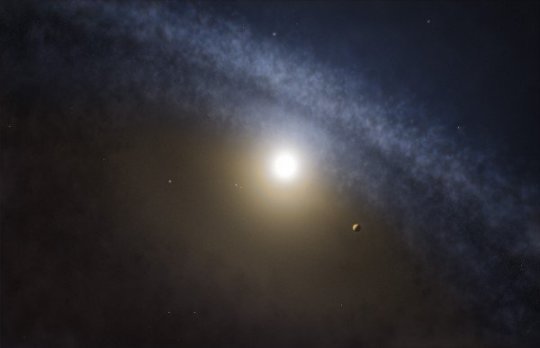
© ALMA (ESO/NAOJ/NRAO)/M. KornmesserAstronomers using the Atacama Large Millimeter/submillimeter Array (ALMA) have found telltale differences between the gaps in the gas and the dust in disks around four young stars. These new observations are the clearest indications yet that planets with masses several times that of Jupiter have recently formed in these disks.
Astronomers using the Atacama Large Millimeter/submillimeter Array (ALMA) have found the clearest evidence yet that giant planets have recently formed around four young stars. These new worlds, each presumably several times more massive than Jupiter, were inferred by the telltale structures they produced in the disks of gas and dust that surround the stars.

Though planets appear remarkably plentiful in our Galaxy, astronomers still don't fully understand how and under what conditions they form. To help answer these questions, scientists study the structure and composition of the planet-forming disks of dust and gas around young stars.

Certain disks, called transitional disks, have a surprising absence of dust at their centers, in the region around the star. Two main ideas have been put forward to explain these mysterious cavities. First, the strong stellar winds and intense radiation from the star could have blown away or simply destroyed the encircling gas and dust. Alternatively, massive young planets in the process of formation could have cleared the material as they orbit the star. Previous observations lacked the sensitivity and resolution to determine the most likely explanation.

Magnify

"Freak" ocean waves hit without warning, new research shows

linear vs non-linear wave
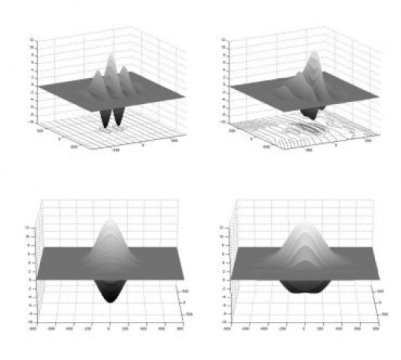
© Thomas AdcockGraphic showing linear vs non-linear wave groups.
Mariners have long spoken of 'walls of water' appearing from nowhere in the open seas. But oceanographers have generally disregarded such stories and suggested that rogue waves -- enormous surface waves that have attained a near-mythical status over the centuries -- build up gradually and have relatively narrow crests.

New research from the University of Oxford in collaboration with the University of Western Australia, however, shows that the anecdotal evidence may not be so far from the truth. Rather than coming at the end of a series of increasingly large waves, rogue (or freak) waves emerge suddenly, being preceded by much smaller waves.

The mathematical modelling also demonstrates that the crests of these rogue waves are longer than the smaller waves that surround them.

The research is published in the journal Proceedings of the Royal Society A.

Magnify

Researchers elucidate network of genes that control when puberty begins

hypothalamic genes
© kentoh / FotoliaA handful of genes in a newly found network, operating within the neuroendocrine brain, serve as a 'neurobiological brake' that delay until the end of childhood the activation of hypothalamic genes responsible for launching puberty, thereby preventing the premature awakening of the process.
Discovery may pave way for linking environmental factors to early-onset puberty in females

In expanding our knowledge of how the brain controls the process of sexual development, researchers at Oregon Healthy & Science University and the University of Pittsburgh have identified for the first time members of an elaborate superfamily of genes that regulate the timing of puberty in highly evolved nonhuman primates. The Zinc finger, or ZNF, gene family comprises approximately 800 individual genes.

A handful of genes in this network, operating within the neuroendocrine brain, serve as a 'neurobiological brake' that delay until the end of childhood the activation of hypothalamic genes responsible for launching puberty, thereby preventing the premature awakening of the process. The paper was published in the journal Nature Communications.

The paper demonstrates that the ZNF gene family encodes repressors -- proteins that hold in check the activity of genes -- to suppress the launch of puberty. The researchers' fresh insights better position scientists to decipher whether environmental factors push the start of puberty to younger ages. Early puberty is associated with an increased incidence of ovarian, uterine and breast cancer as well as an increased incidence of cardiovascular disease and metabolic diseases.

Info

Brain connectivity patterns explain why some people have detailed memory of past events while others remember only facts

brain slices memory traits
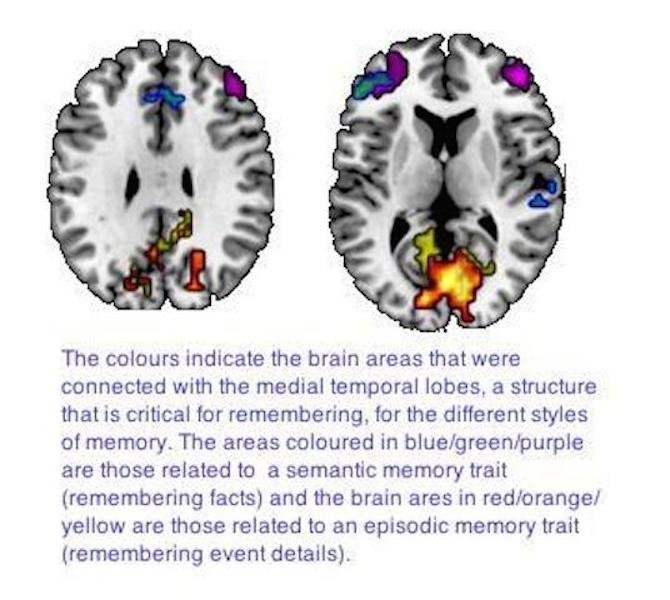
© Rotman Research InstituteTwo brain slices show different memory traits.
Why is it that some people have richly detailed recollection of past experiences (episodic memory), while others tend to remember just the facts without details (semantic memory)?

A research team from the Rotman Research Institute at Baycrest Health Sciences has shown for the first time that these different ways of experiencing the past are associated with distinct brain connectivity patterns that may be inherent to the individual and suggest a life-long 'memory trait'.

The study was recently published online in the journal Cortex.

"For decades, nearly all research on memory and brain function has treated people as the same, averaging across individuals," said lead investigator Dr. Signy Sheldon, now an assistant professor of Psychology at McGill University.

"Yet as we know from experience and from comparing our recollection to others, peoples' memory traits vary. Our study shows that these memory traits correspond to stable differences in brain function, even when we are not asking people to perform memory tasks while in the scanner."

Saturn

Life-friendly chemistry revealed inside Saturn moon

Enceladus
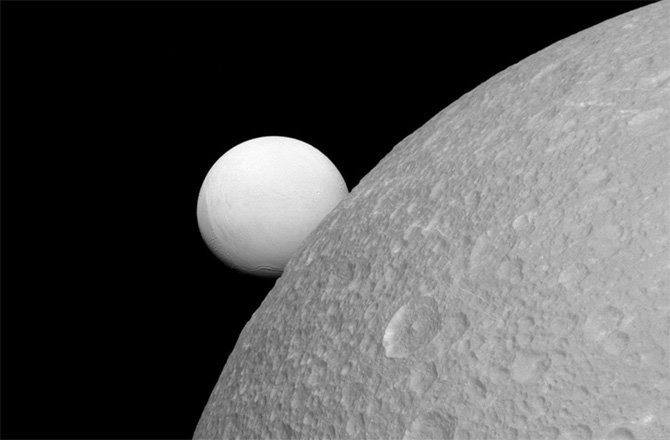
© NASA/JPL-Caltech/Space Science InstituteEnceladus emerges from behind larger moon Dione in this cosmic pairing as imaged by NASA's Cassini spacecraft on Sept. 15.
After determining that the ocean beneath the icy surface of Saturn's moon Enceladus has roughly the same pH as Windex or soapy water -- an indication that the water has been in contact with rock, creating potentially life-friendly chemistry -- scientists are moving on to the trickier hunt for evidence of hydrothermal venting.

The data comes from NASA's Saturn-orbiting Cassini spacecraft, which in October made its deepest dive into plumes of vapor and ice jetting off the southern polar region of Enceladus, a 310-mile wide moon that has emerged as a top contender in the search for life beyond Earth.

"This is really is a world with a habitable environment in its interior," planetary scientist Jonathan Lunine, with Cornell University, said at the American Geophysical Union conference in San Francisco.

Early analysis of Cassini's 30-mile high pass over Enceladus on Oct. 28 indicates that the moon's subsurface ocean, which is believed to be the source of the plumes, has telltale chemical fingerprints of water that has interacted with rock.

Magnify

Isolating water's impact on vibrations within DNA

DNA double helix
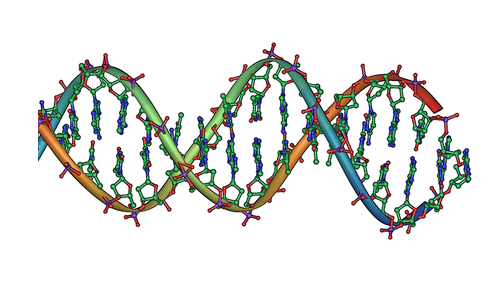
© iStockDNA double helix
In a biological system, the ratio of water-to-non-water molecules, known as the hydration level, influences both the arrangement of biomolecules and the strength of the electric interactions that occur between biomolecules, free ions, and functional groups, which are groups of atoms within molecules that strongly influence the molecules' chemical properties.

To isolate the contribution of water to the vibrational fluctuations that occur between DNA, bulk water, and the charged biomolecular interface between the two, researchers at the Max-Born Institute for Nonlinear Optics and Short Pulse Spectroscopy in Berlin have performed two-dimensional spectroscopic analyses on double-stranded DNA helices at different hydration levels.

The analysis gives insight into the way water and DNA interact, which could ultimately help scientists understand how biological systems function at the molecular level and what goes wrong when adverse conditions cause the systems to fail.

Two-dimensional infrared spectroscopy is a laser technique used to map correlated vibrations, the basic oscillatory motions of atoms, and their fluctuations into observable data.

Galaxy

A new spin on star-forming galaxies

spiral galaxies
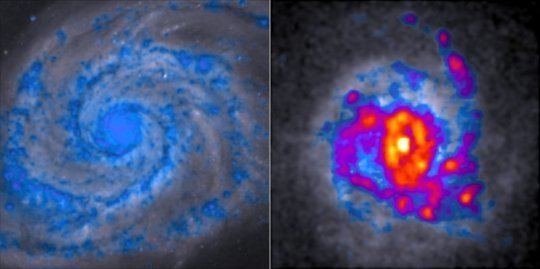
© Dr Danail Obreschkow, ICRARRegular spiral galaxies, such as the 'whirlpool galaxy' on the left, form far fewer stars than the clumpy galaxy on the right. The blue regions have the least star-forming gas and red-yellow regions have the most.
Australian researchers have discovered why some galaxies are "clumpy" rather than spiral in shape -- and it appears low spin is to blame.

The finding challenges an earlier theory that high levels of gas cause clumpy galaxies and sheds light on the conditions that brought about the birth of most of the stars in the Universe.

Lead author Dr Danail Obreschkow, from The University of Western Australia node of the International Centre for Radio Astronomy Research (ICRAR), said that ten billion years ago the Universe was full of clumpy galaxies but these developed into more regular objects as they evolved.

He said the majority of stars in the sky today, including our five billion-year-old Sun, were probably born inside these clumpy formations.

"The clumpy galaxies produce stars at phenomenal rates," Dr Obreschkow said.

Satellite

Hubble reveals diversity of exoplanet atmosphere

exoplanets
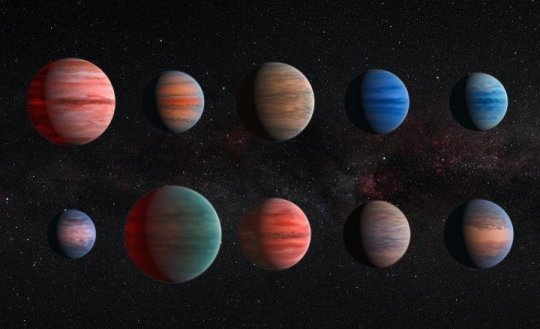
© ESA/Hubble / NASAThis image shows an artist's impression of the ten hot Jupiter exoplanets studied by David Sing and his colleagues. From top left to to lower left these planets are WASP-12b, WASP-6b, WASP-31b, WASP-39b, HD 189733b, HAT-P-12b, WASP-17b, WASP-19b, HAT-P-1b and HD 209458b.
Astronomers have used the NASA/ESA Hubble Space Telescope and the NASA Spitzer Space Telescope to study the atmospheres of ten hot, Jupiter-sized exoplanets in detail, the largest number of such planets ever studied. The team was able to discover why some of these worlds seem to have less water than expected -- a long-standing mystery.

The results are published in Nature.

To date, astronomers have discovered nearly 2000 planets orbiting other stars. Some of these planets are known as hot Jupiters, hot, gaseous planets with characteristics similar to those of Jupiter. They orbit very close to their stars, making their surface hot, and the planets tricky to study in detail without being overwhelmed by bright starlight.

Due to this difficulty, Hubble has only explored a handful of hot Jupiters in the past, across a limited wavelength range. These initial studies have found several planets to hold less water than expected opo1436a , opo1354a .

Magnify

How music, language shape the brain

sound of brain
© Andrey_Arkusha / FotoliaTo measure the brain's response to sound, researchers play speech or music directly into the ears of study volunteers. The scientists then measure the electricity created by the brain as it translates sound through sensors attached to participants' heads.
Northwestern University professor Nina Kraus shed light on one of the brain's most complex tasks -- making sense of sound -- during the recent Falling Walls conference in Berlin.

The annual gathering features significant discoveries or "breakthroughs" by 20 of the world's leading scientists and social leaders across a wide range of fields.

During her 15-minute talk, Kraus explained how she was able to solve a major problem in the field by devising a new way to measure what happens in the brain when it's processing sound.

"The sounds of our lives change our brain," said Kraus, an inventor, amateur musician and director of Northwestern's Auditory Neuroscience Lab in the School of Communication. "In our lab, we investigate how our life in sound changes the brain, and how different forms of enrichment or decline influence how our brain processes sound."