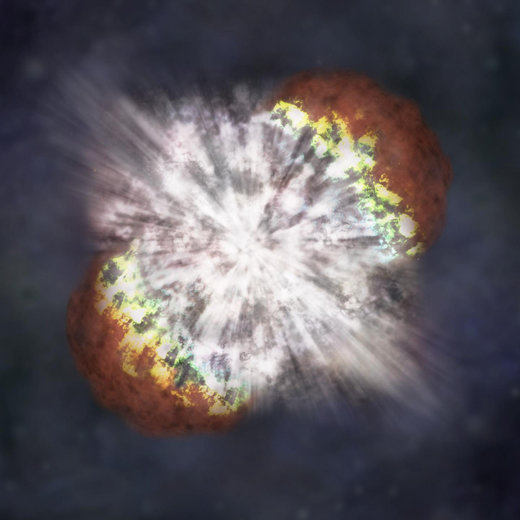
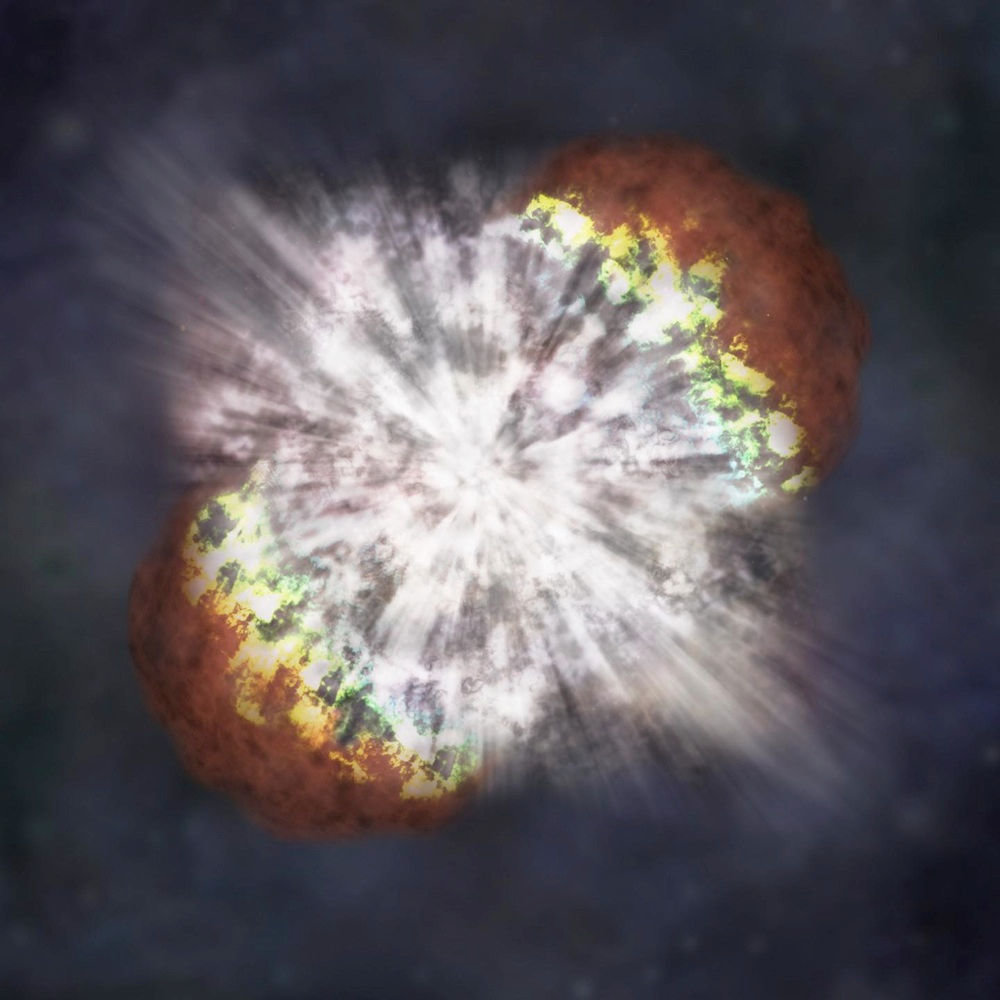
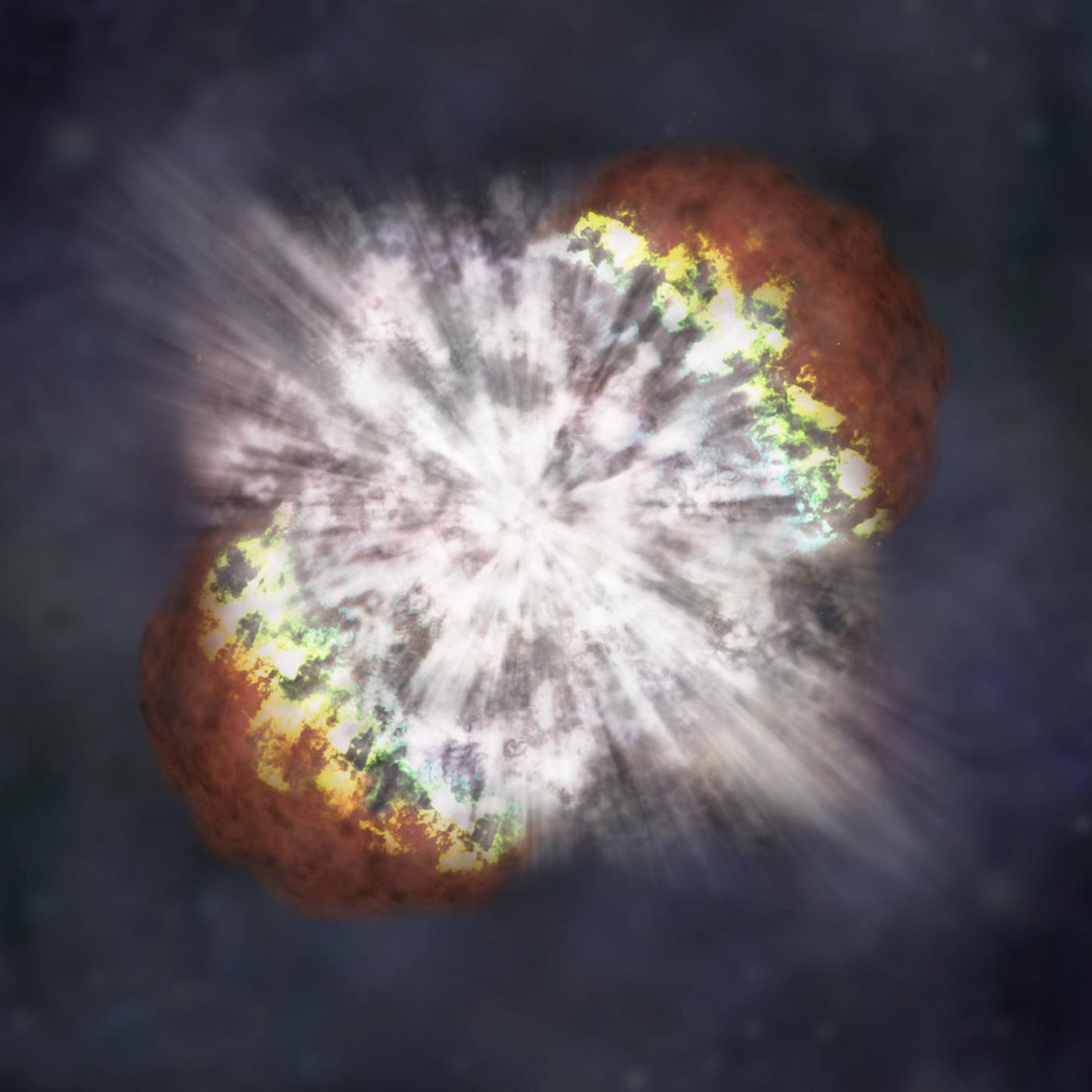
© NASAThis artist's illustration of a supernova shows a shell of material being expelled from the dying star, as well as a burst of bright light.
A mysterious kind of supernova that appears to explode twice may be giving birth to some of the most powerful magnets in the universe, a new study finds. Supernovas are explosions that occur when certain types of stars run out of fuel and "die." These outbursts can briefly outshine all of the millions of other stars in their galaxies.
Recently, scientists detected a very rare class of supernova, known as superluminous supernovas. These star explosions are
up to 100 times brighter than other supernovas. The superluminous variety account for less than a thousandth of all supernovas, and only about 30 examples have been studied well.
"They are extremely bright and can be seen for up to a year but are incredibly rare, so [they]
are difficult to find and measure," said study lead author Mathew Smith, an astrophysicist at the University of Southampton in England. "We don't yet know the physical origin of these cosmic explosions that can be seen out to the beginning of the universe; that's the main focus of current and future searches."
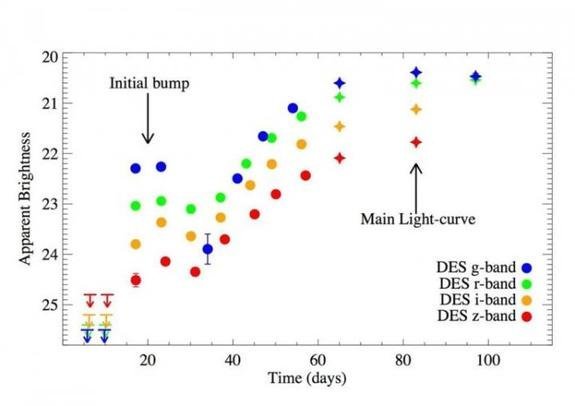
Mysteriously, previous research suggested that some superluminous supernovas appear to explode twice. Before their main explosions, each of these supernovas experience a spike in brightness that lasts a few days.
Now, Smith and his colleagues have analyzed such a "double-peaked" superluminous supernova from almost the moment it occurred, shedding light on its origins. In their new paper, they said most superluminous supernovas may actually be double-peaked.
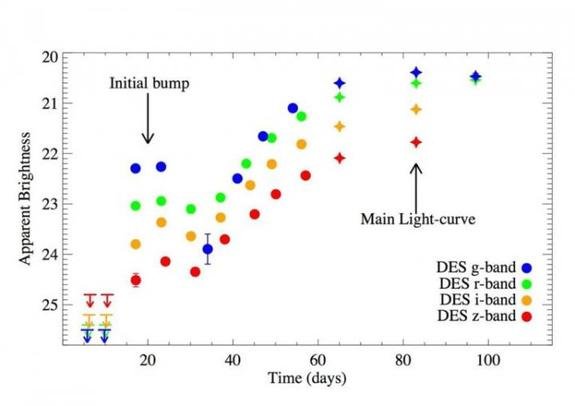
© Matthew SmithThis graph shows the change in the apparent brightness of a superluminous supernova detected by the Dark Energy Survey. The graph shows an initial bump in brightness, followed by a major spike that represents the main supernova explosion.













Comment: Related articles: