Science & TechnologyS


Microscope 2

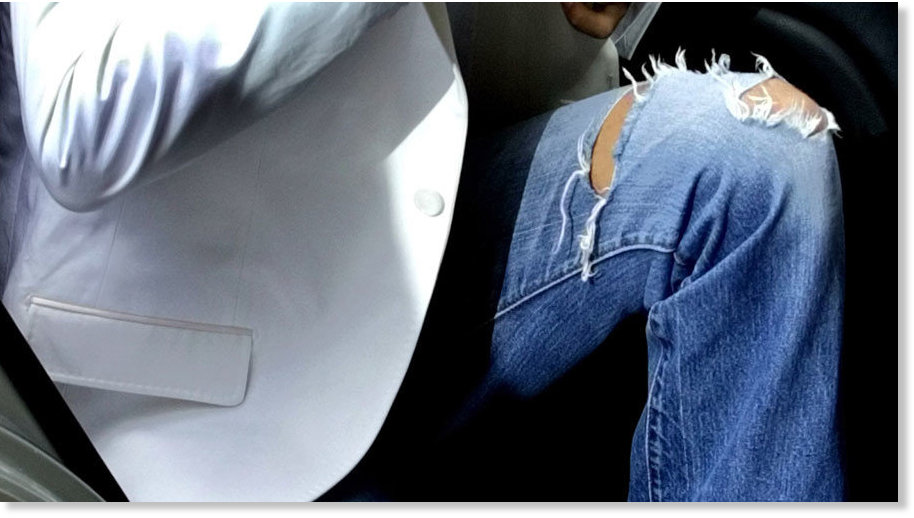
Scientists developing liquid that would allow fabrics to repair themselves

ripped pants
© Andrea Comas / Reuters
The days of patching up a torn pair of jeans with spare fabric may soon be over. Scientists are working on a special liquid that essentially allows everyday clothes to repair themselves.

The trick lies in a self-healing, polyelectrolyte liquid that is currently being developed by researchers at Penn State University.

Made from bacteria and yeast, the liquid can help most fabrics bind together once torn. It contains proteins similar to those found in squid ring teeth, which also have self-repairing qualities.

The healing process involves putting the substance on the torn fabric, applying warm water, and pressing the edges together. The fabric then reattaches, effectively repairing itself.


Magic Wand

Harry Potter would be proud: Russian company makes invisibility cloak for electronics

russian invisibility cloak
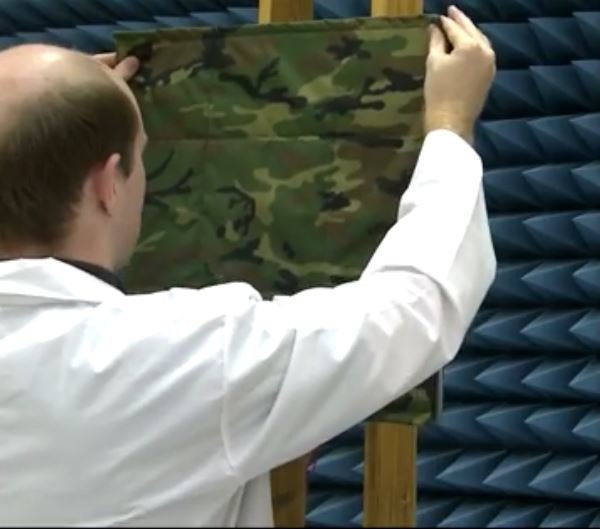
A Russian defense company has created a "cloak," which it says can make electronic objects invisible to enemy radar. The aim of the fiber technology, which is used in the cloak, is to make weapons invisible to prying eyes and detection systems.

The St. Petersburg-based company Roselectronics has come up with the invention and says it can make weapons that use thermal, infrared, and electromagnetic radar in targeting invisible.

The technology works by placing the insulating object over electronic devices, which makes them undetectable.

Galaxy

New infrared images show stunning images of Saturn's atmosphere

Saturn infrared
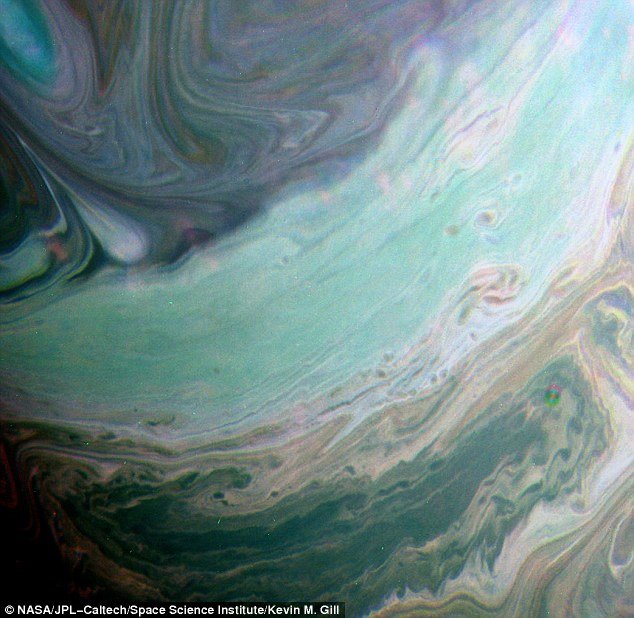
Looking at the planet using the infrared part of the light spectrum reveals the fascinating swirls and streaks created by clouds above the planet's northern hemisphere. The view was produced by space imaging enthusiast Kevin Gill, an engineer at Nasa
With its blue, green and cream-coloured swirls, in some ways this image resembles an abstract work of art. But the photograph released by Nasa actually shows Saturn's atmosphere in stunning detail, and was taken using an infrared filter. Looking at the planet using the infrared part of the light spectrum reveals the fascinating swirls and streaks created by clouds above the planet's northern hemisphere.

The view was produced by space imaging enthusiast Kevin Gill, an engineer at Nasa's Jet Propulsion Laboratory in California. The view was made using images taken by Cassini's wide-angle camera on July 20, 2016, using a combination of spectral filters sensitive to infrared light,' Nasa said. Filters like these, which are sensitive to absorption and scattering of sunlight by methane in Saturn's atmosphere, have been useful throughout Cassini's mission.

They can be used to determining the structure and depth of cloud features in the atmosphere. This new image comes just a week after an image showing the rings of Saturn appearing to melt. Nasa said the amazing optical illusion was caused by light being reflected by Cassini's camera. It showed Saturn's A and F rings appear bizarrely warped where they intersect the planet's limb, whose atmosphere acts here like a very big lens.

Jupiter

NASA's Juno spacecraft releases trove of images from Jupiter

junocam, jupiter images
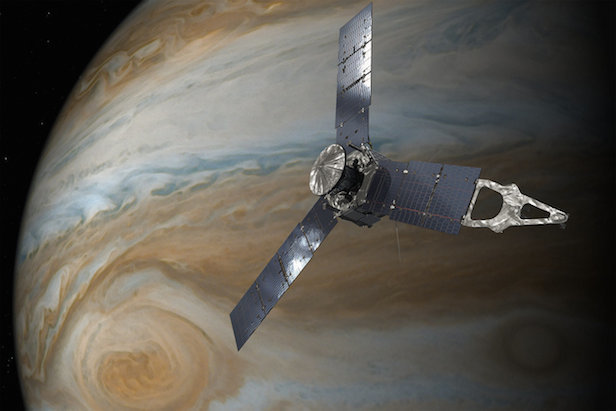
NASA's Juno spacecraft has released its latest dispatch of images of Jupiter. The pictures were snapped at a time when the stormy planet is not visible to astronomers on Earth, making them a unique addition to the gallery.

NASA's release of the so-called "marble movie" shows that Jupiter is such a pretty planet, it doesn't need a filter other than for methane. The phrase "marble movie" refers to the size of Jupiter in the images and how small it looks.

The timing of these images is also unique as they show Jupiter during a time when it would normally be invisible to NASA's ground support. During a period of the year, Jupiter's orbit brings it too close to the sun to be visible from Earth, leaving astronomers in the dark. However, JunoCam continued to take a picture every 15 minutes.

Moon

Two of Pluto's mountains could be ice-spewing volcanoes

pluto
© abdulazez-dukhan
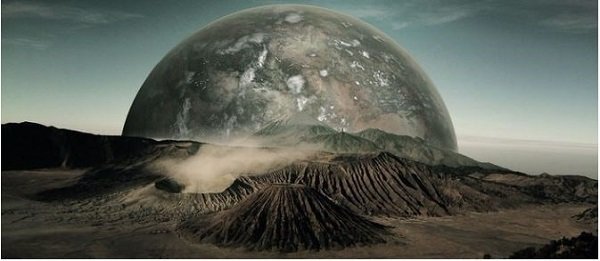
This past January NASA released an up-close image (shown below) of what may be one of the strangest features on Pluto: a massive volcano that spewed ice instead of lava. "This feature is enormous," NASA said on its website. "If it is in fact a volcano, as suspected, it would be the largest such feature discovered in the outer solar system."

"It's a huge finding that small planets can be active on a massive scale, billions of years after their creation," said New Horizons principal investigator Alan Stern, of the Southwest Research Institute (SWRI).

"The New Horizons mission has taken what we thought we knew about Pluto and turned it upside down," said Jim Green, director of planetary science at NASA Headquarters in Washington. "It's why we explore - to satisfy our innate curiosity and answer deeper questions about how we got here and what lies beyond the next horizon."

Comment: See also:New Horizons: NASA 'amazed' by the most detailed images of Pluto yet
Pluto Has "Upside Down" Atmosphere
Hi-res photos taken by 'New Horizons' of Pluto show elaborate "snakeskin" surface of diverse terrain similar to Earth


Microscope 2

Study finds cancer drug given to pregnant women may reduce fertility in unborn daughters

pregnant woman
© Alvin Baez / Reuters
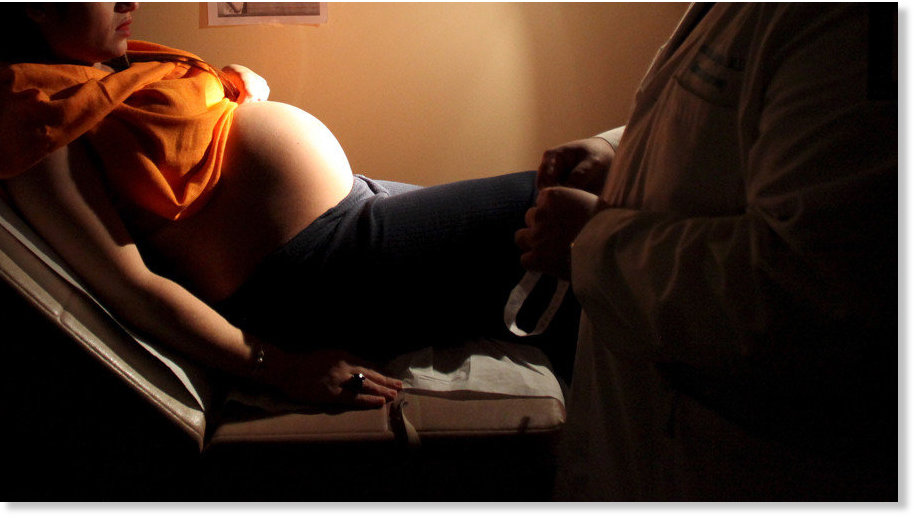
A chemotherapy drug prescribed to moms-to-be fighting cancer may reduce the fertility of their unborn daughters, researchers say. Their findings result from the first study into the long-term effects of chemotherapy during pregnancy.

"This is an issue that has not been explored until now," the study's lead researcher, Professor Norah Spears, from Edinburgh University's Center for Integrative Physiology, said in a statement. Spears said previous studies, looking at chemotherapy drugs' effects during pregnancy, focused exclusively on the immediate effects, such as "increased miscarriage rates or severe foetal abnormalities.

A team of scientists at Edinburgh University have found that a drug called etoposide can damage the development of ovarian tissue in mice. Given that 95 percent of their genes are the same as those of humans, this could have the same impact on humans, researchers say.

Around one in 1,000 pregnant women are diagnosed with cancer.

Etoposide use involves a low risk of miscarriage and birth defects, and is considered safe for use in the second and third trimester of pregnancy. Little is known, however, about the longer-term effects of the drug on the unborn baby, researchers say.

Blue Planet

NASA researchers suggest Venus once had an ocean, atmosphere and supported life

venus
© NASAObservations suggest Venus may have had water oceans in its distant past. A land-ocean pattern like that above was used in a climate model to show how storm clouds could have shielded ancient Venus from strong sunlight and made the planet habitable
Venus may have once had a shallow ocean and habitable temperatures, allowing it to support life for up to two billion years of its early history, according to NASA researchers.

Using a model similar to what is used to study climate change on Earth, scientists at NASA's Goddard Institute for Space Studies (GISS) concluded that the planet may have once been an entirely different place than modern-day Venus, which is a "hellish place" with a carbon dioxide atmosphere 90 times as thick as Earth's and almost no water vapor, and temperatures that reach 864 degrees Fahrenheit (462 degrees Celsius).

"Many of the same tools we use to model climate change on Earth can be adapted to study climates on other planets, both past and present," Michael Way, a researcher at GISS and the paper's lead author, said in a statement.

The research, published in the journal Geophysical Research Letters, was made possible by using previous data and applying it to a new hypothesis of what ancient Venus was really like.

Robot

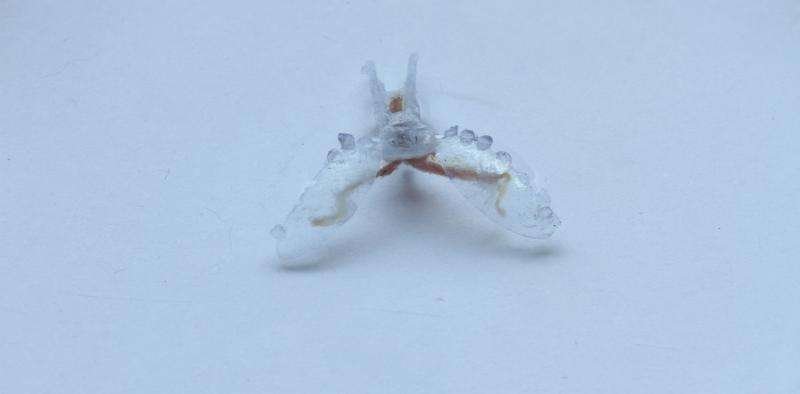
They're here! Animal inspired biohybrid robots being created in labs

biobot
© Dr. Andrew Horchler, CC BY-NDBiohybrid sea slug, reporting for duty.
Think of a traditional robot and you probably imagine something made from metal and plastic. Such "nuts-and-bolts" robots are made of hard materials. As robots take on more roles beyond the lab, such rigid systems can present safety risks to the people they interact with. For example, if an industrial robot swings into a person, there is the risk of bruises or bone damage.

Researchers are increasingly looking for solutions to make robots softer or more compliant - less like rigid machines, more like animals. With traditional actuators - such as motors - this can mean using air muscles or adding springs in parallel with motors. For example, on a Whegs robot, having a spring between a motor and the wheel leg (Wheg) means that if the robot runs into something (like a person), the spring absorbs some of the energy so the person isn't hurt. The bumper on a Roomba vacuuming robot is another example; it's spring-loaded so the Roomba doesn't damage the things it bumps into.

Comment: Next on the list: Robots made with human parts.


Magnify

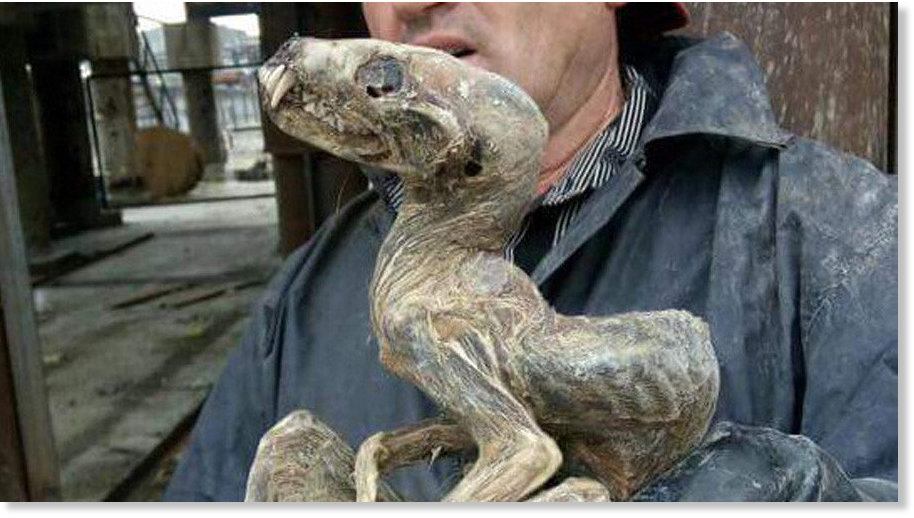
Mummified 'monster' unearthed by Siberian miners may be lost species of dinosaur

dinosaur mummy
© Yakutian-Sakha Inform Agency / ysia.ru
An ancient mummified 'monster' unearthed in a diamond pit by Siberian miners could be a previously undiscovered species of dinosaur.

Russia's northern region is known to be a veritable ice box of discovery, hosting the remains of countless prehistoric animals in a natural deep freeze.

But researchers are understood to be baffled at the latest creature pulled from sands near the town of Udachny, located in the Sakha Republic, according to the Siberian Times.

Fish

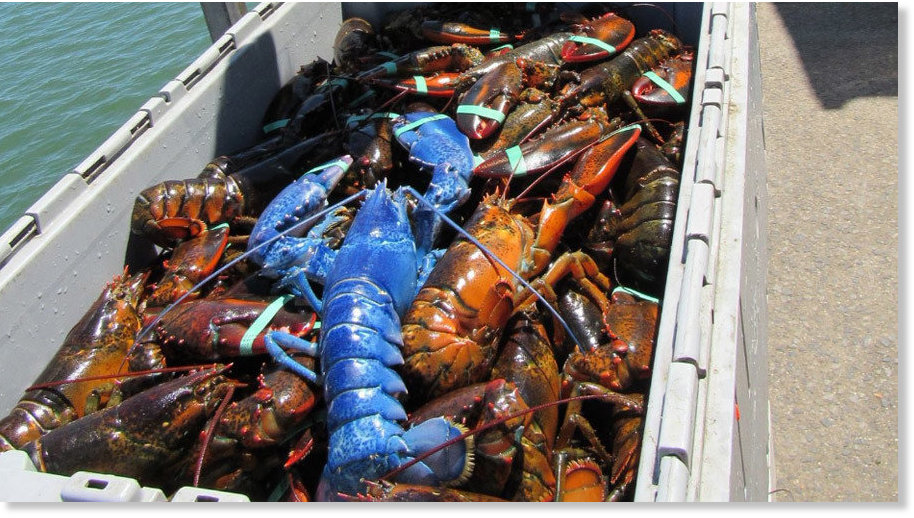
Extremely rare sapphire-blue lobster caught off Cape Cod

blue lobster
© Jan Nickerson / Facebook
A Cape Cod fisherman got an exciting surprise in his catch earlier this week when he found a 2-pound lobster in his trap, the color of a sapphire. According to experts his catch is an extreme rarity, occurring in about one in two million.

Wayne Nickerson, owner and captain of FV Windsong in Plymouth, was the lucky fisherman who has been fishing for lobster for over 35 years. He told ABC this was only the second one he has caught.

"He let out a loud exclamation of excitement," Jan, his wife, told ABC News. "He was very clear about how excited he was."

Jan posted a photo of the blue lobster on a Facebook page on Monday. Since then the photo has been liked by over 1,800 people and shared by over 2,000 others.