
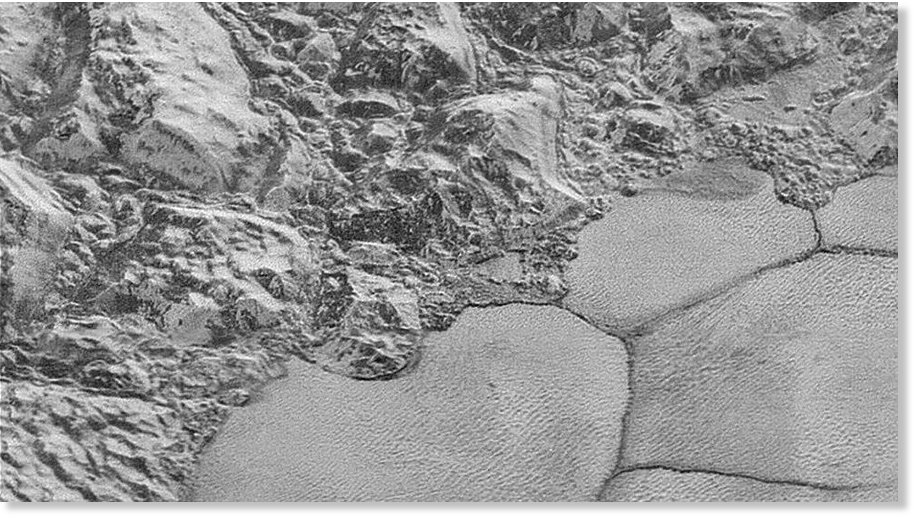
© NASA/JHUAPL/SwRI The Mountainous Shoreline of Sputnik Planum: In this highest-resolution image from NASA’s New Horizons spacecraft, great blocks of Pluto’s water-ice crust appear jammed together in the informally named al-Idrisi mountains.
Aboard the piano-sized New Horizons is the telescopic Long Range Reconnaissance Imager (LORRI), which snapped shots of mountains, craters and other spellbinding scenes from about 10,000 miles (17,000 kilometers) above Pluto's surface that people won't get a glimpse of again for many years, if ever.
'Simply incredible:' NASA shows off major discoveries from historic Pluto flyby https://t.co/6gtYovygwB pic.twitter.com/ftT7wI0SOE
— RT America (@RT_America) November 10, 2015More images from the July expedition are still coming in, as the spacecraft transmits 1 to 2 kilobits of data per second once a week, meaning the total amount of data collected won't reach NASA for another year. Thankfully for scientists and enthusiasts, there are enough images available now to make the wait easier.
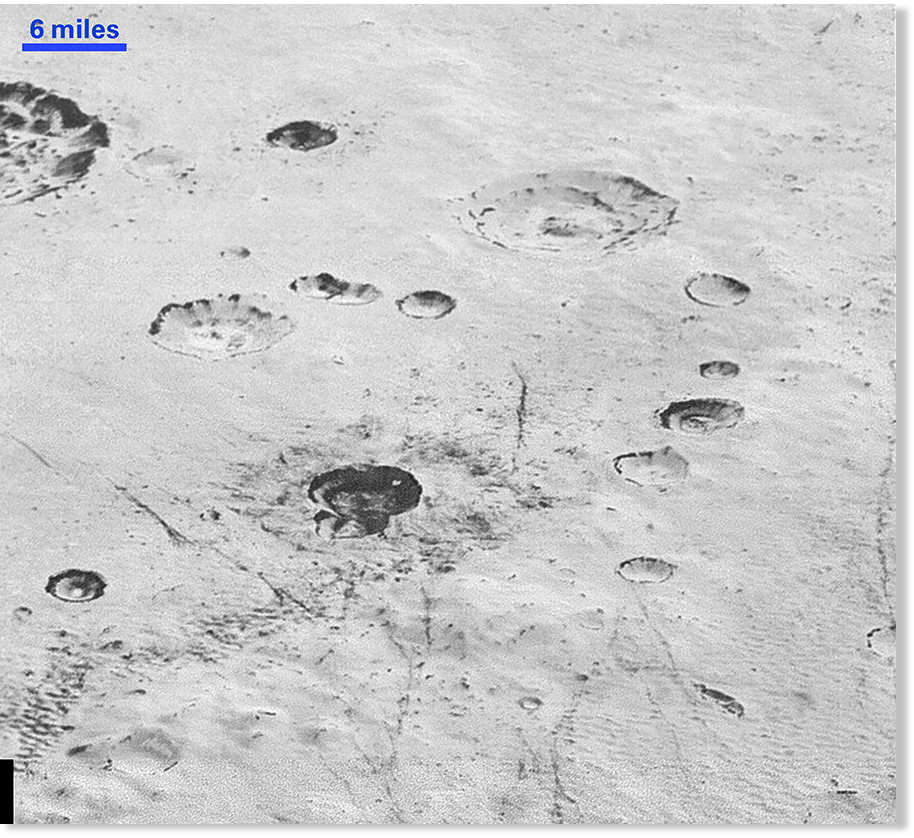
© NASA/JHUAPL/SwRI Layered Craters and Icy Plains: This highest-resolution image from NASA’s New Horizons spacecraft reveals new details of Pluto’s rugged, icy cratered plains, including layering in the interior walls of many craters.
The photos' resolutions of 250-280 feet (77-85 meters) per pixel compiled together create a 50-mile (80 kilometer) view of a diversely contoured area.
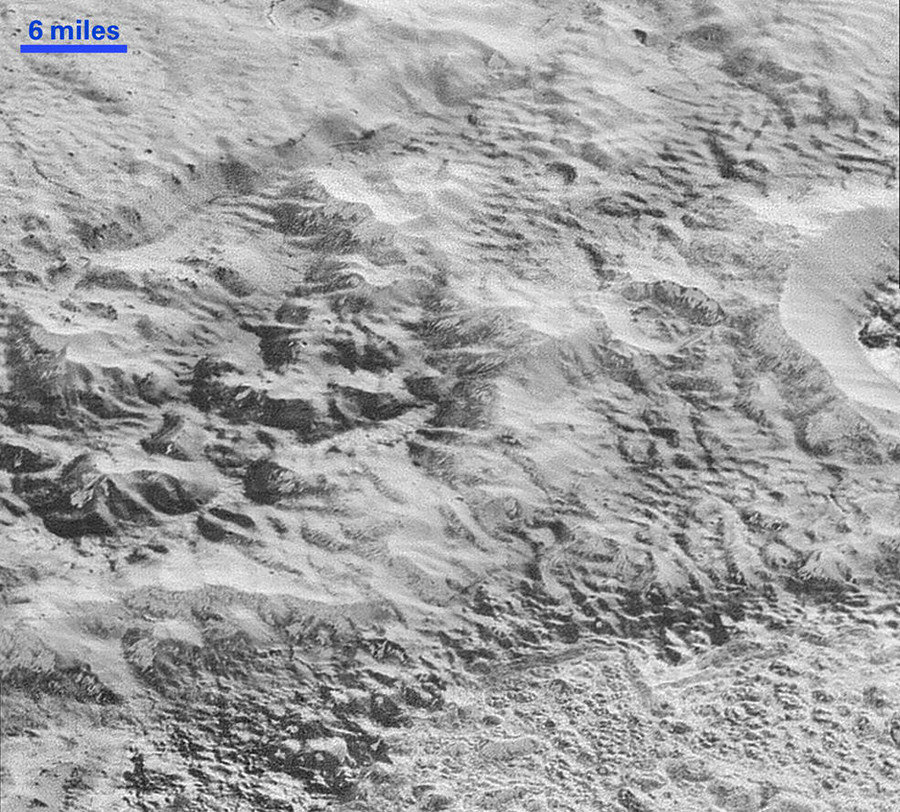
© NASA/JHUAPL/SwRI Pluto’s ‘Badlands’: This highest-resolution image from NASA’s New Horizons spacecraft shows how erosion and faulting have sculpted this portion of Pluto’s icy crust into rugged badlands topography.
As the LORRI takes photos every three seconds, the other camera onboard, the Ralph/Multispectral Visual Imaging Camera (MVIC) scans the surface, using very short exposure times to avoid blurring details. The result is brilliant images, six times better than recent global shots of Pluto, according to NASA.






is on schedule to start air-brushing soon.