Science & TechnologyS


Ambulance

Tech group wants a 150 mile stretch of highway devoted to driverless cars

self driving car
© Kim Kyung Hoon / Reuters
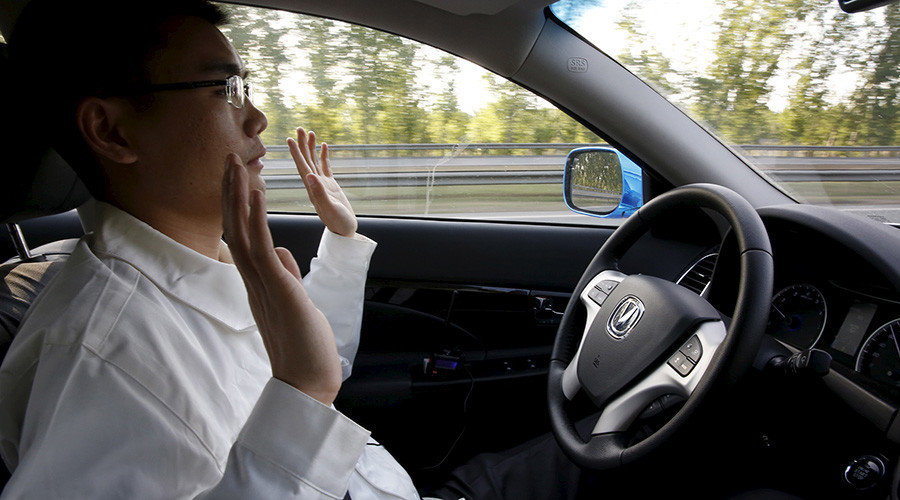
The American passion for cars is turning a new corner. Now a ban is being considered on all human drivers for a 150-mile stretch of highway. Meanwhile, solutions for pedestrians crossing in front of driverless vehicles are being developed as well.

The car of tomorrow could make drivers yesterday's news - but only once the tech companies working on self-driving cars figure out how to digitize nuanced interactions. Autonomous car makers are striving to make their product safe for both passengers and pedestrians, but testing is still in various stages.

From knowing how to anticipate other cars on the road to understanding gestures from pedestrians, there's a lot more to driving than just turning a wheel and hitting the gas.

This is a concept that Drive.ai understands and hopes to revolutionize with their unique take on driverless cars. The Silicon Valley startup believes that the experiences between driverless cars and pedestrians could be improved by focusing on human-robot interactions and developing technology that will allow cars to "learn" like an actual driver - just without high school driver's education.

Comment:


Magnify

White House report indicates forensics used to convict 1,000s of people may not be scientifically valid

Forensic evidence gathering
© Mark Kauzlarich / Reuters
A fingerprint led to the arrest of New York and New Jersey bomber Ahmad Rahami, but a new report from a White House scientific advisory committee says much of what bitemark, hair, firearm and toolmark analyses provide does not meet scientific standards.

The White House's Council of Advisors on Science and Technology concluded in a report released Tuesday that widely used forensic techniques used in criminal trials in the nation's legal system might not be scientifically valid.

The report said validity "requires that a method has been subjected to empirical testing by multiple groups, under conditions appropriate to its intended use."

Info

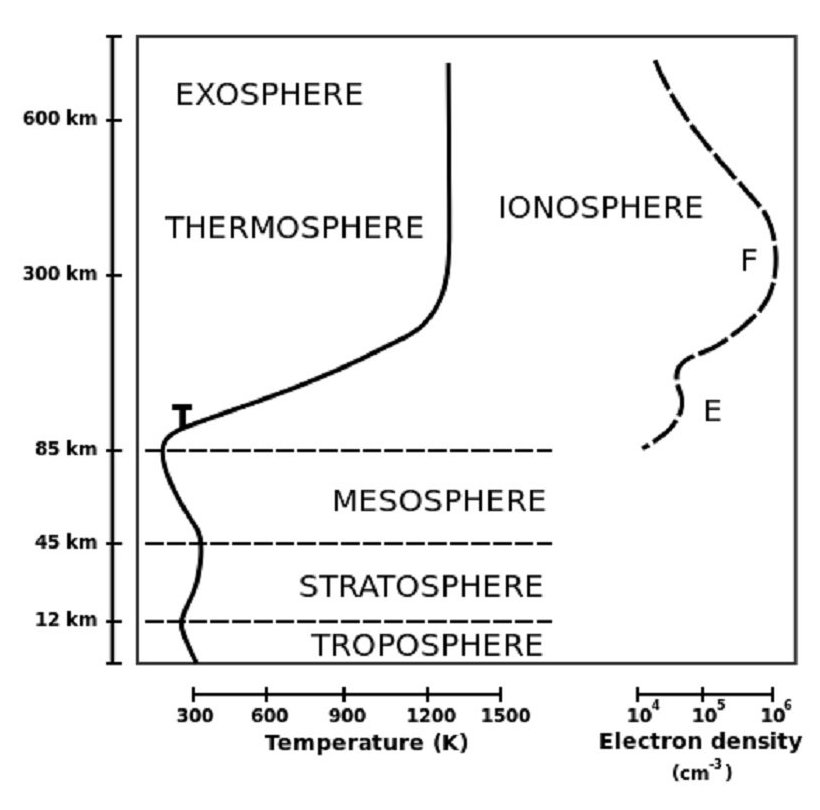
Variation in the ionosphere's electron density is natural, not man-made

Earth's Atmosphere
© Wikimedia CommonsEarth's atmosphere and ionosphere.
Earth's ionosphere is a "conducting layer" that can transmit radio signals. To ensure the reliability of these transmissions, scientists must first understand how ionospheric variations influence radio signals and the drivers behind these variations.

One hypothesis holds that long-term trends in the ionosphere are related to the increase of carbon dioxide in lower layers of Earth's atmosphere. Perrone and Mikhailov take a different approach and consider the origin of long-term variations in the ionosphere as they relate to solar and geomagnetic activity—the so-called "geomagnetic control concept."

The authors scrutinized reliable observations of critical frequencies on European ionosondes for five solar cycles (around 55 years). Through their analysis, they've become the first to retrieve a consistent set of parameters—temperature and neutral composition—for the F layer, the region of the ionosphere transmitting the signals.

They found that their data reflect trends seen in long-term variations in solar and geomagnetic activity for the whole period, including the last deep solar minimum in 2008 - 2009.

The analysis confirms that the long-term variations have a natural origin: They existed in the past and presumably will continue in future, reflecting the long-term variations in solar activity.


Reference:

Journal of Geophysical Research: Space Physics
, doi:10.1002/2016JA022715, 2016

2 + 2 = 4

Researchers discover gene behind 'sixth sense' in humans

dance
© fizkes/iStockphotoResearchers have discovered a gene in humans that appears to be responsible for the body's coordination and awareness in space.
A soft brush that feels like prickly thorns. A vibrating tuning fork that produces no vibration. Not being able to tell which direction body joints are moving without looking at them. Those are some of the bizarre sensations reported by a 9-year-old girl and 19-year-old woman in a new study. The duo, researchers say, shares an extremely rare genetic mutation that may shed light on a so-called "sixth sense" in humans: proprioception, or the body's awareness of where it is in space. The new work may even explain why some of us are klutzier than others.

The patients' affliction doesn't have a name. It was discovered by one of the study's lead authors, pediatric neurologist Carsten Bönnemann at the National Institutes of Health (NIH) in Bethesda, Maryland, who specializes in diagnosing unknown genetic illnesses in young people. He noticed that the girl and the woman shared a suite of physical symptoms, including hips, fingers, and feet that bent at unusual angles. They also had scoliosis, an unusual curvature of the spine. And, significantly, they had difficulty walking, showed an extreme lack of coordination, and couldn't physically feel objects against their skin.

Bizarro Earth

Earth's oxygen levels continue decline

Antarctica
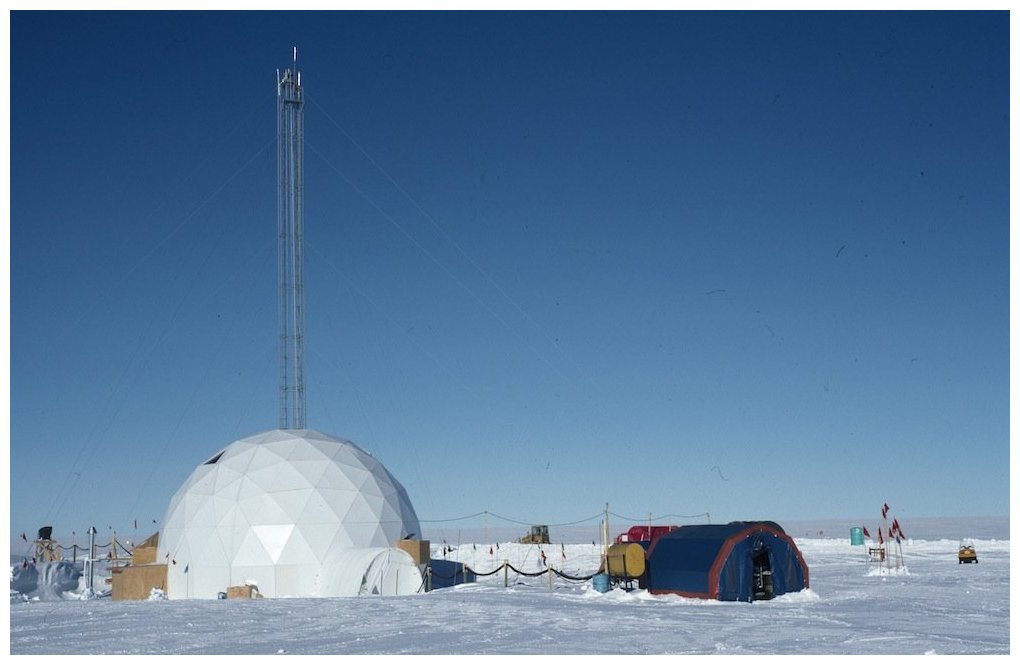
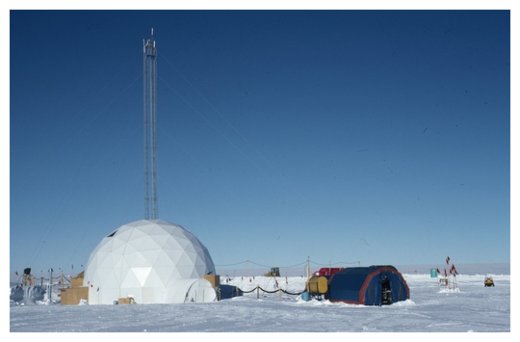
© Michael BenderResearchers analyzed samples from ice core drilling stations in Antarctica and Greenland to evaluate the planet's atmospheric oxygen levels throughout history.
Atmospheric oxygen levels have declined over the past 1 million years, although not nearly enough to trigger any major problems for life on Earth, a new study finds.

The research behind this new finding could help shed light on what controls atmospheric oxygen levels over long spans of time, the researchers said.

Atmospheric oxygen levels are fundamentally linked to the evolution of life on Earth, as well as changes in geochemical cycles related to climate variations. As such, scientists have long sought to reconstruct how atmospheric oxygen levels fluctuated in the past, and what might control these shifts.

However, models of past atmospheric oxygen levels often markedly disagree, differing by as much as about 20 percent of Earth's atmosphere, which is oxygen's present-day concentration, the researchers said. 1 It is not even known if atmospheric oxygen levels varied or remained steady over the past 1 million years.

"There was no consensus on whether the oxygen cycle before humankind began burning fossil fuels was in or out of balance and, if so, whether it was increasing or decreasing," said study lead author Daniel Stolper, a geochemistat Princeton University in New Jersey.

In the new study, researchers calculated past atmospheric oxygen levels by looking at air trapped inside ancient polar ice samples. Specifically, they looked at samples from Greenland and Antarctica.

The new estimates suggest that atmospheric oxygen levels have fallen by 0.7 percent over the past 800,000 years. The scientists concluded that oxygen sinks — processes that removed oxygen from the air — were about 1.7 percent larger than oxygen sources during this time.

Although a drop in atmospheric oxygen levels might sound alarming, the decrease the researchers found "is trivial in regard to ecosystems," Stolper told Live Science. "To put it in perspective, the pressure in the atmosphere declines with elevation. A 0.7 percent decline in the atmospheric pressure of oxygen occurs at about 100 meters (330 feet) above sea level — that is, about the 30th floor of a tall building."

There are two hypotheses that may help explain this oxygen decline over the past million years, Stolper said.

Magnify

3D digital scanning software deciphers ancient biblical scroll

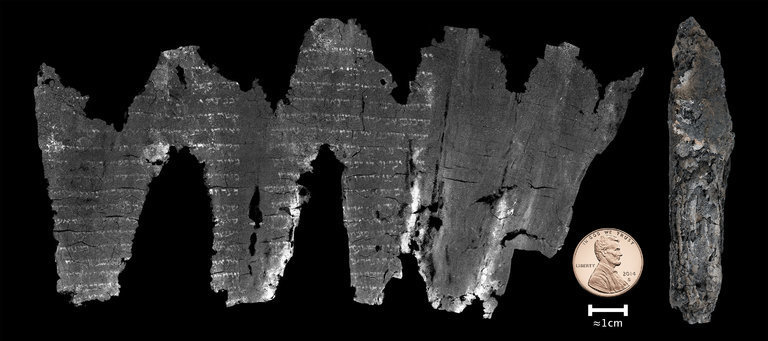
A composite image of the completed virtual unwrapping of the En-Gedi scroll
© Seales et al. Sci. Adv. 2016; 2 : e1601247A composite image of the completed virtual unwrapping of the En-Gedi scroll.
The charred lump of a 2,000-year-old scroll sat in an Israeli archaeologist's storeroom for decades, too brittle to open. Now, new imaging technology has revealed what was written inside: the earliest evidence of a biblical text in its standardized form.

The passages from the Book of Leviticus, scholars say, offer the first physical evidence of what has long been believed: that the version of the Hebrew Bible used today goes back 2,000 years.

The discovery, announced in a Science Advances journal article by researchers in Kentucky and Jerusalem on Wednesday, was made using "virtual unwrapping," a 3D digital analysis of an X-ray scan. Researchers say it is the first time they have been able to read the text of an ancient scroll without having to physically open it.

"You can't imagine the joy in the lab," said Pnina Shor of the Israel Antiquities Authority, who participated in the study.

Fish

Singing fish: Fish recorded singing dawn chorus on reefs just like birds

Bat fish ballad
© Norbert Probst/GettyBat fish ballad
The ocean might seem like a quiet place, but listen carefully and you might just hear the sounds of the fish choir.

Most of this underwater music comes from soloist fish, repeating the same calls over and over. But when the calls of different fish overlap, they form a chorus.

Robert McCauley and colleagues at Curtin University in Perth, Australia, recorded vocal fish in the coastal waters off Port Headland in Western Australia over an 18-month period, and identified seven distinct fish choruses, happening at dawn and at dusk. You can listen to three of them here:

R2-D2

A robot was just 'arrested' by Russian police - it went without resistance

robot arrest russia
A robot has been arrested while taking part in a political rally in Russia, after police intervened to prevent it from interacting with the public.

According to reports, the activist robot - called Promobot, and manufactured by a Russian company of the same name - was detained by police as it interspersed with the crowd at a rally in support of Russian parliamentary candidate Valery Kalachev in Moscow.

Adding to the bizarre situation is the fact that this is the same model of robot that previously tried to escape twice from its manufacturer.

Before its arrest last Wednesday, the Promobot was busy "recording voters' opinions on [a] variety of topics for further processing and analysis by the candidate's team", a company spokesperson told Nathaniel Mott at Inverse.

Galaxy

No need for Dark Matter? Distribution of normal matter determines acceleration in rotating galaxies

A new radial acceleration relation found among spiral and irregular galaxies challenges current understanding - and possibly existence - of dark matter

NGC 6946
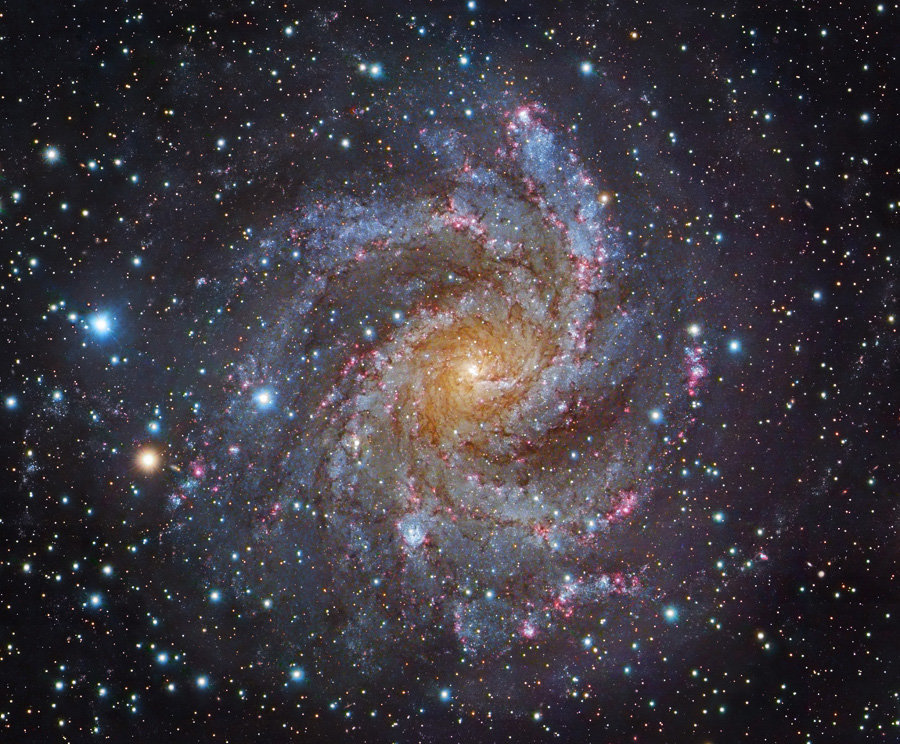
© Subaru Telescope (NAOJ)/Robert GendlerIn spiral galaxies such as NGC 6946, researchers found that a 1-to-1 relationship between the distribution of stars plus gas and the acceleration caused by gravity exists.
In the late 1970s, astronomers Vera Rubin and Albert Bosma independently found that spiral galaxies rotate at a nearly constant speed: the velocity of stars and gas inside a galaxy does not decrease with radius, as one would expect from Newton's laws and the distribution of visible matter, but remains approximately constant. Such 'flat rotation curves' are generally attributed to invisible, dark matter surrounding galaxies and providing additional gravitational attraction.

Comment: The preprint of the paper can be found here


Bug

What could go wrong? Researchers developing 'intelligent' microrobots and genetically modified cells for drug delivery

medical microrobots
© Multi-Scale Robotics Lab Bradley Nelson’s medical microrobots are inspired by natural microorganisms.
ETH researchers are developing tiny, sophisticated technological and biological machines enabling non-invasive, selective therapies. Their creations include genetically modified cells that can be activated via brain waves, and swarms of microrobots that facilitate highly precise application of drugs.

Richard Fleischner, who directed the 1966 cult film Fantastic Voyage, would have been delighted with Bradley Nelson's research: similar to the story in Fleischner's film, Nelson wants to load tiny robots with drugs and manoeuvre them to the precise location in the human body where treatment is needed, for instance to the site of a cancer tumour. Alternatively, the tiny creatures could also be fitted with instruments, allowing operations to be performed without surgical intervention. The advantages compared with conventional treatments with drugs are clear: far more targeted therapy, and as a result, fewer side effects.

Fine-tuning materials and designs

Nelson isn't a dreamer or a storyteller - he is Professor of Robotics and Intelligent Systems at ETH Zurich, and he has an international reputation for his micro- and nanorobots. He still holds the Guinness World Record for the "most advanced mini robot for medical use". His robots are typically just a few micrometres in size and are inspired by nature. He derives models for his own micrometre-scale mechanical propul- sion systems by observing microorganisms and seeing, for example, how the flagellum - a sort of curly tail that aids in movement - works in bacteria. The robots get the energy to move from an external impulse, such as an electromagnetic field.

Comment: Israeli university creates mind-controlled nanobots from DNA that could release drugs inside your brain