
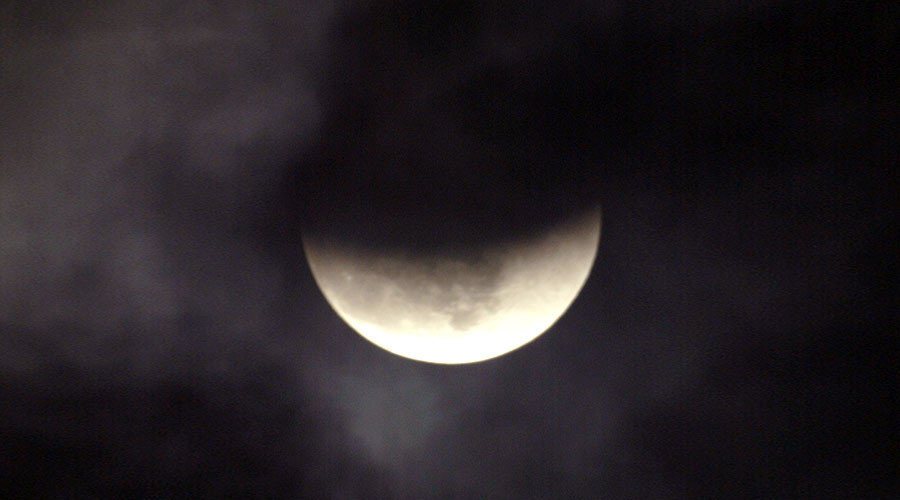
© Daniel Aguilar/Reuters
The black moon will cloak the Western Hemisphere in darkness on Friday and could be linked to the apocalypse.
Conspiracy theorists are worried that after a "ring of fire" solar eclipse was witnessed on September 1, during which the moon lined up with the Earth and the sun above Africa, and now a black moon only weeks later, this could mean we're done for.
The primary source for this thinking is the Bible's numerous references to the moon, sun and stars, particularly Luke 21:25-26, which states "there shall be signs in the sun, and in the moon, and in the stars" which will result in "men's hearts failing them for fear."
One anonymous Facebook user noted how these are "signs are letting us know that Jesus is soon coming," according to the Express. "We are approaching the end of our world and the end of life on Earth for all human being. Every day, we have to come closer to our savior Jesus Christ. For none can escape for what is coming for the Earth," the conspiracy theorist wrote.
A black moon occurs when two new moons happen in one month, with the second moon basically invisible as the illuminated side is facing away from Earth. A blue moon is the opposite, when two full moons happen in the same month.













Comment: Time will tell how this baby turns out.
Three-parent embryos immoral and technique to make them is untested, unsafe