Science & TechnologyS


Info

5 new 'Neptune trojans' discovered

 Neptune Trojans
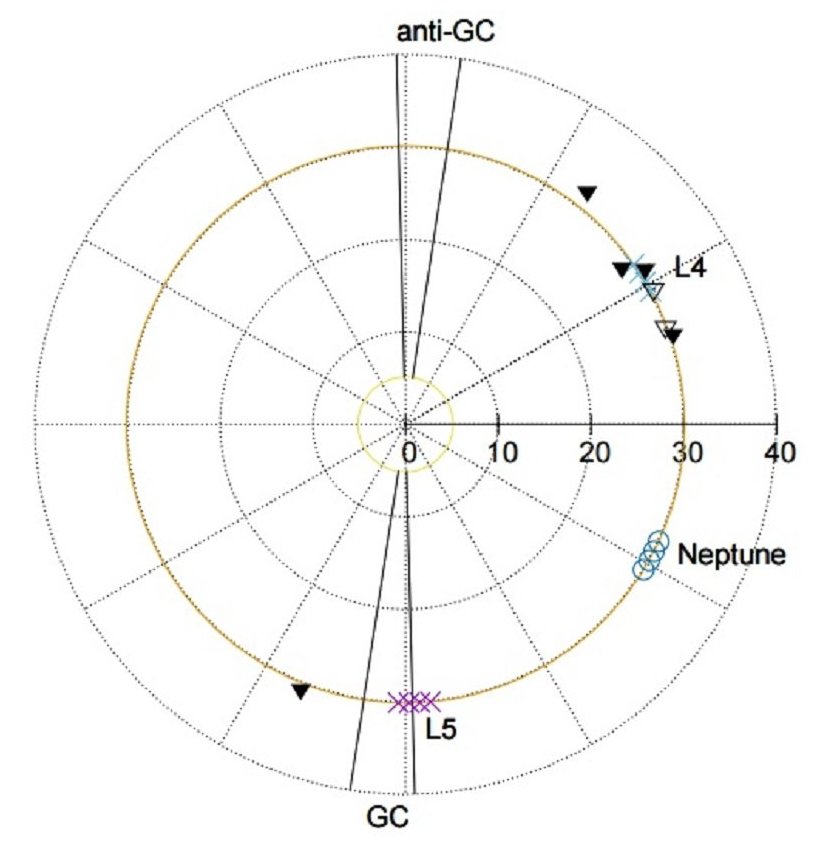
© Lin et al., 2016The spatial distribution of all PS1 detected Trojans. The solid triangles are the newly discovered Neptune Trojans, and open triangles are the known ones detected by PS1. The positions of Neptune Trojans correspond to their first detections of PS1. The blue circles show the locations of Neptune from 2010 to 2013, and the crosses show the corresponding Lagrange points. Notice that the Galactic Center (GC) overlapped with L5 during 2010 to 2012.
An international team of astronomers led by Hsing-Wen Lin of the National Central University in Taiwan has detected five new so-called "Neptune trojans" - minor bodies sharing the same orbit as the planet Neptune. The discovery was made by the Pan-STARRS 1 (PS1) survey and is described in a paper published Sept. 15 on arXiv.org.

The PS1 survey, which utilizes the first Pan-STARRS (Panoramic Survey Telescope and Rapid Response System) telescope in Hawaii, designated PS1, is one of the best tools to search for Neptune trojans. The survey, lasting from May 2010 to May 2014, has made a strong contribution to knowledge of the solar system's minor bodies due to its very wide survey area and its optimized cadence for searching moving objects.

"PS1 survey has a very wide survey area that is deep enough to cover a large part of the Neptune trojan cloud. PS1 currently is the only one with the capability to detect several Neptune trojans in a single survey," Lin told Phys.org.

The researchers found four new L4 trojans, meaning that they orbit Neptune's L4 Lagrangian point 60 degrees ahead of Neptune; they also found one L5 trojan - orbiting the L5 region 60 degrees behind the planet. The newly detected objects have sizes ranging from 100 to 200 kilometers in diameter.

What drew the attention of the astronomers is the fact that the new L5 trojan is dynamically more unstable than the other four, indicating that it could be temporarily captured into the Neptune trojan cloud.

Microscope 1

Study pinpoints brain circuitry of emotional decision-making

MIT neuroscientists identify the neural circuitry linked to emotional decisions.
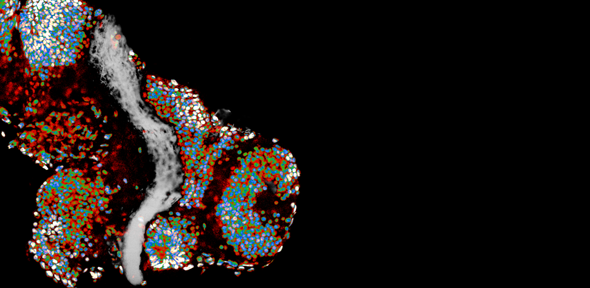
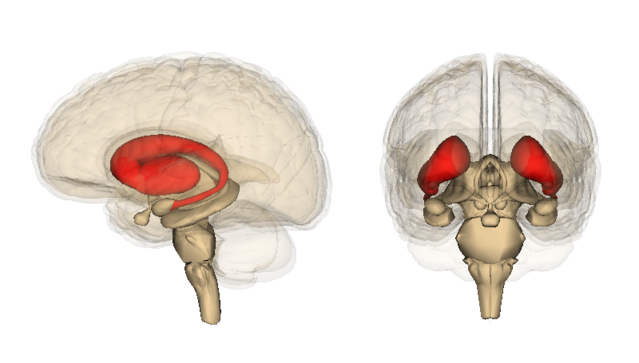
Brain striatum
© Life Science Databases/Wikimedia Commons
We all know the gut-wrenching feeling of being emotionally torn apart while deliberating to make the right decision in a circumstance where both choices have pros and cons. Until now, the neural circuitry involved in making emotional decisions has eluded brain researchers. Yesterday, MIT neuroscientists unveiled a groundbreaking new discovery that pinpoints the brain mechanics involved in making an emotional decision.

Whenever you make a hard decision, you inherently perform a "cost-benefit analysis" of the pros and cons of each option using pragmatic rationale combined with weighing the emotional consequences. Even though there may be obvious extrinsic rewards linked to one choice, how will this decision affect you psychologically? Will you feel as if you sold your soul to the devil if you do something solely for a material reward or financial gain?

For example, someone could ask him or herself, "Should I take the high paying job overseas that will advance my career but requires leaving my family and the hometown community I adore?" Or, "Should I go to a college that is highly ranked by U.S. News and World Report or trust my gut instincts and go to a less prestigious school where I know I'll be happier and have a more positive learning experience?" Or, "Should I stay in a secure job that I hate just for a weekly paycheck and the habitual rewards of a lifestyle I'm accustomed to or take a risk? I'm dying to pursue my lifelong passion for culinary arts by opening a restaurant, but what if it fails?"

Comment: Related articles:


Satellite

China's Tiangong-1 space lab expected to hurtle back into the earth's atmosphere sometime in 2017

Tiangong-1 space lab
© Adrian MannChina's Tiangong-1 space lab will eventually burn up in earth's atmosphere.
The lab is currently intact and orbiting at an average height of 370 kilometers, officials said in quotes published by the official Xinhua news agency. It is expected to enter Earth's atmosphere in late 2017.

Wu Ping, deputy director of the manned space engineering office, said Tiangong-1 has been in service for four and a half years - two and a half years longer than it was designed for.

"Based on our calculation and analysis, most parts of the space lab will burn up during falling," she said, adding that it was unlikely to affect aviation activities or cause damage to the ground.

Ms Wu said China highly valued the management of space debris "conducting research and tests on space debris mitigation and cleaning", Xinhua reported.

People

Got swag? Researchers link exaggerated walking movements with aggression

researcher and subject
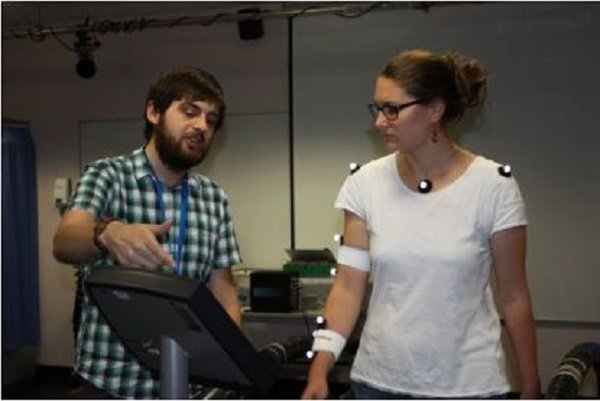
© University of PortsmouthLiam Satchell with a participant.
The way people walk can give clues to how aggressive they are, a new exploratory study from the University of Portsmouth has found.

The researchers from the Department of Psychology assessed the personalities of 29 participants, before using motion capture technology to record them walking on a treadmill at their natural speed.

The study found that the exaggerated movement of both the upper and lower body indicated aggression.

Lead researcher Liam Satchell said: "When walking, the body naturally rotates a little; as an individual steps forward with their left foot, the left side of the pelvis will move forward with the leg, the left shoulder will move back and the right shoulder forward to maintain balance. An aggressive walk is one where this rotation is exaggerated."

Comment: See also:
Direction you walk when blindfolded reveals whether you are inhibited or approach oriented


2 + 2 = 4

Neurons feel the force - physical interactions control brain development

Researchers have identified a new mechanism controlling brain development: that neurons not only 'smell' chemicals in their environment, but also 'feel' their way through the developing brain.

neurons
Scientists have found that developing nerve cells are able to 'feel' their environment as they grow, helping them form the correct connections within the brain and with other parts of the body. The results, reported in the journal Nature Neuroscience, could open up new avenues of research in brain development, and lead to potential treatments for spinal cord injuries and other types of neuronal damage.

Map

Human brain map gets a bold new update

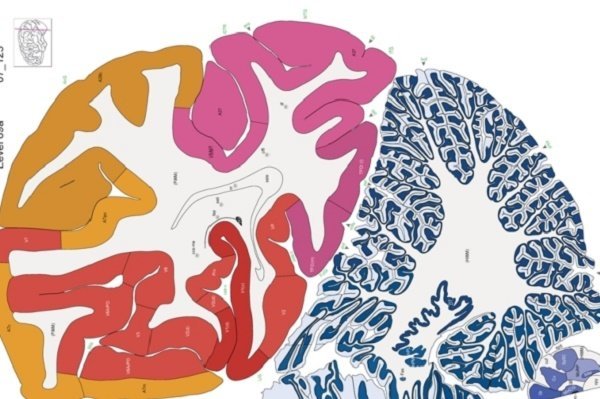
The new Allen Brain Atlas combines neuroimaging and tissue staining to offer an unprecedented level of resolution

Brain map
© Allen Institute for Brain Science
Most of us think little of hopping on Google Maps to look at everything from a bird's-eye view of an entire continent to an on-the-ground view of a specific street, all carefully labeled. Thanks to a digital atlas published this week, the same is now possible with the human brain.

Ed Lein and colleagues at the Allen Institute for Brain Science in Seattle have created a comprehensive, open-access digital atlas of the human brain, which was published this week in The Journal of Comparative Neurology.

"Essentially what we were trying to do is to create a new reference standard for a very fine anatomical structural map of the complete human brain," says Lein, the principal investigator on the project. "It may seem a little bit odd, but actually we are a bit lacking in types of basic reference materials for mapping the human brain that we have in other organisms like mouse or like monkey, and that is in large part because of the enormous size and complexity of the human brain."

Comment: Related articles:


Bulb

Toilet to tank: Toyota uses sewage sludge to power zero-emissions vehicles

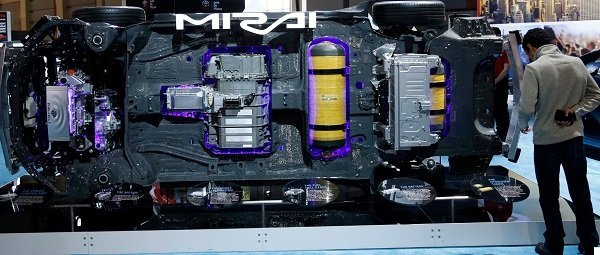
Mirai car
© Reuters/Gary CameronHighest of tech; powered by human waste
Hydrogen fuel cell cars could help solve the global warming crisis, but nobody wants to buy them. Yoshikazu Tanaka, chief engineer of the Toyota Mirai, Toyota's hydrogen fuel cell car, calls it a "chicken or the egg" problem: no one wants to purchase hydrogen cars because there are no hydrogen fuel stations, and nobody wants to build hydrogen fuel stations because there are no hydrogen cars.

But Toyota thinks it may have found a solution. For unlimited clean energy, it's turning to one of the dirtiest places there is: the toilet.

In Fukuoka, Japan, the automaker is converting human waste into hydrogen to fuel the Mirai. The process is pretty simple. At a wastewater treatment plant, like the Fukuoka City Central Water Processing Plant, sewage is separated into liquid and solid waste. The solid waste, called sewage sludge, is exactly what it sounds like: a foul-smelling, brown lump. Most sewage sludge is thrown in landfills.

Ark

DARPA physicists reveal 'significant breakthrough' in quantum teleportation field

cords
© Alessandro Bianchi / Reuters
Two separate teams of scientists funded by the Pentagon's research arm have revealed significant breakthroughs in the field of quantum teleportation which could have a major impact on cybersecurity and encryption.

Quantum teleportation is a process by which quantum information can be transmitted from one place to another, and scientists have long sought to prove it is possible.

Two separate DARPA-funded studies by physicists based in China and Calgary, Canada have now confirmed that not only is quantum teleportation a real phenomenon but they also demonstrated that it's a workable technology that could one day help build an unhackable quantum communication systems to span great distances.

However, the breakthrough doesn't mean that sci fi-style human teleportation is any closer as the photons aren't actually disappearing from one place and appearing in another.

Instead, it's the information that's being teleported through a phenomenon called 'quantum entanglement', which Albert Einstein called "spooky action at a distance".

Microscope 2

Microsoft using artificial intelligence to 'solve' cancer problem by reprogramming disease

Microsoft researcher
© MicrosoftMicrosoft researcher wants to program the body, the same way you can program a computer, to fight cancer.
Researchers are using algorithms and machine learning to tackle the disease

Microsoft is working towards fighting cancer using computer science such as machine learning and algorithms.

By treating cancer like an information processing system, Microsoft researchers are able to adapt tools typically used to model computational processes to model biological ones.

Ultimately, the company hopes to create molecular computers to program the body to fight cancer cells immediately after detection.

"We are trying to change the way research is done on a daily basis in biology," said Jasmin Fisher, a senior researcher who works in the programming principles and tools group in the Microsoft's research lab in Cambridge.

This is combined with a data-driven approach; putting machine learning at the core of Microsoft's attempts to try to tackle the disease. The company wants to take the biological data that is available and use analysis tools to better understand and treat the disease.

"I think it's a very natural thing for Microsoft to be looking at because we have tremendous expertise in computer science and what is going on in cancer is a computational problem," Chris Bishop, director of the Cambridge-based lab, told WIRED.

Comment: See also:


Rocket

Russian space agency Roscosmos announces start of moon landing simulations

Russian moon mission
© PockocmocRussian scientists are using 1970s tech to discover how easy it would be for their cosmonauts to walk on the lunar surface.
Russian space agency Roscosmos and top spacecraft manufacturer RSC Energia have begun simulating a manned landing on the moon, using a unique gravity imitation platform.

The researchers used Selen, a unique platform simulating the moon's gravity, built by RSC Energia in the early 1970s. The experiments, performed by Mark Serov of Roscosmos' test flight department and Energia's cosmonaut instructor Alexander Kaleri, focused on the cosmonaut's ability to get in and out of the rover as well as walking on the lunar surface.

According to the official site of Roscosmos, experts from RSC Energia are also working on an upgraded spacesuit which would allow easier walking on the moon, as well as the ability to get up unaided should the wearer fall down.