Even if you're not a fan of New Year's Eve fireworks, you'll have another reason to look to the skies Saturday. NASA says that as we ring in the new year, a comet will near the moon and be visible to those looking west.
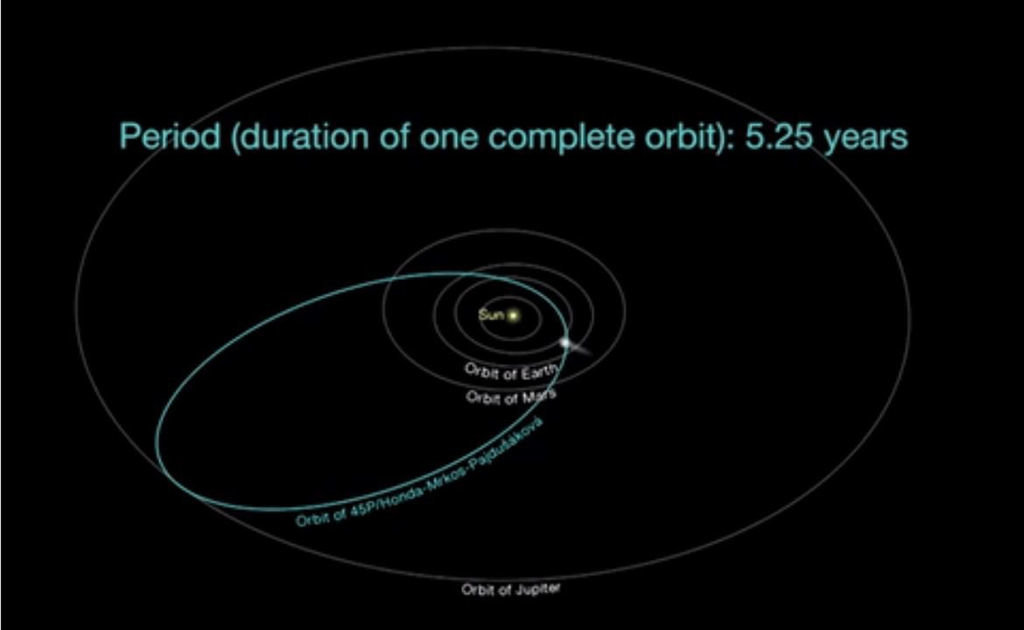
But here's the catch — you'll need a pair of binoculars to see it. NASA says comet 45P/Honda-Mrkos-Pajdušáková, named for the astronomers who discovered it in 1948, takes 5.25 years to complete its orbit.This year, it was first visible on the low western horizon on Dec. 15. On New Year's Eve, it will appear in the sky right near the moon.
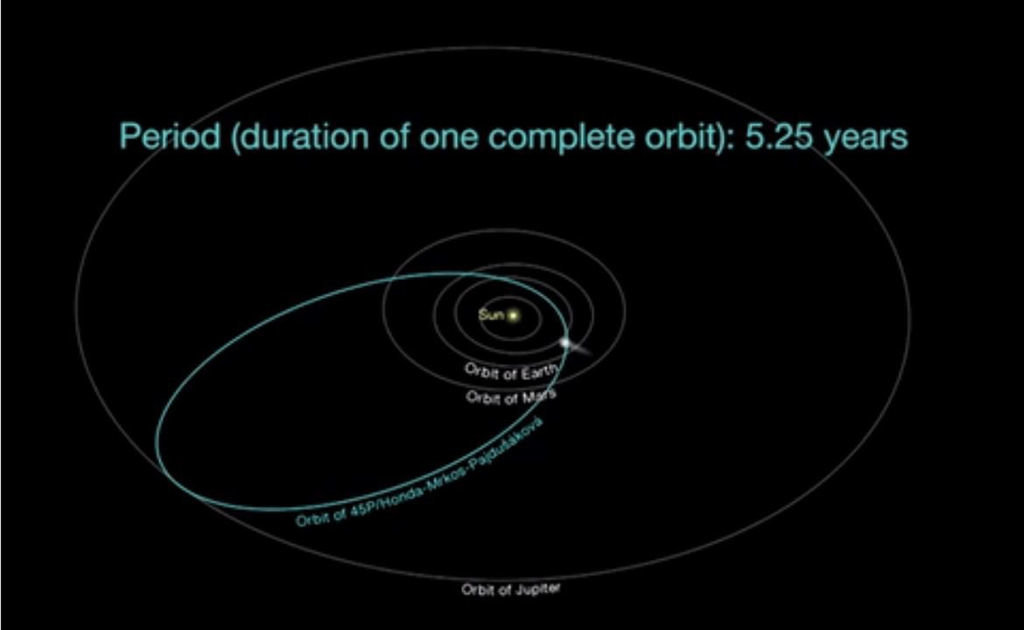
© NASA
The comet will be observable from the Northern Hemisphere of the planet, and here's an easy way to check if it will be visible in your location on New Year's — go to
TheSkyLive.com. It will reach its perihelion — the point of orbit when an object is closest to the sun — on New Year's Day, making its orbit around the sun and disappearing from visibility from Earth. It will be viewable, and reach its maximum brightness, once it swings back around the sun in 2017.
RTFri, 30 Dec 2016 16:35 UTC
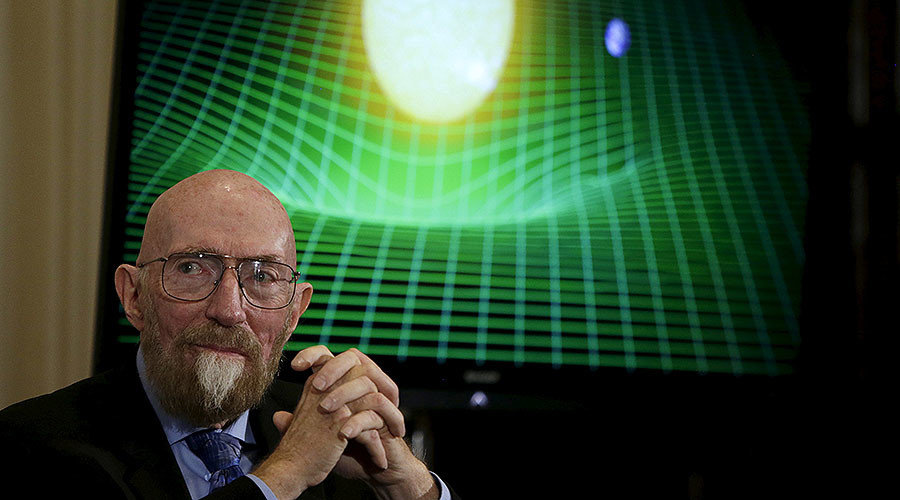
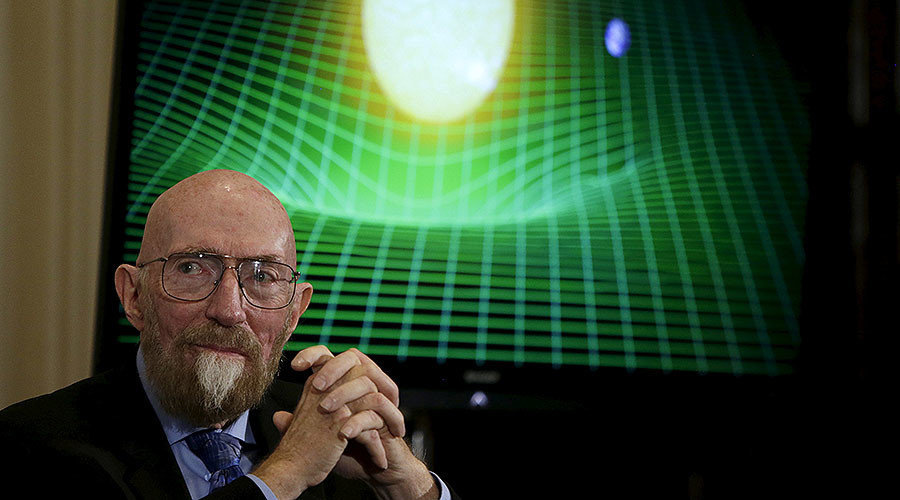
© Gary Cameron / ReutersDr. Kip Thorne of Caltech
From celebrity deaths to presidential politics, 2016 left many feeling like they have a black hole in their chest. But Shaon Ghosh, a University of Wisconsin postdoctoral researcher, tells RT how this year's top scientific discovery truly changed how we see the universe.
Over 100 years ago, Albert Einstein predicted that gravitational waves would one day be detected from Earth, when he published his theory of general relativity in 1915. Then in February 2016, physicists using the Laser Interferometer Gravitational-Wave Observatory (LIGO) did just that.
Science magazine has
dubbed their work the
"breakthrough of the year."

© EHANGThe Ehang 184, a passenger drone
If you summon an Uber in 10 years' time, you will probably
get a car that drives itself. But then again, you may not be travelling in a car at all.
The taxi-hailing app is working on technology that would allow airborne passenger drones to fly its users short distances around cities, it has emerged, raising the prospect of a future in which skylines are dotted with Uber aircraft shuttling commuters back and forth.
Jeff Holden, Uber's head of product, told technology website
Recode that the company is researching "vertical take off and landing" (VTOL) technology. Instead of the helicopter-style rotor blade drones, VTOL aircraft have fixed wings like planes, enabling them to fly silently, while taking off and landing vertically.
Scott Adams, author of the famous
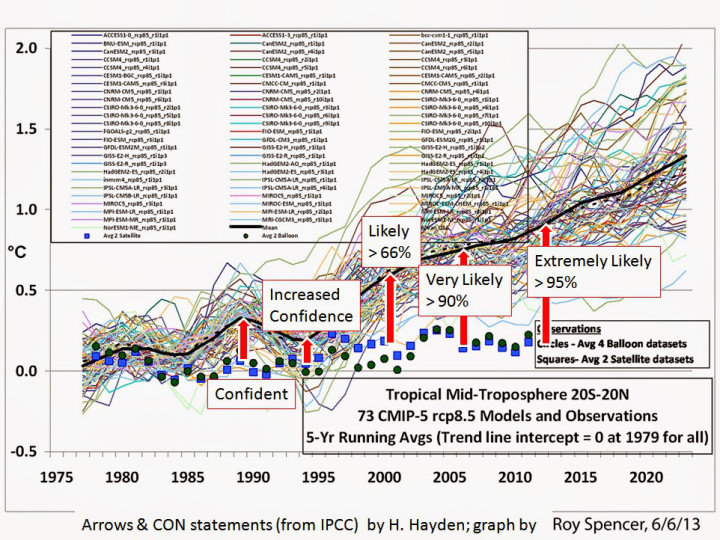
Dilbert Cartoon, has challenged readers to find a qualified scientist who thinks climate models do a good job of predicting the future.
The Climate Science Challenge
I keep hearing people say that 97% of climate scientists are on the same side of the issue. Critics point out that the number is inflated, but we don't know by how much. Persuasion-wise, the "first offer" of 97% is so close to 100% that our minds assume the real number is very high even if not exactly 97%.
That's good persuasion. Trump uses this method all the time. The 97% anchor is so strong that it is hard to hear anything else after that. Even the people who think the number is bogus probably think the real figure is north of 90%.
But is it? I have no idea.
So today's challenge is to find a working scientist or PhD in some climate-related field who will agree with the idea that the climate science models do a good job of predicting the future.
Notice I am avoiding the question of the measurements. That's a separate question. For this challenge, don't let your scientist conflate the measurements or the basic science of CO2 with the projections. Just ask the scientist to offer an opinion on the credibility of the models only.
Remind your scientist that as far as you know there has never been a multi-year, multi-variable, complicated model of any type that predicted anything with useful accuracy. Case in point: The experts and their models said Trump had no realistic chance of winning.
Your scientist will fight like a cornered animal to conflate the credibility of the measurements and the basic science of CO2 with the credibility of the projection models. Don't let that happen. Make your scientist tell you that complicated multi-variable projections models that span years are credible. Or not.
Then report back to me in the comments here or on Twitter at @ScottAdamsSays.
This question is a subset of the more interesting question of how non-scientists can judge the credibility of scientists or their critics. My best guess is that professional scientists will say that complicated prediction models with lots of variables are not credible. Ever. So my prediction is that the number of scientists who ***fully*** buy into climate science predictions is closer to zero than 97%.
But I'm willing to be proved wrong. I kind of like it when that happens. So prove me wrong.
RTThu, 29 Dec 2016 08:02 UTC
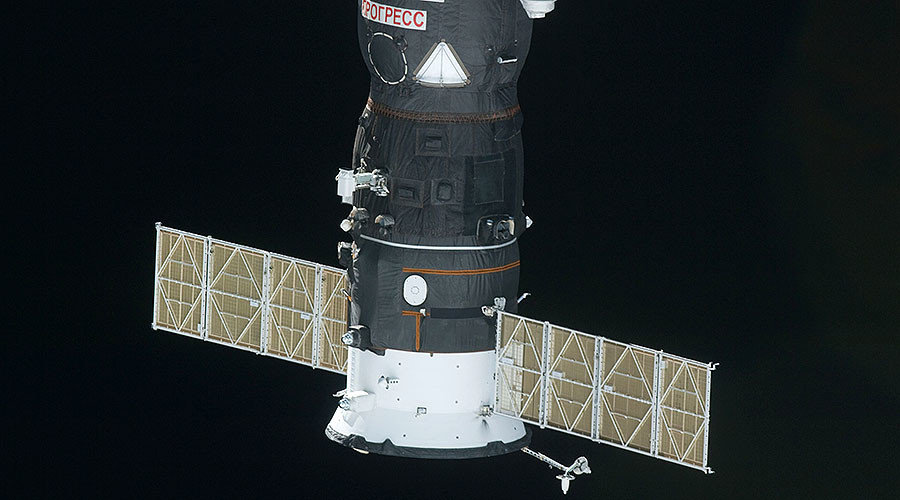
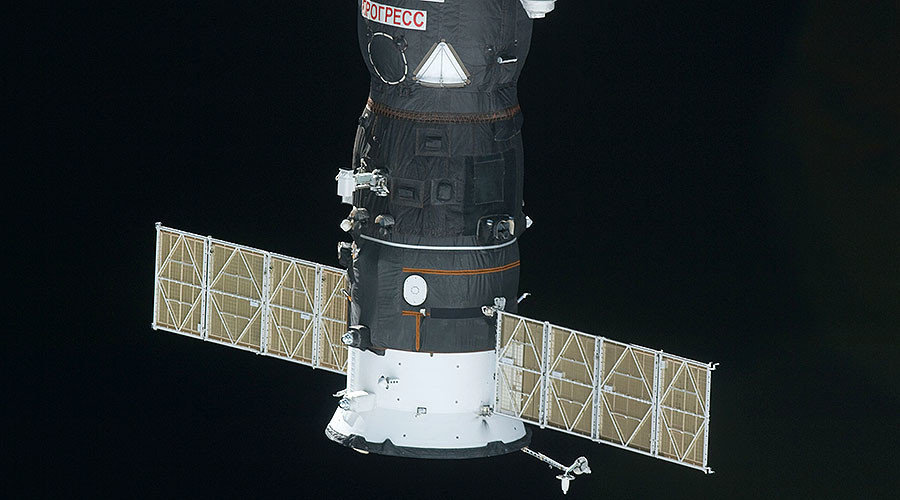
© NASAA Russian Progress resupply vehicle
The US space agency has joined Russia's investigation into the accident involving the Progress M-04 cargo spaceship, which was lost just six minutes after launch on December 1, Russian media report.
Russia's space agency, Roscosmos,
decided to seek NASA's assistance due to the complexity of the issue, Izvestia daily
reports. The investigation has been underway for over a month, but reportedly has not yielded any definitive answers that would explain the mishap.
The accident occurred 382 seconds into the flight at an altitude of 190 kilometers (118 miles) over a rocky unpopulated area in the Russian Republic of Tyva. Most of the wreckage burned up in the atmosphere, although some of the fragments landed some 60-70 kilometers west of Tyva's capital city, Kyzyl.
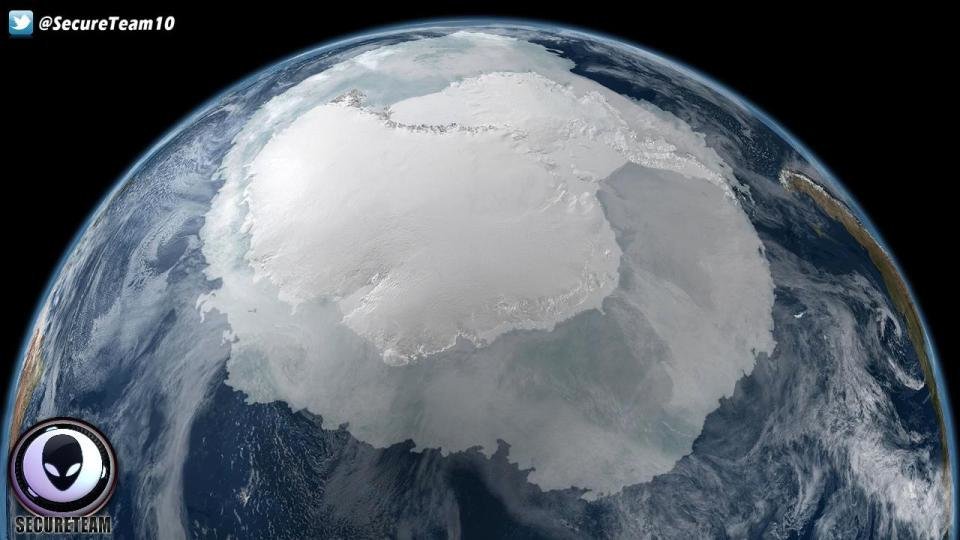
The huge and mysterious "anomaly" is thought to be lurking beneath
the frozen wastes of an area called Wilkes Land. It stretches for a distance of 151 miles across and has a maximum depth of about 848 metres. Some researchers believe it is the remains of a truly massive asteroid which was
more than twice the size of the Chicxulub space rock which wiped out the dinosaurs.
If this explanation is true, it could mean this killer asteroid caused the Permian - Triassic extinction event which killed 96 percent of Earth's sea creatures and up to 70 percent of the vertebrate organisms living on land.
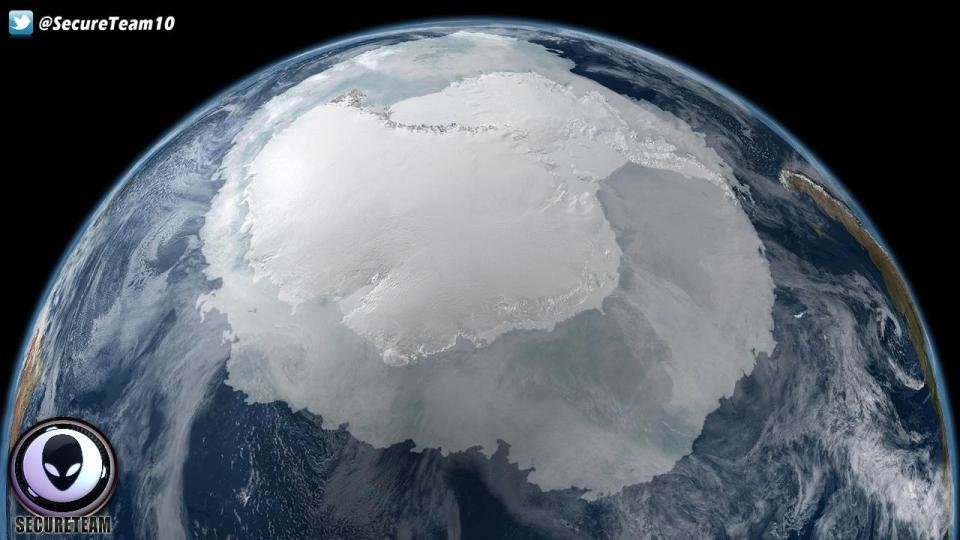
A view of Antarctica, the frozen landmass at the south pole of our planet
However, the wilder minds of the internet have come up with their own theories, with some conspiracy theorists claiming it could be a massive UFO base or a portal to a mysterious underworld called the Hollow Earth.
This "Wilkes Land gravity anomaly" was first
uncovered in 2006, when NASA satellites spotted gravitational changes which indicated the presence of a huge object sitting in the middle of a 300 mile wide impact crater.
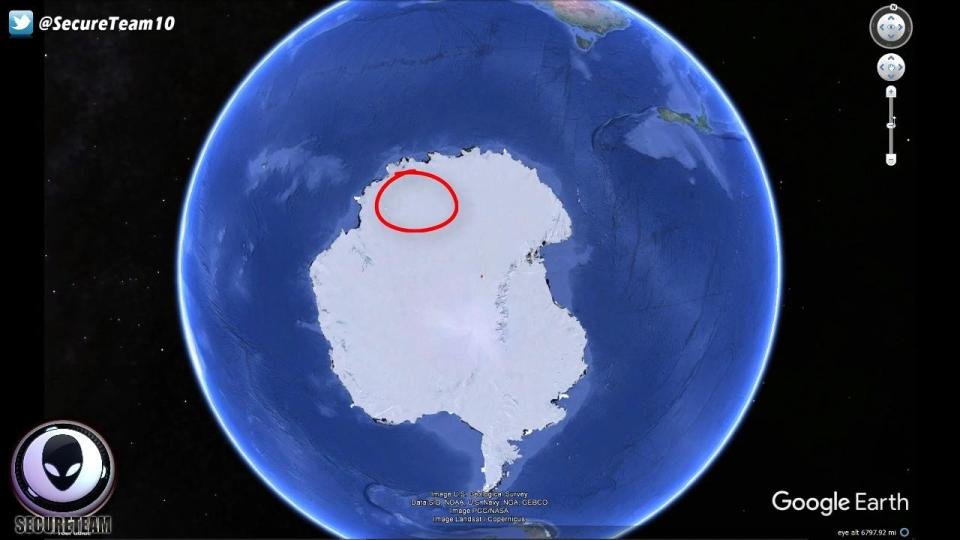
The area known as Wilkes Land is circled in red
Comment: They're assuming that it's an ancient crater, but given that the anomaly was only recently discovered, isn't it more likely to be something new?
Some major changes appear to be going on
inside the planet...
See also:
70-Mile-Long Crack Opens Up in Antarctica
© NASA
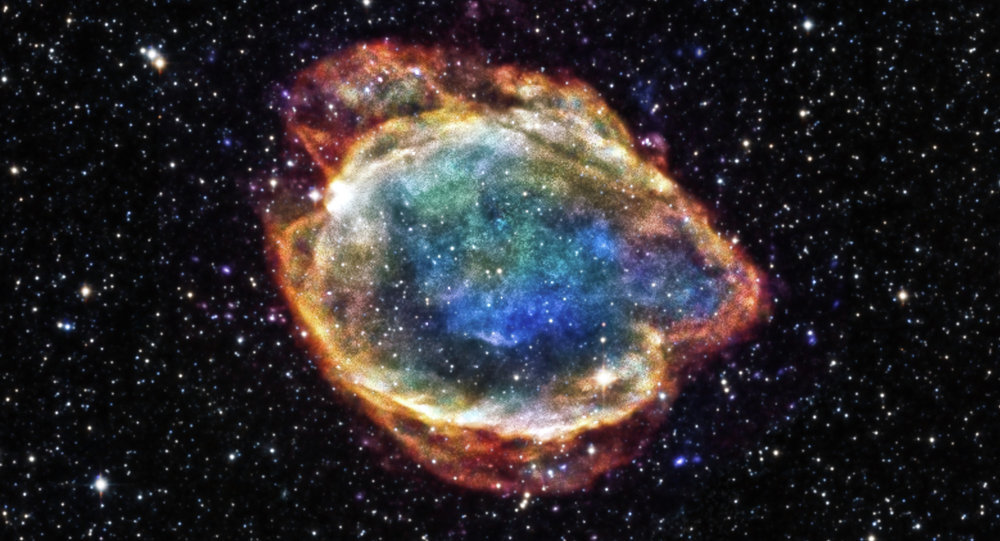
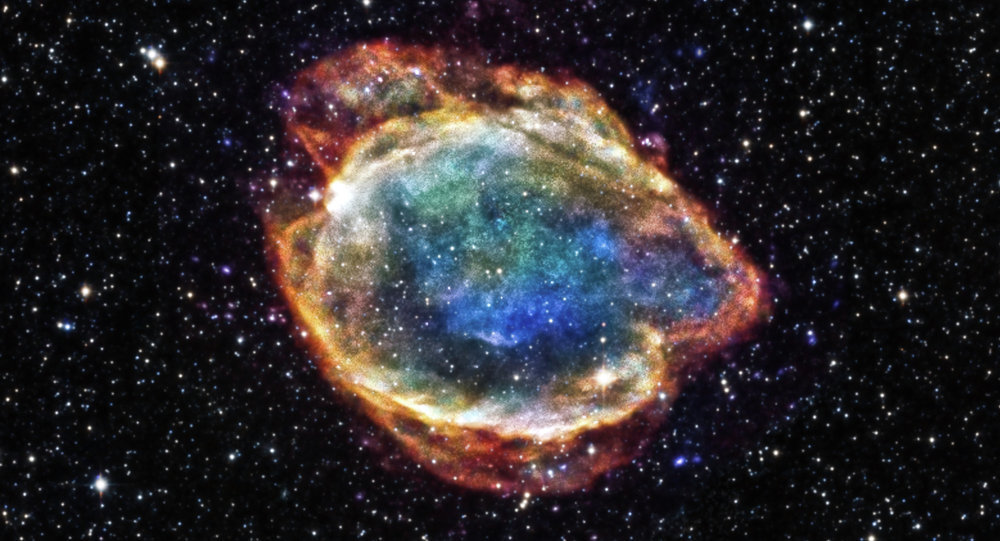
A new study has given credence to the hypothesis that our solar system was created as a result of a distant supernova.
Previously, astrophysicists believed our solar system to have come into existence after a cosmic event "disrupted" a cloud of dust and gas some 4.6 billion years ago, causing much of the dust to gather and become a star. That star would become our Sun, and the remaining dust would make up the planets, moons, and asteroids that comprise our Solar System. It was not clear just what this astronomical disturbance was, however.
Since the 1970s, scientists have suspected that the disturbance was a supernova shockwave, but they had no way to prove it. When a massive star accumulates too much mass, or begins to collapse inward upon itself, it can trigger a supernova, an explosion of energy that can briefly outshine entire galaxies. Matter from the former star is then propelled outward at high speeds, and the leading edge of the blast is considered to be the shockwave. One sort of matter ejected from the exploding star would be radioactive isotopes, which leave behind an atomic signature that lasts for eons.
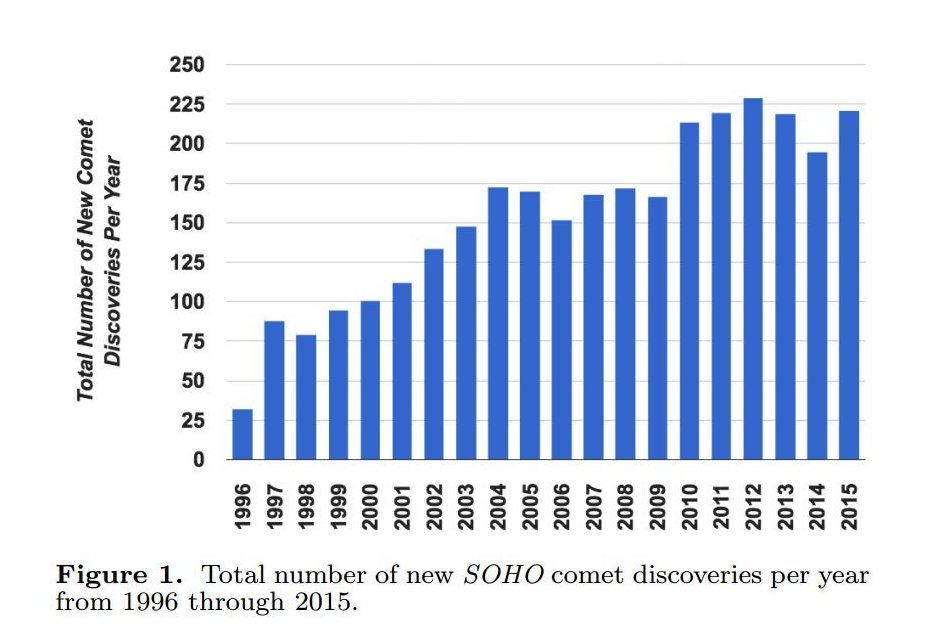
During the months of November 2016, 1 new comet has been discovered. "
Current comet magnitudes" & "
Daily updated asteroid flybys" pages are available at the top of this blog (or just click on the underline text here).
The dates below refer to the date of issuance of CBET (Central Bureau Electronic Telegram) which reported the official news & designations.
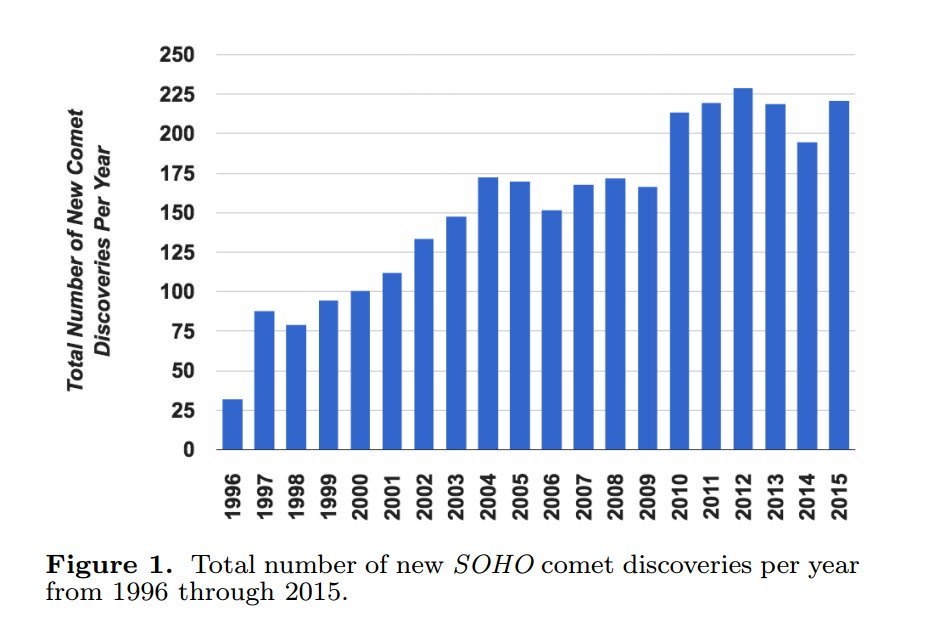
© K. Battams & M. Knight
Nov 03 Discovery of C/2016 U1 (NEOWISE)
Other newsNov 02 Newly discovered asteroid
2016 VA came to about 90.000 km from the Earth's surface on the second day of November, reaching magnitude 12. It crossed the Earth shadow for a few minutes (between 23:24-23:35 UT on Nov 01, just 0.3 LD from Earth), challenging astronomers to observe a peculiar "asteroidal eclipse".
Below you can see an animation showing this spectacular event as observed by
G. Masi (Virtual Telescope Project). According to Masi:
"Each frame comes from a 5-seconds integration. At the eclipse time, the asteroid was moving with an apparent motion of 1500"/minutes".
Nassim Nicholas Taleb
MediumTue, 27 Dec 2016 17:19 UTC

© William Powell Frith
There is inequality and inequality.
The first is the inequality people tolerate, such as one's understanding compared to that of people deemed heroes, say Einstein, Michelangelo, or the recluse mathematician Grisha Perelman, in comparison to whom one has no difficulty acknowledging a large surplus. This applies to entrepreneurs, artists, soldiers, heroes, the singer Bob Dylan, Socrates, the current local celebrity chef, some Roman Emperor of good repute, say Marcus Aurelius; in short those for whom one can naturally be a "fan".
You may like to imitate them, you may aspire to be like them; but you don't resent them.The second is the inequality people find intolerable
because the subject appears to be just a person like you, except that he has been playing the system, and getting himself into rent seeking, acquiring privileges that are not warranted - and although he has something you would not mind having (which may include his Russian girlfriend),
he is exactly the type of whom you cannot possibly become a fan. The latter category includes bankers, bureaucrats who get rich, former senators shilling for the evil firm Monsanto, clean-shaven chief executives who wear ties, and talking heads on television making outsized bonuses. You don't just envy them; you take umbrage at their fame, and the sight of their expensive or even semi-expensive car trigger some feeling of bitterness.
They make you feel smaller.There may be something dissonant in the spectacle of a rich slave.
Comment: Taleb raises some important points. He seems to be approaching something Lobaczewski wrote about in
Political Ponerology, namely the need for a national "adaptation correlation index" or "social order indicator":
It is a universal law of nature that the higher a given species' psychological organization, the greater the psychological differences among individual units. Man is the most highly organized species; hence, these variations are the greatest. Both qualitatively and quantitatively, psychological differences occur in all structures of the human personality dealt with here, albeit in terms of necessary over-simplification. Profound psychological variegations may strike some as an injustice of nature, but they are her right and have meaning.
Nature's seeming injustice ... is, in fact, a great gift to humanity, enabling human societies to develop their complex structures and to be highly creative at both the individual and collective level. Thanks to psychological variety, the creative potential of any society is many times higher than it could possibly be if our species were psychologically more homogeneous. Thanks to these variations, the societal structure implicit within can also develop. The fate of human societies depends upon the proper adjustment of individuals within this structure and upon the manner in which innate variations of talents are utilized.
Our experience teaches us that psychological differences among people are the cause of misunderstandings and problems. We can overcome these problems only if we accept psychological differences as a law of nature and appreciate their creative value. This would also enable us to gain an objective comprehension of man and human societies; unfortunately, it would also teach us that equality under the law is inequality under the law of nature.
... the development of an adult human's gifts, skills, realistic thought, and natural psychological world view will be optimal where the level and quality of his education and the demands of his professional practice correspond to his individual talents. Achieving such a position provides personal, material, and moral advantages to him; society as whole also reaps benefits at the same time. Such a person would then perceive it as social justice in relation to himself.
In other words, people have different levels of talent and motivation. But as long as they are in a position that corresponds to their nature, they will be content with the status quo. As Taleb puts it above, "I am certain that [blue-collar Frenchmen] would ask for a new dishwasher, or faster train for their commute, not to bring down some rich businessman invisible to them." People who aren't rich don't resent the rich per se. There's more going on:
If various circumstances combine, including a given society's deficient psychological world view, individuals are forced to exercise functions which do not make full use of his or her talents. When this happens, said person's productivity is no better, and often even worse, than that of a worker with satisfactory talents. Such an individual then feels cheated and inundated by duties which prevent him from achieving self-realization. His thoughts wander from his duties into a world of fantasy, or into matters which are of greater interest to him; in his daydream world, he is what he should and deserves to be. Such a person always knows if his social and professional adjustment has taken a downward direction; at the same time, however, if he fails to develop a healthy critical faculty concerning the upper limits of his own talents, his daydreams may "fix on" an unfair world where "all you need is power". Revolutionary and radical ideas find fertile soil among such people in downward social adaptations. It is in society's best interests to correct such conditions not only for better productivity, but to avoid tragedies.
Another type of individual, on the other hand, may achieve an important post because they belong to privileged social groups or organizations in power while their talents and skills are not sufficient for their duties, especially the more difficult problems. Such persons then avoid the problematic and dedicate themselves to minor matters quite ostentatiously. A component of histrionics appears in their conduct and tests indicate that their correctness of reasoning progressively deteriorates after only a few years' worth of such activities. In the face of increasing pressures to perform at a level unattainable for them, and in fear of being discovered as incompetent, they begin to direct attacks against anyone with greater talent or skill, removing them from appropriate posts and playing an active role in degrading their social and professional adjustment. This, of course, engenders a feeling of injustice and can lead to the problems of the downwardly adapted individual as described above. Upwardly-adjusted people thus favor whip-cracking, totalitarian governments which would protect their positions.
These are the people with no "skin in the game", whose positions are secured for reasons other than their level of ability. As Taleb describes them: "a corporate executive with upside and no financial downside ... is paid according to some metrics that do not necessarily reflect the health of the company; ... he can manipulate, hide risks, get the bonus, then retire (or go to another company) and blame his successor for the subsequent results." When such a state of affairs becomes the norm, revolution is pretty much inevitable.
Upward and downward social adjustments, as well the qualitatively improper ones, result in a waste of any society's basic capital, namely the talent pool of its members. This simultaneously leads to increasing dissatisfaction and tensions among individuals and social groups; any attempt to approach human talent and its productivity problematics as a purely private matter must therefore be considered dangerously naive. Development or involution in all areas of cultural, economic and political life depend on the extent to which this talent pool is properly utilized. In the final analysis, it also determines whether there will be evolution or revolution.
Technically speaking, it would be easier to construct appropriate methods that enable us to evaluate the correlations between individual talents and social adjustment in a given country ... A low correlation would be an indication that social reform is needed. A near-zero or even negative correlation should be interpreted as a danger-sign that revolution is imminent. Revolutions in one country often cause manifold problems for other countries, so it is in the best interests of all countries to monitor such conditions.
The examples adduced above do not exhaust the question of causative factors influencing the creation of a social structure which would adequately correspond to the laws of nature. Our species-instinct level has already encoded the intuition that the existence of society's internal structure, based on psychological variations, is necessary; it continues to develop alongside our basic intelligence, inspiring our healthy common sense. This explains why the most numerous part of populations, whose talents are near average, generally accepts its modest social position in any country as long as the position fulfills the indispensable requirements of proper social adjustment and guarantees an equitable way of life no matter at what level of society the individual finds their proper fit.
This average majority accepts and respects the social role of people whose talents and education are superior, as long as they occupy appropriate positions within the social structure. The same people, however, will react with criticism, disrespect, and even contempt, whenever someone as average as themselves compensates for his deficiencies by flaunting an upwardly-adjusted position. The judgments pronounced by this sphere of average but sensible people can often be highly accurate ...
Again, from Taleb: "the subject appears to be just a person like you, except that he has been playing the system ... The latter category includes bankers, bureaucrats who get rich, former senators shilling for the evil firm Monsanto, clean-shaven chief executives who wear ties, and talking heads on television making outsized bonuses. You don't just envy them; you take umbrage at their fame, and the sight of their expensive or even semi-expensive car trigger some feeling of bitterness. They make you feel smaller."
Consider what Lobaczewski wrote about the U.S. in the 80s with this in mind:
America's psychological recession drags in its wake an impaired socio-professional adaptation of this country's people, leading to a waste of human talent and an involution of societal structure. If we were to calculate this country's adaptation correlation index, as suggested in the prior chapter, it would probably be lower than the great majority of the free and civilized nations of this world, and possibly lower than some countries which have lost their freedom.
A highly talented individual in the USA finds it ever more difficult to fight his way through to self-realization and a socially creative position. Universities, politics, and businesses ever more frequently demonstrate a united front of relatively untalented persons and even incompetent persons. The word "overeducated" is heard more and more often. Such "overqualified" individuals finally hide out in some foundation laboratory where they are allowed to earn the Nobel prize as long as they do not do anything really useful. In the meantime, the country as whole suffers due to a deficit in the inspirational role of highly gifted individuals.
As a result, America is stifling progress in all areas of life, from culture to technology and economics, not excluding political incompetence. When linked to other deficiencies, an egotist's incapability of understanding other people and nations leads to political error and the scapegoating of outsiders. Slamming the brakes on the evolution of political structures and social institutions increases both administrative inertia and discontent on the part of its victims.
In sum, the problem is not inequality per se. (Nor is it "class", "race", "patriarchy", or any other simplistic category.) It is downward and upward adjustment, lack of ergodicity and downward mobility, and the most important element Lobaczewski discusses in his book: the role of psychopaths when they strive for and achieve positions of power. When that happens, they exploit feelings of resentment, catalyze or co-opt revolutions, and create totalitarian systems of repression that make everyday life a living nightmare.
Addictive cravings are still persistent after death, finds a new study.
A protein in the reward center of the brain is altered in those suffering from a chemical dependency - it is split off and shortened.
Following numerous autopsies, Austrian researchers found the modified protein in deceased heroin addicts - suggesting cravings for the stimulus continued after their death.
The protein, called FosB, is a transcription factor in the brain which, together with other molecules, is involved in so-called signal transduction (transmission of stimuli to the cells).
It is said to convey genetic information between the cells and also determines whether certain genes are activated or not. FosB is part of the activating protein AP1, which is involved with regulating gene expression in response to a range of stimulus, including stress and bacterial infections.Due to a constant supply of drugs, such as heroin, FosB turns into DeltaFosB, which is increasingly stimulated in cases of chronic use and even influences growth factors and structural changes (neuronal plasticity) in the brain - approximately in the region where memory is formed
















Comment: They're assuming that it's an ancient crater, but given that the anomaly was only recently discovered, isn't it more likely to be something new?
Some major changes appear to be going on inside the planet...
See also: 70-Mile-Long Crack Opens Up in Antarctica