Science & TechnologyS


Microscope 1

Researchers discover surgical technique using electricity and stem cells to restore failing organs

test tube
© Anawat Sudchanham/ShutterstockResearchers at the University of California San Francisco are using a new technique that may help restore failing organs
Researchers at the University of California at San Francisco, or UCSF, have found a technique to transplant cells into organs to treat disease and restore failing organs.

The technique involves piercing cells with rapid pulses of electricity, which allows researchers to create a hospitable environment to boost stem cell survival when transplanting cells into organs to restore them during organ failure.

"Our research is in its early stage," Dr. Tammy T. Chang, an assistant professor in the UCSF Department of Surgery, said in a press release. "We've shown we can create the hospitable environment for new cells. Full demonstration of the procedure's value will be when we can introduce stem cells to restore function to diseased livers and other organs."

The new technique called irreversible electroporation, or IRE, kills a section of liver cells with microsecond electric pulses to create a pocket for transplanting new cells into the organ with minimal collateral damage.

Brain

Scientists discover 52 smart genes linked to intelligence

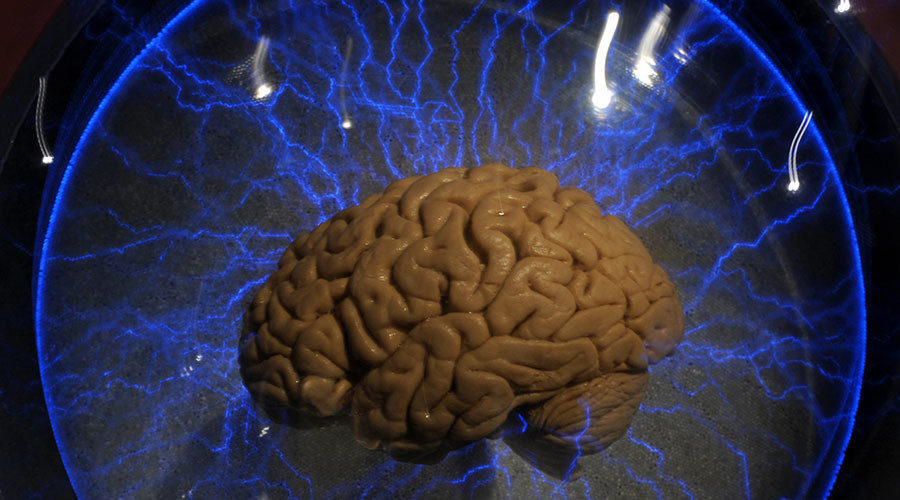
human brain
© Mauricio Lima / AFP
Links to intelligence have been found in 52 genes, 40 of which have been identified for the first time, new research has revealed. However, the discovery does not mean that the genes determine genius.'

On Monday, a team of 30 scientists, led by Danielle Posthuma of VU University Amsterdam, released a new study in the journal Nature Genetics announcing "new insight into the genetic architecture of intelligence."

"For the first time, we were able to detect a substantial amount of genetic effects in IQ," Posthuma told AFP. "Our findings provide insight into the biological underpinnings of intelligence."

For the study, researchers used various tests to measure intelligence in 13 different groups of people. They looked for genetic markers linked to intelligence across 78,308 adults and children of European descent, including a database of exceptionally intelligent people and some studies of twins.

Through two different kinds of genome analysis, they were able to pinpoint 40 new genes associated with intelligence. However, they explain that, taken together, their results only account for "up to 4.8 percent of the variance in human intelligence."

Researchers found that intelligence is more shaped by an individual's social environment than their genes.

Galaxy

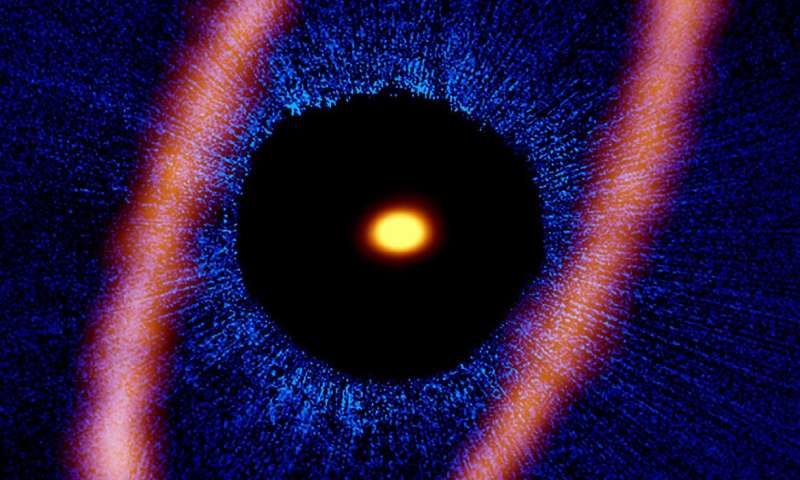
ALMA provides first complete image of Fomalhaut's debris disk

ALMA debris disk
© ALMA (ESO/NAOJ/NRAO), M. MacGregor; NASA/ESA Hubble, P. Kalas; B. Saxton (NRAO/AUI/NSF)Composite image of the Fomalhaut star system. The ALMA data, shown in orange, reveal the distant and eccentric debris disk in never-before-seen detail. The central dot is the unresolved emission from the star, which is about twice the mass of our sun. Optical data from the Hubble Space Telescope is in blue; the dark region is a coronagraphic mask, which filtered out the otherwise overwhelming light of the central star.
An international team of astronomers using the Atacama Large Millimeter/submillimeter Array (ALMA) has made the first complete millimeter-wavelength image of the ring of dusty debris surrounding the young star Fomalhaut. This remarkably well-defined band of rubble and gas is likely the result of exocomets smashing together near the outer edges of a planetary system 25 light-years from Earth.

Earlier ALMA observations of Fomalhaut—taken in 2012 when the telescope was still under construction - revealed only about one half of the debris disk. Though this first image was merely a test of ALMA's initial capabilities, it nonetheless provided tantalizing hints about the nature and possible origin of the disk.

The new ALMA observations offer a stunningly complete view of this glowing band of debris and also suggest that there are chemical similarities between its icy contents and comets in our own solar system.

"ALMA has given us this staggeringly clear image of a fully formed debris disk," said Meredith MacGregor, an astronomer at the Harvard-Smithsonian Center for Astrophysics in Cambridge, Mass., and lead author on one of two papers accepted for publication in the Astrophysical Journal describing these observations. "We can finally see the well-defined shape of the disk, which may tell us a great deal about the underlying planetary system responsible for its highly distinctive appearance."

Fomalhaut is a relatively nearby star system and one of only about 20 in which planets have been imaged directly. The entire system is approximately 440 million years old, or about one-tenth the age of our solar system.

As revealed in the new ALMA image, a brilliant band of icy dust about 2 billion kilometers wide has formed approximately 20 billion kilometers from the star.


Comment: Are 'comet belts' around companion stars key to curious Fomalhaut solar systems?


Cell Phone

Technology allows shoppers to pay with their faces

facial recognition
© Kim Brunhuber/CBC
Chinese shoppers will soon be able to free up their hands, thanks to new technology that enables consumers to pay with their faces.

"We have finished an experiment for facial recognition payment and it will be used in the near future," said Chen Jidong on Monday, who is in charge of biometric identification technology at Ant Financial, the affiliate financial service of Chinese e-commerce giant Alibaba.

Eye 1

Google's AI future is so impressive it's scary

Google CEO Sundar Pichai delivers the keynote address of the Google I/O conference
© Getty ImagesGoogle CEO Sundar Pichai delivers the keynote address of the Google I/O conference
The company is quietly transforming your camera into a search engine. Google this week held its developer conference for 2017, where it teased some of the brand new features coming to its products and services.

What we saw on stage was undeniably impressive, but one of the demonstrations in particular was frighteningly so. Google Lens will give the company greater insight into our daily lives than ever before.

Bizarro Earth

Geologists: Large volcanic eruption may have caused first mass extinction of life on earth

Hg enrichment graph
© Kunio KaihoThe researchers found Hg enrichments in sedimentary rocks deposited in North America and southern China 445-443 million years ago. Hg enrichments are products of multiple phases of a large igneous province volcanism. This, they say, could have led to the environmental changes that caused the disappearance of many marine animal species.
Researchers in the U.S. and Japan say they may have found the cause of the first mass extinction of life on Earth.

There have been five mass extinctions since the divergent evolution of early animals 600 to 450 million years ago (Figure 1). Volcanic activity was the cause of both the third and fourth, while an asteroid impact led to the fifth. But triggers of the first and second mass extinctions had, until now, been unknown. The new study strongly suggests volcanic activity caused the first mass extinction.

It occurred at the end of the Ordovician. This age is between the divergence of the Ordovician and land invasion of vascular land plants and animals. Animals in the Ordovician-Silurian comprised marine animals like corals, trilobites, sea scorpions, orthoceras, brachiopods, graptolite, crinoid and jawless fish. Approximately 80 percent of species disappeared at the end of the Ordovician.

A team led by Dr. David S. Jones of Amherst College and Professor Kunio Kaiho of Tohoku University looked into possible triggers of the first mass extinction. They took sedimentary rock samples from two places—North America and southern China—and analyzed their mercury (Hg) content. They found Hg enrichments coinciding with the mass extinction in both areas. This, they believe, is the product of large volcanic eruptions, because the Hg anomaly was also observed in other large igneous province volcanisms.

Info

Researchers discover surprisingly hot groundwater along New Zealand's Alpine Fault

South Island's Alpine Fault
© 123RFThe scientific team drilled into the South Island's Alpine Fault.
A scientific team that drilled into the South Island's Alpine Fault has discovered surprisingly high temperatures and the potential for large geothermal resources.

Lead scientist Professor Rupert Sutherland, from Victoria University, says the extreme activity was unexpected.
"Nobody on our team, or any of the scientists who reviewed our plans, predicted that it would be so hot down there," he said.

"This geothermal activity may sound alarming, but it is a wonderful scientific finding that could be commercially very significant for New Zealand."
He said it was too early to say how big or how hot the resource might be.

The Deep Fault Drilling Project - led by Victoria and Otago universities and GNS Science - was carried out in Westland, north of Franz Josef Glacier, in 2014.

More than 100 scientists from 12 countries drilled nearly 900m at Whataroa to try to understand how earthquakes occur in geological faults.

The results, published in the journal Nature, discuss the site's geothermal gradient - a measure of how fast the temperature increases going deeper beneath the Earth's surface.

The team found water hot enough to boil at a depth of 630m. Similar geothermal temperatures are normally found at depths greater than 3km.

Moon

Astronomers discover moon orbiting 'Snow White' dwarf planet

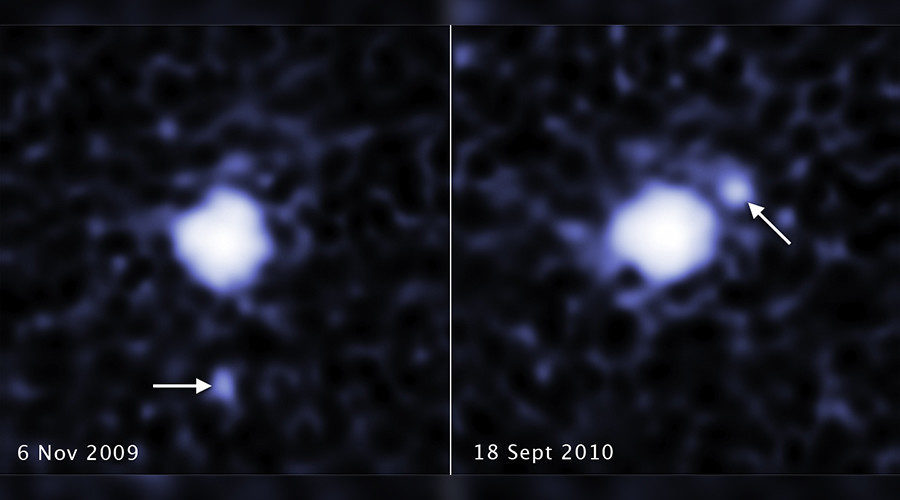
These two images, taken a year apart, reveal a moon orbiting the dwarf planet 2007 OR10
© NASAThese two images, taken a year apart, reveal a moon orbiting the dwarf planet 2007 OR10.
A new study has revealed that the third-largest dwarf planet in our solar system has its own moon.

Researchers used three different space observatories to confirm that dwarf planet 2007 OR10, which is nicknamed "Snow White," is orbited by a moon.

Snow White is a 1,530 kilometer-wide (950 mile) dwarf planet, while the new moon has been measured at between 240 to 400 kilometers (150-250 miles) in diameter. They are located in the frigid Kuiper Belt, on the outskirts of our solar system, beyond Neptune.

The moon was spotted in archival images of Snow White taken by NASA's Hubble telescope. Observations of the dwarf planet by the agency's Kepler Telescope first alerted astronomers to the possibility of a moon circling it.

Jupiter

NASA probe Juno completes latest flyby of gas giant Jupiter

jupiter
© NASA
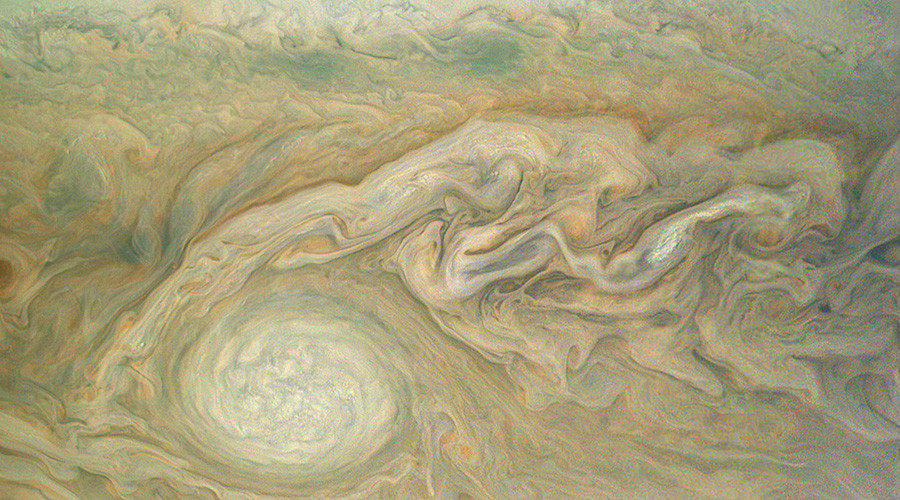
NASA's Juno spacecraft collected more crucial data during its latest flyby of Jupiter, the probe's fifth science orbit since beginning its monumental mission.

Juno's many onboard instruments collected various forms of data during the close flyby. These readings will be returned to Earth for analysis along with images captured by the spacecraft's JunoCam.

The spacecraft got closest to the center of the gas giant at about 2,200 miles (3,500km) above Jupiter's "mysterious cloud tops" - the secrets of which, NASA believes, the flyby will help reveal.

Galaxy

Magnetic field detected between magellanic clouds

milky way
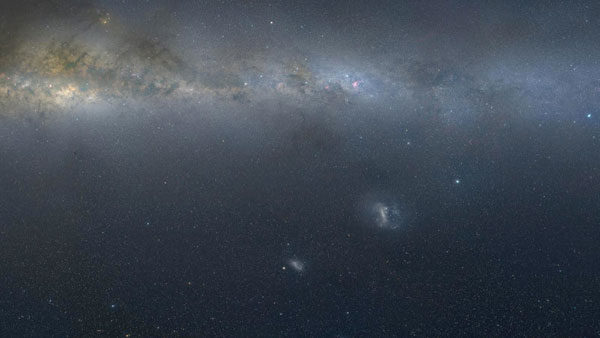
© Axel Mellinger, Central Michigan Univ.This visible-light mosaic shows the Magellanic Clouds in the context of the Milky Way's galactic plane.
A magnetic field appears to span the space between the Large and Small Magellanic Clouds, the two dwarf galaxies being consumed by our Milky Way Galaxy.

For stargazers in the Northern Hemisphere, it's easy to forget that the Milky Way is actively consuming two dwarf galaxies. Those in the Southern Hemisphere have a front row seat to watch our galaxy wreak havoc on the Large and Small Magellanic Clouds (LMC and SMC). But there's more to the story — the dwarfs are not only gravitationally interacting with the Milky Way but with each other as well.

The gravitational effects evident from these interactions can tell us a lot about the history and evolution of these galaxies as well as the environments surrounding them, but gravity isn't the only force at work here. Magnetic fields play a role as well, one astronomers are still trying to puzzle out. Now, for the first time, researchers using the Australia Telescope Compact Array radio telescope in New South Wales, Australia, have detected a magnetic field in the space between the Magellanic Clouds. Called the Magellanic Bridge, this structure is a 75,000 light-year long filament of gas and dust that stretches from the LMC to the SMC. These results are published in the Monthly Notices of the Royal Astronomical Society (full text here).