Science & TechnologyS


Attention

Insect anomaly: 17-Year cicadas emerging 4 years early

cicada
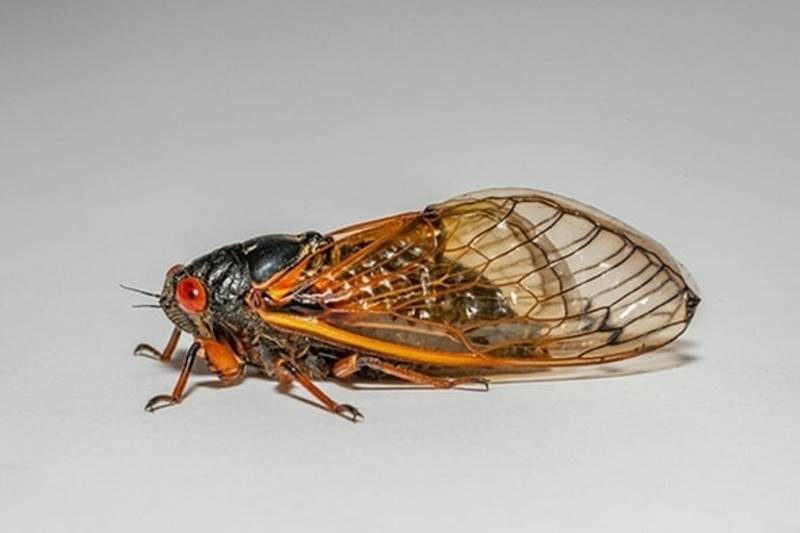
© Education Images Getty Images Close up of a 17 year locust or Magi cicada periodical cicadas.
Scientists search for the mysterious cause, as millions of hatching bugs loudly buzz the night away

Swarms of cicadas are unexpectedly crawling out from under trees from North Carolina to New Jersey. The red-eyed insects are almost impossible to miss; they fly around lazily, plunking into backyard barbeques and crashing into cars. They litter the ground with their crunchy husks as they molt. Most noticeably, they chirp en masse for their mates, producing a relentless, shrill buzz that is recognized as a song of summer. And within a month they are gone.

Different populations, or broods, of "periodical" cicadas emerge in distinct geographical regions during specific years, after spending a 13- or 17-year span growing underground. (Some "annual" species just emerge yearly.) Scientists were expecting to see Brood VI bugs in South Carolina and Georgia, which happened, but they got a surprise when Brood X cicadas also started appearing in North Carolina, Virginia, Maryland, the District of Columbia, Ohio and Indiana last week—four years earlier than anticipated.


Bulb

Microsoft wants to store data in DNA within the next three years

DNA data
© ymgerman/Shutterstock
If we used DNA like we use magnetic tape to store data today, it's theoretically possible to store all of the information humans have ever recorded in a space roughly the size of a double garage.

Sharing their goals with MIT Technology Review this week, Microsoft Research computer architects say they want to start storing their data on strands of DNA within the next few years, and expect to have an operational storage system using DNA within a data centre by the end of the decade.

As antiquated as it seems, one of the best ways to store a lot of information in a small space right now is good, old-fashioned magnetic tape - not only is it cheap, it's rugged enough to hold information for up to 30 years, and can hold as much as a terabyte of data per roll.

But when we consider more data has been generated in just the past two years than in all of human history, it seems even magnetic tape might not cut it in the next few decades.

Binoculars

The Pentagon introduces augmented reality headsets to give soldiers increased 'situational awareness'

army training
© army.mil
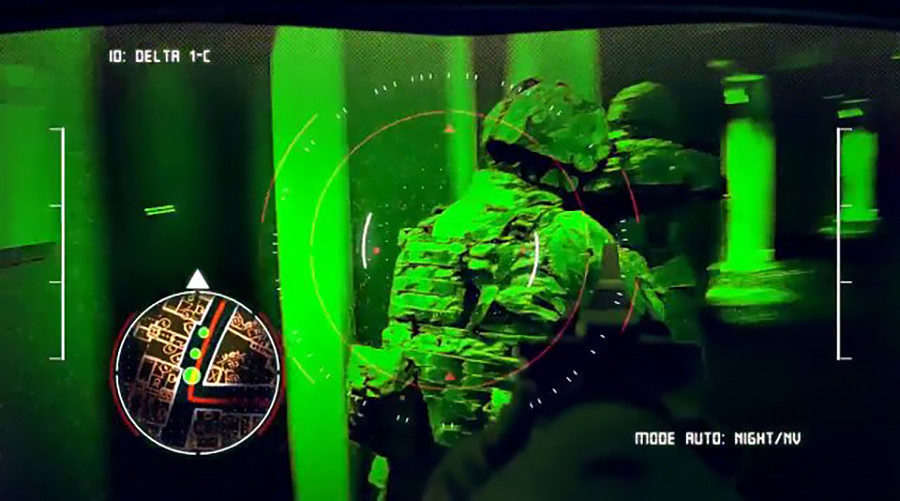
The Pentagon's latest military technology could make warfare feel more like a first person shooter video game. Newly unveiled Tactical Augmented Reality headsets aim to give soldiers "situational awareness," making it possible to map and locate targets or talk to fellow troops.

During last week's Pentagon Lab Day in Washington, DC, the Army's Communications Electronics Research, Development and Engineering Center (CERDEC) and Army Research Lab (ARL) demonstrated the current prototype of their Tactical Augmented Reality (TAR) heads-up display that would give soldiers "situational awareness" on the battlefield.

The technology adds artificial elements such as icons and graphics on top of what a soldier would normally see and provides them with real-time information such as maps, navigation and the locations of enemies and friendly units, all through the Heads Up Navigation, Tracking and Reporting (HUNTR) system.

Jupiter

NASA's Jupiter mission reveals 'brand-new and unexpected' discoveries

Jupiter’s south pole
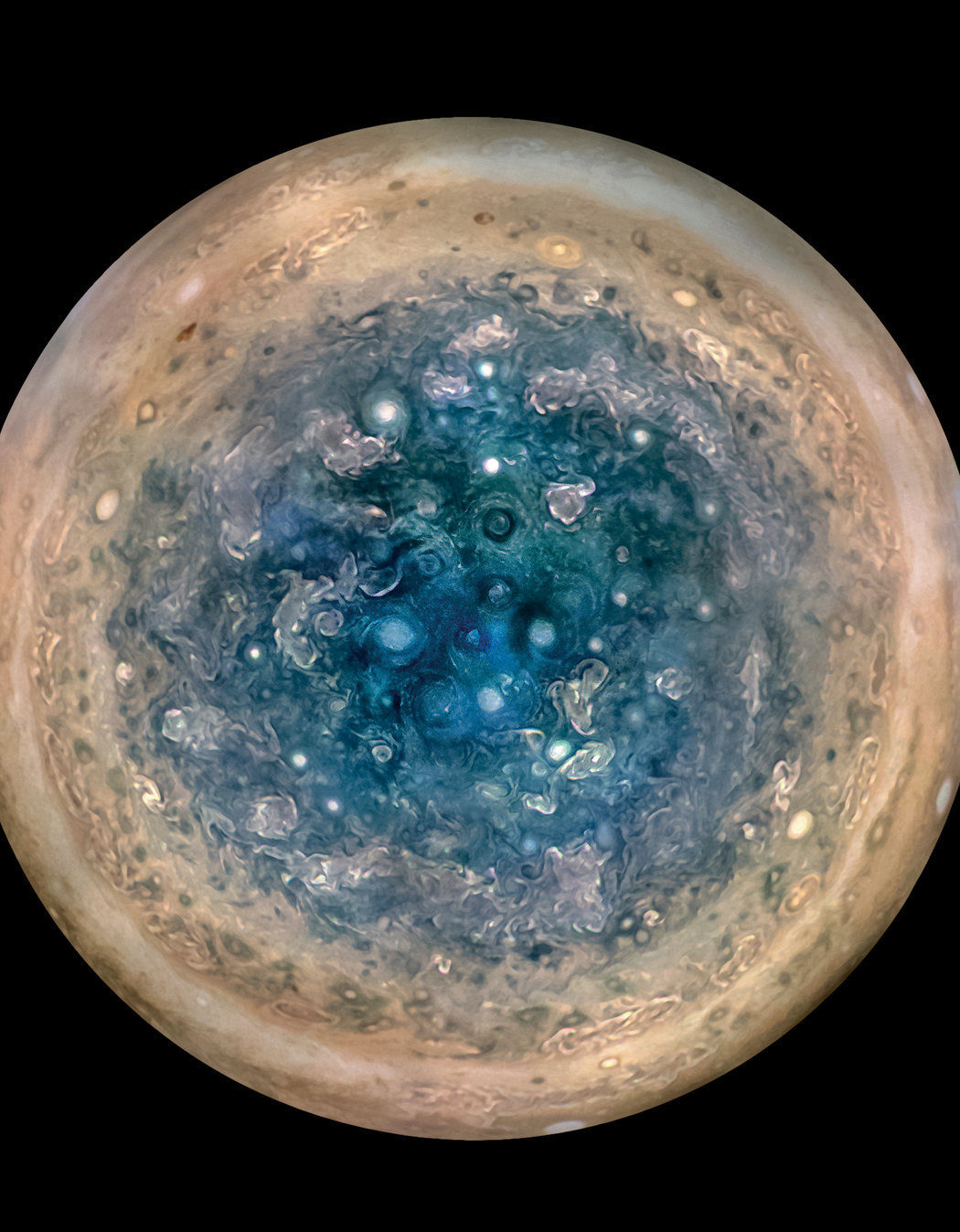
© NASA/JPL-Caltech/SwRI/MSSS/Betsy Asher Hall/Gervasio Robles Multiple images combined show Jupiter’s south pole, as seen by NASA’s Juno spacecraft from an altitude of 32,000 miles. The oval features are cyclones.
The top and bottom of Jupiter are pockmarked with a chaotic mélange of swirls that are immense storms hundreds of miles across. The planet's interior core appears bigger than expected, and swirling electric currents are generating surprisingly strong magnetic fields. Auroral lights shining in Jupiter's polar regions seem to operate in a reverse way to those on Earth. And a belt of ammonia may be rising around the planet's equator.

Those are some early findings of scientists working on NASA's Juno mission, an orbiter that arrived at Jupiter last July.

Juno takes 53 days to loop around Jupiter in a highly elliptical orbit, but most of the data gathering occurs in two-hour bursts when it accelerates to 129,000 miles an hour and dives to within about 2,600 miles of the cloud tops. The spacecraft's instruments peer far beneath, giving glimpses of the inside of the planet, the solar system's largest.

"We're seeing a lot of our ideas were incorrect and maybe naïve," Scott J. Bolton, the principal investigator of the Juno mission, said during a NASA news conference on Thursday.

Two papers, one describing the polar storms, the other examining the magnetic fields and auroras, appear in this week's issue of the journal Science. A cornucopia of 44 additional papers are being published in the journal Geophysical Research Letters. The papers describe findings based largely on the first two close passes of Jupiter in which Juno was able to make measurements. Juno has now made five, with the next on July 11, when it is to pass directly over the Great Red Spot.

Galaxy

Star's sudden disappearance baffles scientists

stars
© Flickr/Dave See
A giant star named N6946-BH1, which American astronomers have observed for several years, has suddenly disappeared, NASA's website wrote, referring to the Monthly Notices of the Royal Astronomical Society.

The specialists don't know the exact reasons behind the disappearance of the star. The most probable hypothesis is that the star has turned into a black hole.

The scientists, who observed the star, did not expect such a scenario. They believed that N6946-BH1 would explode as a supernova instead of disappearing out of sight.

Pirates

Indonesian monkey mafia steals tourists' stuff, then sell it back for treats

monkey with coconut
© Kylie McLaughlin/GettyI’m willing to trade
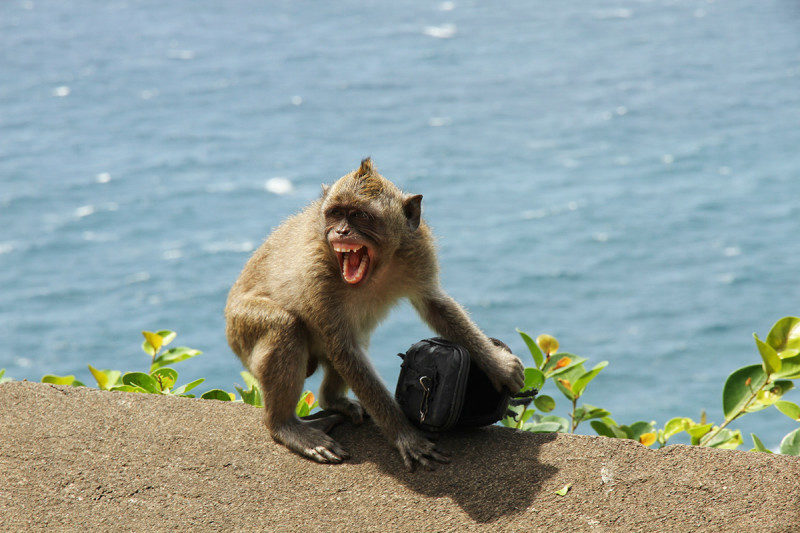
Long-tailed macaques living near an Indonesian temple have figured out how to run a ransom racket on visiting tourists.

The monkeys grab valuables, such as glasses, hats, cameras or, in one case, a wad of cash from the ticket booth, then wait for temple staff to offer them food before dropping their ill-gotten gains and dashing off with the tasty prize (see video below).


Although this behaviour has been reported anecdotally at Uluwatu Temple on the island of Bali for years, it had never been studied scientifically in the wild. So Fany Brotcorne, a primatologist at the University of Liège in Belgium, and her colleagues set out to discover how and why it has spread through the monkey population.

"It's a unique behaviour. The Uluwatu Temple is the only place in Bali where it's found," she says, which suggests it is a learned behaviour rather than an innate ability.

Brotcorne wanted to determine whether it was indeed cultural, which could help us better understand the monkey's cognitive abilities, and even human evolution.

Frog

New study shows snakes, thought to be solitary eaters, coordinate hunts together

Cuban Boa
© Vladimir DinetsThe Cuban boa
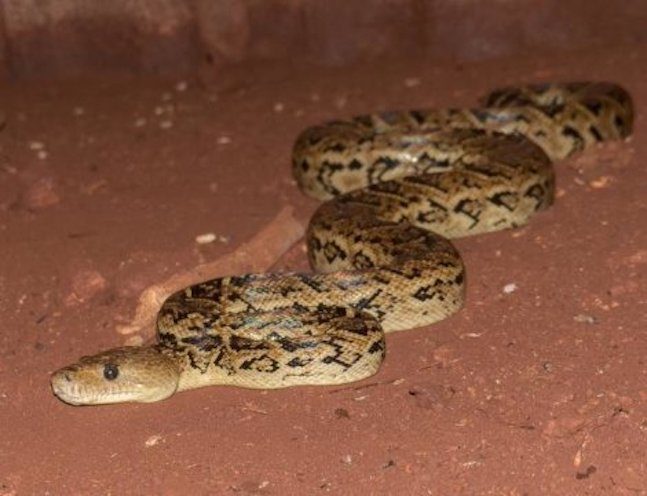
Snakes have long been thought to be loners when it comes to securing a meal, but scientists from the University of Tennessee made a surprising discovery that might prove otherwise. In a new study of Cuban boas, researchers determined the snakes actually coordinate hunts together in order to capture more prey.

Very few of the world's 3,650 species of snakes had been observed in hunting in the wild prior to the study, according to lead researcher Vladimir Dinets, a research assistant professor of psychology at the university. But Dinets and his team traveled to Cuba to observe the eating habits of the country's largest native terrestrial predator in some of the nation's bat caves. Cuba's massive ancient caves, such as the Cuevas de Bellamar, have long been attractions for visitors.

A new study finds that although it's widely believed snakes seek out prey alone, some species actually coordinate hunts together.

For the Cuban boa, the caves are ideal spots to catch prey because of the many bat colonies found living inside them. The researchers found that instead of going on individual hunts for bats, the Cuban boas actually participate in attacks together. When the bats leave the cave at night and return at dawn, Dinets discovered that the boas gather at the entrance to the caves and hang from the ceilings — literally snatching the bats in their mouths as they fly in.

Fireball 4

Asteroids which could wipe out an entire continent are hidden by the Taurids meteor shower, astronomers claim

asteroid collision with Earth
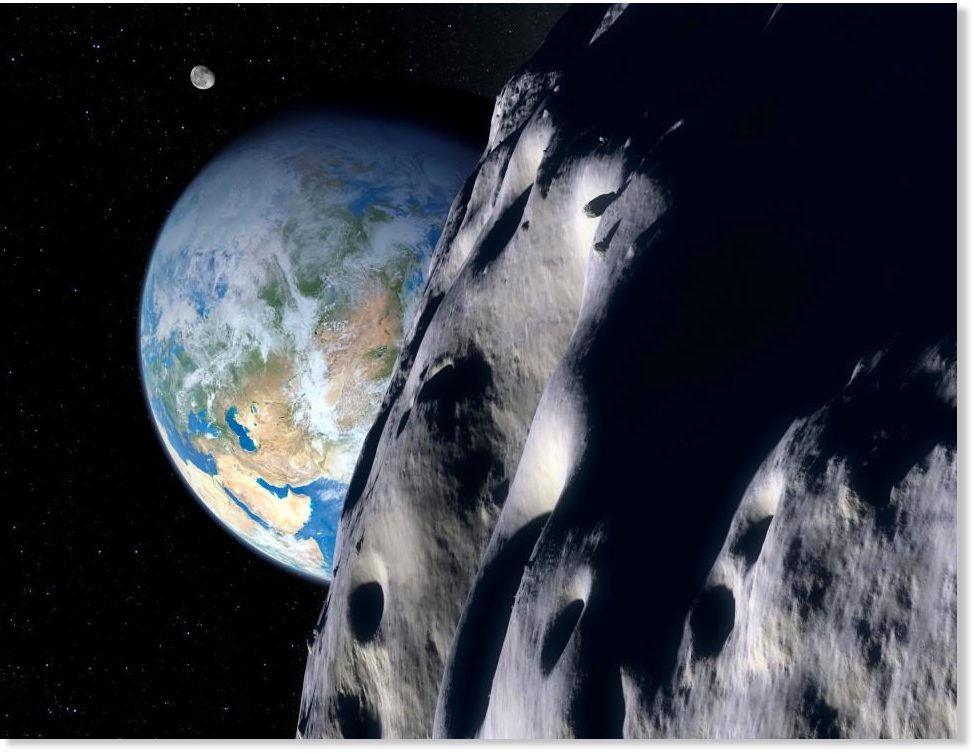
The annual Taurids meteor shower is one of the highlights of the stargazing calendar. But the comet that causes this natural wonder could be hiding gigantic asteroids which are large enough to wipe out whole continents.

That's the warning from a team of academics at the Astronomical Institute of the Czech Academy of Science, who have been keeping a close eye on the Taurids.

Each year in late October and November, Earth's skies light up with shooting stars when the Earth passes through debris called the Taurids which is left behind by comet Encke.

However, the Czech astronomers claimed that asteroids called 2015 TX24 and 2005 UR are "direct members" of an undiscovered "branch" of the Taurids.

Blue Planet

Whales only recently evolved into giants

blue whale
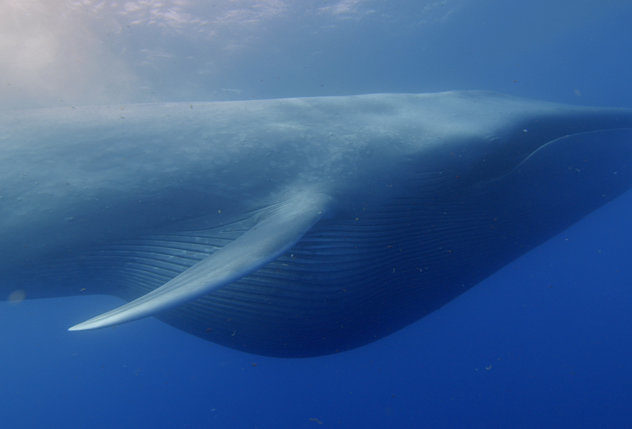
© Hugh Pearson and David Reichert, Silverback Films/BBCA blue whale off the coast of California filmed for the BBC program “The Hunt.”


Gigantism seems like a past phenomenon, given that enormous animals such as Megalodon and Tyrannosaurus rex died out millions of years ago. The largest vertebrate that has ever lived, however, is part of the present, and not past, animal kingdom. The distinction goes to the blue whale, which can reach lengths of over 100 feet.

Blue whales use baleen — a filter-feeder system inside the mouth — to obtain massive amounts of prey from ocean water. The oldest members of the baleen-whale lineage appeared about 36 million years ago, yet new research published in the Proceedings of the Royal Society B finds that very large members of this lineage only appear at around 2 - 3 million years ago, which is a drop in the evolutionary bucket.

"What makes our study unique and important is that it's the first one to explain how, when, and why baleen whales got so big," said senior author Nicholas Pysenson, curator of fossil marine mammals at the Smithsonian's National Museum of Natural History.

Fireball

Five asteroids will cruise by Earth in the next year, and one is coming very close

Asteroids
© Unknown
There's so many cool things to see out in space — from gorgeous views of Jupiter to stunning glimpses of Saturn, and a star that might have aliens hanging out nearby — that it's easy to forget that it's actually a pretty hostile place. We're reminded of that whenever NASA alerts the world that an asteroid is making a close appearance, and a scientists with the Jet Propulsion Laboratory just took some time to break down the next five asteroid flybys that we should all keep our eyes on, including one that might be too close for comfort.

The handful of asteroids, which are thought to be as small as 8 meters in diameter to as large as 90 meters, will all pass within five lunar distances. One lunar distance is the space between the Earth and our moon, or about 238,900 miles. That might seem like a pretty comfortable gap, but in terms of the vastness of space, a rock jetting past our planet at such a distance is a pretty close shave.