Science & TechnologyS


Brain

New types of human brain cells found in quest for understanding its development & why things go wrong

Brain
© Salk Institute for Biological Studies
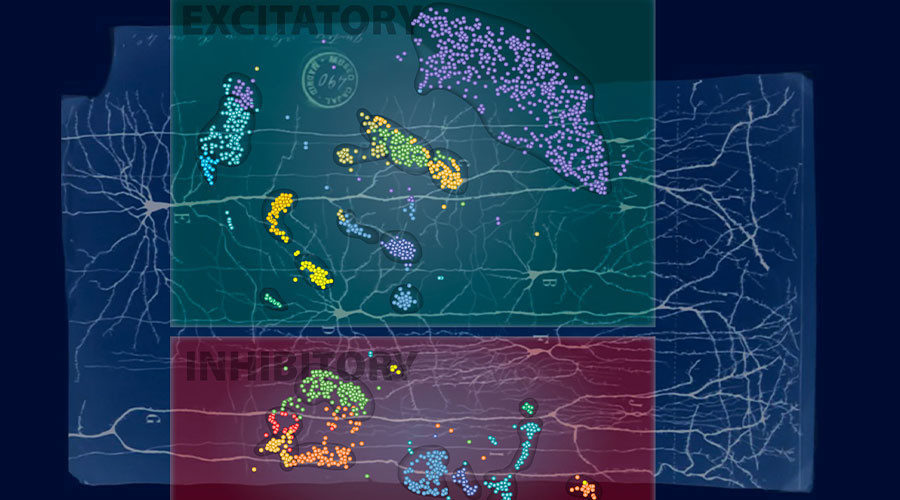
Seeking to find out how the human brain works on a molecular level, scientists used a new method of categorizing brain cells and found new subtypes, which promises to significantly increase understanding of how a brain develops and why things go wrong.

A team of researchers from the Salk Institute in California began their work by examining cells from the frontal cortices of mice and humans.

The frontal cortex is the area of the brain responsible for some of an individual's most important characteristics including personality, decision making and complex thinking.

Comment: See also: If you had the chance to erase your worst, most painful memories, would you do it?


Sun

5 things to know about the upcoming solar eclipse

solar eclipse
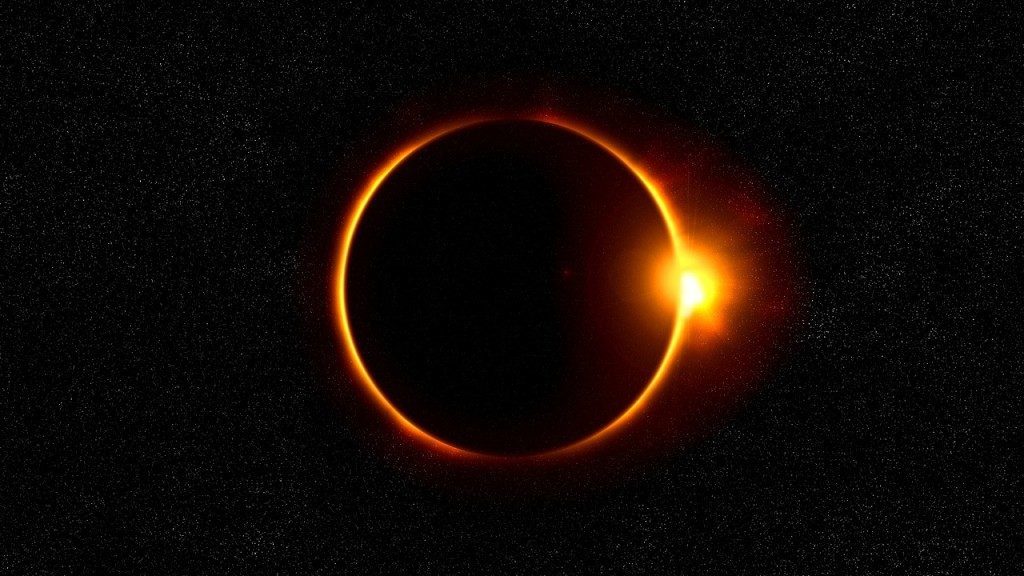
The countdown to a rare celestial spectacle is on. On August 21st, people within the "path of totality," a 70-mile wide swath of land stretching from Oregon to South Carolina (14 states in all), will witness a total solar eclipse. The shadow of the moon will start in the Pacific ocean and travel at Mach 1.5 speeds across the continental U.S., creating an ethereal light show that eclipse hunters swear is unlike any other naturally occurring phenomenon. Eclipse enthusiasts describe the experience as transcendent, even life-changing.

Here are five things to know about the upcoming phenomenon:

1. A total solar eclipse is the result of a remarkable cosmic coincidence.

The incredible serendipity of a total solar eclipse on Earth is difficult to fathom. For the brief few minutes of a totality, the Sun and the Moon occupy the exact same space in our sky, perfectly overlapping one another. How is this possible? While the sun's diameter is 400 times the size of the moon's, the moon is 400 times closer to us. The phenomenon is unlikely to exist for any of the other planets in our solar system and may be fairly unique to the Earth. While other stars and planets assuredly have their own distinct celestial marvels, a total solar eclipse is one of our cosmic home's special treasures.

Life Preserver

Scientists discover method of 3-D printing stem cells to recreate complex living tissue

3D printing living tissue
© Jens Kalaene / Global Look PressThe bioprinting discovery could revolutionize regenerative medicine as it allows for the reproduction of complex tissue that could replace or repair damaged or severed areas of the body.
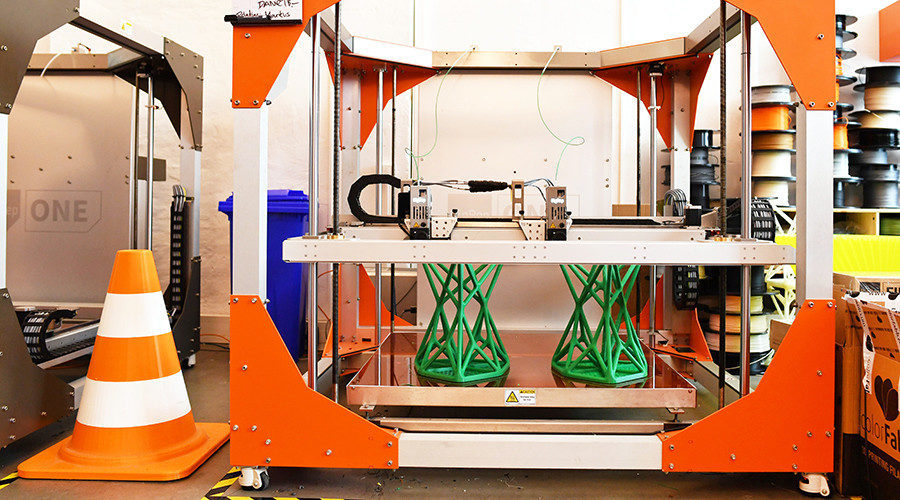
Oxford University scientists have found a ground-breaking way of 3D-printing living tissue that could pave the way for regenerative medicine.

The new way to 3D-print stem cells to recreate complex living tissues was devised by Oxford scientists in collaboration with Bristol's School of Cellular and Molecular Medicine.

The discovery could revolutionize regenerative medicine as it allows for the reproduction of complex tissue that could replace or repair damaged or severed areas of the body.

"The versatility and robust nature of our approach provides a new set of tools for bottom-up tissue engineering at a low cost," researchers claim in their paper, published in Scientific Reports.

Comment: Further reading:


Meteor

Largest space rock ever spotted in close proximity to earth will swing by our planet in September

Asteroid Florence
Florence doesn't pose a risk - but is being closely monitored in case of a catastrophic return in the future.
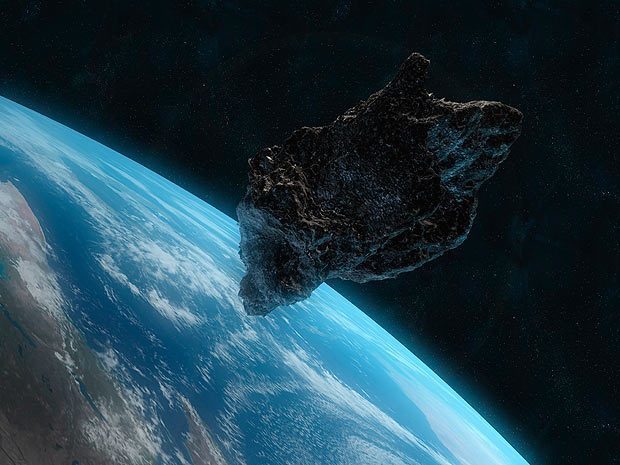
At just under three miles wide, asteroid Florence will be the widest space rock to come this close to Earth.

The monster rock is the largest spotted in close proximity to our planet since records began 20 years ago.

Florence, a Near-Earth Object (NEO), will pass by safely on September 1, but if she did smash into us one day, it would be game over.

Anything larger than 0.6 miles could extinguish life as we know it, scientists have calculated.

So at 2.7miles across, Florence could trigger an apocalyptic disaster.

Nebula

Stunning aurora blooms over Earth captured in astronaut footage (VIDEO)

Auroras
© Randy Bresnik / Twitter
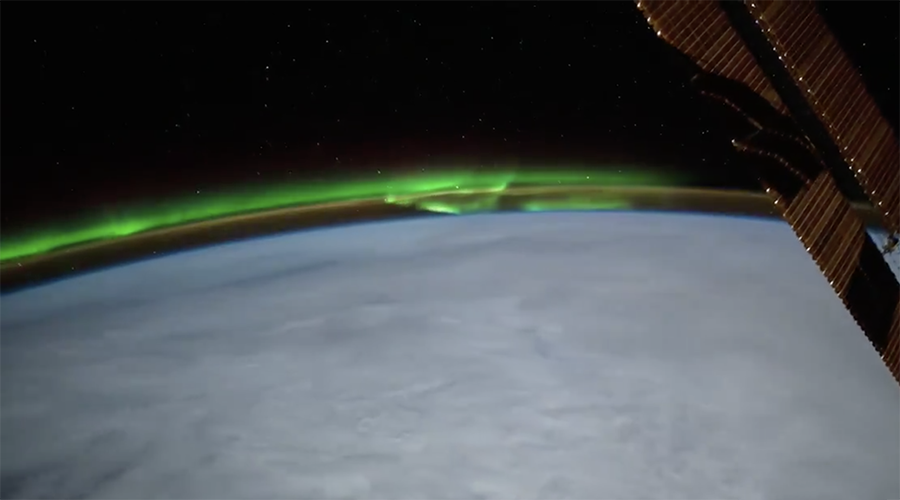
An astronaut aboard the International Space Station captured footage of a dazzling green aurora gloaming on the edge of the Earth's atmosphere.

NASA's Randy Bresnik posted the stunning footage online Friday with the excited message: "My first aurora, ever!"

His video shows the phosphorescent aurora slowly developing on one side of the globe before swirling in a mesmerising green pattern as the ISS moves over Earth.

Comment: See also: Auroras may explain an anomaly in Earth's ionosphere


Life Preserver

Tiny robotic micromotors transporting antibiotics have cured bacterial infections in mice

robotic micromotors
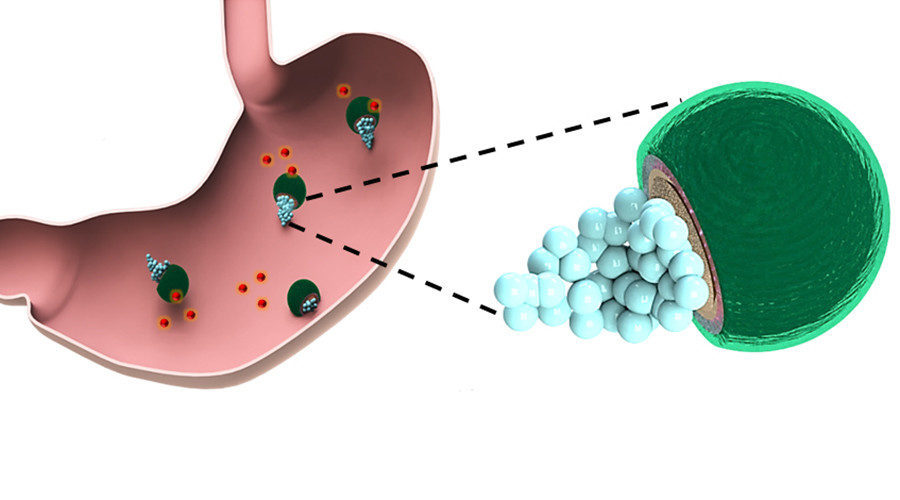
© jacobsschool.ucsd.eduMicromotors are tiny particles that can propel themselves autonomously when placed in a chemical solution.
Tiny robotic drug deliveries could soon be treating diseases inside your body. For the first time, micromotors - autonomous vehicles the width of a human hair - have cured bacterial infections in the stomachs of mice, using bubbles to power the transport of antibiotics.

"The movement itself improves the retention of antibiotics on the stomach lining where the bacteria are concentrated," says Joseph Wang at the University of California San Diego, who led the research with Liangfang Zhang.

In mice with bacterial stomach infections, the team used the micromotors to administer a dose of antibiotics daily for five days. At the end of the treatment, they found their approach was more effective than regular doses of medicine.

Magnify

Scientists reveal alien life may be even more elusive than we thought

proxima b
© M. KORNMESSER/AFP/Getty ImagesAn artist's impression of a view of the surface of the planet Proxima b orbiting the red dwarf star Proxima Centauri, the closest star to the Solar System
Scientists dealt a blow Monday to the quest for organisms inhabiting worlds besides Earth, saying our planet was unusual in its ability to host liquid water - the key ingredient for life.

It was thought likely that distant worlds orbiting stars similar to our Sun would go through water-rich phases.

This would happen when the young, dim star of an icy, lifeless planet - such as early Earth - starts warming, becomes Sun-like, and melts the ice on planets orbiting it at just the right distance - the so-called "Goldilocks" zone.

Icy orbs in our own Solar System, including Jupiter's moon Europa and Saturn's Enceladus, or "exoplanets" in other star systems, may become habitable in this way, the theory goes.

Saturn

The key discoveries from NASA's Cassini Saturn mission

Saturn
© NASA
NASA's Cassini spacecraft will make its final plunge into Saturn's atmosphere in just 30 days, ending a 13-year mission around our solar system's second largest planet.

Since arriving at the planet on July 1, 2004, the first spacecraft to orbit Saturn has made several landmark discoveries and beamed a vast array of stunning images back to Earth.

Here, RT.com looks back at the mission's most important revelations before the probe burns up in Saturn's atmosphere on September 15, bringing an end to its incredible 2.2 billion-mile journey.

Info

Peanuts allergy breakthrough reported by Australian researchers

Peanuts
© A Majeed/AFPAustralian researchers have reported a major breakthrough in the relief of deadly peanut allergy with the discovery of a long-lasting treatment.
Australian researchers have reported a major breakthrough in the relief of deadly peanut allergy with the discovery of a long-lasting treatment they say offers hope that a cure will soon be possible.

In clinical trials conducted by scientists at Melbourne's Murdoch Childrens Research Institute, children with peanut allergies were given a probiotic along with small doses of a peanut protein over an 18-month period.

When the experiment ended in 2013 some 80 percent of the kids were able to tolerate peanuts.

The research, published Wednesday in medical journal The Lancet, found that four years on, about 70 percent could still eat peanuts without an adverse reaction.

"The importance of this finding is that these children were able to eat peanuts like children who don't have peanut allergy and still maintain their tolerant state, protected against reactions to peanut," lead researcher Mimi Tang said.

Microscope 2

Researchers close to developing test to detect cancer long before first symptoms arise

cancer blood test
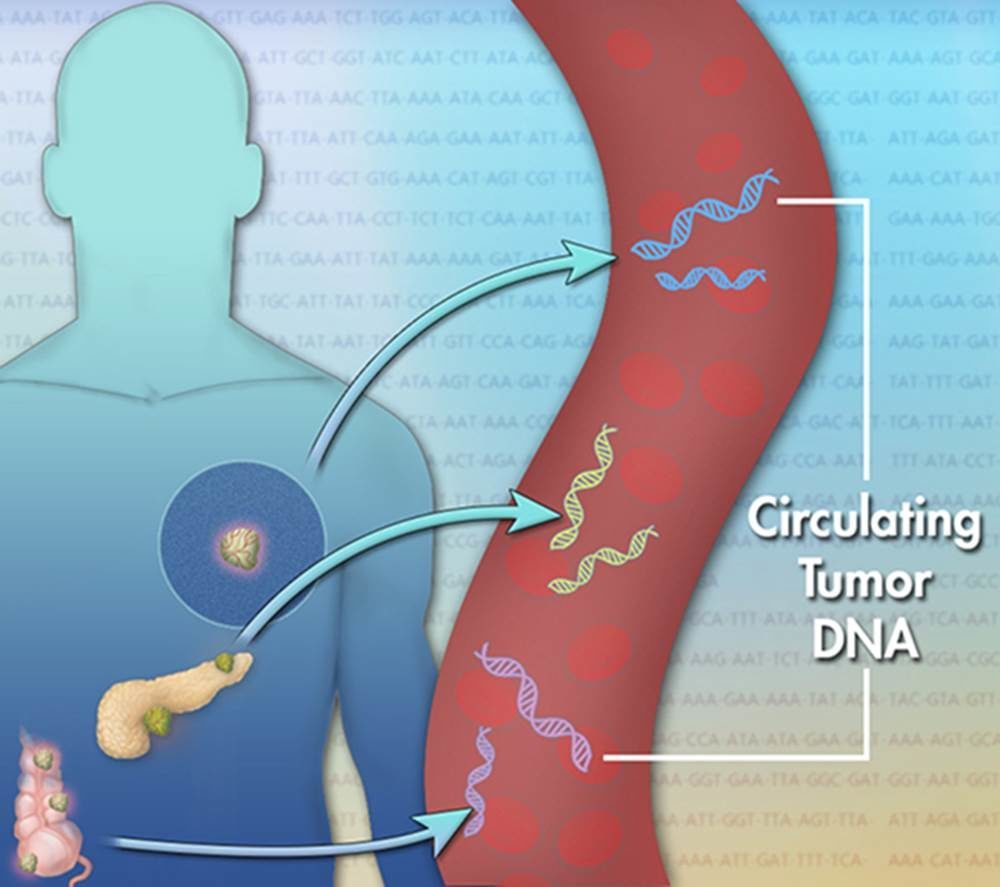
© National cancer InstituteScientists have discovered that dying tumor cells release small pieces of their DNA into the bloodstream. These pieces are called cell-free circulating tumor DNA (ctDNA).
Researchers say they have taken a big step towards developing a test that can tell people if they have cancer long before the first symptoms show up.

The blood test detected the majority of cancers in people with four of the biggest cancer killers: breast, colon, lung and ovarian cancer, the team at Johns Hopkins University said.

The test is a long way from being used to screen for cancer, but the study shows a way to get there, the team reported in the journal Science Translational Medicine.

"There is a lot of excitement about liquid biopsies, but most of that has been in late-stage cancer or in individuals where you already know what to look for," said Dr. Victor Velculescu, professor of oncology and pathology at the Johns Hopkins University Kimmel Cancer Center.

"The surprising result is that we can find a high fraction of early-stage patients having alterations in their blood," said Velculescu, who led the study team.