Science & TechnologyS


Family

Yes Virginia, there are boys and girls: Most authoritative gender-difference review paper tackles the controversy

woman writing
This blog post is a supplement to our main post: The Google Memo: What Does the Research Say About Gender Differences? Please do read at least the introduction to that post before continuing.

As we have scanned the literature to find the major meta-analyses and the most authoritative review articles, we have found one review article that stands above all others, in part for its depth and scope (it is 41 pages long), but especially for its authorship. It was written by a group of psychology's top experts on these topics, a group that was put together to ensure a diversity of opinion among the authors. The first author is Diane Halpern, a professor emerita at Claremont McKenna College, former president of the American Psychological Association, and the author of the book Sex Differences in Cognitive Abilities. One author is Janet Shibley Hyde, a professor at the University of Wisconsin - Madison, whose publications generally point to small and shrinking gender differences (her meta-analyses feature prominently in our main post). Another author is David Geary, author of Male, Female: The Origin of Human Sex Differences, whose publications generally point to more substantial effects. (Here is Geary on the Damore memo). Also on board is Camilla Benbow, an educational psychologist at Vanderbilt University who researches intellectually gifted students, and who was Vice Chair of the President's National Mathematics Advisory Panel (which also included Geary); Ruben Gur a clinical psychologist at the University of Pennsylvania who researches brain-behavior relationships, and Morton Ann Gernsbacher, a professor at the University of Wisconsin - Madison, who researches cognitive and neural mechanisms that underlie human communication. She is also a former president of the Association for Psychological Science.

Robot

Racist & sexist AI bots could discriminate against job, insurance & loans - tech experts

Robots
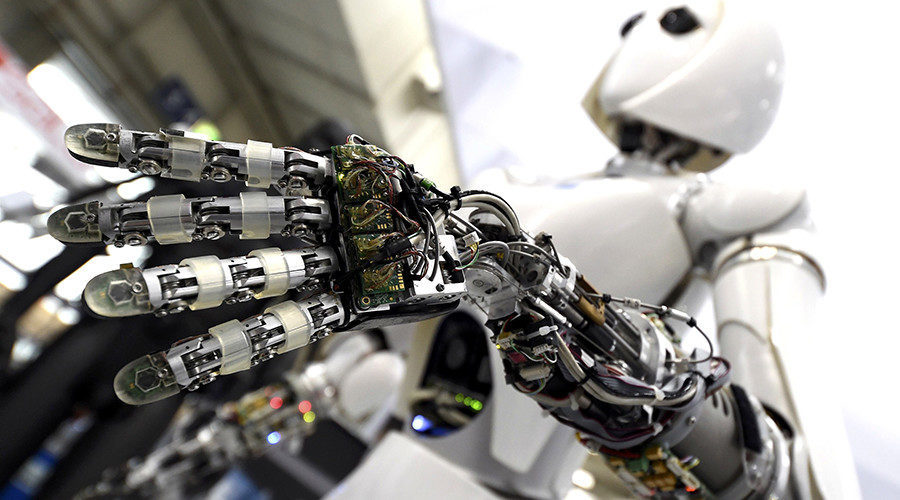
© Fabian Bimmer / Reuters
Artificial intelligence programs designed to assess candidates for university places and bank loans may be inherently racist and sexist, according to technology experts.

Researchers believe that machine-learning algorithms, far from making the world more equitable, are now mimicking society's inequality by discriminating against women and ethnic minorities.

"This is beginning to come up a lot in areas like shortlisting people for jobs, insurance, loans - all those things," Noel Sharkey, Co-Director of the Foundation for Responsible Robotics, told the BBC's Today program.

Sharkey cited the example of research from Boston University in which an AI was trained to read Google News. When asked during a word association game, "man is to computer programmer what woman is to x", the computer replied "homemaker."

"We have a problem," said Sharkey. "We need more women coming into this field to solve it."

In the US, 20 percent of engineering school graduates are women but make up just 11 percent of practicing engineers. In the UK, nine percent of the engineering workforce is female.

Comment: See also: Elon Musk: Artificial intelligence 'more risky' than N. Korea


Arrow Up

Orange peels revive a Costa Rican forest

Orange peels
© Daniel Janzen/Winnie HallwachsAn area covered in orange peels in the 1990s turned into a lush forest nearly 20 years later. The story showcases the unique power of agricultural waste to not only regenerate a forest but also to sequester a significant amount of carbon at no cost.
In the mid-1990s, 1,000 truckloads of orange peels and orange pulp were purposefully unloaded onto a barren pasture in a Costa Rican national park. Today, that area is covered in lush, vine-laden forest.

A team led by Princeton University researchers surveyed the land 16 years after the orange peels were deposited. They found a 176 percent increase in aboveground biomass - or the wood in the trees - within the 3-hectare area (7 acres) studied. Their results are published in the journal Restoration Ecology.

This story, which involves a contentious lawsuit, showcases the unique power of agricultural waste to not only regenerate a forest but also to sequester a significant amount of carbon at no cost.

Cow

Billionaires, Big AG, join venture investors funding lab-grown meat

cattle
© The IndependentAs a meat source, a dying breed?
Eighty-five years ago, Winston Churchill wrote an article for Popular Mechanics that predicted humans would soon be growing their meat rather than cultivating animals for it.

Now, with $17 million in fresh financing from a slew of new investors, including the billionaires Bill Gates and Richard Branson, the big agriculture company Cargill and the venture capital firm DFJ, Memphis Meats is hoping to create an entirely new industry around what it calls "clean meat."

"Instead of using animals as pieces of technology to convert plants into proteins to make things that we like to eat, drink and wear, we can just use biology to make those things directly," said Seth Bannon, a co-founder of the upstart venture firm Fifty Years and an early investor in Memphis Meats.

The company has already successfully made synthesized beef, chicken and duck, according to Memphis Meats co-founder and chief executive Uma Valeti. Now the trick is to get the company to grow their meat at scale.

"We envision this to be a production facility where people can walk through and see where the meat is growing, where it is being harvested and where it is being cooked. You don't get to visit feed lots or visit slaughterhouses," Valeti tells me.

Valeti imagines a production facility that looks more like a craft brewery than a slaughterhouse. It also would represent the first major innovation in the meat industry in the 10,000 years since humans first began breeding livestock.

Comment: Quite a promotion of 'non-slaughter' meat production. What the article doesn't offer are downsides or cautions intrinsic to tampering with nature. Nor does it specify what regulatory process will be its overlord. For a shiver, re-read the last sentence of Churchill's statement for the long-term future of this 'product.'


Cassiopaea

A new type of gravitational wave has been detected... maybe

Cataclysmic collision
© Dana Berry, SkyWorks Digital, Inc./Harvard-Smithsonian Center for Astrophysics
Have we detected a new flavour of gravitational wave? Speculation is swelling that researchers have spotted the subtle warping of the fabric of space resulting from the cataclysmic collision of two neutron stars.

Now optical telescopes - including the Hubble Space Telescope - are scrambling to point at the source of the possible wave: an elliptical galaxy hundreds of millions of light years away.

Gravitational waves are markers of the most violent events in our universe, generated when dense objects such as black holes or neutron stars crash together with tremendous energy. Two experiments - LIGO in the US and VIRGO in Europe - set out to detect minuscule changes in the path of laser beams caused by passing gravitational waves.

LIGO has discovered three gravitational wave sources to date, all of them colliding black holes. The two observatories have been coordinating data collection since November, increasing their sensitivity. That collaboration may be about to pay off.

Comment: See also:


Beaker

Skeptics and true believers clash over sequencing ancient Egyptian DNA

skeleton
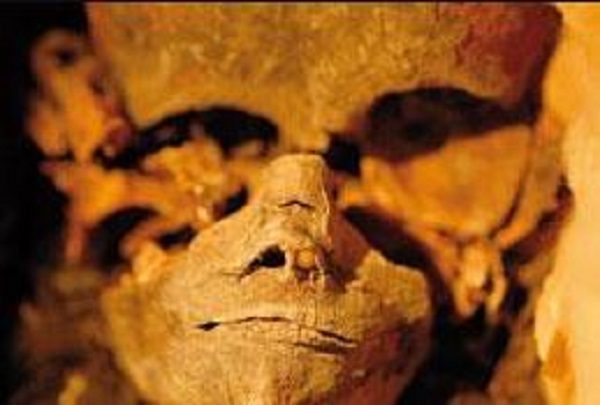
© B. Iverson & B QuiliciMummies found in King Tutankhamun's tomb are at the centre of a dispute over DNA analysis.
Cameras roll as ancient-DNA experts Carsten Pusch and Albert Zink scrutinize a row of coloured peaks on their computer screen. There is a dramatic pause. "My god!" whispers Pusch, the words muffled by his surgical mask. Then the two hug and shake hands, accompanied by the laughter and applause of their Egyptian colleagues. They have every right to be pleased with themselves. After months of painstaking work, they have finally completed their analysis of 3,300-year-old DNA from the mummy of King Tutankhamun.

Featured in the Discovery Channel documentary King Tut Unwrapped last year and published in the Journal of the American Medical Association (JAMA)1, their analysis - of Tutankhamun and ten of his relatives - was the latest in a string of studies reporting the analysis of DNA from ancient Egyptian mummies. Apparently revealing the mummies' family relationships as well as their afflictions, such as tuberculosis and malaria, the work seems to be providing unprecedented insight into the lives and health of ancient Egyptians and is ushering in a new era of 'molecular Egyptology'. Except that half of the researchers in the field challenge every word of it.

Enter the world of ancient Egyptian DNA and you are asked to choose between two alternate realities: one in which DNA analysis is routine, and the other in which it is impossible. "The ancient-DNA field is split absolutely in half," says Tom Gilbert, who heads two research groups at the Center for GeoGenetics in Copenhagen, one of the world's foremost ancient-DNA labs.

Brain

Brain scans reveal the stark differences in the wiring of male and female brains

brain neural map
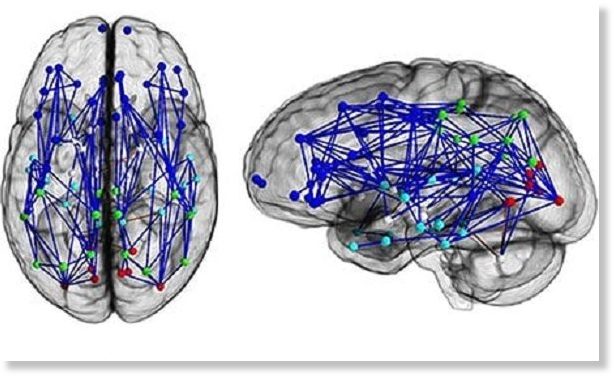
© National Academy of Sciences/PANeural map of a typical man's brain
Scientists have drawn on nearly 1,000 brain scans to confirm what many had surely concluded long ago: that stark differences exist in the wiring of male and female brains.

Maps of neural circuitry showed that on average women's brains were highly connected across the left and right hemispheres, in contrast to men's brains, where the connections were typically stronger between the front and back regions.

Ragini Verma, a researcher at the University of Pennsylvania, said the greatest surprise was how much the findings supported old stereotypes, with men's brains apparently wired more for perception and co-ordinated actions, and women's for social skills and memory, making them better equipped for multitasking.

"If you look at functional studies, the left of the brain is more for logical thinking, the right of the brain is for more intuitive thinking. So if there's a task that involves doing both of those things, it would seem that women are hardwired to do those better," Verma said. "Women are better at intuitive thinking. Women are better at remembering things. When you talk, women are more emotionally involved - they will listen more."

Comment: Someone ought to get the executives at Google to read this and actually get up to speed on the science behind the differences between men and women's brains and how it affects their workplace choices. Maybe they would have been more supportive of James Damore, instead of firing him for essentially speaking the truth:


Brain

Neuroforecasting: Scanning your brain can predict what will happen in the future

brain scan
© Andrew Brookes/GettyTell me the future, oh brain of mine
Can neuroforecasting predict the next election result or market crash? Analysing activity in a part of our brain can predict things that haven't happened yet.

Our brains seem better at predictions than we are. Activity in a particular brain region can foresee whether projects on a crowdfunding website will succeed, even if we consciously decide otherwise. The finding suggests that neuroforecasting by scanning people's brains may provide ways to improve voting polls or even predict changes in financial markets.

To see if it is possible to predict market behaviour by sampling a small group of people, Brian Knutson at Stanford University in California and his team asked 30 people to consider whether they would fund 36 projects on the Kickstarter website. The brain scans took place as the participants were taking in the pictures and descriptions of each campaign. They were then asked to decide if they would want to fund the project.

Info

First X-rays from mystery supernovas detected

type Ia supernova
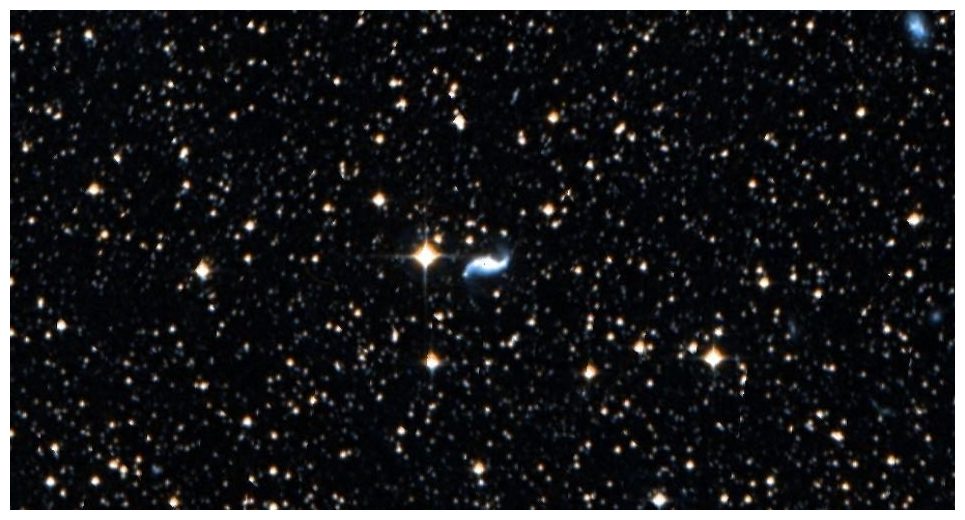
© Digital Sky SurveyScientists have detected the first X-rays from what appears to be a type Ia supernova, located inside the spiral-shaped galaxy ESO 336-G009, about 260 million light-years from Earth.
Exploding stars lit the way for our understanding of the universe, but researchers are still in the dark about many of their features.

A team of scientists, including scholars from the University of Chicago, appear to have found the first X-rays coming from type Ia supernovas. Their findings are published online Aug. 23 in the Monthly Notices of the Royal Astronomical Society.

Astronomers are fond of type Ia supernovas, created when a white dwarf star in a two-star system undergoes a thermonuclear explosion, because they burn at a specific brightness. This allows scientists to calculate how far away they are from Earth, and thus to map distances in the universe. But a few years ago, scientists began to find type Ia supernovas with a strange optical signature that suggested they carried a very dense cloak of circumstellar material surrounding them.

Such dense material is normally only seen from a different type of supernova called type II, and is created when massive stars start to lose mass. The ejected mass collects around the star; then, when the star collapses, the explosion sends a shockwave hurtling at supersonic speeds into this dense material, producing a shower of X-rays. Thus we regularly see X-rays from type II supernovas, but they have never been seen from type Ia supernovas.

Jet5

New Russian MiG interceptor will be able to operate in space at Mach 4 speed

Long-range MiG-31 interceptors at Sokol aircraft plant in Nizhny Novgorod
© Sergey Mamontov / SputnikLong-range MiG-31 interceptors at Sokol aircraft plant in Nizhny Novgorod.
The cutting-edge interceptor aircraft, which has been under development for several years, will be able to reach space and even potentially operate without a pilot, according to the CEO of the MiG corporation working on the project.

The research and development of the PAK DP (perspective aviation complex of long-range interceptor) was launched by the MiG Corporation in 2013. PAK DP, dubbed by media with the unofficial designation MiG-41, is expected to replace the aging long-range interceptor MiG-31 and its variants.

The new fighter will be a spiritual successor of MiG-31, MiG Corporation CEO Ilya Tarasenko stated, shedding some light on the interceptor under development.

"[The development] is at the stage of finalizing the image of the plane. It will be a gradual transition from MiG-31 to PAK DA," Tarasenko told RT at the Army-2017 expo in Kubinka on Wednesday.