Science & TechnologyS


Meteor

Scientists: Asteroid that killed dinosaurs led to endless night and 18-month winter

dinosaur
© iStockDinosaurs were wiped out by an asteroid strike 66 million years ago
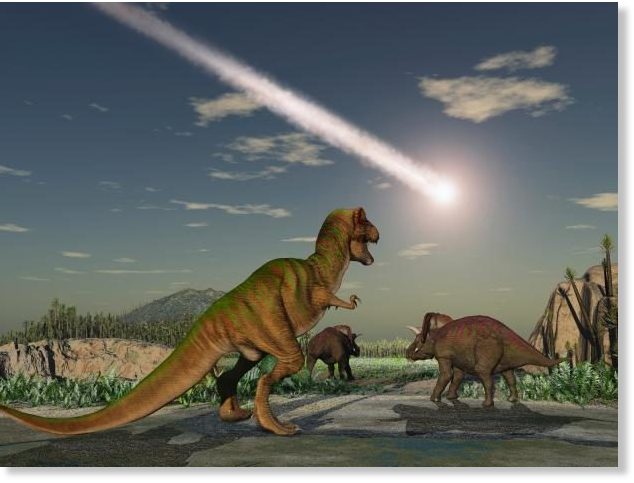
It is a vision of hell on Earth. The sun disappeared behind a cloud of smoke that encircled the planet, turning day into night and causing temperatures to plummet as fire rained down from above.

And if that wasn't bad enough, the massive asteroid that struck the planet 66 million years ago - wiping out the dinosaurs and many other species in the fifth mass extinction of all life - set off earthquakes, giant tsunamis and volcanoes.

Even after the dust cleared nearly two years later, chemical reactions in the upper atmosphere would have wrecked the protective layer of ozone so that the sun's rays would have irradiated anything left alive by the strong ultraviolet light.

It seems extraordinary that life survived such an Armageddon-like event, which was laid bare by researchers who used a sophisticated computer model to work out the effect of the 10km-wide asteroid on the climate.


Microscope 1

Mysterious microbe discovered in Antarctic may hold keys to puzzle of evolution

Antarctic
© CCO/Pixabay
Until now it has remained one of the biggest mysteries in evolution. For decades the best biological brains have been left puzzled over the exact origin of viruses. Now biologists from the University of New South Wales in Australia believe they have found the answer - and it is all down to a peculiar Antarctic microbe.

Are they an older, simpler form of life - or are they parasites that arose only once cells had evolved?

It is thought this microorganism is host to a fragment of DNA that can build a capsule around itself, thus answering that elusive question of how viruses first arose.

According to Ricardo Cavichioli and his team from the University of New South Wales, they found a microorganism in the lakes of the Rauer Islands off the coast of Antarctica that might shed some light on the question.

Brain

Scientists successfully hack into brain remotely, allowing them to control body movements

brains
© Flickr/Neil Conway
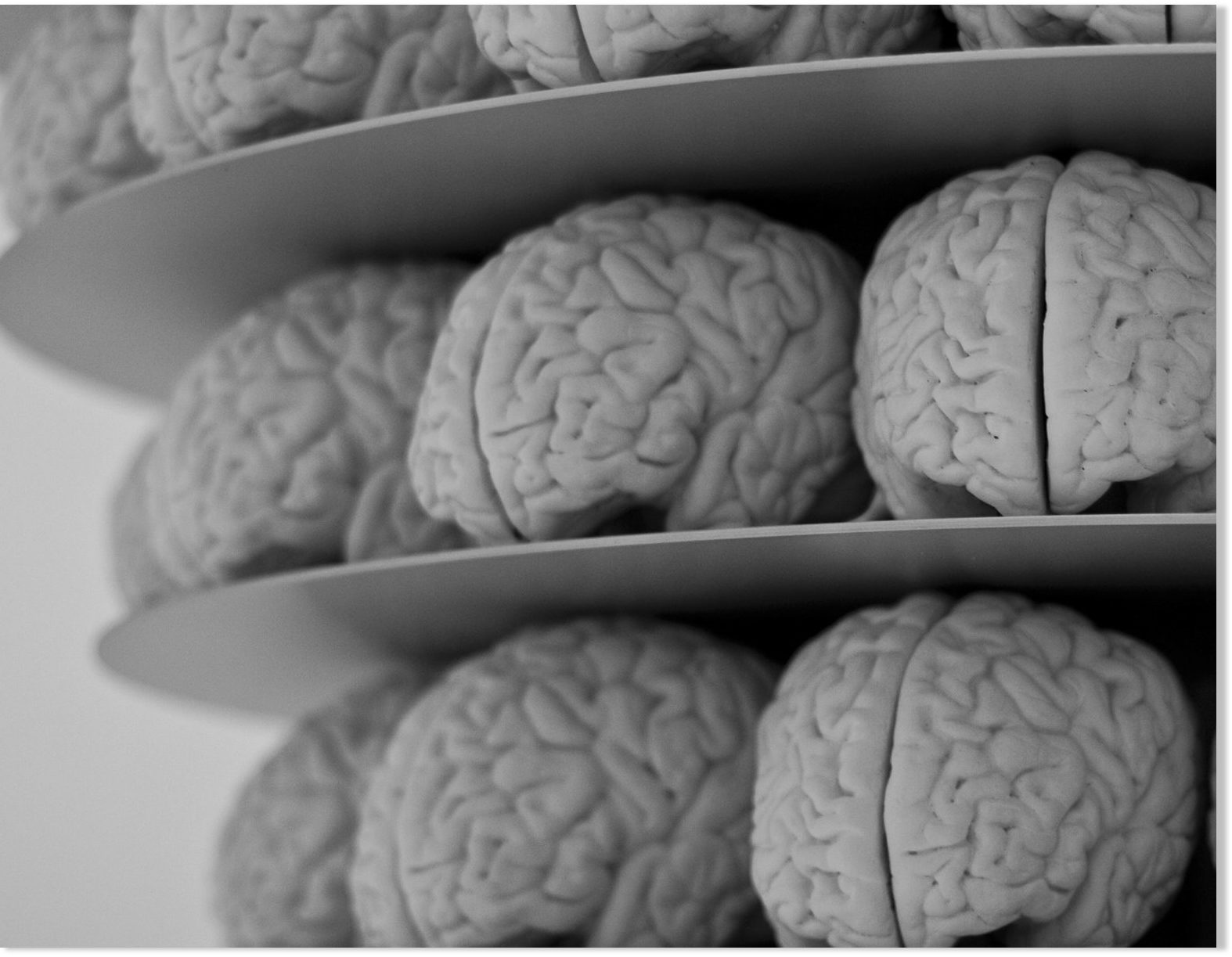
Imagine someone remotely controlling your brain, forcing your body's central processing organ to send messages to your muscles that you didn't authorize. It's an incredibly scary thought, but scientists have managed to accomplish this science fiction nightmare for real, albeit on a much small scale, and they were even able to prompt their test subject to run, freeze in place, or even completely lose control over their limbs. Thankfully, the research will be used for good rather than evil... for now.

The effort, led by physics professor Arnd Pralle, PhD, of the University at Buffalo College of Arts and Sciences, focused on a technique called "magneto-thermal stimulation." It's not exactly a simple process - it requires the implantation of specially built DNA strands and nanoparticles which attach to specific neurons - but once the minimally invasive procedure is over, the brain can be remotely controlled via an alternating magnetic field. When those magnetic inputs are applied, the particles heat up, causing the neurons to fire.

The study, which was published in the most recent edition of the journal eLife, includes experiments where were performed on mice. Using the new technique, the researchers were able to control the movement of the animals, causing them to freeze, lock up their limbs, turn around, or even run.

Despite only being tested on mice, the research could have far-reaching implications in the realm of brain research. The holy grail for dreamers like Elon Musk is that we'll one day be able to tweak our brains to eliminate mood disorders and make us more perfect creatures. This groundbreaking research could very well be an important step towards that future.

Comment: Just imagine if the control element could by implanted via a virus...


Robot

Cybersecurity firm warns most consumer robots are dangerously easy to hack and can be turned into bugging devices

robots
© Tomohiro Ohsumi, Photo Illustration: Tom Hall/Bloomberg
Some of the most popular industrial and consumer robots are dangerously easy to hack and could be turned into bugging devices or weapons, IOActive Inc. said.

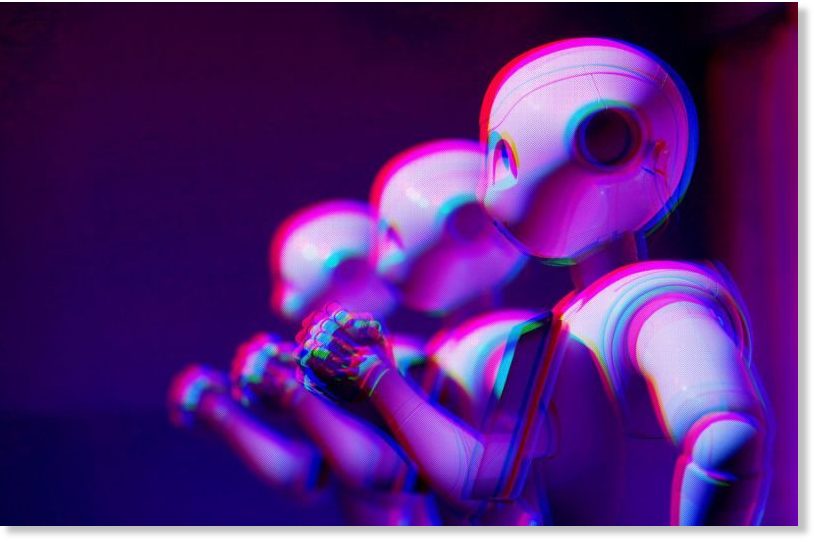
The Seattle-based cybersecurity firm found major security flaws in industrial models sold by Universal Robots, a division of U.S. technology company Teradyne Inc. It also cited issues with consumer robots Pepper and NAO, which are manufactured by Japan's Softbank Group Corp., and the Alpha 1 and Alpha 2 made by China-based UBTech Robotics.

These vulnerabilities could allow the robots to be turned into surveillance devices, surreptitiously spying on their owners, or let them to be hijacked and used to physically harm people or damage property, the researchers wrote in a report released Tuesday.

Universal Robots's devices are designed to work directly alongside humans without being confined to a cage for safety, as with many other industrial models. But IOActive was able to remotely hack the software that controls the robot and disable key safety features. This could result in them being programmed to injure the humans around them.

Blue Planet

Iceland: Photos show North American and European tectonic plates pulling apart

tectonic plate
The dramatic terrain - the join between two tectonic plates - is popular with tourists who can explore the natural wonder on land and underwater.
Tourists look like toys in these bird's eye view photos which show an impressive split landscape where two lands meet.

The dramatic terrain - the join between two tectonic plates - is popular with tourists who can explore the natural wonder on land and underwater. The splits in the land, which has many faults, valleys, volcanoes and hot springs, are caused by the Eurasian and North American plates in Iceland pulling apart.

Some of the rifts are filled with clear cold water where divers can often be seen exploring the underwater crevices, which can be up to 61m (200ft) deep. The clean water is coloured by the sand, silt and other minerals at the bottom and the deeper rifts can be clearly seen from above.

Robot

Elon Musk leads group calling for the ban of killer robots

robocop robot
© Allstar/Studio Canal/Sportsphoto Ltd.A killer robot from the 2014 remake of Robocop. The open letter read: ‘lethal autonomous weapons will permit armed conflict to be fought at a scale greater than ever, and at timescales faster than humans can comprehend.’
Some of the world's leading robotics and artificial intelligence pioneers are calling on the United Nations to ban the development and use of killer robots.

Tesla's Elon Musk and Alphabet's Mustafa Suleyman are leading a group of 116 specialists from across 26 countries who are calling for the ban on autonomous weapons.

The UN recently voted to begin formal discussions on such weapons which include drones, tanks and automated machine guns. Ahead of this, the group of founders of AI and robotics companies have sent an open letter to the UN calling for it to prevent the arms race that is currently under way for killer robots.

In their letter, the founders warn the review conference of the convention on conventional weapons that this arms race threatens to usher in the "third revolution in warfare" after gunpowder and nuclear arms.

The founders wrote: "Once developed, lethal autonomous weapons will permit armed conflict to be fought at a scale greater than ever, and at timescales faster than humans can comprehend. These can be weapons of terror, weapons that despots and terrorists use against innocent populations, and weapons hacked to behave in undesirable ways.

Arrow Down

Eclipse will send temperatures tumbling as day turns to night

eclipse path
Getting ready to watch the solar eclipse? Bring a sweater along with those special glasses because the mercury could dip as the moon's shadow crosses the land.

Millions of Americans across a 70-mile-wide (113-kilometer) corridor from Oregon to South Carolina will see the sky darken as the sun disappears from view, albeit for only a few minutes at a time.

Temperatures in those areas could tumble by as much as 10 degrees Fahrenheit (5.6 Celsius), according to Paul Walker, a meteorologist with AccuWeather Inc. in State College, Pennsylvania. Other parts of the nation will only experience a partial eclipse.

"That is assuming a totally sunny sky," Walker said by telephone. "We will see a temperature drop where totality happens," he said, referring to the path the eclipse will take across the U.S. where the sun will be completely blocked out.

The eclipse will disrupt the sun's power to heat the ground, warm the atmosphere and supply electricity. It could also be ruined by a rainy day, patch of fog or even just a sudden thunderstorm in the wrong place. Given the limits of modern-day forecasting, predicting any one of those days in advance for an event that only lasts minutes is near impossible.

Eye 1

Siberian 'cyber-doctor' has 6 microchips implanted as a multi-functional gadget

Microchip
© Ruptly
A Siberian doctor has implanted six microchips under his skin to turn his body into a no-nonsense multi-functional gadget. This has opened quite a few doors for Aleksandr Volchek - including literally.

Some of the chips function as swipe cards, letting him into his home and office.

A syringe with a thick needle is needed to inject a microchip.

The size of a standard chip is 2 × 12mm, and the smallest one is no more than 1.5 × 8mm, the doc says.

Comment: See also: US company celebrates implanting microchips in employees by throwing a 'chip party'


Monkey Wrench

How to build your own solar eclipse viewer

shoebox viewer
Are you scrambling to find eclipse glasses to view Monday's historic eclipse? It's too late to order them online and many stores and other sellers have sold out of the protective eyewear. Don't panic - You can still safely watch the Great American Solar Eclipse with the rest of the United States if you're up for a simple do-it-yourself project.

The excitement is in the air as Aug. 21 gets closer: This will be the first total eclipse in 40 years to be visible from the continental U.S., and for the first time in 99 years, the path of totality - when the sun's light is completely blocked by the moon - will travel across the length of the continent.

However, it's extremely dangerous to look at the sun, even if most of its light is obscured by the moon. Just as a magnifying glass can focus enough sunlight onto a leaf to start a fire, the lens in your eye can also focus that sliver of light onto your retina to burn it. And because retinas have no pain receptors, you can damage your vision without even feeling it happen. Let us make this perfectly clear: Don't look at the sun during a solar eclipse!

Comment:


Blue Planet

A forest is much more than what you see: Trees talk to each other & recognize their offspring

trees
© CC BY 2.0 Edwin van Buuringen
The Lorax might have spoken for the trees, but it turns out that trees can speak for themselves. At least to other trees, that is.

While it's not news that a variety of communication happens between non-human elements of the natural world, the idea of mycelia (the main body of fungi, as opposed to the more well-known fruiting bodies - mushrooms) acting as a sort of old-school planetary internet is still a fairly recent one, and may serve as a spore of a new breed of forestry, ecology, land management.

Comment: Are Fungi The Earth's Natural Internet?
"I believe that mycelium is the neurological network of nature. Interlacing mosaics of mycelium infuse habitats with information-sharing membranes. These membranes are aware, react to change, and collectively have the long-term health of the host environment in mind. The mycelium stays in constant molecular communication with its environment, devising diverse enzymatic and chemical responses to complex challenges." ― Paul Stamets, Mycelium Running: How Mushrooms Can Help Save the World