Science & TechnologyS


Info

The Strange Case of Solar Flares and Radioactive Elements

Peter Sturrock
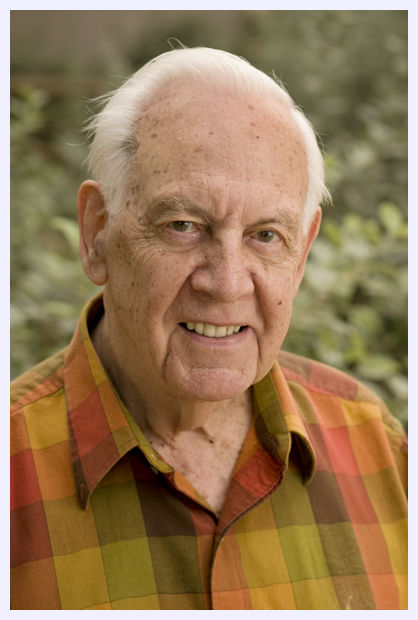
© L.A. CiceroPeter Sturrock, professor emeritus of applied physics.
When researchers found an unusual linkage between solar flares and the inner life of radioactive elements on Earth, it touched off a scientific detective investigation that could end up protecting the lives of space-walking astronauts and maybe rewriting some of the assumptions of physics.

It's a mystery that presented itself unexpectedly: The radioactive decay of some elements sitting quietly in laboratories on Earth seemed to be influenced by activities inside the sun, 93 million miles away.

Is this possible?

Researchers from Stanford and Purdue University believe it is. But their explanation of how it happens opens the door to yet another mystery.

There is even an outside chance that this unexpected effect is brought about by a previously unknown particle emitted by the sun. "That would be truly remarkable," said Peter Sturrock, Stanford professor emeritus of applied physics and an expert on the inner workings of the sun.

The story begins, in a sense, in classrooms around the world, where students are taught that the rate of decay of a specific radioactive material is a constant. This concept is relied upon, for example, when anthropologists use carbon-14 to date ancient artifacts and when doctors determine the proper dose of radioactivity to treat a cancer patient.

Star

Fermi Detects Gamma-rays from Exploding Nova

Washington -- Using the Large Area Telescope (LAT) onboard NASA's Fermi Gamma-ray Space Telescope satellite, astronomers have detected gamma rays from a nova for the first time, a finding that surprises both observers and theorists. The discovery dispels the long-held idea that nova explosions are not powerful enough to produce such high-energy radiation. These findings are published in the August 13th edition of Science with Teddy Cheung, an astrophysicist at the Naval Research Laboratory (NRL), as the lead author.

A nova is a sudden, rapid increase in the brightness of a star. The explosion occurs when a white dwarf ignites in an enormous thermonuclear explosion. The newly detected explosion is equivalent to about 1,000 times the energy that the sun gives off every year. However, compared to what Fermi is capable of detecting, this exploding nova is a relatively modest event.

Gamma rays are the most energetic form of light, and scientists believe the observed gamma-ray emission arises as a million-mile-per-hour shock wave races from the site of the explosion. Fermi's LAT detected the nova for 15 days.

The nova explosion was first noticed on March 11, when amateur astronomers Koichi Nishiyama and Fujio Kabashima in Miyaki-cho, Saga Prefecture, imaged a dramatic change in the brightness of a star in the constellation Cygnus. They knew that the star, known as V407 Cyg, was 10 times brighter than it appeared in an image they had taken three days earlier.

The amateur astronomers contacted Hiroyuki Maehara at Kyoto University, who in turn notified astronomers around the world asking for follow-up observations.

"A few days later, automatic processing of data from Fermi's LAT alerted us to a new high-energy gamma-ray source at the same location as the nova," said NRL's Cheung. "When we looked closer, we found that the LAT had detected the first gamma rays at about the same time as the nova's discovery."

People

Do-Gooders Get Voted Off Island First: People Don't Really Like Unselfish Colleagues, Psychologists Find

You know those goody-two-shoes who volunteer for every task and thanklessly take on the annoying details nobody else wants to deal with?

That's right: Other people really can't stand them.

Four separate studies led by a Washington State University social psychologist have found that unselfish workers who are the first to throw their hat in the ring are also among those that coworkers most want to, in effect, vote off the island.

"It's not hard to find examples but we were the first to show this happens and have explanations for why," said Craig Parks, lead author of The Desire to Expel Unselfish Members from the Group in the current Journal of Personality and Social Psychology.

Info

Farthest Full Moon of 2010 on Tuesday Is Smallest, Too

Image
© Unknown
The moon will reach full phase Tuesday. But as far as full moons go, it won't be the most impressive. In fact, it will be the smallest full moon of the year.

About 13 hours after it's officially full, the moon will arrive at the point in its orbit farthest from Earth (called apogee), a distance of 252,518 miles (406,389 km). The moon's apparent angular size that night will be at a minimum in 2010.

Though the casual viewer may not notice the difference, the Aug. 24 moon will appear 12.3 percent smaller than the full moon of Jan. 30, which nearly coincided with perigee - the moon's closest point in its orbit relative to Earth. [Moon Mechanics]

Laptop

Author Sells 60 Kindle Books for Every iBook

An author has come forward to say sales of his book contradict recent figures about how much the new Apple iBooks store is affecting Amazon's Kindle e-book sales.

J.A. Konrath, who is a popular fiction author, wrote on his blog that he sells 60 Kindle books for every iBook.

Apple CEO Steve Jobs recently said that the iPad, in conjunction with iBooks, had captured 22 percent of the e-book market, which has been dominated recently by Amazon. But Konrath contends that his sales aren't even close to Jobs' figures.

Meteor

Another Fireball Impact On Jupiter - Caught Again By Amateur Astronomer

On August 20th at 18:22 UT, amateur astronomer Masayuki Tachikawa of Kumamoto city, Japan, video-recorded an apparent impact on Jupiter.


This is the third time in only 13 months that amateur astronomers have detected signs of impact on Jupiter. The earlier events occured on July 19, 2009, and June 3, 2010. This weekend's impact, if that's what it was, has not been confirmed by multiple observers, but it resembles the uncontroversial impact of June 3, 2010, and appears to be genuine.

Bulb

Rotating Solar House Generates Five Times The Energy It Consumes

rotatinghouse
© TechCrunch
What's cooler than a rotating house? One whose solar panels produce five times the energy the house uses. That's pretty incredible, considering that even zero-energy structures are rare.

German architect Rolf Disch built the home, called Heliotrope, to follow the sun throughout the day. The structure features triple panes of thermally insulated glass to strike a balance between letting light in and keeping the house cooler inside.

A giant 6.6-kilowatt-capacity rooftop solar panel called the Sun Sail slurps up the rays of energy, pumping them into the home and grid. Solar thermal collectors on balcony railings act as water heaters and radiators. On cloudy days, the house can be heated with wood chips and solar thermal heating.

Ambulance

Organ banks on horizon as boffins prep tissue-freeze tech

Worryingly, experiments include human cells and flies

Once again disregarding the warnings of science fiction, boffins in America are seeking to develop technology which will allow human parts to be frozen indefinitely in organ banks for use in on-demand transplants.

"The goal is to make human cells survive on ice. Twenty-four hours on ice is pushing it and many people die waiting," says Daniel Shain, biology boffin.

Shain and his colleagues believe that the key to allowing human tissues, organs etc to survive being deep-frozen and then returning to service inside another body may be found in nature. Specifically, it seems that a certain type of fruit fly may hold the secret.

The humble Drosophila melanogaster, according to Shain and his collaborating fly expert Nir Yakoby, has an enzyme-regulated "molecular thermostat" which could - expertly tinkered with - allow it to survive being frozen. It seems that Shain has already gained similar insights from the abilities of Tibetan ice worms.

Rocket

DARPA orders VTOL robots for 'covert payload placement'

Tailsitter two-stroke 'V-Bats' drop off surprise packages

DARPA, the US military research bureau occasionally prone to embarrassing tumbles from the teetering kitchen stool of unreasonable risk while groping wildly for the inaccessible biscuit tin of technological dominance secreted atop the unscalable refrigerator of unfeasibility, has done it again


Rocket

Second live test of US raygun jumbo delayed by glitch

Nork-bust blast cannon now set for Saturday sky-fry

The United States' radical jumbo jet mounted ICBM-blasting laser cannon was set for its most ambitious test yet last night, in which it would have fried a missile in flight from more than 100 miles off. However technical hitches have delayed the test until the weekend.

The trial was announced by the US defence department in a statement on Tuesday, at which time it was expected that the laser jumbo would shoot down its second missile above a Californian firing range early yesterday morning. Thus far the raygun has shot down just one missile (in February) at a relatively close range, which would be inconvenient in operational use - the plane would have to fly dangerously close to the enemy missile silo or pad, penetrating defences to do so.

Here's a vid of the test:

