Science & TechnologyS


Bizarro Earth

Northern Lights Hit 100-Year Low Point: Finnish Researchers

Aurora_Borealis
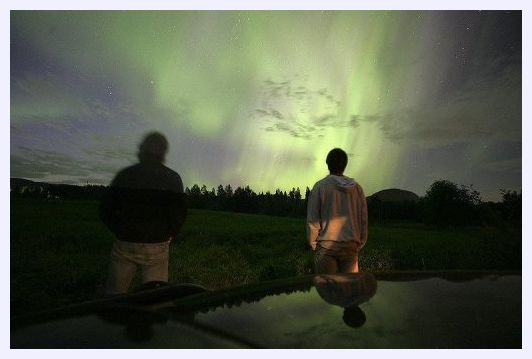
© Physorg.comSwedes watch a display of Aurora Borealis in Ostby in 2006. The Northern Lights have petered out during the second half of this decade, becoming rarer than at any other time in more than a century, the Finnish Meteorological Institute said Tuesday.

The Northern Lights have petered out during the second half of this decade, becoming rarer than at any other time in more than a century, the Finnish Meteorological Institute said Tuesday.

The Northern Lights, or aurora borealis, generally follow an 11-year "solar cycle", in which the frequency of the phenomena rises to a maximum and then tapers off into a minimum and then repeats the cycle.

"The solar minimum was officially in 2008, but this minimum has been going on and on and on," researcher Noora Partamies told AFP.

"Only in the past half a year have we seen more activity, but we don't really know whether we're coming out of this minimum," she added.

The Northern Lights, a blaze of coloured patterns in the northern skies, are triggered by solar winds crashing into the earth and being drawn to the magnetic poles, wreaking havoc on electrons in the parts of the atmosphere known as the ionosphere and magnetosphere.

Info

New Earth-Like Planet Discovered

Gliese 581g
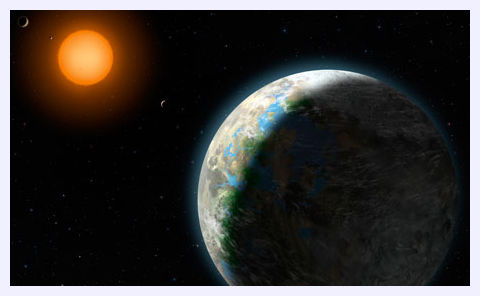
© Zina Deretsky/National Science Foundation/APAn artist's impression of Gliese 581g, which astronomers say is near Earth - relatively speaking - at 120 trillion miles.
Gliese 581g is in the 'Goldilocks zone' of its solar system, where liquid water could exist, and is a strong contender to be a habitable world

Astronomers have discovered a potentially habitable planet of similar size to Earth in orbit around a nearby star.

A team of planet hunters spotted the alien world circling a red dwarf star called Gliese 581, 20 light years away.

The planet is in the "Goldilocks zone" of space around a star where surface temperatures are neither too hot nor too cold for liquid water to form.

"Our findings offer a very compelling case for a potentially habitable planet," said Steven Vogt, an astronomer at the University of California, Santa Cruz. "The fact that we were able to detect this planet so quickly and so nearby tells us that planets like this must be really common."

If confirmed, the planet would be the most Earth-like that has ever been discovered in another solar system and the first strong contender for a habitable one.

More than 400 exoplanets have been discovered by astronomers, but most are gas giants, like Jupiter, that would be inhospitable to life as we know it.

Info

The Cosmic Scale

An incredible and humbling perspective.


Sherlock

Fossil secrets of the da Vinci codex

Image
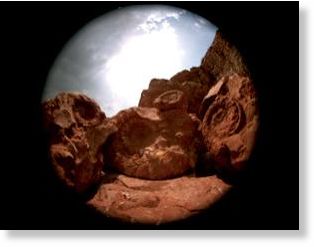
© Ted Spiegel/CorbisDa Vinci realised people were wrong about the origin of Italy's fossils
Did Leonardo decipher traces of ancient life centuries before Darwin?

It was to be Leonardo da Vinci's most impressive work yet. In 1483, the Duke of Milan, Ludovico Sforza, commissioned the up-and-coming artist to create a huge bronze statue of a horse, standing over 7 metres tall. Da Vinci spent the next 10 years perfecting a full-size clay model. Sadly, it was never cast in bronze. Tonnes of the metal were needed, and Sforza ended up using the earmarked supplies to make weapons for use against invading French troops. When the French army took Milan in 1499, its archers used da Vinci's clay horse for target practice.

Those years in Milan were nevertheless important for da Vinci, and not only for the many masterpieces he painted in that time. The polymath was also working on a very different project inspired by an intriguing feature of the surrounding countryside: embedded in the rocks there appeared to be a multitude of small stone sea creatures. "The hills around Parma and Piacenza show abundant molluscs and bored corals still attached to the rocks," da Vinci wrote a few years later. "When I was working on the great horse in Milan, certain peasants brought me a huge bagful of them."

Sun

Another Crackling Sunspot

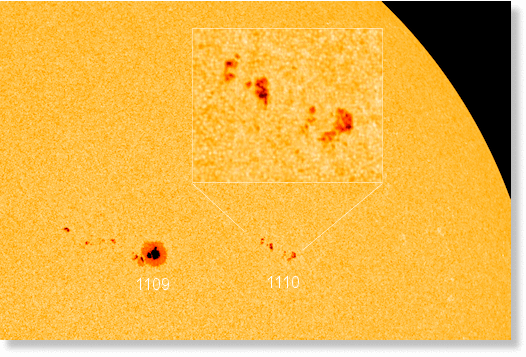
During the past 24 hours, sunspot 1110 has increased in size more than 10-fold. A white-light camera onboard NASA's Solar Dynamics Observatory took this picture during the early hours of Sept. 29th:

Image
© NASA/SDO
Although it is still small compared to behemoth sunspot 1109 right behind it, sunspot 1110 is much more active. Reconnection events in the sunspot's magnetic canopy have produced at least two C-class solar flares since yesterday (SDO movies: #1, #2).

Meteor

Comet Hartley 2 Approaches Earth

Comet Hartley 2
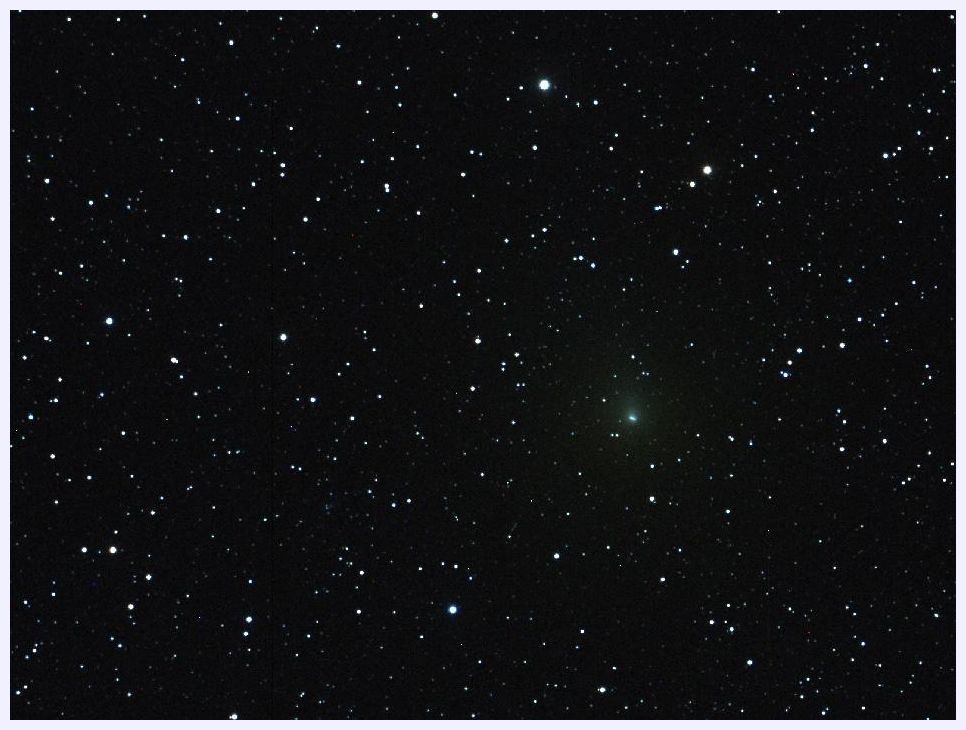
© NASA/MSFC/Bill Cooke, NASA's Meteoroid Environment OfficeComet Hartley 2 approaches Earth at a distance of 18 million miles, seen on Sept. 28, 2010.
A pale green interloper among the stars of Cassiopeia, Comet Hartley 2 shines in this four-minute exposure taken on the night of Sept. 28, 2010, by NASA astronomer Bill Cooke. Still too faint to be seen with the unaided eye, the comet was 18 million miles away from Earth at the time. Cooke took this image using a telescope located near Mayhill, N.M., which he controlled via the Internet from his home computer in Huntsville, Ala. Comet-watching from the comfort of your living room? Modern astronomy is truly amazing...

Comet 103P/Hartley 2, a small periodic comet, was discovered in 1986 by Malcolm Hartley, an Australian astronomer. It orbits the sun about every 6.5 years, and on Oct. 20, the comet will make its closest approach to Earth since its discovery. In this case, "close" means 11 million miles, or 17.7 million kilometers. A moonless sky will make for promising viewing conditions in the northeastern skies, especially just before dawn.

Ambulance

New Microfluidic Device Helps Identify and Capture Breast Cancer Cells

Image
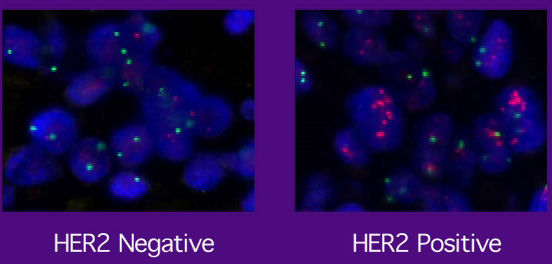
© Roche.comDevice can identify the protein HER2 status and isolate circulating tumor cells
Researchers have developed a new disposable device that could help identify patients with advanced breast cancer awaiting drug therapy with trastuzumab, and capture cancer cells that have an abnormal amount of the protein HER2 (typically found in aggressive breast cancers).

Benjamin Thierry, of the Ian Wark Research Institute at the University of South Australia, along with his colleagues, has created an elastic, disposable microfluidic device that can efficiently catch the protein HER2 - which is the tyrosine kinase human epidermal growth factor receptor 2 -- found in "aggressive breast cancers with poor prognosis."

The only way to find out HER2 status in breast cancer patients now is through fluorescence in situ hybridization (FISH) or immunohistochemistry, both of which require biopsies. The problem with biopsy-based testing is that it could lead to treatment that is ineffective, because the HER2 status of the primary tumor in 20 percent of breast cancers differs from the HER2 status in that of a metastatic tumor. This information has led to the idea of isolating circulating tumor cells (CTCs), but this is difficult because circulating tumor cells exist at very low ratios of 1 to 10 per billion blood cells.

Syringe

Rewiring a Damaged Brain

Researchers in the Midwest are developing microelectronic circuitry to guide the growth of axons in a brain damaged by an exploding bomb, car crash or stroke. The goal is to rewire the brain connectivity and bypass the region damaged by trauma, in order to restore normal behavior and movement.

Pedram Mohseni, a professor of electrical engineering and computer science at Case Western Reserve University, and Randolph J. Nudo, a professor of molecular and integrative physiology at Kansas University Medical Center, believe repeated communications between distant neurons in the weeks after injury may spark long-reaching axons to form and connect.

Their work is inspired by the traumatic brain injuries suffered by ground troops in Afghanistan and Iraq. Despite improvements in helmets and armor, brain trauma continues to be the signature injury of these wars.

Sherlock

Prehistoric Stonehenge Visitors Came from the Mediterranean and the Alps

Image
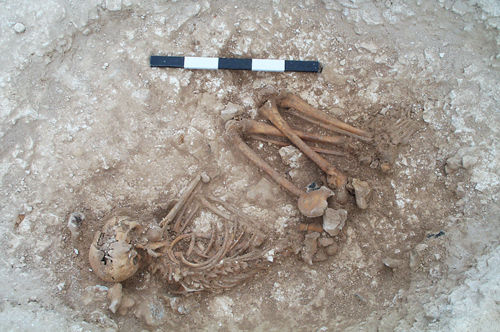
© NERCThe 'Mediterranean' Boy with the Amber Necklace burial at Boscombe Down, about 3 kilometres from Stonehenge
The links between the Stonehenge area and the Mediterranean have been debated for years.

Recent research suggest that some of the people buried in the area during the Bronze Age were not local. Rather, they came from both the snow of the Alps and the heat of the Mediterranean to visit Stonehenge.

The analysis of the teeth from two males provides new evidence that one dubbed 'the Boy with the Amber necklace' had come from the Mediterranean area, whilst it confirms the 'Amesbury Archer' had come from the Alps.

The Amesbury Archer was discovered around five kilometres from Stonehenge. His is the richest Copper Age (2450 - 2300 BC) grave found in Britain and it contained some of Britain's earliest gold and copper objects - a pair of gold hair clasps and three copper daggers.

Binoculars

World's Biggest Solar Powered Boat Sets Sail

The state-of-the-art catamaran which is 31 metres long and 15 metres wide, was launched in Monaco.