Science & TechnologyS


Info

Your Vital Signs, on Camera


You can check a person's vital signs - pulse, respiration and blood pressure - manually or by attaching sensors to the body. But a student in the Harvard-MIT Health Sciences and Technology program is working on a system that could measure these health indicators just by putting a person in front of a low-cost camera such as a laptop's built-in webcam.

So far, graduate student Ming-Zher Poh has demonstrated that the system can indeed extract accurate pulse measurements from ordinary low-resolution webcam imagery. Now he's working on extending the capabilities so it can measure respiration and blood-oxygen levels. He hopes eventually to be able to monitor blood pressure as well. Initial results of his work, carried out with the help of Media Lab student Daniel McDuff and Professor of Media Arts and Sciences Rosalind Picard, were published earlier this year in the journal Optics Express.

Poh suggests that such noninvasive monitoring could prove useful for situations where attaching sensors to the body would be difficult or uncomfortable, such as for monitoring burn victims or newborns. It could also be used for initial telemedicine screening tests over the Internet using a patient's own webcam or even cell-phone camera.

Such a system could also be built into a bathroom mirror so that patients who need ongoing monitoring, or just people who want to keep track of their own health, could get pulse, respiration, oxygen saturation and blood-pressure readings routinely while they brush their teeth or wash up, displayed in a corner of the mirror.

Info

Linguists Discover Rarity: a New Language

Koro Speakers
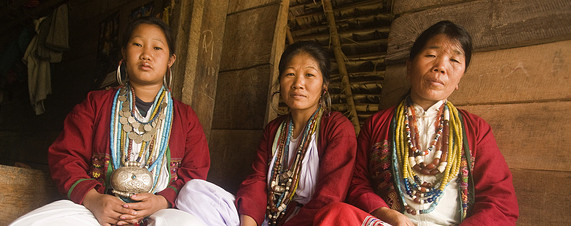
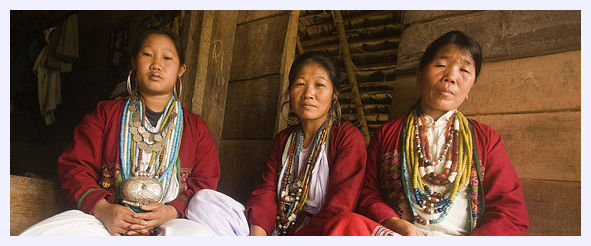
© Chris RainierThree speakers of a newly identified language known as Koro.

In the foothills of the Himalayas, two field linguists have discovered an oddity as rare as any endangered species - a language completely new to science.

The researchers, who announced their find Tuesday in Washington, D.C., encountered it for the first time along the western ridges of Arunachal Pradesh, India's northeastern-most state, where more than 120 languages are spoken. There, isolated by craggy slopes and rushing rivers, the hunters and subsistence farmers who speak this rare tongue live in a dozen or so villages of bamboo houses built on stilts.

The researchers identified the language - called Koro - during a 2008 expedition conducted as part of National Geographic's Enduring Voices project.

"Their language is quite distinct on every level - the sound, the words, the sentence structure," said Gregory Anderson, director of the nonprofit Living Tongues Institute for Endangered Languages, who directs the project's research. Details of the language will be documented in an upcoming issue of the journal Indian Linguistics.
Magnify

Neanderthals Had Deep Sense of Compassion, New Study Suggests

Image
© Press Association
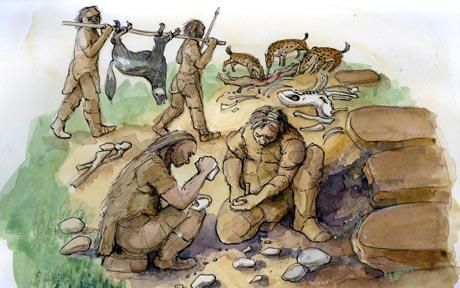
Neanderthals have been unjustly maligned as heartless brutes, according to researchers who claim the primitive humans possessed a deep-seated sense of compassion.

Researchers found that groups living in Europe between 500,000 and 40,000 years ago took care of sick or wounded individuals over a period of many years.

The interdependence of early communities, who would hunt and eat together, let to an emerging commitment to the welfare of others.

The University of York study, published in the journal Time and Mind, examined archaeological remains to see how emotions emerged from our ancestors.

The researchers' evidence showed how a child with a congenital brain abnormality was not abandoned but lived until five or six years old.

Info

Anthropologists Adopt a More Favorable View of Neanderthals

Scientists are broadly rethinking the nature, skills and demise of the Neanderthals of Europe and Asia, steadily finding more ways that they were substantially like us and quite different from the limited, unchanging and ultimately doomed inferiors most commonly described in the past.

The latest revision involves Neanderthals who lived in southern Italy from about 42,000 to 35,000 years ago, a group that had to face fast-changing climate conditions that required them to adapt.

And that, says anthropologist Julien Riel-Salvatore, is precisely what they did: fashioning new hunting tools, targeting more-elusive prey and even wearing identifying ornaments and body painting.

Traditional Neanderthal theory has it that they changed their survival strategies only when they came into contact with more-modern early humans. But Riel-Salvatore, a professor at the University of Colorado at Denver writing in the Journal of Archaeological Method and Theory, says that was not the case in southern Italy.

"What we know is that the more-modern humans lived in northern Italy, more-traditional Neanderthals lived in middle Italy, and this group that adapted to a changing world was in the south - out of touch with the northern group," he said.

"Because of this Neanderthal buffer, it seems very unlikely that the southern Italy Neanderthals learned from the more-modern humans," he said. "They needed to change, and did, apparently by themselves."

He says this finding - along with recent investigations that have determined that between 1 and 4 percent of the human genome in Europe and Asia has Neanderthal genes - means that these often disparaged humans are actually "more like our brothers and sisters than even our cousins."

Info

Extreme PowerPoint Places You in 3D Slide Show


It will either revolutionise your presentations or make "death by PowerPoint" worse. One thing is certain: by allowing you to touch and play with light, Microsoft's LightSpace technology will make presenting more fun.

The LightSpace prototype projects slides, documents, photographs or video onto any surface, from a table to a door. Presenters can then touch and literally pick up a virtual item from a display and carry it across the room as a spot of light in the palm of their hand.

To perform commands - "play video", for example - you move your hand along a projected light beam that acts as the central control. Holding your hand in the right position on the menu for a few seconds activates the function.

"The aim is to bring the kind of multi-touch interaction you get with LCD surface displays to every surface in a room," says Andrew Wilson of the Microsoft Research lab in Redmond, Washington.

Info

4000-Year-Old Aryan City Discovered in Russia

Aryan City
© DD News

Russian archaeologists have unearthed some ancient and virtually unknown settlements which they believe were built by the original Aryan race about 4000 years ago.

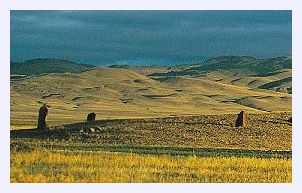
According to the team which has discovered 20 of the spiral-shaped settlements in remote part of Russia steppe in southern Siberia bordering Kazakhstan, the buildings date back to the beginning of Western civilisation in Europe.

The Bronze-age settlements, the experts said, could have been built shortly after the Great Pyramid some 4000 years ago by the original Aryan race whose swastika symbol was later adopted by the Nazis in the 1930s.

TV historian Bettany Hughes, who explored the desolate part of the Russian steppe for BBC programme 'Tracking The Aryans', said: "Potentially, this could rival ancient Greece in the age of the heroes."

Sherlock

One of France's Largest Dinosaur Fossil Deposits Found in the Charente Region

Image
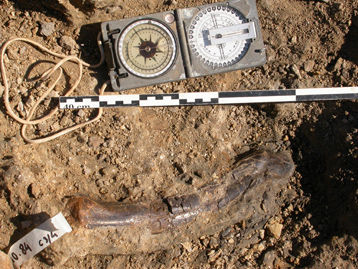
© Didier NéraudeauFemur of a carnivorous dinosaur of the theropod family
The first excavations at the Audoin quarries in the town of Angeac, in the Charente region of south-western France, have confirmed that the site is one of the richest dinosaur fossil deposits in the country.

Coordinated by the Musée d'Angouleme and the Géosciences Rennes laboratory (France), the project involved researchers from CNRS and the Muséum National d'Histoire Naturelle (French Natural History Museum).

With more than 400 bones brought to light, this site is remarkable both for the quantity of discoveries and their state of preservation. The quarries have yielded a wide variety of fossils dating from the Lower Cretaceous Period, dating back 130 million years. The most impressive is a femur exceeding 2.2 meters, which could have belonged to the largest sauropod known in Europe. Unusually, the paleontologists at the site also discovered fossilized wood, leaves and seeds that will enable them to reconstitute the flora in which the animals lived. Based on these exceptional finds, the scientists hope to gain a clearer picture of the terrestrial ecosystems of the Lower Cretaceous, a little-known and insufficiently documented period in this region of Europe.

Eye 1

Scratched Glasses Give Perfect Vision for any Eyesight

Focus
© John Brackenbury/NHPAEverything in focus.

Ditch those bifocals. You might soon wearing spectacles whose lenses allow you to see clearly regardless of how long or short-sighted you are.

With age, the lenses in our eyes often lose the ability to change shape enough to focus light from near objects onto the retina - a condition called presbyopia. This leaves people who were already short-sighted unable to focus on either near or distant objects. Bifocals offer a solution by having two lenses in the same frame, but users must get used to tilting their head up or down to switch focus.

Zeev Zalevsky at Bar-Ilan University in Ramat Gan, Israel, has developed a technique to turn a standard lens into one that perfectly focuses light from anything between 33 centimetres away and the horizon.

It involves engraving the surface of a standard lens with a grid of 25 near-circular structures each 2 millimetres across and containing two concentric rings. The engraved rings are just a few hundred micrometres wide and a micrometre deep. "The exact number and size of the sets will change from one lens to another," depending on its size and shape, says Zalevsky.

Info

Machu Picchu Reveals New Secrets Inkaraqay

Image
© Roxabel Ramon - El Comercio
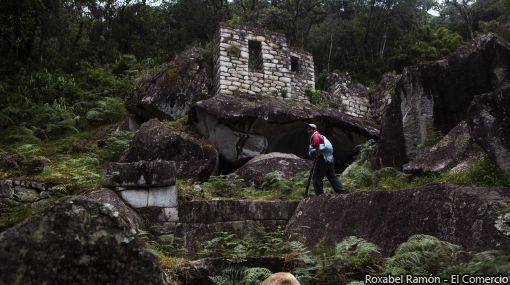
Only ever seen by a few people over the past century, the Inca site of Inkaraqay located on an inaccessible and nearly vertical side of the Huayna Picchu mountain that overlooks Machu Picchu, is only now being revealed to the wider world.

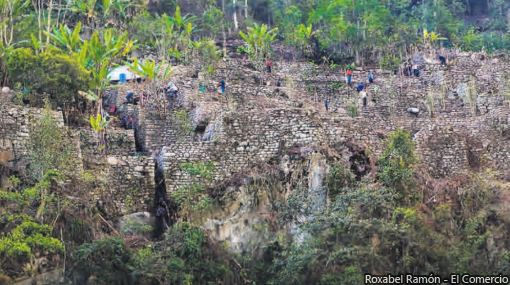
With the appearance of a fort hanging on to the sheer drop that gives way to the Vilcanota river and the well-known moon temple below, its huge walls and terraces covering 4,500 square metres are actually agricultural in nature.

Image
© Roxabel Ramon - El Comercio
Accompanying the five levels of farming terraces is a ritual platform dedicated, as with the temple nearer the mountain's foot, to the worship of the moon.

Magnify

Berlin Researchers Crack the Ptolemy Code

Image
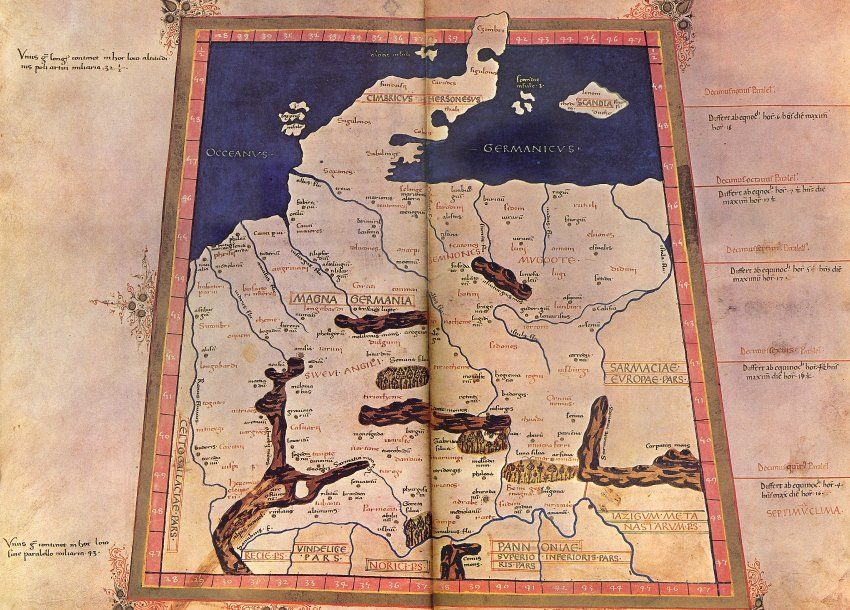
© UNknownA 2nd century map of Germania by the scholar Ptolemy has always stumped scholars, who were unable to relate the places depicted to known settlements. Now a team of researchers have cracked the code, revealing that half of Germany's cities are 1,000 years older than previously thought.
A 2nd century map of Germania by the scholar Ptolemy has always stumped scholars, who were unable to relate the places depicted to known settlements. Now a team of researchers have cracked the code, revealing that half of Germany's cities are 1,000 years older than previously thought.

The founding of Rome has been pinpointed to the year 753. For the city of St. Petersburg, records even indicate the precise day the first foundation stone was laid.