Science & TechnologyS


Laptop

As Internet 'Hypergiants' Proliferate, Attacks on Human Rights Increasingly Common: Study

skull key
© J.Anderson
Amid the rise of the Internet's "hypergiants" -- the massive Internet service providers (ISPs) and network operators at the core of Earth's global communications platform -- smaller media organizations and human rights groups have found themselves on the network's outer fringes, and frequently the targets of devastating cyber-attacks.

That's according to a recent Harvard University study (pdf), carried out by the Berkman Center for Internet & Society, which illustrated the challenges small organizations face in propelling their key issues into the global spotlight.

Harvard researchers found that between August 2009 and September 2010, a collection of just 280 sites run by human rights organizations were hit with 140 different distributed denial-of-service (DDoS) attacks.

But those were just the most prominent instances: there were likely many others that went unnoticed, the researchers noted.

The problem posed by these types of attacks is that smaller organizations operating without the aid of network security experts can be bounced off the Internet by a massive influx of traffic across their domain.

It's a tactic not dissimilar from those employed by "hacktivist" community "Anonymous" in its recent campaign against the corporate enemies of secrets website WikiLeaks, but with an even more nefarious purpose. As opposed to the voluntary networks of individuals who consciously lent their computers to attacking companies like MasterCard and PayPal, most of these DDoS attacks are orchestrated by shadow networks of computers carrying malicious software that hijacks bandwidth without the users' knowledge.

Bulb

The Denisovan Code: Researchers Decipher DNA of Mysterious Human Ancestor

Image
© dapd
Photo Gallery: Humanity's New Relative. Click here.

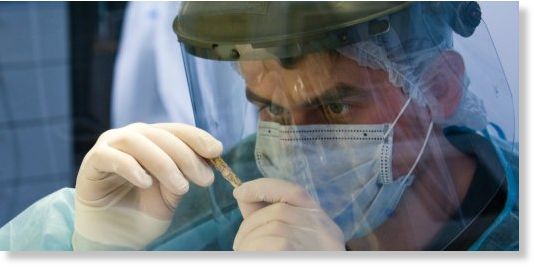
The human family just got a new relative. Genetic researchers in Leipzig have deciphered the DNA of a hominid species that coexisted with Homo sapiens and Neanderthals around 40,000 years ago. A tiny piece of bone was enough for them to sequence the genome.

The miniscule amount of powder could have sat on a knife point, and yet, according to Johannes Krause, it contains something sensational. The Leipzig-based genetic researcher extracted the fine powder from a minute piece of fossilized bone -- and discovered a whole chapter of mankind's history inside it.

Krause and his colleagues at the Max Planck Institute for Evolutionary Anthropology in the eastern German city of Leipzig were able to sequence almost the complete genome of a hitherto unknown type of hominid from molecules that they extracted from bone meal. In addition to the DNA sequence of modern Homo sapiens and Neanderthals, they also unlocked a genome from a third type of hominid, according to a paper published Thursday in the journal Nature. The researchers have dubbed the new hominids "Denisovans," after the Denisova Cave in the Altai Mountains of Siberia where the bone was found.

Info

Lunar Eclipse Reveals Aurora Borealis

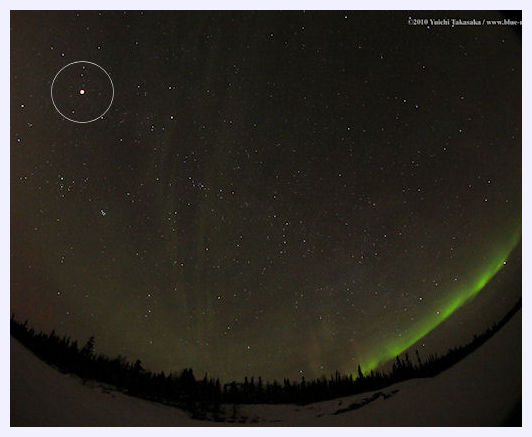
Normally, the full Moon is bad news for Northern Lights; lunar glare overwhelms the delicate aurora borealis. The full Moon of Dec. 21st, however, was different. It slipped into the shadow of Earth for a lunar eclipse, reducing the glare and allowing the auroras to come out and play:

Aurora
© Spaceweather
"Auroras were dancing in the Northern sky while eclipse was happening," says photographer Yuichi Takasaka of Yellowknife, Northwest Territories, Canada. In the snapshot, at left, the Moon is circled, apparently not much brighter than surrounding stars. A video below, prepared by Takasaka shows how dramatically the sky darkened while the Moon was inside Earth's shadow. "What a night!"


Info

Sperm May Pass Along Diet Instructions

Mom's eggs typically get most of the credit for the miracle of life. But now researchers have found sperm may pass nutritional information - not encoded in the DNA - from generation to generation.

In the study, a host of metabolic changes showed up in the livers of mice whose fathers were fed a low-protein diet.

"The take-away is that we are more than just our genes," said study researcher Oliver Rando of the University of Massachusetts Medical School. "And there are many ways our parents can 'tell' us things."

The underlying sequence of base pairs in the mice's genes did not change. (A base pair consists of two nucleotide molecules that sit opposite one another on complementary strands of DNA.) Rather, chemical modifications occurred that alter the way the genes are expressed, or how they function in the mice. The phenomenon is called epigenetics, when the genes themselves don't change but their function does.

Telescope

Milky Way's Galactic Neighbourhood Puzzles Astronomers

Our Strange Galaxy
© KFC
It looks as if the Milky Way and its nearest neighbours make up one of the rarest configurations in the local Universe. Now astronomers are wondering why

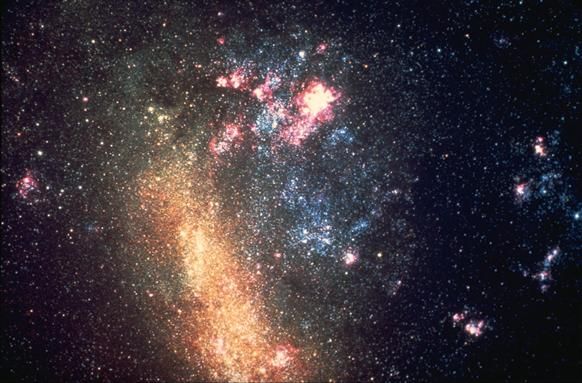
There's something odd about our galactic neighbourhood, which Sidney van den Bergh at the Herzberg Institute of Astrophysics in Canada highlights today in a short paper.

Astronomers have long known that the Milky Way's two closest neighbours are the Large and Small Magellanic Clouds, giant clouds of stars, gas and dust called irregular galaxies.

This is strange for two reasons. These galaxies are much younger than ours and may have even formed together. It looks as if they may just be passing by, on their way to somewhere else. Most other galaxies like ours, such as Andromeda, don't have a single companion like this, so having two seems rather fortunate.

Meteor

NASA astronomers discover amino acids in meteorites that crashed into Sudan in 2008

Image
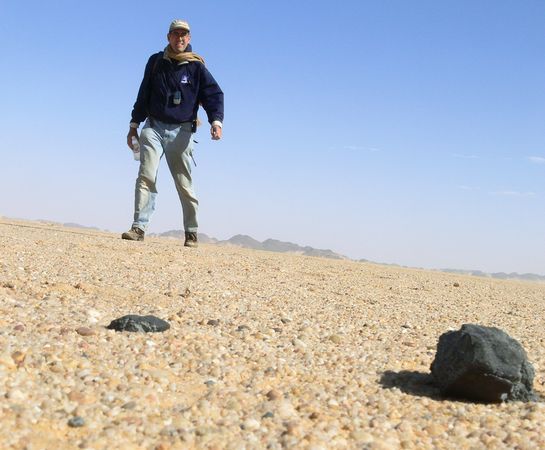
© JPL/NASAAn increasingly frequent event: A meteorite (pictured) from an asteroid that crashed into Sudan's Nubian Desert in 2008.
New evidence that space rocks may have seeded life on Earth.

Hot on the heels of finding arsenic-loving life-forms, NASA astronomers have uncovered amino acids - the fundamental foundation for life - in a place where they shouldn't be.

The acids - precursors of proteins - have been unexpectedly found inside fragments of previously superheated meteorites that landed in northern Sudan in 2008, a new study says.

Amino acids have already been found in a variety of carbon-rich meteorites formed under relatively cool conditions. (See asteroid and comet pictures.)

But this is the first time the substances have been found in meteorites that had been naturally heated to 2,000 degrees Fahrenheit (1,100 degrees Celsius). That extreme temperature which should have destroyed any hint of organic material inside, said study leader Daniel Glavin, an astrobiologist at NASA's Goddard Space Flight Center in Maryland.

"Previously, we thought the simplest way to make amino acids in an asteroid was at cooler temperatures in the presence of liquid water," Glavin said in a statement. "This meteorite suggests there's another way involving reactions in gases as a very hot asteroid cools down."

Info

Scientists Find Evidence for 'Chronesthesia,' or Mental Time Travel

Mental Time Travel
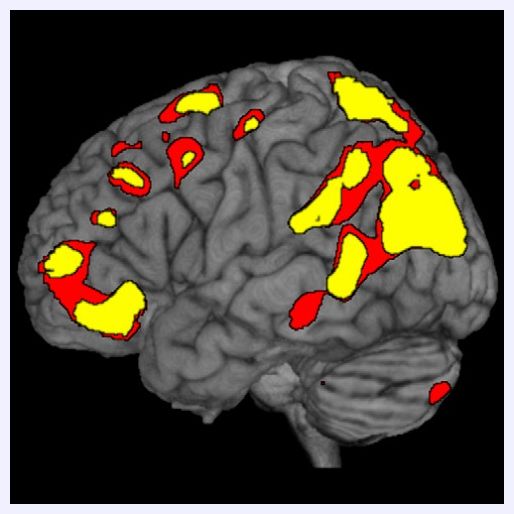
© Lars Nyberg, et al. ©2010 PNAS.Researchers have found evidence for “chronesthesia,” which is the brain’s ability to be aware of the past and future, and to mentally travel in subjective time. They found that activity in different brain regions is related to chronesthetic states when a person thinks about the same content during the past, present, or future.
The ability to remember the past and imagine the future can significantly affect a person's decisions in life. Scientists refer to the brain's ability to think about the past, present, and future as "chronesthesia," or mental time travel, although little is known about which parts of the brain are responsible for these conscious experiences. In a new study, researchers have used functional magnetic resonance imaging (fMRI) to investigate the neural correlates of mental time travel and better understand the nature of the mental time in which the metaphorical "travel" occurs.

The researchers, Lars Nyberg from Umea University in Umea, Sweden; Reza Habib from Southern Illinois University in Carbondale, Illinois; and Alice S. N. Kim, Brian Levine, and Endel Tulving from the University of Toronto in Toronto, Ontario, have published their results in a recent issue of the Proceedings of the National Academy of Sciences.

"Mental time travel consists of two independent sets of processes: (1) those that determine the contents of any act of such 'travel': what happens, who are the 'actors,' where does the action occur; it is similar to the contents of watching a movie - everything that you see on the screen; and (2) those that determine the subjective moment of time in which the action takes place - past, present, or future," Tulving told PhysOrg.com.

"In cognitive neuroscience, we know quite a bit (relatively speaking) about perceived, remembered, known, and imagined space," he said. "We know essentially nothing about perceived, remembered, known, and imagined time. When you remember something that you did last night, you are consciously aware not only that the event happened and that you were 'there,' as an observer or participant ('episodic memory'), but also that it happened yesterday, that is, at a time that is no more. The question we are asking is, how do you know that it happened at a time other than 'now'?"

In their study, the researchers asked several well-trained subjects to repeatedly think about taking a short walk in a familiar environment in either the imagined past, the real past, the present, or the imagined future. By keeping the content the same and changing only the mental time in which it occurs, the researchers could identify which areas of the brain are correlated with thinking about the same event at different times.


Info

Earth's Exposure to Radiation Stresses Biodiversity, Study Says

Milky Way
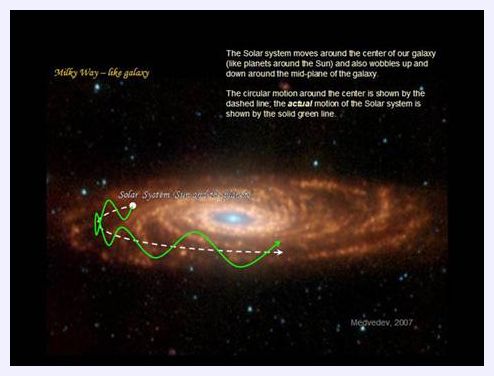
© Mikhail Medvedev, courtesy of Dimitra AtriAs the sun orbits around the center of the Milky Way, it bobs up and down relative to the plane of the galactic disk. Every 64 million years, our solar system pops above the "northern" edge of the disk, exposing Earth to a barrage of dangerous cosmic rays that may be affecting biodiversity on the planet.

A puzzlingly regular waxing and waning of Earth's biodiversity may ultimately trace back to our solar system's bobbing path around the Milky Way, a new study suggests.

Every 60 million years or so, two things happen, roughly in synch: The solar system peeks its head to the north of the average plane of our galaxy's disk, and the richness of life on Earth dips noticeably.

Researchers had hypothesized that the former process drives the latter, via an increased exposure to high-energy subatomic particles called cosmic rays coming from intergalactic space. That radiation might be helping to kill off large swaths of the creatures on Earth, scientists say.

The new study lends credence to that idea, putting some hard numbers on possible radiation exposures for the first time. When the solar system pops its head out, radiation doses at the Earth's surface shoot up, perhaps by a factor of 24, researchers found.

"Even with the lowest assumption, this exposure provides a real stress on the biosphere periodically," said lead author Dimitra Atri of the University of Kansas, who presented the findings last week at the fall meeting of the American Geophysical Union in San Francisco.

No Entry

Skype Outage, Millions Affected Worldwide

Image
© Reuters
Popular Internet telephony service Skype has crashed, inhibiting communication for millions of users trying to phone home for the holidays, the company has acknowledged.

Users across the globe reported issues accessing the service this morning, prompting the company to acknowledge the issue on Twitter: "Some of you may have problems signing in to Skype -- we're investigation, and we're sorry for the disruption to your conversations."

Skype followed up with another tweet assuring users that their "engineers and site operations are working non-stop to get things back to normal."

The problem is unconnected the hacking attacks that disabled popular websites such as MasterCard and Visa last week.

Info

Pentagon Wants to Give Troops Terminator Vision

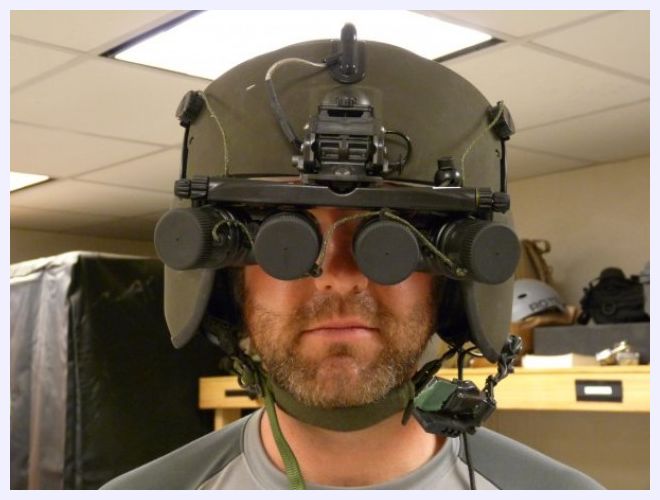
All Round Vision Helmet
© Noah Shachtman

No more will soldiers' vision be limited to the socket-embedded spheres that God intended. The Pentagon now wants troops to see dangers behind them in real time, and able to tell if an object a kilometer away is a walking stick or an AK-47.

In a solicitation released today, Darpa, the Pentagon's far-out research branch, unveiled the Soldier Centric Imaging via Computational Cameras effort, or SCENICC. Imagine a suite of cameras that digitally capture a kilometer-wide, 360-degree sphere, representing the image in 3-D (!) onto a wearable eyepiece. You'd be able to literally see all around you, including behind yourself, and zooming in at will, creating a "stereoscopic/binocular system, simultaneously providing 10x zoom to both eyes." And you would do this all hands-free, apparently by barking out or pre-programming in a command - the solicitation leaves it up to a designer's imagination - when needing to adjust focus.