Science & TechnologyS


Info

Scientists Say Quartz is Key to Understanding Quakes

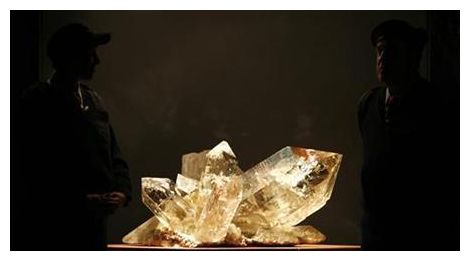
Quartz Crystal
© Reuters / Christian HartmannSecurity guards stand in front of a 300 kg quartz piece two days before the opening of an exhibition of crystals discovered in the region of the Saint-Gotthard mount, in Fluelen, near Lucerne, March 29, 2007.

Underground quartz deposits worldwide may be behind earthquakes, mountain building and other continental tectonics, a discovery that may aid in predicting tremblers, according to a study released on Wednesday.

The findings by Utah State University geophysicist Anthony Lowry and a colleague at the University of London, to be published Thursday in the journal Nature, may solve a riddle of the ages about the formation and location of earthquake faults, mountains, valleys and plains.

"Certainly the question of why mountains occur where they do has been around since the dawn of time," Lowry told Reuters.

He and research partner Marta Perez-Gussinye examined temperature and gravity across the Western United States from a movable network of seismic instruments to describe the geological properties of the earth's crust.

The scientists discovered that quartz crystal deposits are found wherever mountains or fault lines occur in states like California, Idaho, Nevada and Utah.

The Utah State geoscientist said the breakthrough came after repeated testing revealed a correlation between quartz deposits and geologic events that was "completely eye-popping."

Using newly developed remote sensing technology known as Earthscope, Lowry and Perez-Gussinye found that quartz indicates a weakness in the earth's crust likely to spawn a geologic event such as an earthquake or a volcano.

Bandaid

NASA to Shoot Lasers at Space Junk Around Earth to Prevent Collisions with Satellites

NASA fears 'Kessler Syndrome', where there is too much space junk for it to be safe to fly out, leaving us trapped on Earth

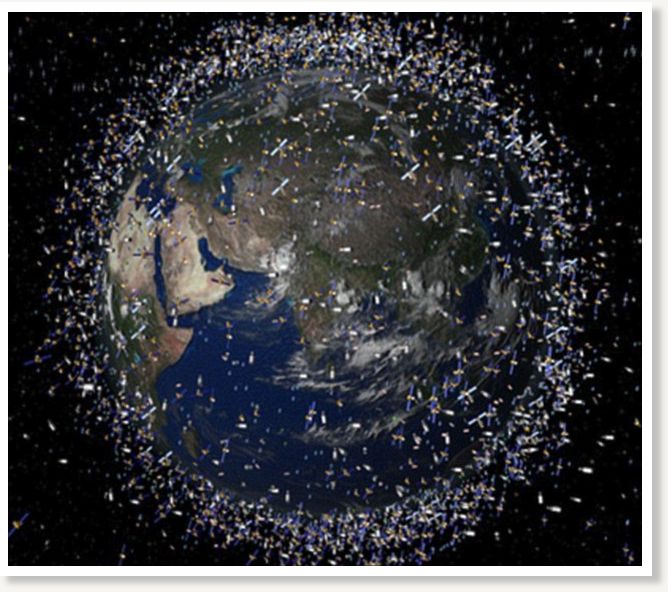
NASA is considering using lasers to deflect space junk around Earth and stop it colliding with satellites.

Lasers similar to those used for welding in car factories would be fired through telescopes to 'nudge' piles of rubbish left in orbit.

The gentle movement would stop them from taking out communications satellites or hitting the International Space Station.

Image
© NASACrowded: An artist's impression of space junk in low-Earth orbit. Nasa is considering using lasers to deflect the debris and stop it colliding with satellites.
The process could also avoid what is known as 'Kessler Syndrome', where there is too much space junk flying around Earth for it to be safe to fly out, leaving us trapped on our own planet.

Robot

Video: Japan's New Goateed Geminoid Robot Is Uncomfortably Realistic

Image
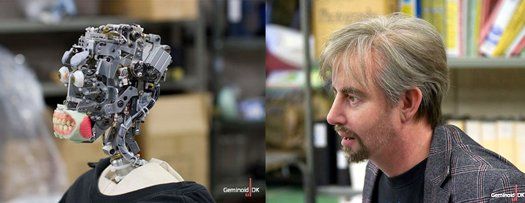
© PopsciGeminoid, Skin On and Skin Off
The latest Geminoid robot is one of the most realistic, and thus creepiest, android we've ever seen. The skin, hair, goatee (!), and facial expressions are real enough to fool you for a few seconds while it sinks in that something very, very weird is going on.

This specific model is called the Geminoid DK, and it comes from the same studio that gave us the robotic actress, Geminoid F. The DK is the first Geminoid model that's based on a non-Japanese person (in this case, Associate Professor Henrik Scharfe of Denmark's Aalborg University) and also the first bearded model (if you consider a goatee a beard, which in my full-bearded opinion is debatable).

Like its Geminoid siblings, the DK is controlled remotely with a motion-capture system in which the Geminoid mimics the movements of the person being captured. Future uses are kind of secondary to the basic goal of making the most human-like robot possible, but it could be a step forward for human-robot interaction--paired with, say, Watson's brain, the Geminoid series could be used in some pretty interesting ways. That being said, here's a terrifying picture of the Geminoid's hair- and pupil-less visage.

Satellite

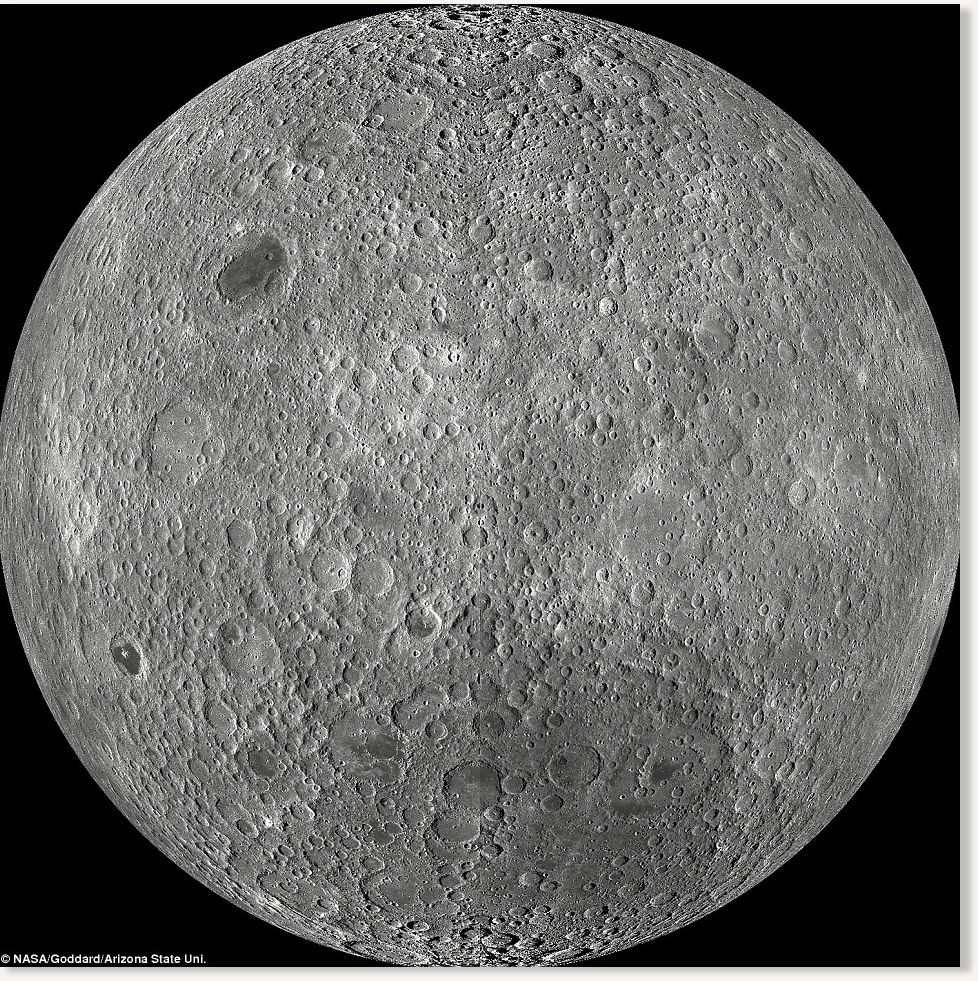
Now in even crater detail... Far side of the moon revealed in amazing mosaic of orbiter images

This stunning image is the most detailed look at the far side of the moon to date.

Image
© NASA Goddard / ASU
It comprises over 15,000 wide angle camera (WAC) photos taken between November 2009 and February 2011 by Nasa's Lunar Reconnaissance Orbiter Camera (LROC). The mosaic was put together by a team or researchers at Arizona State University.

A Nasa spokesman said: 'This WAC mosaic provides the most complete look at the morphology of the far side to date, and will provide a valuable resource for the scientific community.

'And it's simply a spectacular sight.'

Moon morphology is the study of how the moon and its features were formed, including craters, mountains and other features.

Sun

Equinox Solar Eclipse

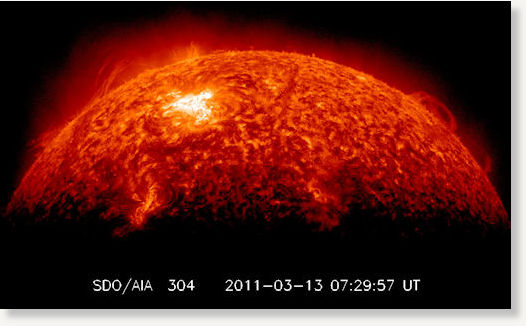
It must be spring. This is the time of year when the sun, Earth, and NASA's Solar Dynamics Observatory in geosynchronous orbit can line up for spectacular sun-Earth eclipses. Only around equinoxes does this phenomenon occur. SDO took this picture of the sun partially blocked by our own planet on March 13th:

Image
© SDO
Every day from now until April 2, 2011, there will be a short break in the data flow as the Earth moves between SDO and the sun. The length of an eclipse can be as long as 72 minutes and they happen at about midnight at the SDO ground station in Las Cruces, NM (0700 UT). Never before has missing data looked so good.

Syringe

NASA Investigates Cocaine Found at Facility

Image
© UnknownNow we know how NASA keep their scientists in line.
Nasa is investigating after cocaine was found in a facility at the Kennedy Space Centre in Florida.

Nasa spokesman Allard Beutel said today that 4.2 grams of a white powdery substance was found last week at the Nasa facility, though he would not say where.

It tested positive for cocaine.

It's not the first time cocaine has been found at the space centre.

A small amount was discovered in January 2010 in a secure part of a hangar that housed space shuttle Discovery.

Beaker

New Composite Material Stores Hydrogen

The material is made of nanoparticles of magnesium metal, which is scattered over a polymethyl methacrylate pattern

Image
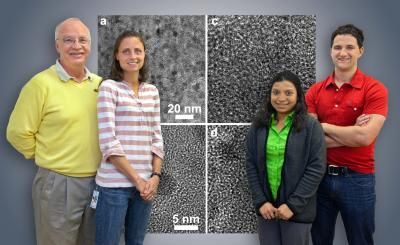
© Roy Kaltschmidt, Berkeley Lab Public AffairsChristian Kisielowski, Anne Ruminski, Rizia Bardhan and Jeff Urban
Researchers from the U.S. Department of Energy Lawrence Berkeley National Laboratory have created a new way of storing hydrogen, making it more accessible and energy efficient.

Hydrogen has been considered a viable alternative to fossil fuels for some time now. Hydrogen is lightweight and offers a higher energy density than gasoline. In addition, gasoline produces harmful greenhouse gases and pollutants while hydrogen's combustion by-product is water. The problem with using hydrogen on a larger scale is storage. It must be stored densely and safely, and must be easily accessible.

While many attempts in the past have failed -- such as packing large quantities of the gas into solids, which resulted in the solids only absorbing a small amount of hydrogen and requiring energy efficiency boosts through heating and cooling -- scientists have now created a new composite material for storing hydrogen without compromising density, safety or accessibility.

The material is made of nanoparticles of magnesium metal, which is scattered over a polymethyl methacrylate pattern. This design is capable of both absorbing and releasing hydrogen without oxidizing the metal after cycling, and at "modest" temperatures.

Satellite

NASA Probe Set for Historic Arrival at Mercury This Week

Image
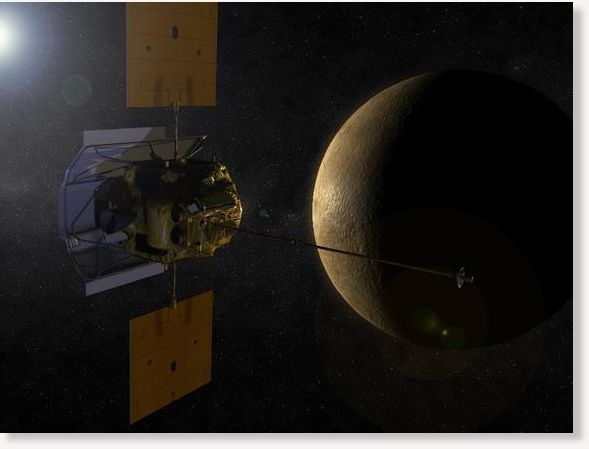
© NASAAn artist's conception shows the MESSENGER spacecraft in orbit around Mercury.
NASA's Messenger probe is poised to make history Thursday (March 17), when it will become the first spacecraft in history to orbit the planet Mercury.

At 8:45 p.m. EDT Thursday (0045 GMT March 18), the Messenger spacecraft will fire its main thruster for 14 minutes to slow itself down enough to enter orbit around Mercury. If all goes well, Messenger is expected to spend the next year studying the solar system's innermost planet, mapping Mercury's surface and investigating its composition and magnetic environment, among other features.

Learning more about Mercury should help scientists better understand how the solar system - and, in particular, the rocky planets Mercury, Mars, Venus and Earth - formed and evolved, researchers said. The Messenger spacecraft has been making its way toward Mercury for more than six years.

Attention

Air Pollution From BP Oil Spill Reaching Far Beyond The Gulf

Gulf Oil Spill
© Aviation Online MagazineThe oil slick, seen from the window of the Lockheed WP-3D Orion aircraft. Best known as one of NOAA's "hurricane hunters," the plane was outfitted with chemistry instruments for a mission in California during the spring of 2010. NOAA diverted it to the Gulf for several days in June, as part of a multi-agency effort to asses the atmospheric consequences of the spill.

During a special airborne mission to study the air-quality impacts of the BP Deepwater Horizon oil spill last June, NOAA researchers discovered an important new mechanism by which air pollution particles form.

Although predicted four years ago, this discovery now confirms the importance of this pollution mechanism and could change the way urban air quality is understood and predicted.

The NOAA-led team showed that although the lightest compounds in the oil evaporated within hours, it was the heavier compounds, which took longer to evaporate, that contributed most to the formation of air pollution particles downwind.

Because those compounds are also emitted by vehicles and other combustion sources, the discovery is important for understanding air quality in general, not only near oil spills.

"We were able to confirm a theory that a major portion of particulate air pollution is formed from chemicals that few are measuring, and which we once assumed were not abundant enough to cause harm," said Joost de Gouw, lead author of a new paper on the finding, published in the March 11 edition of Science.

De Gouw is an atmospheric scientist in the Chemical Sciences Division of NOAA's Earth System Research Laboratory in Boulder, Colorado and a Fellow at CIRES, the Cooperative Institute for Research in Environmental Sciences at the University of Colorado at Boulder.

NOAA sent a research aircraft to the Gulf region in June 2010 to help other agencies assess pollutant levels in the air. The Lockheed WP-3D Orion aircraft, best known as NOAA's "hurricane hunter," was in California for an air quality and climate science mission. When diverted to the Gulf, the P-3 was already loaded with instruments designed to measure many types of air pollution particles including "organic aerosol" and the chemicals from which they are formed in air.

Hardhat

General Electric-designed reactors in Fukushima have 23 sisters in U.S.

The General Electric-designed nuclear reactors involved in the Japanese emergency are very similar to 23 reactors in use in the United States, according to Nuclear Regulatory Commission records.

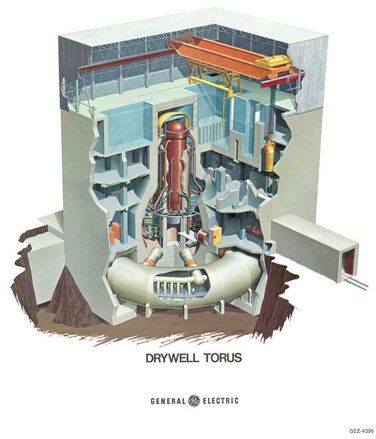
The NRC database of nuclear power plants shows that 23 of the 104 nuclear plants in the U.S. are GE boiling-water reactors with GE's Mark I systems for containing radioactivity, the same containment system used by the reactors in trouble at the Fukushima Daiichi plant. The U.S. reactors are in Alabama, Georgia, Illinois, Iowa, Massachusetts, Michigan, Minnesota, Nebraska, New Jersey, New York, North Carolina, Pennsylvania and Vermont.

In addition, 12 reactors in the U.S. have the later Mark II or Mark III containment system from GE. These 12 are in Illinois, Louisiana, Mississippi, New York, Ohio, Pennsylvania and Washington state. See the full list below.

Image
© GE via NRCGE's Mark I containment system.
(General Electric is a parent company of msnbc.com through GE's 49 percent stake in NBCUniversal. NBCUniversal and Microsoft are equal partners in msnbc.com.)

Msnbc.com sent questions Saturday to GE Energy, asking whether the Japanese reactors differed from those of the same general design used in the U.S.

A GE spokesman, Michael Tetuan, referred all questions to the Nuclear Energy Institute, an industry trade and lobbying group. Tetuan said GE nuclear staff members in Wilmington, N.C., are focused on assisting GE employees in Japan and standing by to help the Japanese authorities if asked to help. The NEI on Sunday confirmed that the figure of 23 is correct.