Science & TechnologyS


Meteor

NASA's WISE releases data on millions of galaxies, stars, asteroids

Image
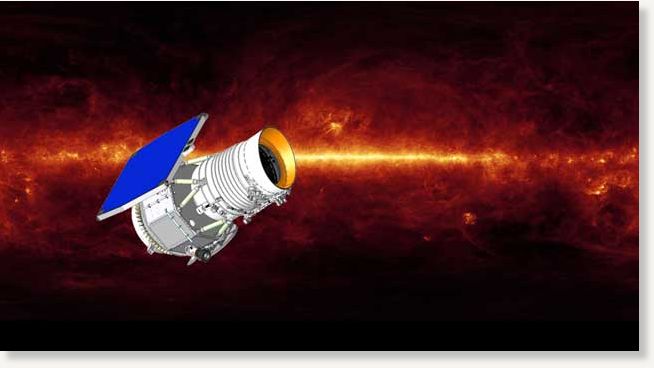
© NASA/JPL-Caltech Artist's concept of the Wide-field Infrared Survey Explorer.
NASA's Wide-field Infrared Survey Explorer (WISE) mission released the first bundle of data on hundreds of millions of galaxies, stars and asteroids on Thursday, the Jet Propulsion Laboratory (JPL) said. "Today, WISE is taking the first major step in meeting its primary goal of delivering the mission's trove of objects to astronomers," JPL said in a news release.

Data from the first 57 percent of the sky surveyed is accessible through an online public archive, allowing astronomers across the globe to sift through numerous galaxies, stars and asteroids, said JPL in Pasadena, Los Angeles. The complete survey, with improved data processing, will be available in the spring of 2012, according to JPL.

"Starting today thousands of new eyes will be looking at WISE data, and I expect many surprises," said Edward (Ned) Wright of University of California-Los Angeles, the mission's principal investigator.

The mission's nearby discoveries included 20 comets, more than 33,000 asteroids between Mars and Jupiter, and 133 near-Earth objects (NEOs), which are those asteroids and comets with orbits that come within 28 million miles (about 45 million kilometers) of Earth's path around the sun, according to JPL.

Saturn

Astronomers Study Unusual Asteroid

Protoplanet
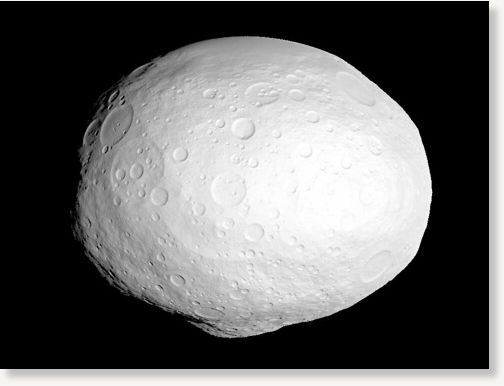
© NASA/JPL-Caltech/UCLA/PSIThis image shows a model of the protoplanet Vesta, using scientists' best guess to date of what the surface of the protoplanet might look like. It was created as part of an exercise for NASA's Dawn mission involving mission planners at NASA's Jet Propulsion Laboratory and science team members at the Planetary Science Institute in Tuscon, Arizona
You've heard of Pluto, once a full-scale planet that astronomers now classify as a dwarf planet. Now meet 4 Vesta -- or Vesta for short -- an asteroid that may not be a real asteroid.

The 330-mile diameter object sits in the asteroid belt, a collection of large and small pieces of rubble that circles the sun between the orbits of the planets Mars and Jupiter. But Vesta, numbered 4 because it was the fourth member of the asteroid belt to be discovered, is larger than most of its asteroid companions and also differs from them geologically.

An unmanned NASA spacecraft called Dawn is now heading for Vesta to explore those differences.

"There are at least two classes of objects that have been called asteroids," said Thomas McCord, director of the Bear Fight Institute in Winthrop, Washington. "The real asteroids are broken up pieces of rock 100 kilometers (62 miles) in diameter or smaller. The others are more like small planets."

In addition to Vesta those others include Ceres, the largest asteroid and first to be discovered, and Pallas, the second asteroid to be spotted. Ceres is now classified as a dwarf planet like Pluto.

Comment: Could these protoplanet asteroids be formed under electrical heating conditions described by James McCanney's Comet Capture Theory of Solar System formation? For further reading see:

Planet-X, Comets and Earth Changes by J.M. McCanney


Evil Rays

A new Clockwork Orange? The marketing gadget that tracks brainwaves as you watch TV

Would you feel comfortable if market researchers could know your every thought?

A headband designed by San Francisco firm EmSense can sense your brainwaves as you have reactions to watching something and then record the data for researchers.

The process of measuring your reaction to something is known as 'quantitative neurometrics' and it can be carried out as you watch a computer or television screen.

Image
© EmSenseMeasuring reactions: The EmBand, designed by San Francisco firm EmSense, can sense your brainwaves as you have reactions to watching something

Saturn

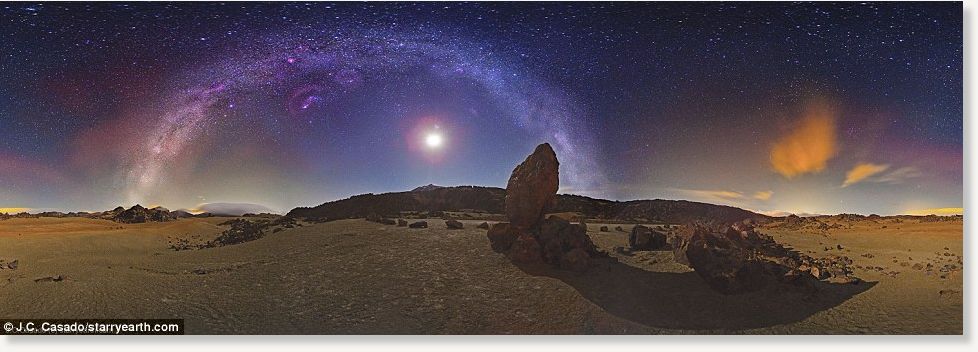
The Milky Way as you've never seen it before: Incredible 360-degree panorama reveals the majesty of our galaxy

This breathtaking composite image shows just how huge the Milky Way really is.

Amateur astronomer Juan Carlos Casado stitched together this extraordinary shot from nine photos of the night sky.

All were taken in a national park in the Canary Islands away from light pollution, resulting in images of astounding clarity.

Image
© J.C. Casado/starryearth.comDigital fusion: Amateur astronomer Juan Carlos Casado stitched together this extraordinary shot from nine photos of the night sky
Viewed as one digitally-fused image, as they are here, and the result is a 360-degree panorama.

The faint band of light that stretches across the sky is the disc of our spiral galaxy. It appears to encircle Earth - this is because we are inside the disc.

Satellite

To boldly go... online: New frontier as Nasa posts thousands of incredible space images on the internet

You'll go starry-eyed at Nasa's latest mission success - because the space agency has uploaded thousands of amazing space snaps onto the internet, including shots of previously unseen galaxies, stars and asteroids.

The colossal gallery - available to anyone with a connection to the web - was taken by Nasa's super hi-tech sky-mapping telescope.

It took a staggering two and a half million pictures of the universe, which include 33,000 new asteroids found floating between Mars and Jupiter - and 20 comets.

Image
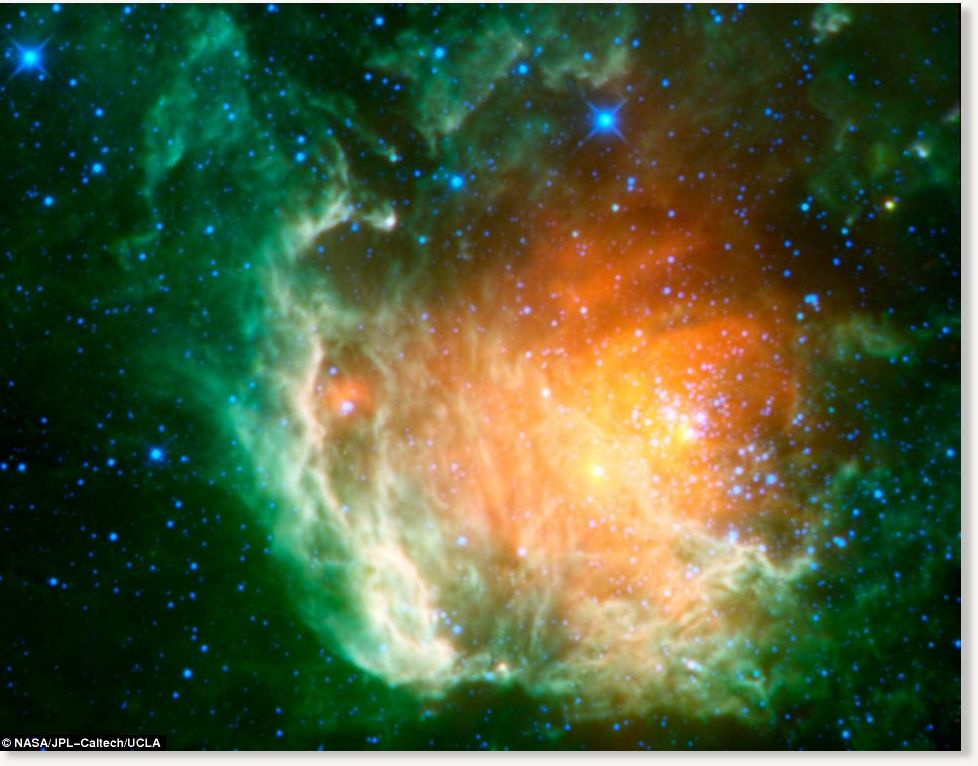
© NASA/JPL-Caltech/UCLAHeavens above: This WISE image shows the Berkeley 59 cluster of stars, which are relative babies at just a few million years old, and resemble a cosmic rose

Display

US: App purchases, child 'exploitation' lead to new Apple suit

iPad
© ReutersA girl views a new iPad tablet computer at an Apple store during its UK launch in central London
A new lawsuit is alleging that Apple's iPhone and iPad does not do enough to prevent unauthorized purchases of applications by children, allowing the company to bank "millions" of dollars in ill-gotten gains.

Garen Meguerian of Phoenixville, Pennsylvania, is the lead plaintiff in the class action lawsuit claiming that Apple's purchase policy makes for "unlawful exploitation" of children by not doing enough to prevent purchases from iTunes and Apple's App Store.

"Minors 13 and older are permitted to open their own Apple accounts, and minors younger than 13 may purchase Game Currency by using their parents' general Apple password (no special Apple password is required to purchase Game Currency," according to the suit, which was filed in a Northern California district court.

Pills

UK: Puberty blocker for children considering sex change

Children as young as 12 are to be allowed drugs to block puberty while they decide whether to have a sex change, it has been revealed.

The monthly injection suspends the onset of adulthood so that young people confused about their gender can be sure of any decision before they take on too many masculine or feminine features.

Supporters say that the "window" prevents a great deal of mental and physical anguish caused by the maturing of sex organs, facial hair growth and changes in the voice.

But critics argue it only prolongs the agony and can prevent people "growing out" of any feelings of confusion.

The treatment can be prescribed for people diagnosed with Gender Identity Disorder (GID) - a rare psychiatric condition where a person is born one sex, but feels they are the other.

One of the main effects of the drugs is to stunt the development of sexual organs so less surgery will be required if someone chooses to permanently change their gender at a later date.

Info

Kiwi Discovers Mother of Language

Khoisan
© Getty ImagesEarly Settler: A South African Khoisan, the earliest inhabitants of Africa's southern tip.

A New Zealand evolutionary psychologist has created a scientific sensation by claiming to have discovered the mother of all mother tongues.

The claims by Quentin Atkinson of the University of Auckland have appeared today in the prestigious journal Science, winning extensive coverage in the world's major media.

Atkinson said the world's 6000 languages descended from a single ancestral tongue spoken by early southern African humans between 50,000 and 70,000 years ago. The Mother of all Mother Tongues is known as Khoisan, a family of the Kalahari Bushmen click language.

By studying the sounds made in 504 modern languages, Atkinson said he had found an ancient signal in them.

For linguists the controversial part was not so much the location of the first language, but the implication that modern language only emerged once.

Atkinson looked at phonemes, distinct units of sound such as vowels, consonants and tones.

For example, the English words "rip" and "lip" differ by a single phoneme, one corresponding to the letter "r" and the other to the letter "l".

Bulb

Solar power without solar cells: A hidden magnetic effect of light could make it possible

Light Magnetic Field
© Unknown

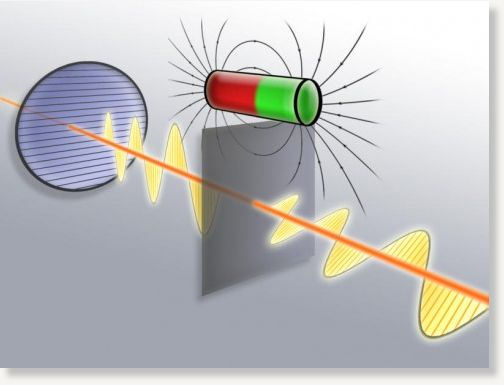
A dramatic and surprising magnetic effect of light discovered by University of Michigan researchers could lead to solar power without traditional semiconductor-based solar cells.

The researchers found a way to make an "optical battery," said Stephen Rand, a professor in the departments of Electrical Engineering and Computer Science, Physics and Applied Physics.

In the process, they overturned a century-old tenet of physics.

"You could stare at the equations of motion all day and you will not see this possibility. We've all been taught that this doesn't happen," said Rand, an author of a paper on the work published in the Journal of Applied Physics. "It's a very odd interaction. That's why it's been overlooked for more than 100 years."

Light has electric and magnetic components. Until now, scientists thought the effects of the magnetic field were so weak that they could be ignored. What Rand and his colleagues found is that at the right intensity, when light is traveling through a material that does not conduct electricity, the light field can generate magnetic effects that are 100 million times stronger than previously expected. Under these circumstances, the magnetic effects develop strength equivalent to a strong electric effect.

Attention

Genetically modified cows produce "human" milk

Scientists have created genetically modified cattle that produce "human" milk in a bid to make cows' milk more nutritious.

The scientists have successfully introduced human genes into 300 dairy cows to produce milk with the same properties as human breast milk.

Human milk contains high quantities of key nutrients that can help to boost the immune system of babies and reduce the risk of infections.

The scientists behind the research believe milk from herds of genetically modified cows could provide an alternative to human breast milk and formula milk for babies, which is often criticised as being an inferior substitute.

They hope genetically modified dairy products from herds of similar cows could be sold in supermarkets. The research has the backing of a major biotechnology company.

The work is likely to inflame opposition to GM foods. Critics of the technology and animal welfare groups reacted angrily to the research, questioning the safety of milk from genetically modified animals and its effect on the cattle's health.