Science & TechnologyS


Snowflake

Why snow isn't actually white

forest snow sunrise
© DepositPhotosFew languages have as many distinct words for snow as Japanese, which has words like miyuki or "beautiful snow."
Winter wonderlands are only possible thanks to a sparkly light trick.

When someone says "as white as snow," it's easy to envision what they're talking about. We often think of snow as a dazzling white, the same way we immediately conjure up a color when someone says "blood red" or "ocean blue."

But here's the thing: snow isn't actually white. It's just tiny ice crystals, afterall, and ice, like water, looks clear to the naked eye. So why, then, does snow appear white? We talked to a couple of experts to find out: Their answers might surprise you.

Comet 2

Halley's Comet wrongly named: 11th-century English monk predates British astronomer

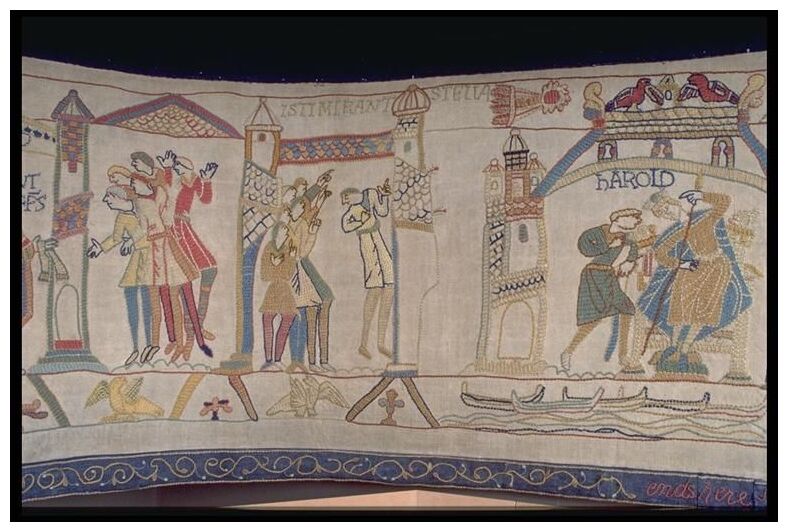
Bayeux Tapestry.
© Wikimedia CommonsThe oldest known depiction of Halley’s Comet on the Bayeux Tapestry.
The British astronomer and mathematician Edmond Halley was not, after all, the first to understand the cycle of the comet that now bears his name. This is shown by research conducted by, among others, Professor Simon Portegies Zwart. It was the monk Eilmer of Malmesbury who, as early as the 11th century, linked two observations of the comet.

The events are described by the 12th-century chronicler William of Malmesbury, but until now this has gone unnoticed by scholars. Portegies Zwart and Lewis now argue that Aethelmaer witnessed both appearances of the comet. Their findings have been published in the book 'Dorestad and Everything After. Ports, townscapes & travellers in Europe, 800-1100'.

Halley identifies the comet's periodicity

Halley discovered that the very bright periodic comet later named after him, 1P/Halley, observed in 1531, 1607 and 1682, was in fact the same comet, returning approximately every 76 years.

Satellite

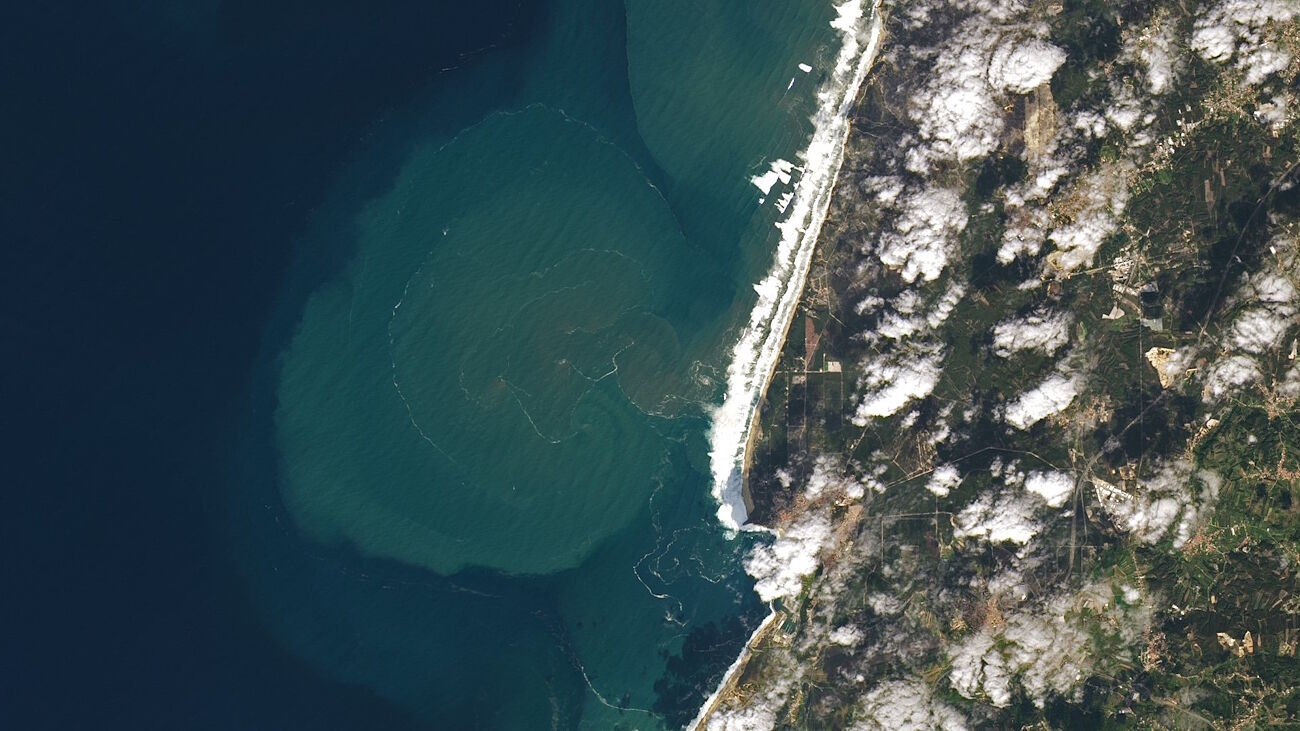
Satellite captures images of giant underwater plumes triggered by 7-story waves off the coast of Nazaré, Portugal

underwater plumes nazare giant ocean waves
© Lauren Dauphin/NASA Earth Observatory/Landsat 8The Portuguese coast surrounding the town of Nazaré is famous for its giant waves, which also unleash giant underwater plumes as they crash along the shore. Taken by the Landsat 8 satellite Oct. 29, 2020
This striking satellite snap highlights the immense power of 7-story waves crashing along the Portuguese coast and ejecting massive sediment plumes under the sea. The same day this photo was taken, a local 18-year-old surfer set a new world record by riding one of the colossal crests.

The Landsat 8 satellite captured this epic scene near the town of Nazaré in western Portugal, a region famous for having some of the tallest waves on Earth. Nazaré is home to around 15,000 people and regularly hosts "big-wave" surfing competitions, which attract surfers from around the world. The swells there are so big that surfers often have to be towed into the breaking waves with a jet ski.

The monster waves in the image likely reached heights of around 80 feet (24 meters), which is roughly equivalent to a 7-story building. This is exceptionally tall — even for Nazaré, where waves usually peak up to 50 feet (15m) at this time of year — and would usually be considered too dangerous to surf.

Nebula

Giant rotating string of galaxies is 'probably the largest spinning object' in the known universe

rotating cosmic structure galaxies
© Lyla JungA figure showing the rotation of neutral hydrogen (right) in galaxies spotted in a giant filament of the cosmic web (middle)
A giant rotating filament of the cosmic web may be the largest spinning structure ever seen, and could help reveal how galaxies form.

Astronomers have spotted what is likely the "largest spinning object" ever discovered, and its rotation could hold important clues about how galaxies develop.

The whirling structure, located 140 million light-years from Earth, is a long, threadlike string of gas that's about 5.5 million light-years long and 117,000 light-years wide — wider than our Milky Way galaxy. The cosmic filament has 14 hydrogen-rich galaxies linked to it in a chain, like charms on a bracelet. These galaxies were what gave away the filament's existence, the researchers explained in a paper published today (Dec. 3) in the journal the Monthly Notices of the Royal Astronomical Society.

Comment: What is not touched on is the impetus for the rotation. What set it in motion and keeps it there? The Electric Universe Theory, which incorporates the existence of Birkland currents, fits the bill nicely. It would also seem our solar system is caught up in a similar rotating structure. Two videos illustrate:


Horse

Horses can smell human fear when we sweat

Horses
© bbcearth.com
Horses can smell your fear. If you are experiencing this emotion while standing near a horse, they will be able to detect it through your scent alone, which changes their behavior and physiology. That's the conclusion of a new study published in the journal PLOS One.

Scientists already know that dogs can smell human stress. But a team from the National Research Institute for Agriculture, Food and the Environment (INRAE) in France wanted to see if the same is true for horses, another domesticated animal that has lived alongside us for thousands of years.

Galaxy

What if space is actually a 'sticky fluid'?

Carina Nebula
Carina Nebula, captured in infrared light by the Near-Infrared Camera (NIRCam) on the NASA/ESA/CSA James Webb Space Telescope, July 2022
Our best models of the cosmos don't add up — but that could change if the universe is actually made of a viscous 'fluid,' a new paper suggests.

Recent observations have revealed that our understanding of the cosmos is flawed, but it may be because the universe is "stickier" than we assumed, new research proposes.

In a paper that was published on the arXiv preprint server but has not been peer-reviewed, Muhammad Ghulam Khuwajah Khan, a researcher at the Indian Institute of Technology, suggests that space may possess a property called bulk viscosity.

Viscosity is a measure of how much a fluid resists flowing or changing shape — like the difference between pouring water versus honey. In this case, we are talking about the bulk viscosity of the vacuum itself, a ghostly resistance that occurs when space expands.

Satellite

How Iran jammed Starlink

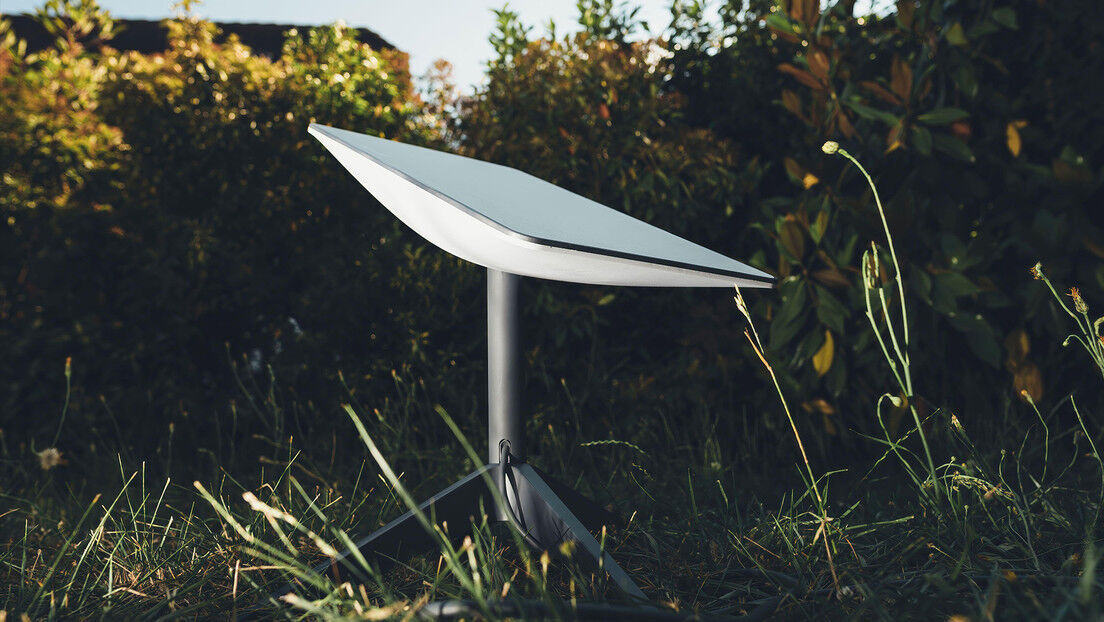
Starlink
© ifeelstock / Legion-Media
After shutting down the internet, the Iranian government is now attempting to jam the Starlink satellite service made free to Iranians by the company. Iranians are now seeking ways to circumvent this latest wave of censorship.

Iranian authorities cut the public's access to the internet and telephone communications on January 8. The networks were later partially reinstated, but with severe restrictions. The Iranian regime has been facing a series of protests since late December. In an attempt to crush the movement, the Iranian government also tried to break the last international communication link available to Iranians: Starlink.

Starlink, which provides internet access through a constellation of satellites, was thought to be out of the Iranian authorities' reach for censorship. However, in recent days, Starlink has been subject to a jamming campaign that has seriously impaired its use.

Clock

Chinese scientists unveil reliable lunar clock that accounts for Einstein's relativity

A new software package detailed by Chinese scientists promises to tell what time it is on the moon, accounting for effects of relativity.
Lunar Clock
© Getty ImagesA lunar eclipse seen near a golden clock tower in Thailand. Time on the moon ticks slightly faster than on Earth, gaining about 56 microseconds each Earth day.
Did you ever wonder what time it is on the moon? A software package developed by researchers in China can finally tell you.

The model, built by a team from the Purple Mountain Observatory in Nanjing and the University of Science and Technology of China in Hefei, was detailed in a paper published in December 2025 in the journal Astronomy & Astrophysics. The new lunar timekeeping method promises to remain accurate over a 1,000-year time span.

But why create a distinct lunar clock in the first place? For the answer, we turn — as we so often do — to Albert Einstein.

Because the moon has less gravity than Earth does, time passes slightly differently there. This effect was first predicted by Einstein's theory of general relativity. For every 24 hours that pass here on terra firma, the moon gains about 56 microseconds, according to NASA.

While small, this discrepancy adds up over prolonged periods — a fact that could pose major issues for future crewed moon missions, like NASA's Artemis initiative or Russia and China's joint International Lunar Research Station. (Mars is an even bigger challenge, with clocks there ticking about 477 microseconds faster per Earth day.)

Moon

The Moon is curiously lopsided: Could a massive impact be to blame?

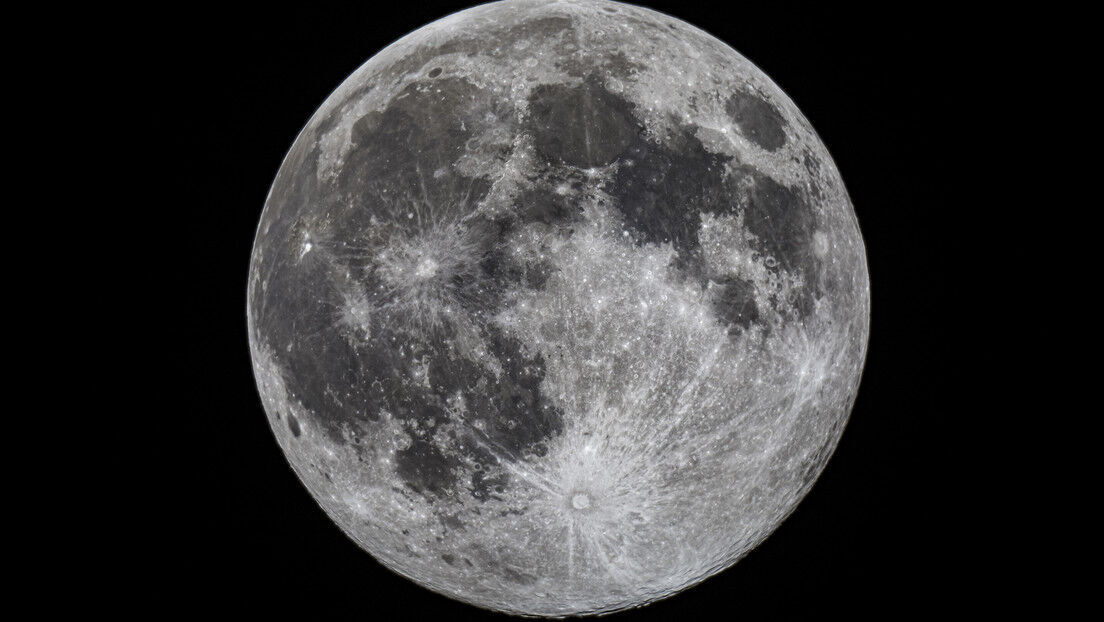
Moon luna
© Gettyimages.ru
The first material ever collected from the far side of the Moon could help settle a long-held lunar mystery.

According to a Chinese Academy of Sciences analysis of Moon dust ferried to Earth by China's Chang'e-6 mission, the reason the natural satellite's two hemispheres are so different may be due to a giant impact long ago that literally altered the Moon's composition from the inside out.

It's a conclusion that neatly connects several features of the lunar far side, and shows that meteorite impacts aren't just cosmetic scars on a planet's surface - they can dramatically and permanently reshape the interiors of worlds.

Comet 2

Astronomers may have already spotted the 'Great Comet of 2026' — and it could soon be visible to the naked eye

Recently discovered Comet C/2025 R3 (PanSTARRS) will make its closest approach to the sun and Earth in late April and could potentially be visible to the naked eye. It may end up being the brightest comet of the year.
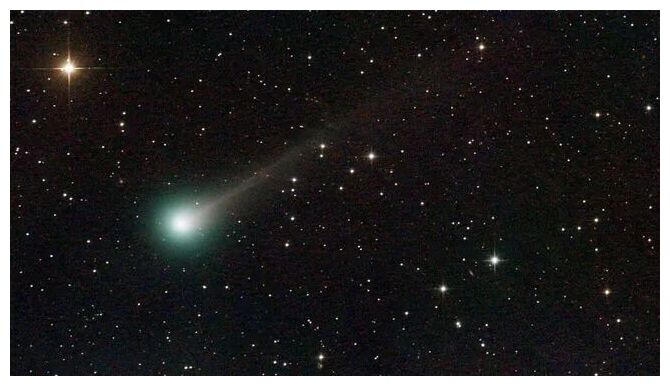
© Dimitrios Katevainis, CC BY-SA 4.0Researchers say they may have already spotted the "Great Comet of 2026," dubbed C/2025 R3 (Pan-STARRS). It could shine as brightly as Comet Lemmon (photographed above), which passed us by in October last year.
We may be less than two weeks into 2026, but a new comet is already leading the charge to become the "Great Comet" of the year. The highly anticipated ice ball, which could potentially be seen with the naked eye, will reach its closest point to us less than four months from now.

Scientists discovered the incoming comet, dubbed C/2025 R3 (PanSTARRS), on Sept. 8, 2025, in images captured by the Panoramic Survey Telescope and Rapid Response System (Pan-STARRS) — a pair of 5.9-foot (1.8 meters) reflector telescopes located on the summit of Hawaii's Haleakalā volcano. It is currently around 216 million miles (348 million kilometers) from Earth, around halfway between the orbits of Jupiter and Mars, according to TheSkyLive.com.

C/2025 R3 is a long-period comet, meaning it likely takes more than 1,000 years to orbit the sun, and probably originates from the Oort cloud — a giant reservoir of comets and other icy objects near the edge of the solar system. Astronomers have yet to narrow down the comet's orbital pathway, so they do not know how long the ice ball takes to circle our home star. But similar discoveries in recent years have revealed comets that have not passed by Earth for tens of thousands of years.

C/2025 R3 is currently speeding toward the sun and will reach perihelion — its closest point to our home star — on April 20. It will come within 47.4 million miles (76.3 million km) of the sun, which is somewhere between the orbits of Mercury and Venus.

Just one week later, on April 27, the comet will make its closest approach to Earth, coming within 44 million miles (70.8 million km) of our planet, which is more than 180 times farther from us than the moon is.

Astronomers don't yet know how brightly the comet will shine during its solar flyby, Live Science's sister site Space.com recently reported. Some researchers have predicted that it will reach an apparent magnitude of 8, meaning it would be visible only via a decent telescope or pair of stargazing binoculars. But others estimate that it could reach magnitude 2.5, which would make it clearly visible to the naked eye. (Apparent magnitude is measured on a reverse logarithmic scale, meaning a lower number equates to a greater brightness.)