Science & TechnologyS


Eye 1

Whether We Know It Or Not, We Can "See" Through One Eye At A Time

Image
© Unknown
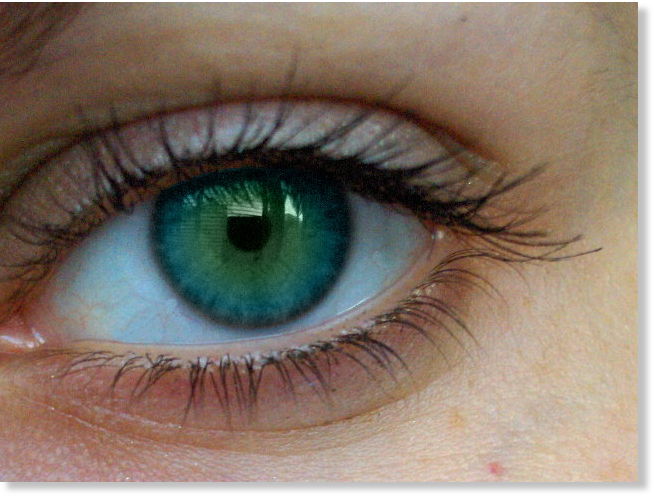
Although portions of the visible world come in through one eye only, the brain instantaneously takes all that information and creates a coherent image. As far as we know, we "see" with both eyes at once. Now a new study suggests that the brain may know which eye is receiving information - and can turn around and tell that eye to work even harder.

"We have demonstrated for the first time that you can pay attention through one eye, even when you have no idea where the image is coming from," says Peng Zhang, who conducted the study with University of Minnesota colleagues Yi Jiang and Sheng He. And the harder that eye is working - the heavier the "informational load" - the more effectively still that eye can attend to its object. The findings will appear in an upcoming issue of Psychological Science, a journal published by the Association for Psychological Science.

Info

How Old is the Earth's Inner Core? Tech Researcher Weighs in with New Evidence

Earth's Inner Core
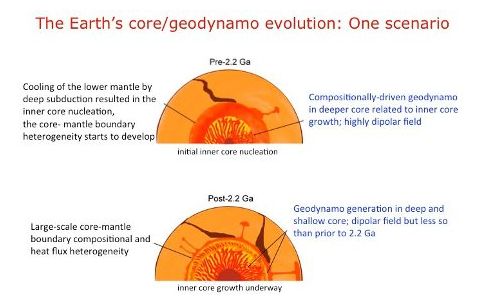
© MTUResearch by Assistant Professor Aleksey Smirnov and colleagues from University of Rochester indicates that the earth's inner core is much older than we thought.

Another discovery by a Michigan Technological University researcher could send shockwaves across the world of earth science.

Aleksey Smirnov, assistant professor of geophysics, with colleagues from the University of Rochester and Yale University, has discovered that the earth's inner core could actually be at least 1.2 billion years older than previously thought.

"It's a big deal to researchers in this basic science who thought the earth's core was much younger, so to speak," Smirnov says of his paper in the journal Physics of the Earth and Planetary Interiors. "They won't be happy with it."

Previously, Smirnov helped solve the mystery of how Siberian "traps" - large-scale basaltic formations - were formed, also a controversial finding.

Smirnov uses paleomagnetic data to do his research, measuring the magnetic fields in the oldest rocks on earth. By doing so with samplings from around the globe, he was able to estimate the age of the inner core, which he claims is also related to the start of plate tectonics.

Beaker

Texas Scientists Develop Nontoxic Flame-Resistant Clothing Using Water-Based Polymers

Image
Parents who worry about toxic chemicals in nonflammable children's clothing can soon breathe a sigh of relief. Using a technology that protects skyscrapers from fire, Texas A&M University scientist have developed a fire-resistant fabric composed of renewable ingredients such as garden-variety clay and chitosan, a natural compound extracted from shrimp and lobster shells. When heat is applied to the material, the coating bubbles out, creating a protective layer of foam that keeps the fabric from igniting. The first-of-its-kind polymer treatment could find applications in children's pajamas, terry-cloth bathrobes, and car seats, according to Jaime C. Grunlan, the associate professor of mechanical engineering heading the research. The water-based ingredients are less toxic than the so-called 'halogenated' or 'brominated' flame-retardants typically used, he says, not to mention more environmentally friendly.

Igloo

Russian Scientist Predicts 100 Years of Cooling

ice
© n/a
See their cooling graph for the next 100 years!

In a study of cyclic behavior of the Sun, Russian scientists now predict 100 years of cooling.

These are not just any scientists. This forecast comes from astrophysicist Dr Habibullo Abdussamatov, head of the Russian segment of the International Space Station, and head of Space Research of the Sun Sector at the Pulkovo Observatory of the Russian Academy of Sciences.

The Russian scientists began by looking at a paper published by J. A. Eddy* in 1976 that documented the correlation between sunspot activity and corresponding large - and disruptive - climate changes on Earth. Disruptive because the changes frequently lead to economic and demographic crises that affected the existence of entire nations.

Conducting research similar to Eddy's, Russia's Eugene Borisenkov** discovered a quasi 200- year cycle of global cooling during the past 7,500 years that correlates to times of sunspot minima similar to the Maunder minimum. (These were also times when any industrial influence was non-existent, Abdussamatov points out. )

Robot

The Brave New World of Genetically Modifying a 'New Human Species'

Human Genome Sequence
© Wikimedia CommonsHuman Genome Sequence
If some of the information emerging from the technology, governmental, and academic worlds are any indication, not only is the police state here; the scientific dictatorship is right around the corner. Indeed, if recent comments made by Juan Enriquez are indicative of the coming state merger between technology and genetics, we have much to be concerned about.

For those that are unfamiliar with Enriquez, he may not be the most flashy of the science superstars currently on the scene, but he is not exactly a nobody either. Enriquez was the founding director of the Harvard Business School Life Sciences Project and is currently chairman and CEO of Biotechonomy LLC., a "life sciences research and investment firm" and managing director of Excel Venture Management. He is the author of numerous books, including As The Future Catches You: How Genomics And Other Forces Are Changing Your Life, and Work, Health, and Wealth and The Untied States of America: Polarization, Fracturing, and Our Future.

Enriquez also serves on the boards of Cabot Corporation, The Harvard Medical School Genetics Advisory Council, The Chairman's International Council of the America's Society, the Visiting Committee of Harvard's David Rockefeller Center, Tuft University's EPIIC, and Harvard Business School's PAPSAC.

Chalkboard

X-ray facility to study conditions at Earth's core

ID24 beam line
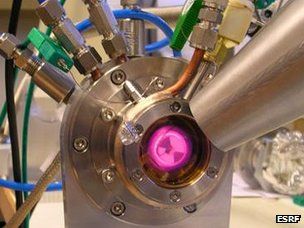
© ESRFMaterials are heated to searing temperatures before being probed with a spray of intense X-rays
An experiment to recreate the extreme conditions of the centre of the Earth was officially opened on Thursday.

The ID24 beam line at the European Synchrotron Radiation Facility (ESRF) will use X-ray beams to subject iron and other materials to extraordinary temperatures and pressures.

How the X-rays are absorbed should give insight into the mysterious processes going on at and near the Earth's core.

For example, the work could unravel why the Earth's magnetic field can "flip".

Question

Can Fetus Sense Mother's Psychological State? Study Suggests Yes

Image
© Mikael Damkier/FotoliaUltrasound image of fetus inside womb.
As a fetus grows, it's constantly getting messages from its mother. It's not just hearing her heartbeat and whatever music she might play to her belly; it also gets chemical signals through the placenta. A new study, which will be published in Psychological Science, a journal of the Association for Psychological Science, finds that this includes signals about the mother's mental state. If the mother is depressed, that affects how the baby develops after it's born.

In recent decades, researchers have found that the environment a fetus is growing up in - the mother's womb - is very important. Some effects are obvious. Drinking, for example, can be devastating. But others are subtler; studies have found that people who were born during the Dutch famine of 1944, most of whom had starving mothers, were likely to have health problems like obesity and diabetes later.

Info

Super Cool New H2O Discovered

Ice Block
© Wikimedia CommonsIce block at beach near Jökulsárlón, Iceland.
Besides vapor, ice and liquid, a fourth form of water may exist, but don't worry, Kurt Vonnegut fans, it's not ice-nine, the dangerous, solid at room temperature substance from the book Cat's Cradle. Unlike the fictional ice-nine, which melted at 114 degrees Fahrenheit, this new form of H2O likes it cold, about 54 degrees below zero Fahrenheit.

Liquid water usually freezes into ice at 32 Fahrenheit, but under the right conditions, like the high pressure at the bottom of the ocean, water stays liquid below 32 Fahrenheit.

Water's fourth form, or phase, may be a liquid with some of the properties of both ice and regular liquid water. But laboratory equipment isn't sensitive enough to observe the rapid transformation from regular liquid water to the fourth form.

Telescope

Strange Hyperactive Galaxies Spotted by Hubble Telescope

dwarf galaxies
© NASA, ESA, A. van der Wel (Max Planck Institute for Astronomy), H. Ferguson and A. Koekemoer (Space Telescope Science Institute), and the CANDELS teamThis image reveals 18 tiny galaxies uncovered by the NASA/ESA Hubble Space Telescope. The dwarf galaxies, shown in the insets, existed 9 billion years ago and are brimming with star birth.
Astronomers have discovered a strange population of tiny, distant galaxies forming stars at a surprisingly rapid clip.

The researchers used the Hubble Space Telescope to spot the 69 hyperactive dwarf galaxies, which are about 9 billion light-years away from Earth. They're churning out stars so fast that their stellar population would double in just 10 million years. By contrast, it took the Milky Way 1,000 times longer to double its number of stars, researchers said.

The new results are unexpected, since they're somewhat at odds with other recent studies of ancient dwarf galaxies.

"Those studies suggest that star formation was a relatively slow process, stretching out over billions of years," study co-author Harry Ferguson, of the Space Telescope Science Institute (STScI), said in a statement. Ferguson is co-leader of the survey that found the dwarf galaxies, which is called the Cosmic Assembly Near-infrared Deep Extragalactic Legacy Survey (CANDELS).

"The CANDELS finding that there were galaxies of roughly the same size forming stars at very rapid rates at early times is forcing us to re-examine what we thought we knew about dwarf galaxy evolution," Ferguson added.

Magnify

Gemological Institute of America tests Extraterrestrial Peridot specimens

Peridot
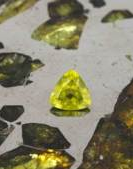
Scientists and researchers have discovered 'extraterrestrial samples' of the gem Peridot - an olive-green gem which is also found on earth. These extraterrestrial samples were recovered from meteorites on occasion. To understand the difference of properties between the Peridot gem found on earth and those recovered from the meteorites, researchers at GIA (Gemological Institute of America) assembled 26 extraterrestrial samples and the findings are reported in GIA's Gems & Gemology's Fall 2011 issue.

GIA researchers assembled specimens from several terrestrial locales and compared them with 26 samples taken from the Esquel meteorite, the most notable peridot-bearing extraterrestrial object discovered in Argentina about 50 years ago, this massive meteorite contained numerous peridot crystals. An American collector purchased most of the Esquel in 1992 and divided it into a number of sections for sale. Three of the Esquel samples examined by GIA were faceted gemstones, while the others were part of polished slabs. The GIA team discovered significant differences between earthly and extraterrestrial peridot - including different levels of lithium, vanadium, nickel, manganese, cobalt and zinc between the two - allowing researchers and ultimately gem buyers to confidently distinguish between peridot of different worlds.