Science & TechnologyS


Info

Strangers Spot People With Compassionate Genes in Seconds

compassion

Strangers can "see" a persons trustworthy genes through their behaviors, suggests a new study finding that a single genetic change makes a person seem more compassionate and kind to others.

The gene in question is the "love hormone," or oxytocin, receptor. A single change in the receptor can result in higher or lower empathy, or how much you can emotionally relate to others. These changes can be detected by strangers from just 20 seconds of soundless video; these strangers could literally see the person's genes manifesting in their behavior.

Our genes are made of bases, called nucleotides, which come in four types: A, T, C, and G. Researchers have found that switching out a single A to a G on the "love hormone" receptor can have profound effects on behavior. A person with two copies of this A-to-G mutation (one from each parent) report having more empathy.

"Previous research has found that people that are GGs are more empathic, more compassionate," study researcher Aleksandr Kogan at the University of Toronto told LiveScience. These studies were self-reported by the GGs, so Kogan's study asked: "Do other people actually find people with a GG more trustworthy?"
Info

Prehistoric Landslide Created Hidden Lake

Prehistoric Lake
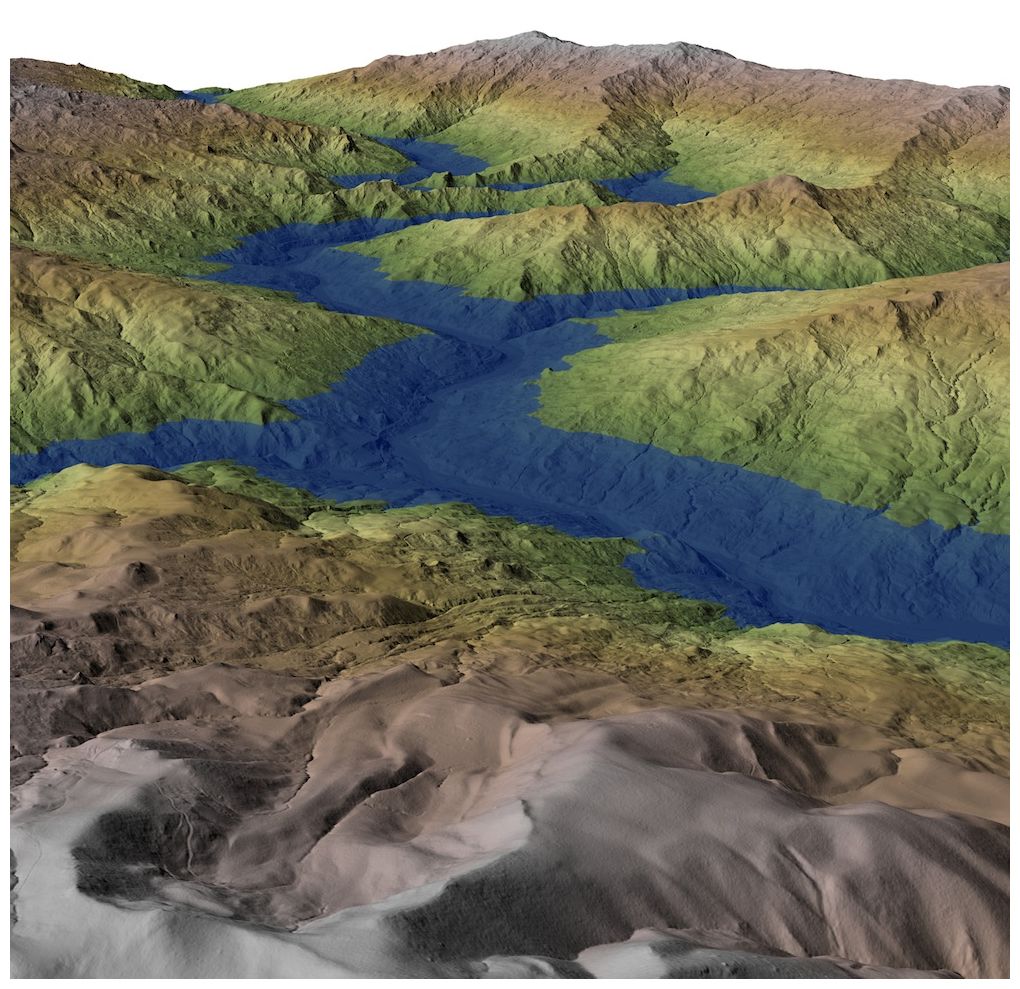
© Image courtesy of Benjamin MackeyAn artist's rendering of a prehistoric lake, now a river, would have looked like.

A catastrophic prehistoric landslide left behind a giant lake along what is now a river in California, researchers have discovered. The landslide also apparently left its mark on the river's trout, in the form of a genetic similarity, the researchers added.

Scientists investigated Northern California's Eel River to study large, slow-moving landslides. The river stretches about 200 miles (320 kilometers) in length and carries extraordinarily large amounts of sediment down its course, the most of any river not fed by a glacier in the contiguous United States.

The researchers analyzed the landscape using a laser range-finding system mounted on an aircraft and hand-held GPS units. They discovered that along a stretch of the river, terraces on adjacent slopes stayed oddly similar in elevation, rather than decreasing downstream as expected.

"This was the first sign of something unusual, and it clued us into the possibility of an ancient lake," said researcher Benjamin Mackey, a geomorphologist at the California Institute of Technology. The stretch they detected most likely represented where a lake with relatively stable shores once was, explaining why the leftover terraces were all of similar elevation.

Rocket

Russian Soyuz Capsule Successfully Launches to ISS After Rocket Troubles

Image
© msnbc.msn.comDespite a snowy morning, the Soyuz TMA-22 launches successfully.
The Soyuz TMA-22 launch also marks the first flight of a NASA astronaut since the retirement of the 30-year space shuttle program, which ended in July

A Russian Soyuz capsule launched successfully into orbit Monday on a mission to the International Space Station.

The Soyuz TMA-22 is carrying a three-man crew, consisting of Russians Anton Shkaplerov and Anatoly Ivanishin as well as NASA astronaut Dan Burbank.

The successful launch from Russia's Baikonur Cosmodrome in Kazakhstan was a relief after a recent failure had postponed the launch for two months. On August 24, an unmanned Progress cargo ship crashed on its way to the International Space Station. The failed rocket was the same type used on the Soyuz, and it forced the Russians to take another look at the safety of the Soyuz rocket model used for manned missions.

Russia's space agency determined that the Soyuz rocket failure was an isolated incident and not a major problem with the model. According to the space agency, a fuel pipe blockage caused the crash.

Evil Rays

US: Experimental Navy Destroyer to Operate on Biofuel

Retired destroyer is remotely controlled

Image
© Navy TimesExperimental destroyer in dock.
The U.S. Navy has made no secret about wanting to transition its ships and other vehicles from petroleum to alternative fuels. The move is being cited as a way to reduce the consumption of imported oil. The Navy has already been showing off ships and other vehicles that run on a mix of biofuel and diesel.

The fuel in question is the same mix of algae oil based bio fuel and diesel used on the small Riverine command boat. The ship is the former destroyer known as the Paul F. Foster and it will be the largest ship yet to operate with the biofuel.

The fuel in the tanks is a 50/50 blend of F-76 petroleum and the hydro-processed algae oil. The fuel will be used to power one of the LM2500 gas turbines the ship uses for propulsion and it will power the ship's service turbine. The experimental ship will travel on November 16 from Point Loma in San Diego to the Navy Surface Warfare Center in Port Hueneme, California. The trip is considered a short overnight jaunt.

The ship will take on 20,000 gallons of the biofuel previously said to sell for over $400 per gallon.

The retired destroyer is known as the Self Defense Test Ship and is a remotely controlled, self-defense weapons engineering platform that can be used without risking personnel. The test is part of the Navy's push to have a "Great Green Fleet" by 2016.

Comment: From Drone planes to the high seas, war is being made into a video game, now under the guise of saving fuel.


Cut

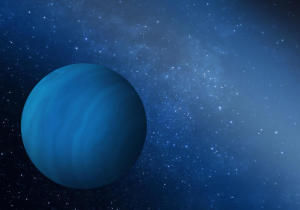
Giant Planet Ejected from the Solar System?

Solar system got rid of a planet
© Southwest Research InstituteArtist's impression of a planet ejected from the early solar system.

Just as an expert chess player sacrifices a piece to protect the queen, the solar system may have given up a giant planet and spared Earth, according to an article recently published in The Astrophysical Journal Letters.

"We have all sorts of clues about the early evolution of the solar system," says author Dr. David Nesvorny of the Southwest Research Institute. "They come from the analysis of the trans-Neptunian population of small bodies known as the Kuiper Belt, and from the lunar cratering record."

These clues suggest that the orbits of giant planets were affected by a dynamical instability when the solar system was only about 600 million years old. As a result, the giant planets and smaller bodies scattered away from each other.

Some small bodies moved into the Kuiper Belt and others traveled inward, producing impacts on the terrestrial planets and the Moon. The giant planets moved as well. Jupiter, for example, scattered most small bodies outward and moved inward.

Beaker

For the First Time, Lab-Grown Blood Is Pumped Into a Human's Veins

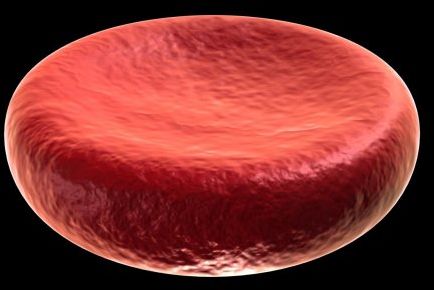
Red Blood Cell
Red Blood Cell Wikimedia Commons

Artificial blood may become a common reality, thanks to the first successful transfusion of lab-grown blood into a human. Luc Douay, of Pierre and Marie Curie University, Paris, extracted hematopoietic stem cells from a volunteer's bone marrow, and encouraged these cells to grow into red blood cells with a cocktail of growth factors. Douay's team labeled these cultured cells for tracing, and injected 10 billion of them (equalling 2 milliliters of blood) back into the marrow donor's body.

After five days, 94 to 100 percent of the blood cells remained circulating in the body. After 26 days, 41 to 63 percent remained, which is a normal survival rate for naturally produced blood cells. The cells functioned just like normal blood cells, effectively carrying oxygen around the body. "He showed that these cells do not have two tails or three horns and survive normally in the body," said Anna Rita Migliaccio of Mount Sinai Medical Center in New York.

This is great news for international health care. "The results show promise that an unlimited blood reserve is within reach," says Douay. The world is in dire need of a blood reserve, even with the rising donor numbers in the developed world. This need is even higher in parts of the world with high HIV infection rates, which have even lower reserves of donor-worthy blood.

Beaker

Stem Cell Based Lab-Grown Meat Coming Soon to Your Dinner Plate

meat

Labeled as 'cultured meat' by scientists, new meat grown in laboratory Petri dishes utilizing animal stem cells may soon be coming to a grocery store near you - and perhaps even your dinner plate.

Scientists and advocates are pushing the new meat as a method of tackling world hunger, savings the lives of animals, the environment, and conserving resources.

The cost of creating the meat, however, is quite outlandish. The first Petri dish hamburger will cost around 250,000 euros to create, according to Mark Post, a vascular biologist at the University of Maastricht in the Netherlands.

Post hopes to unveil the human-made hamburger soon, making way for the mainstream creation of synthetic meat products.
'The first one will be a proof of concept, just to show it's possible,' Post told Reuters in a telephone interview from his Maastricht lab. 'I believe I can do this in the coming year.

Info

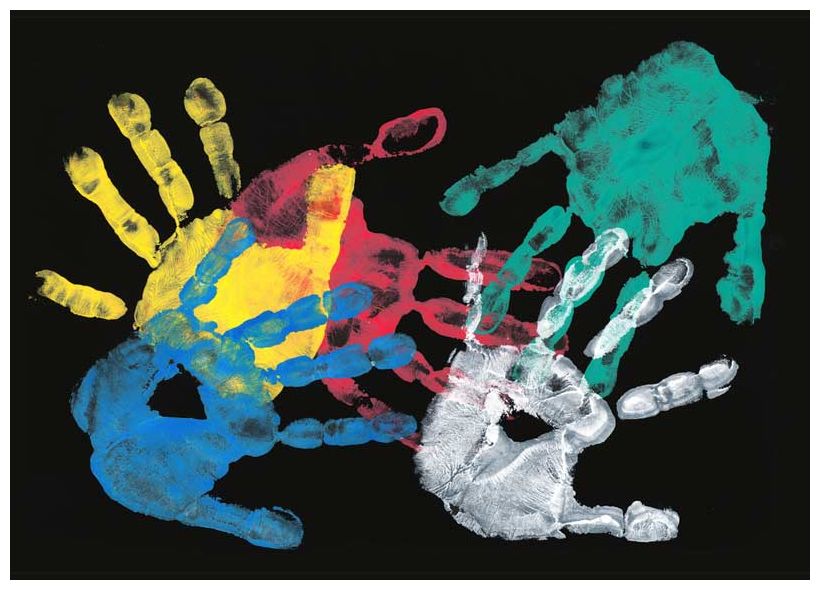
Life's Extremes: Left- vs. Right-Handed

Painting
© Igor Kovalchuk | ShutterstockWhether you're a righty or lefty may say more about you than what hand you use to write or play sports.

To get a sense of human handedness, take a survey of those combination chair-desk furniture pieces in classrooms. The desktops tend to wrap around from the right. That's so right-handers can comfortably rest their arms while jotting down notes with their dominant hand. For that uncommon left-hander, if he or she is lucky, there might be an odd-looking desk or two with an oppositely molded desktop.

Such classroom chauvinism reflects the puzzlingly strong bias toward right-hand dominance in our species. All over the planet, nine out of 10 people, on average, favor their right hand for writing, throwing and so on. ("Footedness" roughly follows this same breakdown, though for sensory organs, such as eyes and ears, preference is less skewed; true ambidexterity occurs in less than 1 percent of the population.)

Despite more than a century and a half of research, scientists have yet to find an answer for what causes handedness. "It's a very good question but we don't know," said David P. Carey, a neuropsychologist at Bangor University in the U.K.

Clues relating to asymmetries in our bodies, and especially in the brain, however, could help explain the paucity of "south paws."

Meteor

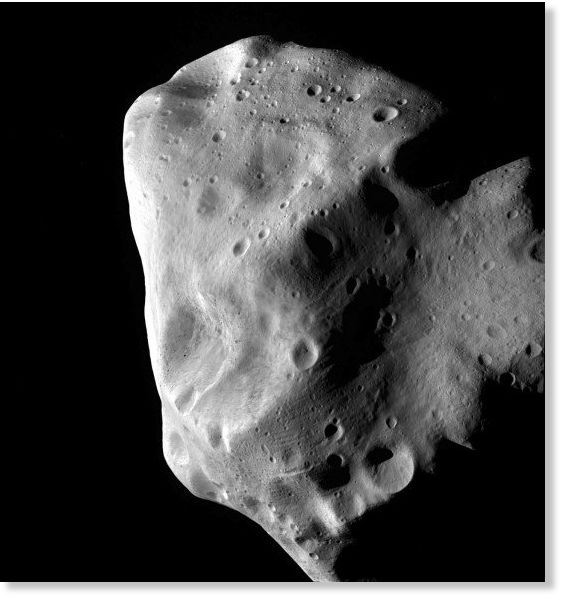
Asteroid Lutetia... A Piece Of Earth?

Image
© ESA 2010 MPS for OSIRIS Team MPS/UPD/LAM/IAA/RSSD/INTA/UPM/DASP/IDAThis image of the unusual asteroid Lutetia was taken by ESA’s Rosetta probe during its closest approach in July 2010. Lutetia, which is about 100 kilometres across, seems to be a leftover fragment of the same original material that formed the Earth, Venus and Mercury. It is now part of the main asteroid belt, between the orbits of Mars and Jupiter, but its composition suggests that it was originally much closer to the Sun. Credit:
According to data received from ESA's Rosetta spacecraft, ESO's New Technology Telescope, and NASA telescopes, strange asteroid Lutetia could be a real piece of the rock... the original material that formed the Earth, Venus and Mercury! By examining precious meteors which may have formed at the time of the inner Solar System, scientists have found matching properties which indicate a relationship. Independent Lutetia must have just moved its way out to join in the main asteroid belt...

A team of astronomers from French and North American universities have been hard at work studying asteroid Lutetia spectroscopically. Data sets from the OSIRIS camera on ESA's Rosetta spacecraft, ESO's New Technology Telescope (NTT) at the La Silla Observatory in Chile, and NASA's Infrared Telescope Facility in Hawaii and Spitzer Space Telescope have been combined to give us a multi-wavelength look at this very different space rock. What they found was a very specific type of meteorite called an enstatite chondrite displayed similar content which matched Lutetia... and what is theorized as the material which dates back to the early Solar System. Chances are very good that enstatite chondrites are the same "stuff" which formed the rocky planets - Earth, Mars and Venus.

"But how did Lutetia escape from the inner Solar System and reach the main asteroid belt?" asks Pierre Vernazza (ESO), the lead author of the paper.

Telescope

Fresh Start: Scientists Glimpse Unsullied Traces of the Infant Universe

earliest gases universe
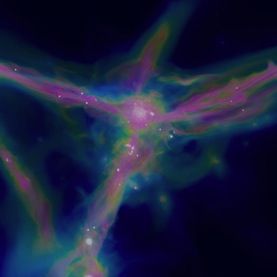
© Simulation by Ceverino, Dekel and PrimackUnsullied Strands: In this simulation image, strands of gas connect to a developing galaxy. The newfound gas clouds could occur in a filament around such a galaxy.
For the first time, astronomers discover pockets of pristine gas formed in the universe's first few minutes

By peering into the distance with the biggest and best telescopes in the world, astronomers have managed to glimpse exploding stars, galaxies and other glowing cosmic beacons as they appeared just hundreds of millions of years after the big bang. They are so far away that their light is only now reaching Earth, even though it was emitted more than 13 billion years ago.

Astronomers have been able to identify those objects in the early universe because their bright glow has remained visible even after a long, universe-spanning journey. But spotting the raw materials from which the first cosmic structures formed - the gas produced as the infant universe expanded and cooled in the first few minutes after the big bang - has not been possible. That material is not itself luminous, and everywhere astronomers have looked they have found not the primordial light-element gases hydrogen, helium and lithium from the big bang but rather material polluted by heavier elements, which form only in stellar interiors and in cataclysms such as supernovae.