Science & TechnologyS


Arrow Down

Deepest terrestrial animal found in Krubera-Voronja cave

Springtail
© Rafael Jordana and Enrique Baquero
Scientists have discovered four new species of primitive eyeless insects, one of which they described as the deepest land animal ever found.

These animals are springtails (Arthropoda, Insecta, Collembola), a minute primitive wingless insect with six-legs and without eyes that commonly live in total darkness in caves, where they feed on fungi and decomposing organic matter.

Described by Rafael Jordana and Enrique Baquero from University of Navarra (Spain), they are known for science as: Anurida stereoodorata, Deuteraphorura kruberaensis, Schaefferia profundissima and Plutomurus ortobalaganensis.

The last one is the deepest arthropod ever found, at the remarkable depth of 1.980 meters (2,165 yards) below ground surface.

Heart - Black

Childhood Stress May Cause Genetic Changes

Image
© Unknown
A new research effort comes to the conclusion that major stress during childhood can change a person's biological risk for psychiatric disorders.

Researchers from Butler Hospital at Brown University believe childhood adversity may lead to epigenetic changes in the human glucocorticoid receptor gene, an important regulator of the biological stress response that may increase risk for psychiatric disorders.

The research is published online in PLoS ONE.

Phoenix

Two die in fire at Brazil's Antarctic research station

Image
© ReutersThe Brazilian navy said the fire had destroyed the entire station
The Brazilian navy says it has recovered the bodies of two of its members from the debris of a Brazilian research station in the Antarctic.

The Comandante Ferraz base near the tip of the Antarctic Peninsula was destroyed by an explosion on Saturday.

Officials said the blast was caused by a fire which raged through the base, where marine research work is carried out.

A third member of the navy injured in the fire is in a stable condition.

Defence Minister Celso Amorim praised the military personnel's bravery.

"In an act of heroism, they risked their lives to extinguish the fire, but did not succeed," Mr Amorim said.

He said all the scientists from the station had been evacuated to Punto Arenas in Chile, from where they will be taken to Brazil on Sunday.

The military personnel stayed in Antarctica, but sought temporary shelter at Chile's Eduardo Frei research base.

Beaker

How Vitamin D Inhibits Inflammation

Vitamin D
© Unknown
Researchers at National Jewish Health have discovered specific molecular and signaling events by which vitamin D inhibits inflammation. In their experiments, they showed that low levels of Vitamin D, comparable to levels found in millions of people, failed to inhibit the inflammatory cascade, while levels considered adequate did inhibit inflammatory signaling. They reported their results in the March 1, 2012, issue of The Journal of Immunology.

"This study goes beyond previous associations of vitamin D with various health outcomes. It outlines a clear chain of cellular events, from the binding of DNA, through a specific signaling pathway, to the reduction of proteins known to trigger inflammation," said lead author Elena Goleva, assistant professor of pediatrics at National Jewish Health. "Patients with chronic inflammatory diseases, such as asthma, arthritis and prostate cancer, who are vitamin D deficient, may benefit from vitamin D supplementation to get their serum vitamin D levels above 30 nanograms/milliliter."

Current national guidelines suggest that people should maintain a minimum blood serum level of 20 ng/ml, although there is much scientific debate about optimum levels. Vitamin D has long been known to contribute to bone health by promoting the absorption of calcium. In recent years, much attention has been paid to its possible immune and inflammatory benefits. Low vitamin D levels have been associated with several diseases including asthma, cancer, diabetes, and arthritis.

Health

Iceman May Hold Earliest Evidence of Lyme Disease

Iceman
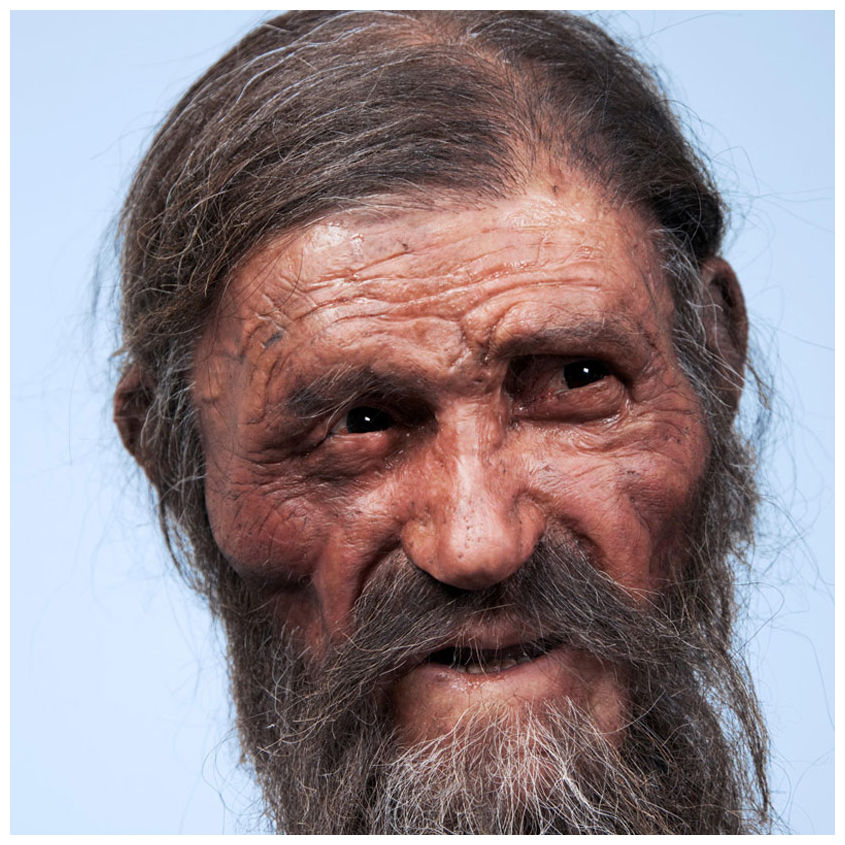
© Heike Engel-21Lux/Sudtiroler Archäologiemuseum/NATIONAL GEOGRAPHIC DEUTSCHLANDA reconstruction of the Iceman's face, as crafted by Dutch experts, Alfons and Adrie Kennis. New genetic analysis suggests the Iceman may have had Lyme disease.

The 5,300-year-old ice mummy dubbed Ötzi, discovered in the Eastern Alps about 20 years ago, appears to have had the oldest known case of Lyme disease, new genetic analysis has revealed.

As part of work on the Iceman's genome - his complete genetic blueprint - scientists found genetic material from the bacterium responsible for the disease, which is spread by ticks and causes a rash and flu-like symptoms and can lead to joint, heart and nervous system problems.

The new analysis also indicates the Iceman was lactose intolerant, predisposed to cardiovascular disease, and most likely had brown eyes and blood type O.

To sequence the Iceman's genome, researchers took a sample from his hip bone. In it, they looked for not only human DNA - the chemical code that makes up genes - but also for that of other organisms. While they found evidence of other microbes, the Lyme disease bacterium, called Borrelia burgdorferi, was the only one known to cause disease, said Albert Zink, a study researcher and head of the European Institute for Mummies and the Iceman at the European Academy of Bozen/Bolzano (EURAC) in Italy.

"Our data point to the earliest documented case of a B. burg­dorferi infection in mankind. To our knowledge, no other case report about borreliosis [Lyme disease] is available for ancient or historic specimens," Zink and colleagues write in an article published on Tuesday (Feb. 28) in the journal Nature Communications.

Clock

The Myth of the Eight-Hour Sleep

Image
© Thinkstock
We often worry about lying awake in the middle of the night - but it could be good for you. A growing body of evidence from both science and history suggests that the eight-hour sleep may be unnatural.

In the early 1990s, psychiatrist Thomas Wehr conducted an experiment in which a group of people were plunged into darkness for 14 hours every day for a month.

It took some time for their sleep to regulate but by the fourth week the subjects had settled into a very distinct sleeping pattern. They slept first for four hours, then woke for one or two hours before falling into a second four-hour sleep.

Beaker

Scientists Use Stem Cells to Generate Human Eggs

Image
© Brian Snyder / The New York TimesJonathan L. Tilly led the study, which, if confirmed, could pave the way for new infertility treatments.
Researchers at Massachusetts General Hospital say they have extracted stem cells from human ovaries and made them generate egg cells. The advance, if confirmed, might provide a new source of eggs for treating infertility, though scientists say it is far too early to tell if the work holds such promise.

Women are born with a complement of egg cells that must last throughout life. The ability to isolate stem cells from which eggs could be cultivated would help not only with fertility but also with biologists' understanding of how drugs and nutrition affect the egg cells.

The new research, by a team led by the biologist Jonathan L. Tilly, depends on a special protein found to mark the surface of reproductive cells like eggs and sperm. Using a cell-sorting machine that can separate out the marked cells, the team obtained reproductive cells from mouse ovaries and showed that the cells would generate viable egg cells that could be fertilized and produce embryos.

They then applied the same method to human ovaries donated by women at the Saitama Medical Center in Japan who were undergoing sex reassignment because of a gender identity disorder. As with the mice, the team was able to retrieve reproductive cells that produced immature egg cells when grown in the laboratory. The egg cells, when injected into mice, generated follicles, the ovarian structure in which eggs are formed, as well as mature eggs, some of which had a single set of chromosomes, a signature of eggs and sperm. The results were published online Sunday by the journal Nature Medicine.

Question

US: Mystery Grows As More Livestock Dies In Tennessee

Horses are dying and now cattle as well and detectives in Maury County have been at a loss to explain how or why it is happening.


First, seven seemingly healthy horses turned up dead last week at a Hampshire farm in Maury County. The state performed a necropsy and released the results.

"They ruled that it's undetermined. The cause of death cannot be determined at this time. It is a mystery. We don't know what happened," said Detective Terry Chandler with the Maury County Sheriff's Department.

Question

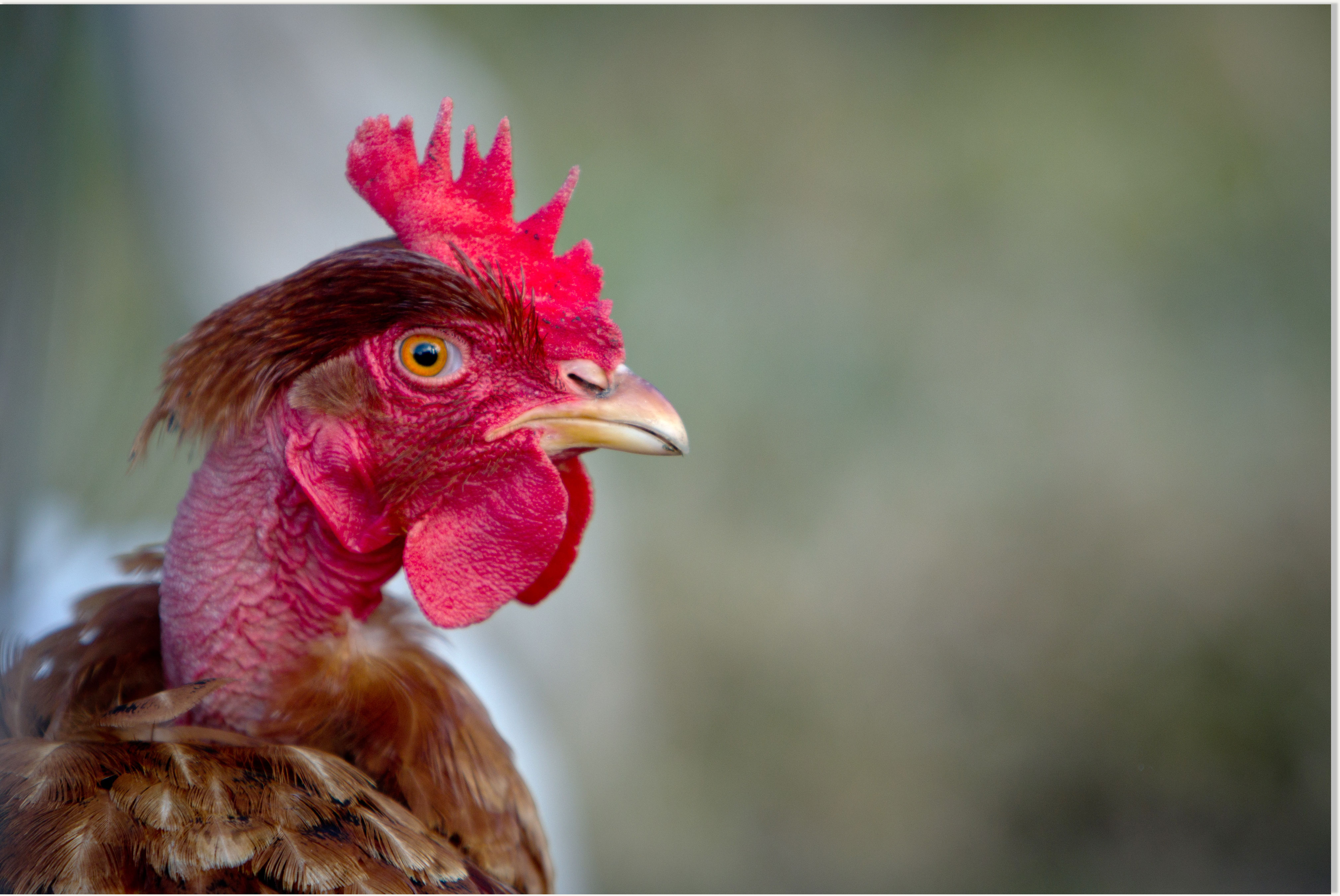
Nepal: 20,000 chickens die from unidentified disease

chicken
© unknown
More than 20,000 chickens have died of unidentified disease in Naubise VDC's Dharke and surrounding areas in the past week.

Livestock Development Officer Dr Shivaji Prasad Das of District Livestock Service Office said chickens had been dying but since the farmers kept mum more chickens could not be prevented from dying. It was only yesterday that a team including Dr Das went to the incident site. It sent dead chickens for tests to Kathmandu's Central Livestock Disease Control Laboratory today. According to Dr Das, test report will be out in three days.

Magnify

Bird flu, pig flu, now bat flu? Human risk unclear

bat flu
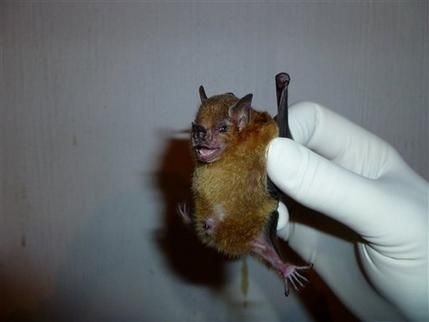
© AP Photo/Centers for Disease Control and Prevention/Amy GilbertSturnira lilium, the host species of bat that the influenza virus has recently been detected in.
For the first time, scientists have found evidence of flu in bats, reporting a never-before-seen virus whose risk to humans is unclear.

The surprising discovery of genetic fragments of a flu virus is the first well-documented report of it in the winged mammals. So far, scientists haven't been able to grow it, and it's not clear if - or how well - it spreads.