Science & TechnologyS


Magnify

Scientists find fossils of ancient tiny camel while probing sediment from Panama Canal

Image
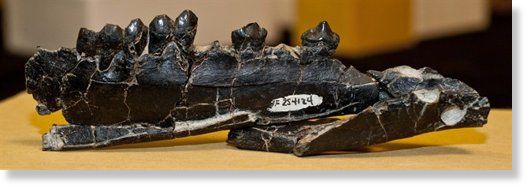
© The Canadian Press/The Associated Press/HO/Jeff GageIn this undated photo made available by the Florida Museum of Natural History, shows the lower jaw of Aguascalietia panamaensis, a new species of ancient camel described by University of Florida researchers online in the Journal of Vertebrate Paleontology.
US: Miami, Florida - Researchers say they have discovered the fossils of a small camel with a long snout that roamed the tropical rainforests of the isthmus of Panama some 20 million years ago.

The ancient camel had no hump, and one of the two species found appeared to stand only about two feet (.6 metres) tall, scientists reported in a recently published article in the Journal of Vertebrate Paleontology.

University of Florida researcher Aldo Rincon discovered the fossils during the widening of the Panama Canal to accommodate hulking new cargo ships. He and other scientists from Panama, the United States and the Smithsonian Tropical Research Institute also reported finding fossils of ancient marlins, turtles and horses.

"We never expected to find a camel there," said Smithsonian scientist Carlos Jaramillo, co-author of the journal article. "It's really, really a surprise."

Unlike contemporary camels, these had crocodile-like teeth.

"It was like a little dog," Jaramillo said.

Scientists believe the camels, Aguascalientia panamaensis and Aguascalientia minuta, may have used the sharp teeth as they chomped on lush foliage and fruit.

Satellite

DARPA, Pentagon Want Disposable On-Demand Satellites

Cheap satellites, an oxymoron?
Image
© Unknown

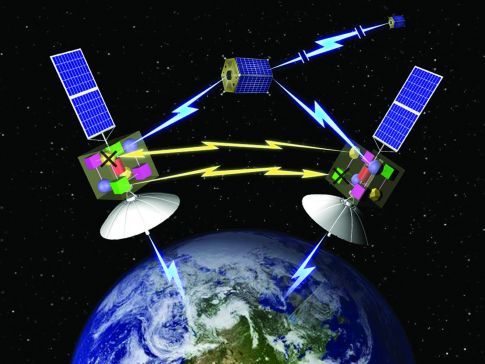
Modern satellites are very expensive to build and launch. With this in mind, DARPA wants a new breed of disposable mini satellites to provide reconnaissance to soldiers at the press of a button. DARPA is currently seeking input from manufacturers on the project.

DARPA wants the satellites to cost around $500,000 each, which is still expensive, but much cheaper compared to the millions of dollars that a traditional satellite can cost. DARPA wants to launch "constellations" of roughly 24 satellites that would stay in low Earth orbit for 60 to 90 days before plunging into the atmosphere and burning up on reentry.

"We envision a constellation of small satellites, at a fraction of the cost of airborne systems, that would allow deployed war fighters to hit 'see me' on existing handheld devices and in less than 90 minutes receive a satellite image of their precise location to aid in mission planning," the agency says in a statement.

Info

Message Beamed Through Rock With Exotic Particles

Fermilab Scientist
© FermilabScientists stand with the Minerva neutrino detector, located 330 feet underground at Fermi National Accelerator Laboratory.

For the first time, scientists have used neutrinos - the exotic fundamental particles that routinely pass right through Earth - to send a message through the ground.

Researchers have long been intrigued by the communication possibilities of neutrinos, because these particles can easily travel through matter, including a planet, without stopping, slowing down or being misdirected.

Neutrinos are extremely tiny particles with almost zero mass and neutral charge. Thus they are impervious to electromagnetic forces and respond very weakly to gravity. They almost never collide with other particles, generally passing straight through the atoms that make up matter.

Now, scientists have successfully harnessed neutrinos to send a message from one place to another, spelling out the word "neutrino" in a particle binary code.

2 + 2 = 4

The Good News About the Virus in Your Genes

Image
© John S. Dykes
Might some forms of neurological illness, such as multiple sclerosis and schizophrenia, be caused at least partly by bacteria, viruses or other parasites? A largely Danish team has recently published evidence of a strong association between multiple sclerosis and a retrovirus, together with hints that a gene called TRIM5, which is used by cells to fight viruses, is especially active in people with MS.

Other illnesses have unexpectedly turned out to be caused by parasites. In the 1980s, Barry Marshall of the University of Western Australia ran into a brick wall of official disbelief for suggesting that a bacterium caused stomach ulcers. Only by deliberately infecting and then curing himself did he finally get the medical establishment's attention (and eventually the Nobel Prize).

Grey Alien

Extraterrestrial Life Is A Censored Subject Says Famous Professor

Image
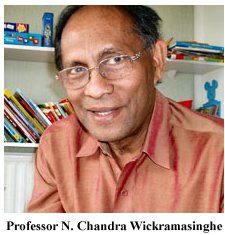
Professor N. Chandra Wickramasinghe
It is not often scientists are willing to openly discuss the possibility of extraterrestrial life.

According to a famous astronomy professor there is a reason why a majority of scientists avoid the subject - it is censored!

Even though the general public embraces ideas of extraterrestrial life, science is expected to shun this subject no matter how strong the evidence, albeit through a conspiracy of silence.

It is an unwritten doctrine of science that extraterrestrial life could not exist in our immediate vicinity, or, that if such life did exist, it could not have a connection with Earth.

Comment: For more information on censorship and corruption in science, read: The Corruption of Science in America


Info

Earliest Pregnant Reptile Pushes Back Fossil Record of Live Birth

Mesosaur Embryo
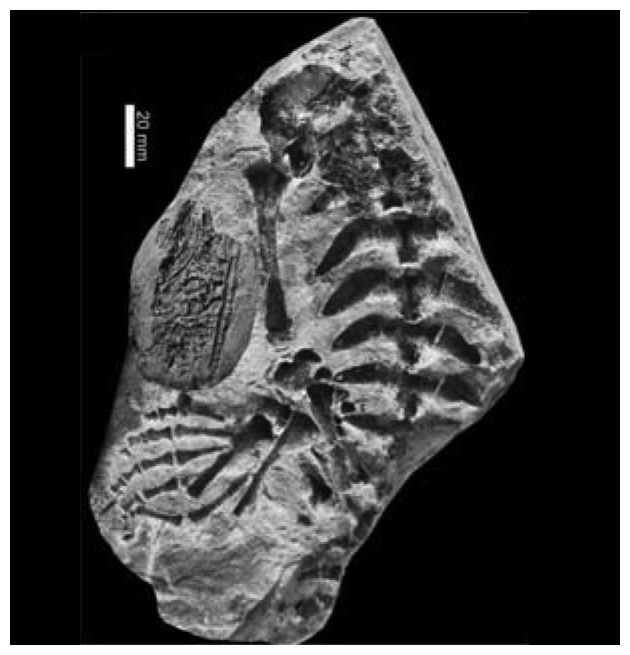
© raciela PineiroThis composite photo shows an isolated mesosaur embryo with an adult mesosaur to show the size relation.

Newly found fossils of embryos from the first aquatic reptiles called mesosaurs - along with a pregnant female - may be the oldest known example of birth given to live young instead of eggs, scientists report.

Both mammals and reptiles wrap their developing embryos in protective layers, something that helped the little ones survive and ultimately helped their ancestors conquer the land. Mammals often keep these membrane-swaddled offspring within them, giving birth to live young, while reptiles typically lay their membrane-bundled progeny in eggs.

However, there are some oddballs: Some mammals, such as the platypus, lay eggs, while some reptiles, such as most vipers, are viviparous, giving birth to live young.

The fact that mammals and reptiles surround their embryos with these protective layers makes them known as amniotes. The fossil record of amniotic eggs and embryos is very sparse, and as such, scientists have little information about when, how and why they evolved.

Info

Jupiter's Jet Streams Get Thrown Off Course

Jupiter's jet streams
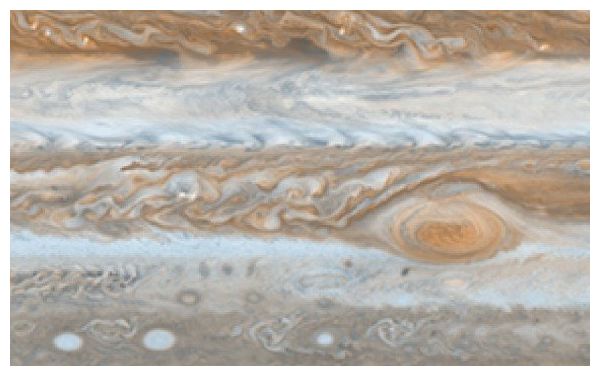
© NASA/JPL/SSIJupiter's jet streams.
Both Earth and Jupiter have jet streams; fast-moving winds that circle the globe. On Jupiter, those jet streams are constrained to very specific bands of the planet, while they meander around the Earth. We can see huge variations of weather when Earth's jet streams move around - like unusually cold weather in Florida.

These strange weather patterns can occur on Earth when the jet streams interact with another atmospheric phenomenon called Rossby waves. We have them here on Earth, and they were first identified on Jupiter about 20 years ago.

And now scientists have identified the signature of Rossby waves throwing the jet streams off course on Jupiter. During its flyby of Jupiter, NASA's Cassini spacecraft captured these images of Jupiter's atmosphere; 100 were stitched together into a time-lapse movie.

Beaker

Ocean iron affects biological productivity: study

Image
© unkOcean
A team of researchers has just published a new paper, lead authored by Boston University Professor of Earth Sciences Richard W. Murray, that provides compelling evidence from marine sediment that supports the theory that iron in the Earth's oceans has a direct impact on biological productivity, potentially affecting the amount of carbon dioxide in the atmosphere and, in turn, atmospheric temperature. These findings have been published in the March 11, 2012 online edition of the journal Nature Geoscience.

The oceans are the world's largest inventory of reactive carbon. Over time, oceanic carbon exchanges with the atmospheric reservoir of carbon in the form of carbon dioxide (CO2). Much of the carbon present in the surface oceans is taken up by the growth of marine plants (primarily by phytoplankton) through photosynthesis. Consequently, marine biological productivity is recognized as a factor in determining the amount of atmospheric carbon dioxide at various times in the Earth's history.

Satellite

Cassini spies wave rattling jet stream on Jupiter

Image
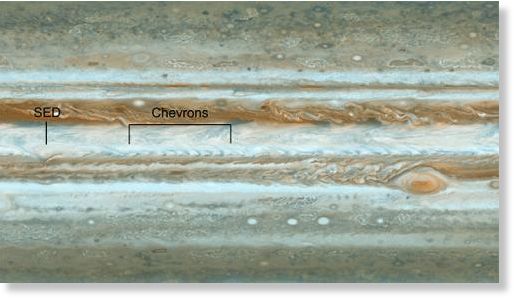
© NASA/JPL/Space Science Institute
New movies of Jupiter are the first to catch an invisible wave shaking up one of the giant planet's jet streams, an interaction that also takes place in Earth's atmosphere and influences the weather. The movies, made from images taken by NASA's Cassini spacecraft when it flew by Jupiter in 2000, are part of an in-depth study conducted by a team of scientists and amateur astronomers led by Amy Simon-Miller at NASA's Goddard Space Flight Center in Greenbelt, Md., and published in the April 2012 issue of Icarus.

"This is the first time anyone has actually seen direct wave motion in one of Jupiter's jet streams," says Simon-Miller, the paper's lead author. "And by comparing this type of interaction in Earth's atmosphere to what happens on a planet as radically different as Jupiter, we can learn a lot about both planets."

Like Earth, Jupiter has several fast-moving jet streams that circle the globe. Earth's strongest and best known jet streams are those near the north and south poles; as these winds blow west to east, they take the scenic route, wandering north and south. What sets these jet streams on their meandering paths -- and sometimes makes them blast Florida and other warm places with frigid air -- are their encounters with slow-moving waves in Earth's atmosphere, called Rossby waves.

2 + 2 = 4

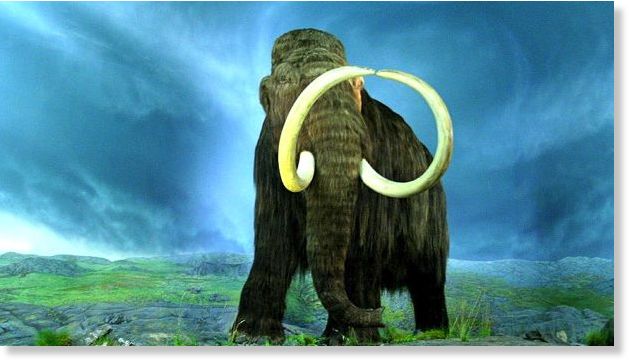
South Korean and Russian scientists join to clone woolly mammoth

Image
© Unknown
Russian and South Korean scientists have signed a deal on joint research intended to recreate a woolly mammoth, an animal which last walked the earth some 10,000 years ago.

The deal was signed by Vasily Vasiliev, vice rector of North-Eastern Federal University of the Sakha Republic, and controversial cloning pioneer Hwang Woo-Suk of South Korea's Sooam Biotech Research Foundation, on Tuesday.

Hwang was a national hero until some of his research into creating human stem cells was found in 2006 to have been faked. But his work in creating Snuppy, the world's first cloned dog, in 2005, has been verified by experts.

Stem cell scientists are now setting their sights on the extinct woolly mammoth, after global warming thawed Siberia's permafrost and uncovered remains of the animal.

Sooam said it would launch research this year if the Russian university can ship the remains. The Beijing Genomics Institute will also take part in the project.