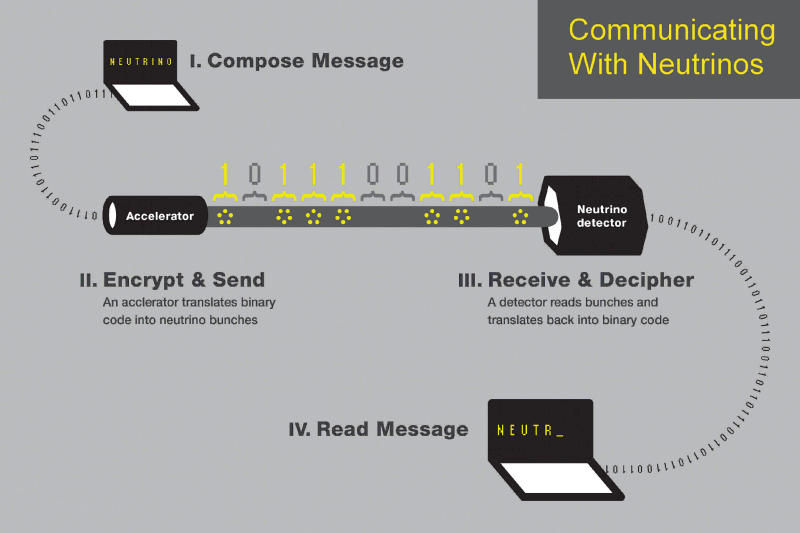
© University of Rochester
University of Rochester and North Carolina State University researchers have found a way to send messages using a beam of neutrinos, which could eventually eliminate the need for cables or satellites.
Dan Stancil, lead author of the study and professor of electrical and computer engineering at NC State, along with Kevin McFarland, a physics professor at the University of Rochester, and a team of researchers, have successfully sent a message through 240 meters of stone using a beam of neutrinos.
Using neutrinos to communicate wireless messages is not a new idea. Neutrinos are ideal for this task because they are capable of penetrating pretty much any obstacle in their way. They can do this because of their neutral charge and lack of mass, which allows them to not be affected by magnetic attractions or gravity. They can pass through entire planets without being affected while electromagnetic waves, which are used by cell phones, radios and televisions today, are blocked by many objects like water and mountains.