
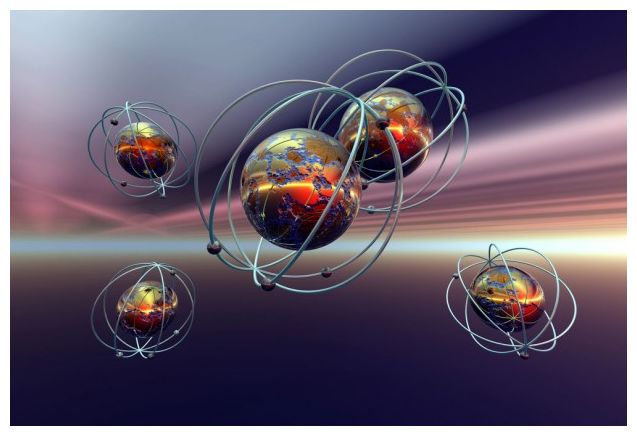
© sam100 / Shutterstock
For clarity's sake, one should be aware that the uncertainty principle is not the same as the observer effect, which states that the act of observing a phenomenon will change the phenomenon itself. The uncertainty principle is more about how precisely something can be measured in two dimensions such as position and momentum, simultaneously. In common parlance, the two theories are often conflated.
This principle has driven quantum physicists crazy for nearly a century. That is, it drove them crazy until recently, when researchers at the University of Toronto demonstrated the ability to directly measure the disturbance and confirm that Heisenberg was too pessimistic.
"We designed an apparatus to measure a property - the polarization - of a single photon. We then needed to measure how much that apparatus disturbed that photon," says Lee Rozema, a PhD. candidate in Professor Aephraim Steinberg's quantum optics research group at U of T.
"To do this, we would need to measure the photon before the apparatus but that measurement would also disturb the photon," Rozema says.
To overcome this challenge, the team employed a technique known as weak measurement wherein the action of a measuring device is weak enough to have an imperceptible impact on what is being measured. Prior to sending each photon to the measurement apparatus, the physicists measured it weakly and then measured it again afterwards. They then compared the results and found that the disturbance induced by the measurement is less than Heisenberg's precision-disturbance relation would require.


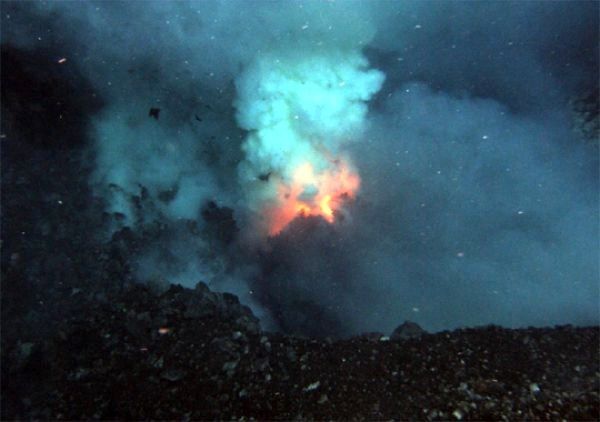





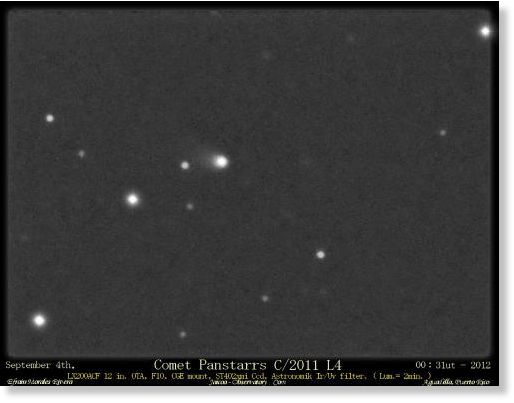






Comment: Indeed, mass eruptions of volcanoes go hand in hand with mass influx of cometary debris. This idea that one single asteroid killed off the dinosaurs is as improbable as it is unscientific. The fact of the matter is that comet swarms periodically load Earth's atmosphere with millions of tonnes of debris, most of which is 'meteor smoke'. This has far greater and more frequent effects than occasional impacts like the one in the Yucatán Peninsula.