Science & TechnologyS


Health

Quantum Teleportation Goes the Distance: Record-Breaking Distance of 143 Kilometers Through Free Space

Image
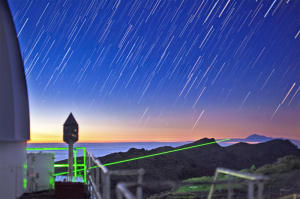
© IQOQI-ViennaScientists recently achieved the successful teleportation of quantum information -- in this case, the states of light particles, or photons -- between the Canary Islands of La Palma and Tenerife.
An international research team including several scientists from the University of Waterloo has achieved quantum teleportation over a record-breaking distance of 143 kilometres through free space.

The experiment saw the successful teleportation of quantum information -- in this case, the states of light particles, or photons -- between the Canary Islands of La Palma and Tenerife. The breakthrough is a crucial step toward quantum communications via satellite.

Unlike the teleportation of solid objects popularized in science fiction, the experiment involved the teleportation of quantum states, an essential pre-requisite of quantum computing, quantum communication and other powerful technologies under development at the Institute for Quantum Computing (IQC) at Waterloo.

The project, led by researchers from Vienna's Institute for Quantum Optics and Quantum Information, relied on algorithms and equipment developed in Waterloo. Their results were published this week in Nature.

Teleportation across 143 kilometres is a crucial milestone in this research, since that is roughly the minimum distance between the ground and orbiting satellites. This achievement leads to the possibility of quantum teleportation between ground stations and orbiting satellites, a key goal in the research of Professor Thomas Jennewein, an IQC faculty member and collaborator on the record-setting experiment.

Bizarro Earth

Swamp Rats & Baby Dolphins! How Hurricanes Impact Animals

Nutria Carcasses
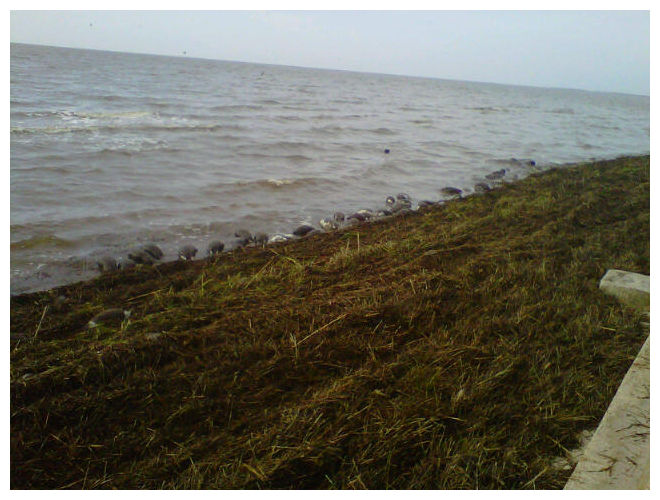
© Mississippi Department of Environmental QualityClean-up crews are removing the rotting nutria carcasses with pitchforks and front-end loaders. The smell is reportedly terrible.
The aftermath of Hurricane Isaac has washed ashore tens of thousands of dead "swamp rats," invasive species whose rotting corpses are now presenting a health hazard in Mississippi.

The drowned rodents, known as nutria, are a stark reminder of the effects of hurricanes on wildlife, which can range from mass death to - surprisingly enough - dolphin baby booms. In the case of the nutria, the drownings may be a blessing for the Gulf Coast, where the beaver-like creatures wreck havoc on native marsh vegetation.

The clean-up, though, is proving unpleasant.

"They're actually starting to swell up and bust," Hancock County Supervisor David Yarborough told local news station WLOX. "It smells really bad."

Info

The Real Source of 'Climate Change': Meteoroids Change Atmospheres of Earth, Mars, Venus

Perseid Meteor
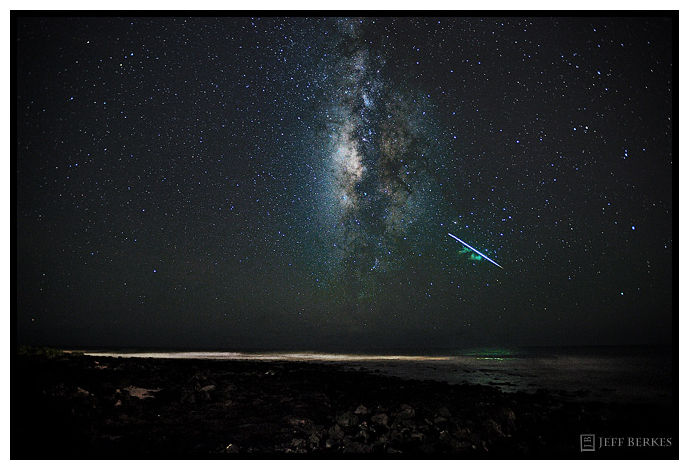
© Jeff BerkesAstrophotographer Jeff Berkes caught this Perseid meteor over the Hawaiian island of Kauai in 2010.

Meteoroids streaking through the atmospheres of planets such as Earth, Mars and Venus can change these worlds' air, in ways that researchers are just now beginning to understand.

Most planetary atmospheres are made up of simple, low-mass elements and compounds such as carbon dioxide, oxygen and nitrogen. But when a debris particle, or meteoroid, passes through, it can shed heavier, more exotic elements such as magnesium, silicon and iron.

Such elements can have a significant impact on the circulation and dynamics of winds in the atmosphere, researchers say.

"That opens up a whole new network of chemical pathways not usually there," said Paul Withers of Boston University.

Meteor

Close Approach of PHA Asteroid 2012 QG42

M.P.E.C. 2012-Q72, issued on 2012 Aug. 28, reports the discovery of the PHA asteroid 2012 QG42 (discovery magnitude 16.8) by Catalina Sky Survey on images taken on August 26.3 with a 0.68-m Schmidt + CCD.

2012 QG42 has an estimated size of 200 m - 500 m (H=20.4) and it will have a close approach with Earth at about 7.43 LD (Lunar Distances) or 0.019 AU at 0510 UT on 14 Sept. 2012. This asteroid will reach an average magnitude of 13.6 around September 10-12. 2012 QG42 is a current radar target for ground based radio telescopes. Astronomers at Goldstone and Arecibo will try to observe it on September as "this object should be a really strong delay-Doppler imaging target".

It was classified as a PHA ((Potentially Hazardous Asteroid). PHA are asteroids larger than approximately 100m that can come closer to Earth than 0.05 AU. None of the known PHAs is on a collision course with our planet, although astronomers are finding new ones all the time.

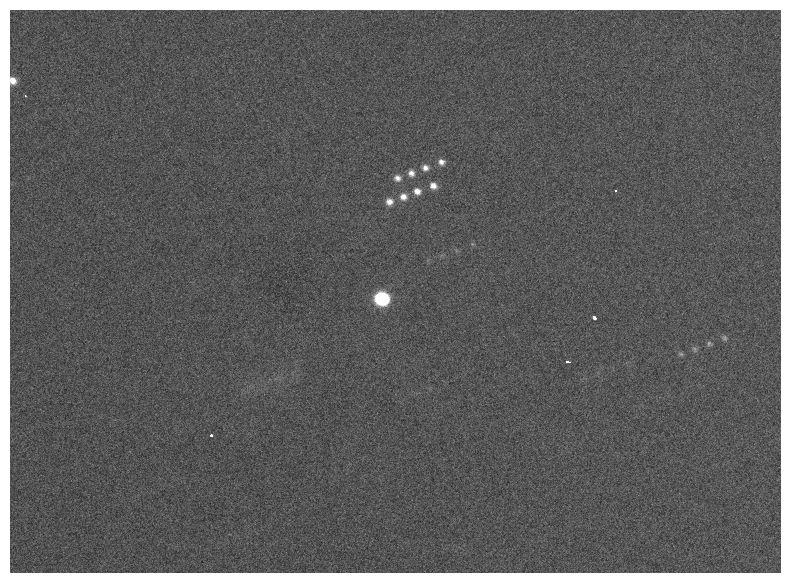
We performed some follow-up measurements of this object, remotely from the Siding Spring-Faulkes Telescope South on 2012, September 04.5, through a 2.0-m f/10.0 Ritchey-Chretien + CCD. Below you can see our image, stack of 4x10-second exposures, taken with the asteroid at magnitude ~15.2 and moving at 4.35"/min. At the moment of the close approach on 14 September, 2012 QG42 will move at ~ 49"/min.
Asteroid 2012 QG42
© Remanzacco Observatory
Here you can see a short animation showing the movement of 2012 QG42 (each frame is a 10-second exposure).

Telescope

A Surprisingly Bright Superbubble

Image
© X-ray: NASA/CXC/U.Mich./S.Oey, IR: NASA/JPL, Optical: ESO/WFI/2.2-m
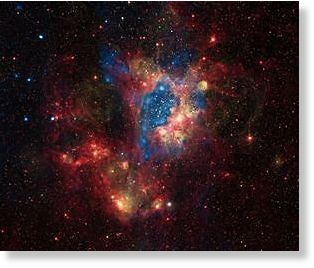
This composite image shows a superbubble in the Large Magellanic Cloud (LMC), a small satellite galaxy of the Milky Way located about 160,000 light years from Earth. Many new stars, some of them very massive, are forming in the star cluster NGC 1929, which is embedded in the nebula N44, so named because it is the 44th nebula in a catalog of such objects in the Magellanic Clouds.

The massive stars produce intense radiation, expel matter at high speeds, and race through their evolution to explode as supernovas. The winds and supernova shock waves carve out huge cavities called superbubbles in the surrounding gas. X-rays from NASA's Chandra X-ray Observatory (blue) show hot regions created by these winds and shocks, while infrared data from NASA's Spitzer Space Telescope (red) outline where the dust and cooler gas are found.

Better Earth

Ancient flood myths may have a basis in geological history

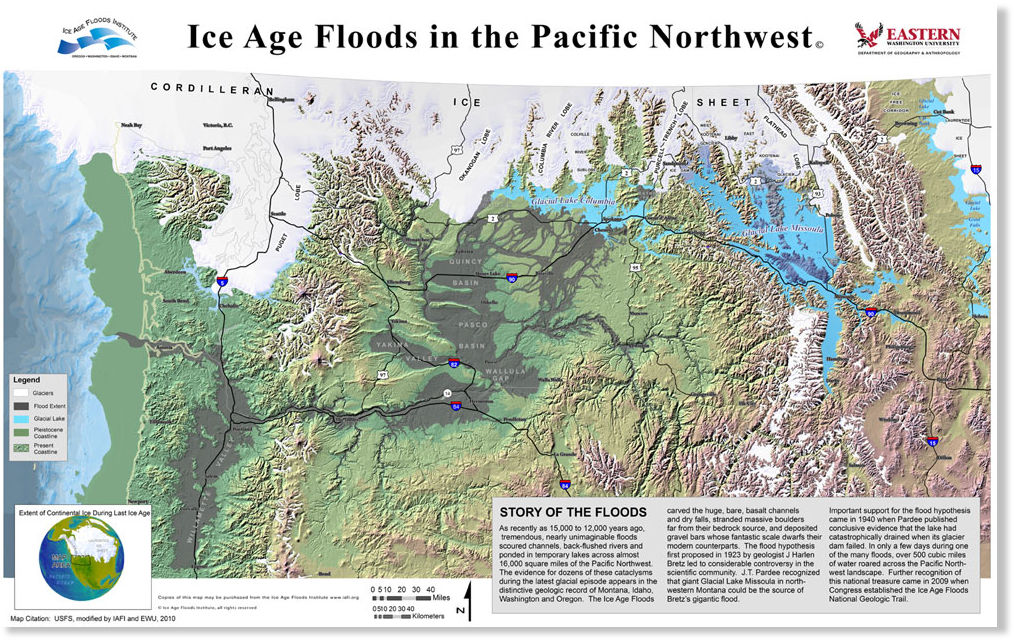
10,000 years ago, at a time when humans recorded historical events by telling mythical stories that got passed from one generation to the next, huge parts of the North American continent were deluged by massive walls of water. They were, as geologist David R. Montgomery writes in this month's Discover magazine, "Biblical-type floods." Huge regions of the Pacific Northwest, called the "scablands" were chewed up by flash floods that were more like tsunamis. And it was all caused by the melting of the glaciers from the last ice age. As the walls of ice damming lakes melted away, the waters would rush out across the land.
Image

Star

Record-Breaking Stellar Explosion Helps Astronomers Understand Far away Galaxy

Astronomers took advantage of the most distant supernova of its type to probe a galaxy some 9.5 billion light years away. The light from the exploding star, discovered by Pan-STARRS with followup spectroscopic observations by the Gemini North telescope and the Multiple Mirror Telescope, confirmed that the gas environment between the stars in the distant galaxy is "reassuringly normal".

An international research team, led by Edo Berger of Harvard University, made the most of a dying star's fury to probe a distant galaxy some 9.5 billion light-years distant. The dying star, which lit the galactic scene, is the most distant stellar explosion of its kind ever studied. According to Berger, "It's like someone turned on a flashlight in a dark room and suddenly allowed us to see, for a short time, what this far-off galaxy looks like, what it is composed of."

The study, published recently in The Astrophysical Journal, describes how the researchers used the exploding star's light (called an ultra-luminous core-collapse supernova) as a probe to study the gas conditions in the space between the host galaxy's stars. Berger says the findings reveal that the distant galaxy's interstellar conditions appear "reassuringly normal" when compared to those seen in the galaxies of our local universe. "This shows the enormous potential of using the most luminous supernovae to study the early universe," he says. "Ultimately it will help us understand how galaxies like our Milky Way came to be."

The discovery of the dying star in this distant galaxy was made using images from the Pan-STARRS1 survey telescope on Haleakala in Maui, Hawai'i. "These are the types of exciting and unexpected applications that appear when a new capability comes on line," said John Tonry, one of the study's co-authors and supernovae researcher at the University of Hawai'i at Manoa's Institute for Astronomy. Tonry adds, "Pan-STARRS is pioneering a new era in deep, wide-field, time-critical astronomy -- and this is just the beginning." After the Pan-STARRS discovery, spectroscopic follow-up studies using the Multiple Mirror Telescope in Arizona and the 8-meter Gemini North telescope on Mauna Kea, Hawai'i provided the data used by the team to probe the gas of the distant galaxy's interstellar environment.

Sun

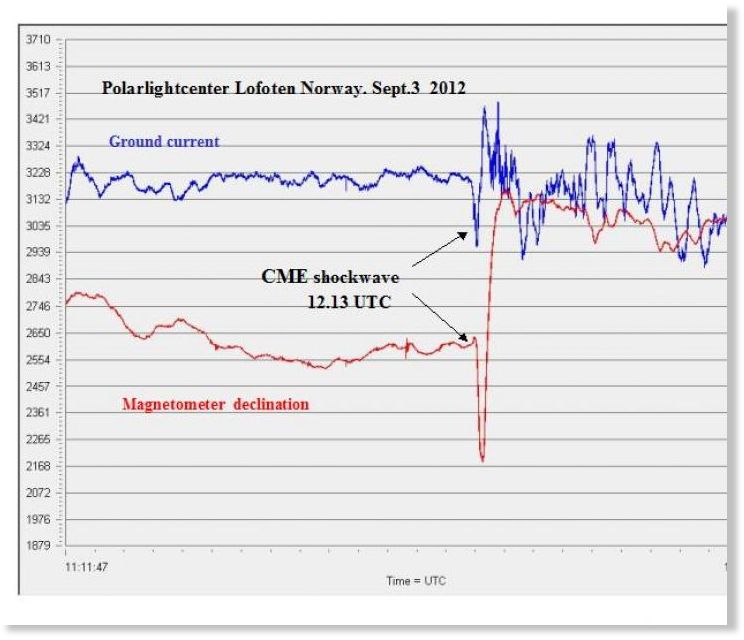
Coronal Mass Ejection, Geomagnetic Storm Induces Significant Ground Currents in Norway

Image
As expected, a coronal mass ejection hit Earth on Sept. 3rd at approximately 1200 UT (5 am PDT). The impact induced significant ground currents in the soil of northern Scandinavia and sparked bright auroras around the Arctic Circle. A moderate geomagnetic storm is underway. Aurora alerts: text, phone.

Image
© Jonathan Tucker
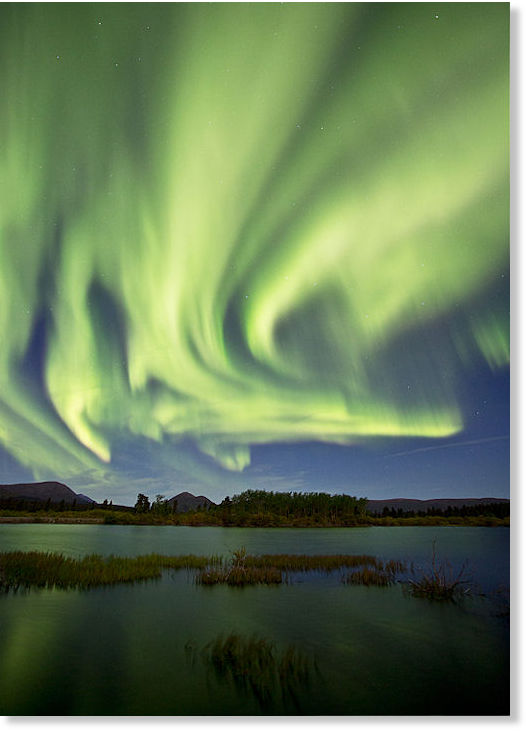
Jonathan Tucker photographed this display over Whitehorse in the Yukon Territories during the early hours of Sept. 3rd:

Sun

Magnificent Eruption On Sun's Southeastern Limb - One of the Most Beautiful Ever Recorded

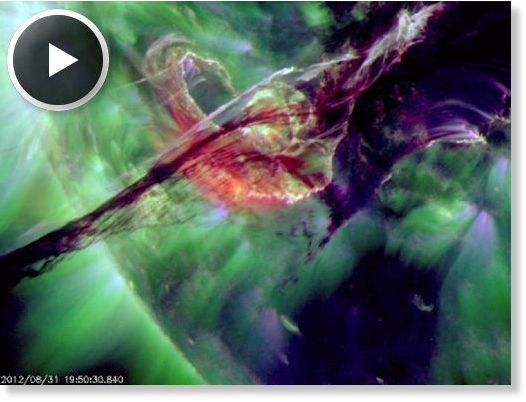
A filament of magnetism curling around the sun's southeastern limb erupted on August 31st, producing a coronal mass ejection (CME), a C8-class solar flare, and one of the most beautiful movies ever recorded by NASA's Solar Dynamics Observator. The explosion hurled a CME away from the sun traveling faster than 500 km/s (1.1 million mph). The cloud, shown here, is not heading directly toward Earth, but it could deliver a glancing blow to our planet's magnetic field on or about September 3rd. This date is preliminary and may be changed in response to more data from coronagraphs on the Solar and Heliospheric Observatory (SOHO). Stay tuned. Click here for movie.
Image
© NASA/SDO

Info

Unique Gamma Ray Station to Be Built on Baikal

Image
© RIA Novosti. Yuri KaverUnique Gamma Ray Station to Be Built on Baikal
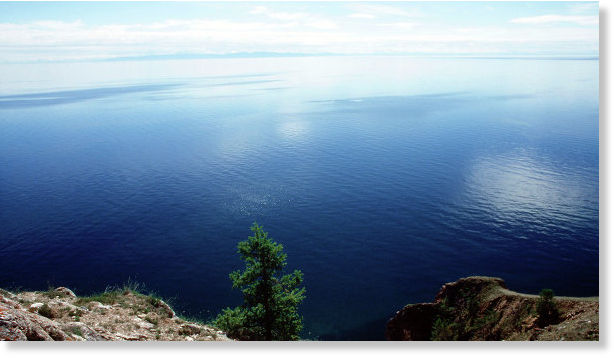
Work began by the Siberian Lake Baikal to create a unique gamma ray observatory, which will span 100 square kilometers in one of the world's cleanest places, researchers said on Sunday.

The Tunka experiment has been ongoing since 1990s, when the first array of photomultipliers began work in the Republic of Buryatia. It was expanded in 2009 to span 1 square kilometer, becoming the world's biggest Cherenkov radiation detector.

The Cherenkov radiation is caused by charged particles moving through the air, producing a faint luminescence that can be detected and analyzed for information on particles that generate it.

The experiment is conducted in Tunka valley, marked for extremely clear air that makes it easier to detect the light generated by the particles.