Science & TechnologyS


Question

Hong Kong super volcano linked to dinosaur extinction?

Volcano
© CBS
Scientists discover that downtown Hong Kong sits above remnants from an extinct super volcano that last erupted 140 million years ago.

Downtown Hong Kong sits above remnants from an extinct super volcano, the first of its kind to be discovered in south-east China, announced Hong Kong government scientists on Thursday (August 30).

A "super volcano" is a volcano that erupts more than 240 cubic miles.

The newly-discovered High Island Super volcano in Hong Kong spurted out 1,300 cubic kilometers of ash about 140 million years ago, near the end of the Jurassic period.

The super volcanic eruption on the southeastern China seaboard would have produced a global environmental impact and could be related to the extinction of dinosaurs, according to handout from Hong Kong's Geotechnical Engineering Office that conducted the research.

While millions of years of erosion removed a large part of the super volcano, it left its most visible footprints in the tall, leaning hexagonal columns in eastern Hong Kong's Ninepin Island chain.

After the eruption, cooled volcanic ash became rocks, which slowly contracted and eventually cracked in hexagonal patterns -- the most efficient way to release tensile stress.

Tectonic forces then caused the 18 km wide cauldron -- along with the rock columns -- to tilt.

Info

The Maturing Science of Getting Old

Old Father Time
© Pam FrayA statue of Old Father Time in Sandringham, Norfolk, U.K.

Getting older: it's a common human obsession, from surgery to lift saggy skin to games that promise to keep the brain flexible. In the larger natural world, though, getting older takes many forms -- and scientists are beginning to peer more deeply into the mysterious changes to an organism's biology as it ages.

Any evolutionary biologist will say that senescence -- a rise in mortality and a physical deterioration with age -- is based on the concept of evolutionary fitness, the ability to survive and reproduce. The individuals who reproduce copies of their genes the most win the evolutionary game. If mutations arise that shorten lifespan at older ages, but help younger individuals, those mutations would get passed along. As the theory goes, there should be a whole bunch of mutations that affect later stages in life.

"As humans get older, they are less able to reproduce," said Shripad Tuljapurkar, a biologist at Stanford University. "So the view of senescence is that it should set in at the end of reproduction, but that view doesn't work: we clearly have humans living long past menopause, and the question is why."

For humans, social factors could be involved. After maturity, humans have a steady mortality rate -- about one in 10,000 per year -- until age 40, when mortality increases exponentially.

Around 100,000 years ago, the rate of adult mortality was much higher: about one in 100 per year. Some anthropologists and demographers have proposed the grandmother hypothesis to explain human longevity after reproductive fitness ends. The theory goes like this: women may stop reproducing themselves, but they contribute significantly to the survival ability of next generation of women, who in turn can take better care of their grandmothers.

Better Earth

Iran Produces New Nanocatalyst to Purify Wastewater without Visible Light

Image
© Fars News Agency
Iranian researchers succeeded in the production of a new type of nanocatalyst that needs no visible light to remove colorants from wastewater.

Various methods have so far been proposed for the removal of colorants from wastewater, each of which has its own specific limitations. One the most well-known methods is the use of titanium oxide (TiO2) nanostructures as photocatalysts, which has some limitations due to the need for sunlight and visible light.

By carrying out studies on nanocatalysts, the Iranian researchers in Shiraz University used Pd/HAP/Fe3O4 as an appropriate nanocatalyst in order to remove azo dyes. The researchers synthesized Pd/HAP/Fe3O4 nanocatalyst, and they studied its performance in the water containing colorants.

They believe that in order to remove the colorant, the nanocatalyst firstly reacts with the oxygen dissolved in water in acidic atmosphere, and hydro-peroxide is formed. The obtained hydro-peroxide reacts with azo dye in the presence of HAP catalyst, and it results in the decomposition of the azo dye.

The results of the research show that the reaction of dye removal indicates the high efficiency of the nanocatalyst. Among the advantages of the nanocatalyst, mention can be made of high catalytic activity, ability to extract catalyst from the solution through magnetic methods, appropriate stability, ability to be recycled, and the lack of need for light or any other harmful substance.

Magnify

Photonic Interactions Measured at Atomic Level

Image
© Sebastian Nicosia and Cristian CiracThis is an artistic representation of the film-nanoparticle plasmonic system. Spherical gold nanoparticles are coupled to a gold film substrate by means of an ultrathin layer that forbids the particles from directly touching the film. Electromagnetic ultra-hot spots are excited in the gaps. The system enables the science of light on a scale of a few tenths of a nanometer, the diameter of a typical atom.
By measuring the unique properties of light on the scale of a single atom, researchers from Duke University and Imperial College, London, believe that they have characterized the limits of the ability of metals to be used in devices that rely on the enhancement of light.

This field is known as plasmonics because scientists are trying to take advantage of plasmons, electrons that have been "excited" by light in a phenomenon that produces electromagnetic field enhancement. The enhancement achieved by means of metals at the nanoscale is significantly higher than that achievable with any other material.

Until now, researchers have been unable to quantify plasmonic interactions at very small sizes, and thus have been unable to quantify the practical limitations of light enhancement. This new knowledge should help in the development of devices, such as medical sensors and integrated photonic communications components, since scientists will have a roadmap for precisely controlling the scattering of light.

Typically, plasmonic devices involve the interactions of electrons between two metal particles separated by a very short distance. For the past 40 years, scientists have been trying to figure out what happens when these particles are brought closer and closer, at sub-nanometer distances, according to the Duke electrical engineers.

Binoculars

"Little flash" as bionic eye brings amazed woman some sight

Image
© Bionic Vision AustraliaThe future of eyesight?
A bionic eye has given an Australian woman partial sight and researchers say it is an important step towards eventually helping visually impaired people get around independently.

Dianne Ashworth, who has severe vision loss due to the inherited condition retinitis pigmentosa, was fitted with a prototype bionic eye in May at the Royal Victorian Eye and Ear Hospital. It was switched on a month later.

"All of a sudden I could see a little flash ... it was amazing," she said in a statement.

"Every time there was stimulation there was a different shape that appeared in front of my eye."

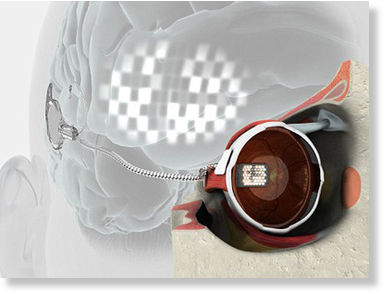
The bionic eye, designed, built and tested by the Bionic Vision Australia, a consortium of researchers partially funded by the Australian government, is equipped with 24 electrodes with a small wire that extends from the back of the eye to a receptor attached behind the ear.

It is inserted into the choroidal space, the space next to the retina within the eye.

"The device electrically stimulates the retina," said Dr Penny Allen, a specialist surgeon who implanted the prototype.

"Electrical impulses are passed through the device, which then stimulate the retina. Those impulses then pass back to the brain (creating the image)."

The device restores mild vision, where patients are able to pick up major contrasts and edges such as light and dark objects. Researchers hope to develop it so blind patients can achieve independent mobility.

Info

Giant Impact Hypothesis: New Research Eclipses Current Moon Formation Theory

Giant Impact
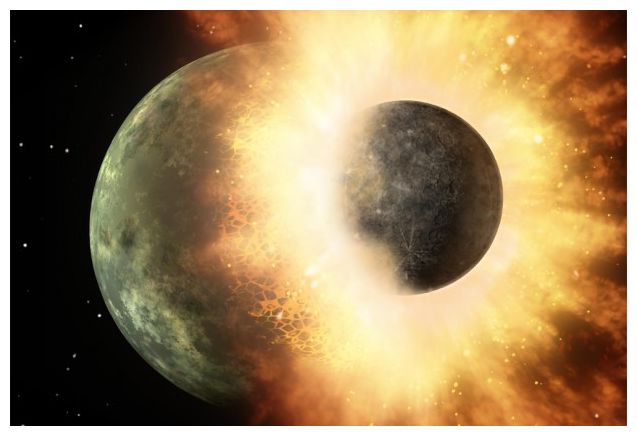
© NASA/JPL-Caltech Artist's depiction of a collision between two planetary bodies. Such an impact between the Earth and a Mars-sized object likely formed the Moon.
Around 4.5 billion years ago, the Earth is believed to have collided with an impactor the size of Mars known as "Theia." This collision, current theory says, is what formed the Moon.

Scientists have simulated this formation process and reproduced many of the Earth-Moon system properties. However, these simulations have also given rise to a problem known as the Lunar Paradox. According to the Paradox, the Moon seems to be made up of material that would not be expected if the current collision theory is correct.

Published in Icarus, a recent study offers some new perspective on the theory in answer to this paradox.

In current theory models, analyses of the various simulations of the Earth-Theia collision predict that the Moon should be mostly made up of material from Theia. When materials from the Earth and the Moon are compared, however, there are remarkable similarities. In fact, elements from the Moon show identical isotopic properties to those found on Earth.

Since all other known solar system bodies, except the Moon, have a different isotopic composition from the Earth, it is highly unlikely that Theia had an identical isotopic composition. Moreover, for some elements like Silicon, the isotopic composition is the result of an internal process related to the size of the parent body. Given Theia was smaller than Earth, its Silicon isotope composition should have definitely been different from Earth's mantle.

Question

Nanoparticle Safety Still Unknown

Nano Particles
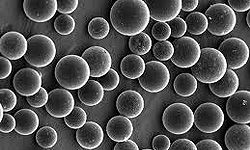
© Matthias Kulka/CorbisScientists worry that not enough testing has been done yet to understand the effects on the environment -- how will tiny particles affect plants and animals that we eat, for example?
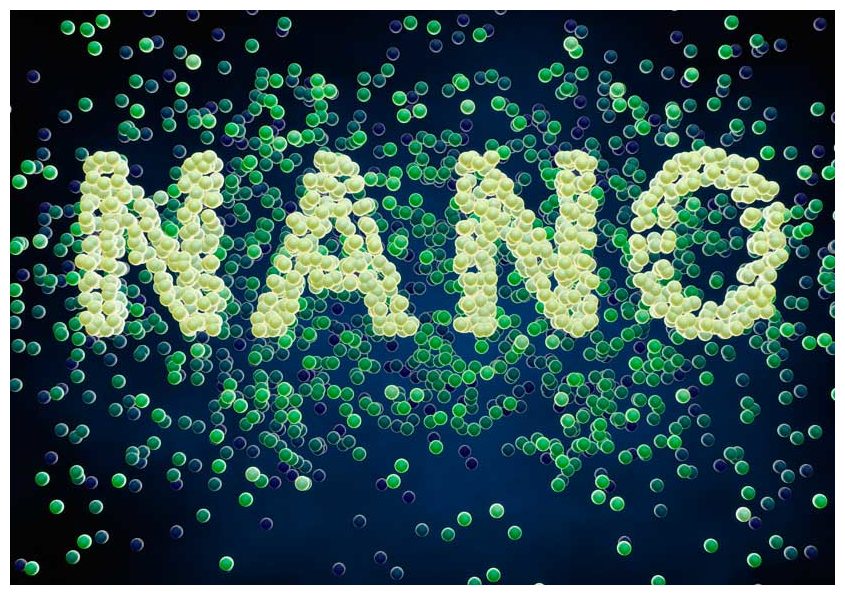
Once the subject of sci-fi flicks and techno-thrillers, nanomaterials are now mainstream. These tiny particles can be found in hundreds of consumer products from camping gear to anti-stink socks, while helping medical researchers deliver drugs by fooling the body's defense mechanisms. Nano-silver particles, for example, have become common in both wound dressings and sunscreens.

But experts say the rise of nanomaterials is a concern. Compounds at the nano-scale (from 1 to 100 nanometers, or down to 1/100,000 the width of a human hair) often behave differently than at normal size. Metals change color or conduct electricity differently, and may interact with human cells in unusual ways. Scientists worry that not enough testing has been done yet to understand the effects on the environment -- how will tiny particles affect plants and animals that we eat, for example?

A study published last week in the journal PNAS by researchers at the University of California, Santa Barbara, found that the presence of two nanomaterials used in exhaust gases and fertilizers stunt the growth of soybean plants.

The researchers used high doses of zinc oxide (used in cosmetics and ultimately found in waste fertilizers) -- and cerium oxide (used to improve engine performance) in soybean plants grown hydroponically or without soil. The cerium oxide slowed the soybean plant growth rates by blocking a bacteria's ability to fix nitrogen. Plants treated with zinc oxide grew faster, but the zinc built up in leaves and stems.

"What this report shows is we have a lot more to learn," said Jennifer Sass, senior scientist at the Natural Resources Defense Council. "They are not well tested. We don't know before these things are already being used."

Info

Genome of Mysterious Extinct Human Reveals Brown-Eyed Girl

Denisovan Molar
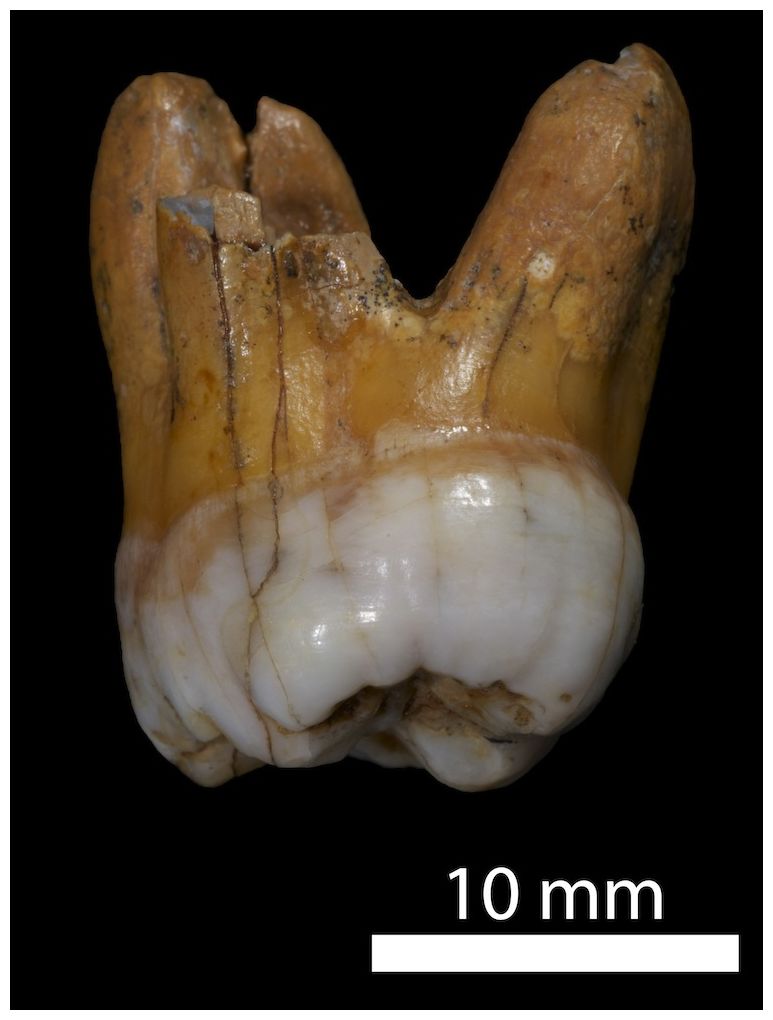
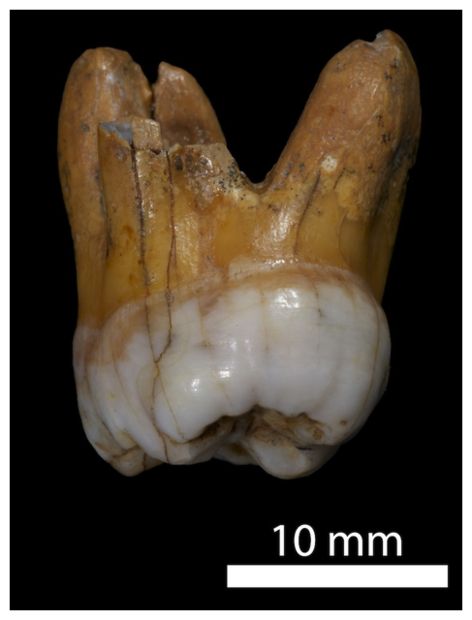
© Max Planck Institute for Evolutionary AnthropologyScientists have just completed sequencing the entire genome of a species of archaic humans called Denisovans. The fossils, which consist of a finger bone and two molars, from this extinct lineage were discovered in Denisova Cave in southern Siberia in 2008. Scientists don't know the precise age of the material found, though they estimate it ranges anywhere from 30,000 to 80,000 years of age. Shown here, a distal molar of a Denisovan.
The genome of a recently discovered branch of extinct humans known as the Denisovans that once interbred with us has been sequenced, scientists said today (Aug. 30).

Genetic analysis of the fossil revealed it apparently belonged to a little girl with dark skin, brown hair and brown eyes, researchers said. All in all, the scientists discovered about 100,000 recent changes in our genome that occurred after the split from the Denisovans. A number of these changes influence genes linked with brain function and nervous system development, leading to speculation that we may think differently from the Denisovans. Other changes are linked with the skin, eyes and teeth.

"This research will help [in] determining how it was that modern human populations came to expand dramatically in size as well as cultural complexity, while archaic humans eventually dwindled in numbers and became physically extinct," said researcher Svante Pääbo at the Max Planck Institute for Evolutionary Anthropology in Leipzig, Germany.

Future research may turn up other groups of extinct humans in Asia "in addition to Neanderthals and Denisovans," Pääbo told LiveScience.

Although our species comprises the only humans left alive, our planet was once home to a variety of other human species. The Neanderthals were apparently our closest relatives, and the last of the other human lineages to vanish.

However, scientists recently revealed another group of extinct humans once lived at the same time as ours. DNA from fossils unearthed in Denisova Cave in southern Siberia in 2008 revealed a lineage unlike us and closely related to Neanderthals. The precise age of the Denisovan material remains uncertain - anywhere from 30,000 to 80,000 years of age.

"The Denisovan genome is particularly close to my heart, because it was the first time that a new group of extinct humans was discovered and defined just from DNA sequence evidence and not from the morphology of bones," Pääbo said.

Meteor

Russian scientists say chances of Apophis striking Earth in 2029 very slim

Image
It's not large bodies we need to be concerned about
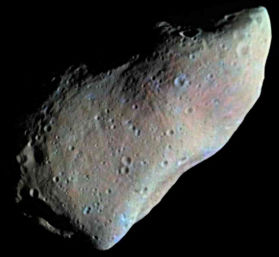
Scientists with the Institute of Astronomy of the Russian Academy of Sciences have recalculated the path of a large asteroid, Apophis; the refined data indicates a significantly low likelihood of a hazardous encounter with Earth, the institute's leading research fellow Viktor Shor said on Wednesday.

The Apophis asteroid is approximately the size of two-and-a-half football fields; its orbit is slightly offset to that of Earth's. Discovered in 2004, astronomers have determined that the asteroid will make a very close flyby in 2029 and might even hit Earth.

The initial calculation for the asteroid Apophis orbit was made using only two sets of observations.

Comment: It's not large bodies we need to be concerned about. In her book, The Apocalypse: Comets, Asteroids and Cyclical Catastrophes, Laura Knight-Jadczyk writes:
What I have prepared for today is The List, by no means exhaustive, of all the incidents I have been able to uncover of meteorite, asteroid, or cometary impacts that have caused death and destruction, property damage, or were near misses. Major parts of The List are extracted from the work of John S. Lewis, Professor of Planetary Sciences at the Lunar and Planetary Laboratory, Codirector of the NASA/University of Arizona Space Engineering Research Center, and Commissioner of the Arizona State Space Commission, in specific, his books entitled Rain of Iron and Ice and Comet and Asteroid Impact Hazards on a Populated Earth. In this latter volume, he writes:
The most intensively studied impact phenomenon, impact cratering, is of limited importance, due to the rarity and large mean time between events for crater-forming impacts. Almost all events causing property damage and lethality are due to bodies less than 100 meters in diameter, almost all of which, except for the very largest and strongest, are fated to explode in the atmosphere. ... [W]e are forced to conclude that the complex behavior of smaller bodies is closely relevant to the threat actually experienced by contemporary civilization.
Based on the data he collected, Lewis noted that:
[O]n the century time scale, firestorm ignition and direct blast damage by rare, strong, deeply penetrating bodies are the most common threats to human life, with average fatality rates of about 250 people per year. ... On a 1000-year scale, the most severe single event, which is usually a 10 to 100 megaton Tunguska-type airburst, accounts for most of the total fatalities. On longer time scales, regional impact-triggered tsunamis become the most dangerous events. ...The exact impactor threshold size for global effects remains poorly determined. [...]

Perhaps most interesting is the implication that the large majority of lethal events (not of the number of fatalities) are caused by bodies that are so small, so faint, and so numerous that the cost of the effort required to find, track, predict, and intercept them exceeds the cost of the damage incurred by ignoring them. [Lewis, 1999]


Nuke

Low-flying helicopters over Berkeley are measuring radiation levels

Image
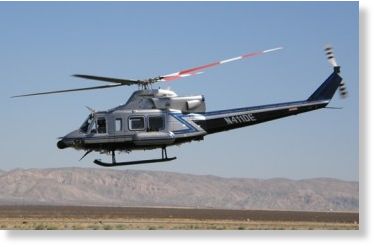
Many Berkeley residents have been in touch with us today asking about the helicopters that have been flying overhead, across the city and also into Oakland. A call to Berkeley Police Department confirms that the choppers are out measuring baseline radiation levels.

The flyovers are part of research by two federal security agencies - the Department of Homeland Security and the National Nuclear Security Administration - to compare aerial and ground based mapping of radioactivity, according to a story in the Contra Costa Times.

The National Nuclear Security Administration agency says the project will help local, state and federal authorities'measure radiation. Radioactive sources - such as uranium, radon gas and carbon-14 - have been present in the Earth's crust since it was formed. (Read the NNSA press release.)

While the purpose may be worthy, the low-flying choppers - they need to fly at around 300 ft - are not proving popular with everyone. "It's driving me batty," said Berkeleysider Emily Cohen.

Update, 6:00pm: Berkeley Police say the helicopter will be making daily flights for five days, between Aug. 27 and Sept. 1, 2012. "The helicopter will fly in a grid pattern over the locations about 300 feet above the ground," they said in a release.