Science & TechnologyS


Book

New Book Says Einstein Highly-Overrated and Ruined Physics

einstein
Book: How Einstein Ruined Physics, by Roger Schlafly
Dark Buzz, 2011

Was Albert Einstein the smartest man and the greatest scientist who ever lived? Millions believe so.

But Roger Schlafly takes a different view, downgrading the rank of the 20th- century's most revered scientist. Why? Schlafly presents compelling evidence that other leading physicists and mathematicians before and concurrent with Einstein made equally important breakthroughs in relativity theory and related fields. Further, Schlafly suggests that Einstein may have purloined some of his most famous insights.

What made Einstein so great? The official story goes this way: Albert Einstein, a young clerk in a Swiss patent office, single-handedly transformed physics from a static, three-dimensional science to a four-dimensional, mind-blowing, time-space universe via brilliant and solitary "thought experiments" involving gravity, motion, space and time. Einstein also made unprecedented inroads into understanding the nature of light and energy and was the first to comprehend the equivalence between energy and mass. Einstein's discoveries not only transformed modern physics but the way we view the universe.

Schlafly disagrees. "It is all a myth. Einstein did not invent relativity or most of the other things for which he is credited." Schlafly makes a very bold and persuasive case.


Arrow Down

CISPA-like Cybersecurity Executive Order Drafted by White House

Image
© cjournal.info
With Congress still unable to iron out a cyber-security bill that both sides of the Legislative Branch can get behind, the White House has drafted an Executive Order that they will roll out if efforts on Capitol Hill remain unproductive.

Despite repeated pleas from lawmakers and other federal officials to have a cybersecurity legislation adopted by the United States government, members of the House and Senate have been unwilling to compromise on a bill. With every attempt at passing cybersecurity legislation ending with roadblocks, the White House has now announced that it is considering taking measures into their own hands.

White House spokeswoman Caitlin Hayden tells the Washington Post that "an Executive Order is among the things we're considering to fulfill the president's direction to us to do absolutely everything we can to better protect our nation against today's cyberthreats," though has not confirmed how far along the White House is with efforts to enact such an order.

Camera

FBI's $1B USD Facial Recognition Project Enjoys Strong Bipartisan Support

Big Brother gets a boost from bleeding edge technology

President Barack Obama wants to trim defense spending. Former Mass. Governor and Republican presidential nominee Mitt Romney wants to bump the defense budget. But one thing both agree on funding is funding the U.S. National Intelligence Agency's (NIA) ambitious facial recognition bid, which along with other advanced identification efforts, currently has been earmarked $1B USD in Congressional funding.

I. Facial Recognition is Now

Much of the funding goes to researchers working at Pittsburgh, Penn.'s Carnegie Mellon University. By 2010, CMU reported [PDF] to Congress that it could pick out a person's face out of a database of 1.6m mug shots approximately 92 percent of the time. While that high success rate did require the target be looking at the camera, Marios Savvide's lab is working to improve the algorithms so they can recognize faces at other angles too -- even if the person is looking away.

Using a 3D model of the face, the CMU algorithms render expected images from various angles for comparison. Currently, the biggest challenge is lighting. Results can be improved by augmenting the visible light data with infrared camera images -- but infrared cameras are expensive, and are relatively rare at public locations.

Comment: Those who would give up essential liberty to purchase a little temporary safety, deserve neither liberty nor safety. - Ben Franklin


Meteor

Close Approach of Asteroid 2012 QC8

M.P.E.C. 2012-Q25, issued on 2012 Aug. 20, reports the discovery of the asteroid 2012 QC8 (discovery magnitude 17.1) by Siding Spring Survey on images taken on August 19.6 with a 0.5-m Uppsala Schmidt + CCD.

2012 QC8 has an estimated size of 670 m - 1.5 km (H=18.0) and it will have a close approach with Earth at about 22.7 LD (Lunar Distances) or 0.0583 AU at 2256 UT on 14 Sept. 2012. This asteroid will reach an average magnitude of 14.6 around September 10-13. 2012 QC8 is a current radar target for ground based radio telescopes.

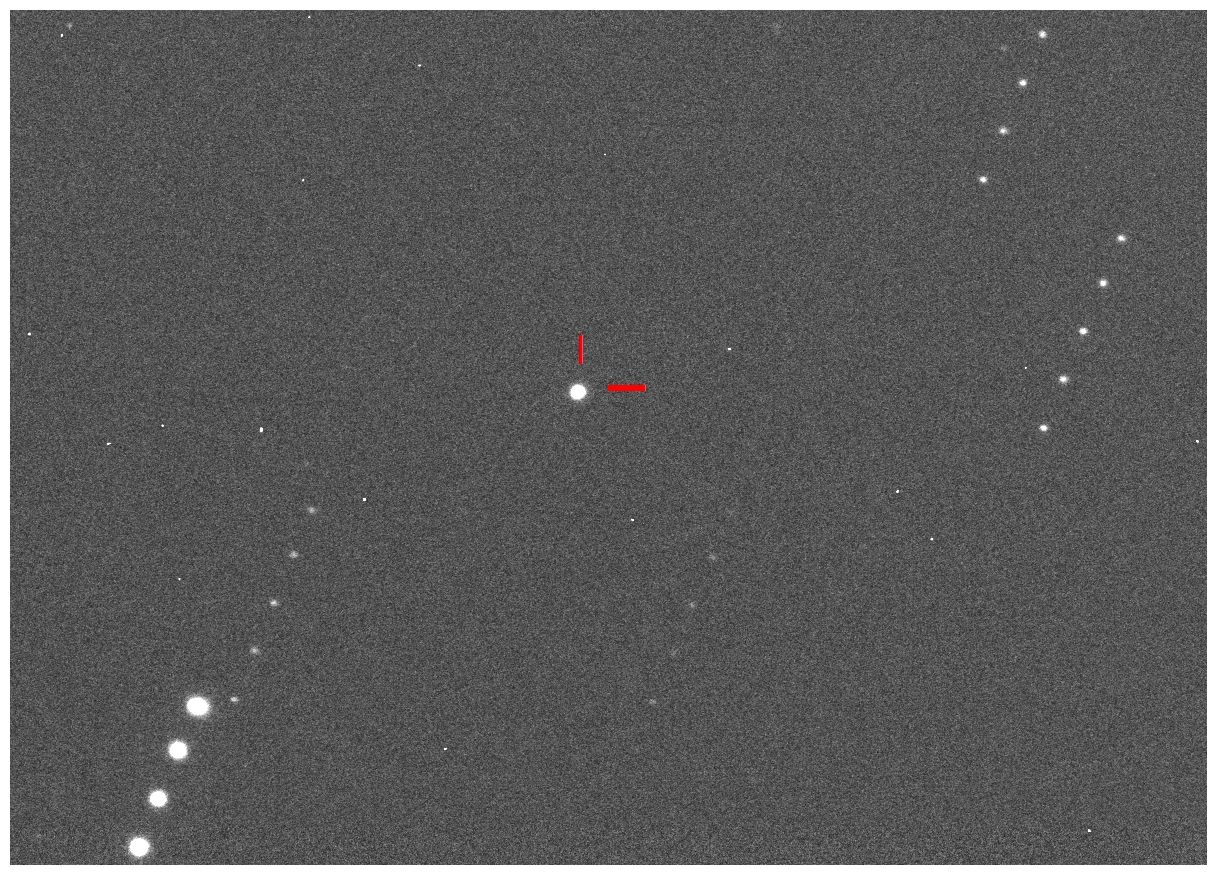
We performed some follow-up measurements of this object, remotely from the Siding Spring-Faulkes Telescope South on 2012, September 10.4, through a 2.0-m f/10.0 Ritchey-Chretien + CCD. Below you can see our image, stack of 5x5-second exposures, taken with the asteroid at magnitude ~14.6 and moving at 16.15"/min. At the moment of the close approach on 14 September, 2012 QC8 will move at ~ 29"/min.

Asteroid 2012 QC8
© Remanzacco Observatory
Here you can see a short animation showing the movement of 2012 QC8 (each frame is a 5-second exposure).

Info

Our Dangerous Galactic Passage

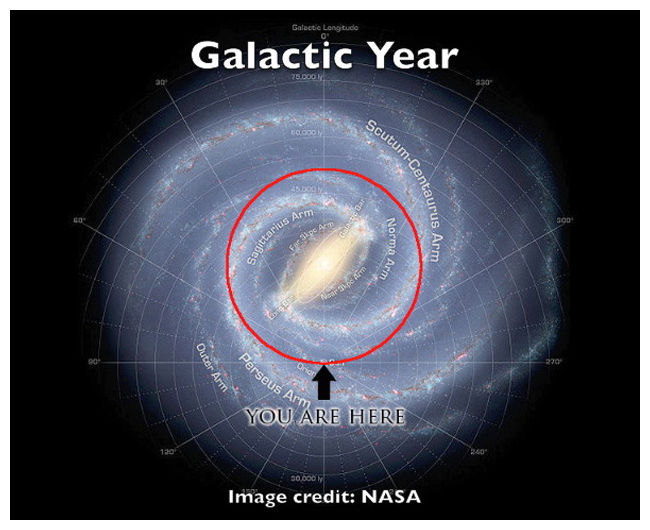
Galatic Year
© NASA
We're only a little more than three months away from the imaginary 2012 End of Times (based on silly misinterpretations of the ancient Mayan calendar). The 2012 doom and gloom folks have glommed onto all kinds of nonsensical predictions where the Milky Way galaxy disrupts us: the passage of the solar system across the galactic plane, or a supposed "grand alignment" with the galactic center will trigger a mysterious and nondescript celestial 'force.'

In reality, our Milky Way really does pose numerous hazards to Earth during the sun's orbital journey around the galactic center. But no future space disaster can be circled on a calendar on Dec. 21 or any other date.

The sun has completed 20 orbits of the galactic hub since Earth formed. Each orbit is called a galactic year -- a vast stretch of time (220 million Earth years) that the Mayans could have never imagined. Whatever cosmic catastrophes might have happened along the way, it has not prevented complex life from arising and evolving on Earth over roughly the past three galactic years. There have been attempts at statistically linking mysterious mass extinctions to cosmic disasters, but we simply don't have enough data, says Colin Norman the Johns Hopkins University in Baltimore, Md.

The reality is that the potential of navigational hazards along our galactic journey lie far into the future over many millions or billions of years. Our distant descendants could come up with strategies to guard against some of these mishaps. However, the biggest threat is from extremely rare energetic events in the galaxy, says Norman.

Telescope

Early Mars May Not Have Been As Wet

New study could impact the odds that life had a chance to take hold on the Red Planet

Phoenix Mars lander
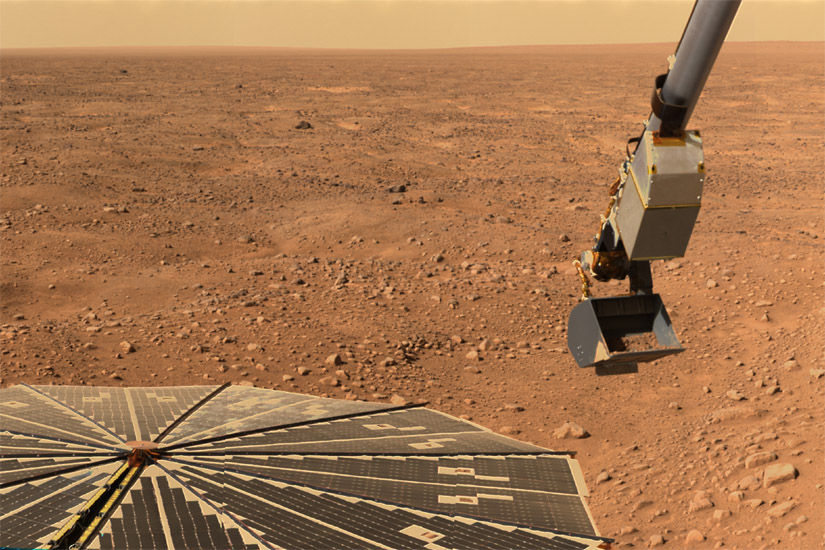
© NASA/JPL-Caltech/Univ. of Ariz.In 2008, NASA's Phoenix Mars lander landed in the Martian arctic region and uncovered evidence for water ice
Early Mars may not have been as warm or wet as scientists suspect, a finding which could impact the likelihood that the Red Planet was capable of evolving life at the time when it was getting started on Earth.

A new study presents an alternative explanation for the prevalence of Mars' ancient clay minerals, which on Earth most often result from water chemically reacting with rock over long periods of time. The process is believed to be a starting point for life.

The clays, also known as phyllosilocates, are among the strongest pieces of evidence for a Mars that once was warmer, wetter and much more like Earth than the cold, dry, acidic desert which appears today.

Data collected by orbiting spacecraft show Mars' clay minerals may instead trace their origin to water-rich volcanic magma, similar to how clays formed on the Mururoa atoll in French Polynesia and in the Parana basin in Brazil. That process doesn't need standing bodies of liquid water.

Satellite

Drury physics professor shares knowledge of space debris

Greg Ojakangas
Greg Ojakangas
Drury physics professor Greg Ojakangas is recognized among his peers as an expert in junk, and NASA is sending him to Hawaii to share this expertise with scientists and military personnel.

The junk Ojakangas studies floats hundreds of miles above the Earth.

"There's a new initiative called active debris removal. It hasn't happened yet, but NASA is planning to have missions to remove space debris from orbit," Ojakangas said. "It's very expensive, but it's been predicted that the expense of not doing anything is going to be even greater."

Ojakangas spoke at the Advanced Maui Optical and Space Surveillance Technologies Conference in 2011. His talk centered on small pieces of space junk in geosynchronous orbit 22,000 miles above the Earth that could damage satellites and spacecraft.

On Saturday, Ojakangas will present a paper titled "Probable Rotation States of Rocket Bodies in Low Earth Orbit."

Magic Wand

New Research Suggests Bacteria Are Social Microorganisms

Image
© ThinkstockResearchers examined about 35,000 chemical reactions to determine the social roles of bacteria.
New research from the Massachusetts Institute of Technology reveals that some unlikely subjects--bacteria--can have social structures similar to plants and animals.

The research shows that a few individuals in groups of closely related bacteria have the ability to produce chemical compounds that kill or slow the growth of other populations of bacteria in the environment, but not harm their own.

Published in the September 7 issue of the journal Science, the finding suggests that bacteria in the environment can play different social roles and that competition occurs not only among individual bacteria, but also among coexisting ecological populations.

The National Science Foundation, an independent federal agency that supports fundamental research and education across all fields of science and engineering, funded the research.
"Bacteria typically have been considered purely selfish organisms and bacterial populations as groups of clones," said Otto Cordero, a theoretical biologist and lead researcher on the paper. "This result contrasts with what we know about animal and plant populations, in which individuals can divide labors, perform different complementary roles and act synergistically."
Cordero and colleagues from MIT, along with researchers from the French Research Institute for Exploitation of the Sea and Woods Hole Oceanographic Institution in Massachusetts, studied whether population-level organization exists for bacteria in the wild.

Question

Mysterious Changes in Ocean Salt Spur NASA Expedition

Knorr
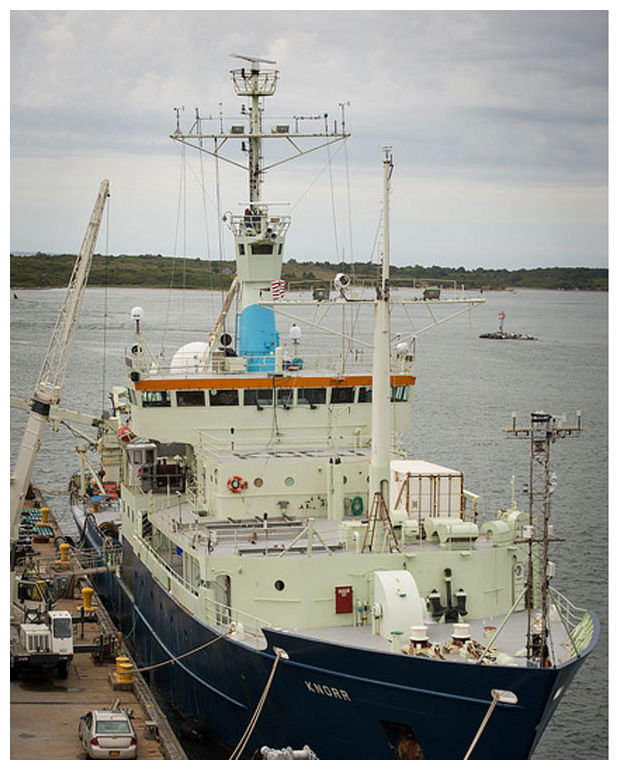
© NASAThe Woods Hole Oceanographic Institution's research vessel Knorr docked before its scheduled departure on Sept. 6 to study salinity in the mid-Atlantic ocean.
Over the past 50 years, the salty parts of the oceans have become saltier and the fresh regions have become fresher, and the degree of change is greater than scientists can explain.

Researchers are heading out into one particularly salty ocean region, in the middle of the North Atlantic Ocean, in the hopes of better understanding what drives variation in salinity in the upper ocean.

Ultimately, they hope, research like this will offer insight on the dynamics behind the dramatic changes in the ocean's salt content.

Many oceanographers have a hunch about what is going on: Climate change, Ray Schmitt, a senior scientist at the Woods Hole Oceanographic Institution, told journalists during a news conference Wednesday (Sept. 5).

"Climate is changing all the time, and some of that change is due to natural variation," Schmitt said. "The 50-year trend we are talking about, most of us believe is really due to the general trend of global warming."

Salt & the global water cycle

This matters because the ocean is at the heart of the planet's water cycle: 86 percent of global evaporation and 78 percent of global precipitation occur over the ocean, according to NASA, the lead entity behind the project, called Salinity Processes in the Upper Ocean Regional Study (SPURS).

Over the ocean, more evaporation as compared to precipitation translates into saltier water. Meanwhile, in regions where precipitation is favored, water is fresher.

By tracking ocean salinity, researchers can better understand the global water cycle. Global warming is expected to intensify it, but current computer models do not predict the amount of change seen over the last 50 years, Schmitt said.

Aside from an increase in evaporation caused by warming, such factors as winds can also contribute to changes in salinity.

"We have a lot of questions about the basic physics we hope to resolve with this cruise," Schmitt said.

Meteor

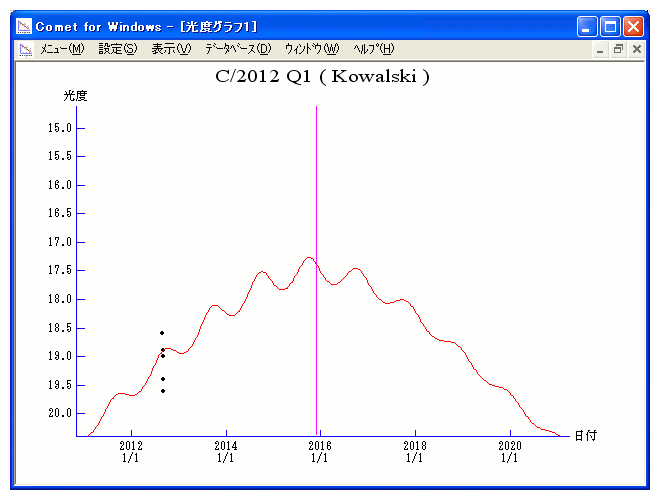
New Comet: C/2012 Q1 (Kowalski)

Discovery Date: August 28, 2012

Magnitude: 18.7mag

Discoverer: R. A. Kowalski (Mount Lemmon)

Magnitude Graph
© Aerith NetMagnitude Graph
The orbital elements are published on M.P.E.C. 2012-R08.