Science & TechnologyS


Info

A Start-Up Figures Out Photoshop Abuses

Photoshopped
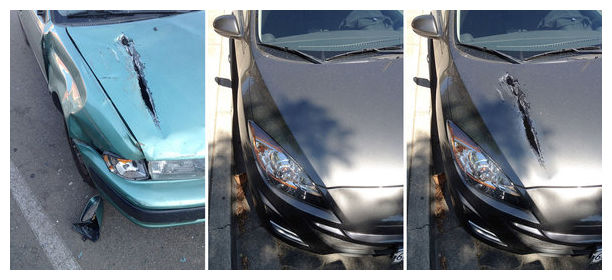
© Kevin Connor/Fourandsix TechnologiesA photo of a damaged car, left, can be used to manipulate an image of an undamaged car.
Hany Farid, a professor at Dartmouth College, has built a career and a reputation as a leading researcher in digital image forensics. He has made software tools for a number of impressive projects in recent years. One was a pixel-sleuthing program to detect how much fashion photographs have been burnished with Adobe's Photoshop editing program to remove wrinkles and flab, while plumping up lips and breasts. Another was software for the automated detection of child pornography on the Web to help law enforcement agencies.

Mr. Farid has worked with government agencies and companies, but these collaborations have typically been for individual projects. "Research is critical," Mr. Farid said. "But unless you put your ideas into a product, the impact is limited."

Mr. Farid is hoping to broaden the reach of his work as co-founder and chief technology officer of a start-up company, Fourandsix Technologies, which is being announced on Tuesday.

The company's president and other founder is Kevin Connor, who spent 15 years at Adobe. He was vice president of product management for Photoshop until last year, when he left to join Mr. Farid. At Adobe, Mr. Connor said, he was familiar with Mr. Farid's research, and Adobe engineers often cooperated with the Dartmouth scientist.

But at a company whose key product has been transmuted into a verb - "to photoshop" - that means to doctor pictures, the technology to authenticate images was not a priority.

Magic Wand

New research presents most extensive pictures ever of an organism's DNA mutation processes

Image
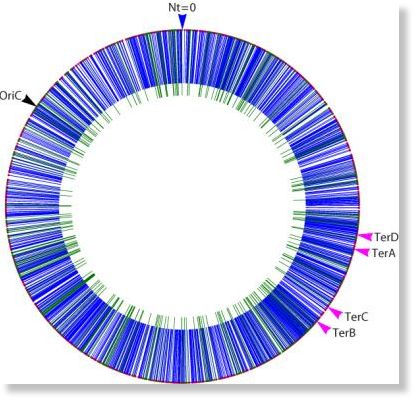
© Andrew J. Hanson, School of Informatics and Computing, Indiana UniversityThis circle represents the Escherichia coli chromosome with 1,931 mutations. Blue lines represent base-pair substitutions and green lines represent the gain or loss of between one and four nucleotides.
Pattern may be used in forensics to help determine where a particular bacterial strain originates.

Biologists and informaticists at Indiana University have produced one of the most extensive pictures ever of mutation processes in the DNA sequence of an organism, elucidating important new evolutionary information about the molecular nature of mutations and how fast those heritable changes occur.

By analyzing the exact genomic changes in the model prokaryote Escherichia coli that had undergone over 200,000 generations of growth in the absence of natural selective pressures, the team led by IU College of Arts and Sciences Department of Biology professor Patricia L. Foster found that spontaneous mutation rates in E. coli DNA were actually three times lower than previously thought.

The new research, which appears today in early editions of the journal Proceedings of the National Academy of Sciences, also notes that the mismatch repair proteins that survey newly replicated DNA and detect mistakes not only keep mutation rates low but may also maintain the balance of guanine-cytosine content to adenine-thymine content in the genome. Guanine-cytosine and adenine-thymine are the nitrogenous bases that bond between opposing DNA strands to form the rungs of the double helix ladder of DNA.

Magic Wand

How bees decide what to be

Image
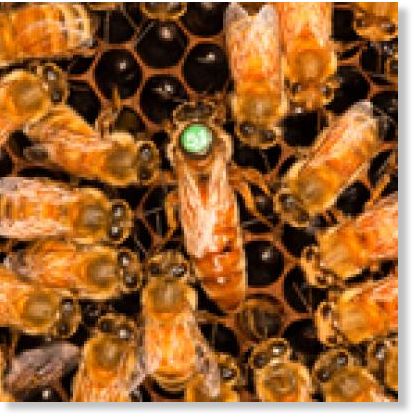
© Christofer BangNurse bees generally remain in the hive to feed and take care of the queen and her larvae.
Johns Hopkins researchers link reversible 'epigenetic' marks to behavior patterns.


Johns Hopkins scientists report what is believed to be the first evidence that complex, reversible behavioral patterns in bees - and presumably other animals - are linked to reversible chemical tags on genes.

The scientists say what is most significant about the new study, described online September 16 in Nature Neuroscience, is that for the first time DNA methylation "tagging" has been linked to something at the behavioral level of a whole organism. On top of that, they say, the behavior in question, and its corresponding molecular changes, are reversible, which has important implications for human health.

According to Andy Feinberg, M.D., M.P.H., Gilman scholar, professor of molecular medicine and director of the Center for Epigenetics at Hopkins' Institute for Basic Biomedical Sciences, the addition of DNA methylation to genes has long been shown to play an important role in regulating gene activity in changing biological systems, like fate determination in stem cells or the creation of cancer cells. Curious about how epigenetics might contribute to behavior, he and his team studied a tried-and-true model of animal behavior: bees.

Working with bee expert Gro Amdam, Ph.D., associate professor of life sciences at Arizona State University and the Norwegian University of Life Sciences, Feinberg's epigenetics team found significant differences in DNA methylation patterns in bees that have identical genetic sequences but vastly different behavioral patterns.

Meteor

New Evidence for Comet Crash That Killed Ice Age Beasts

Spherules
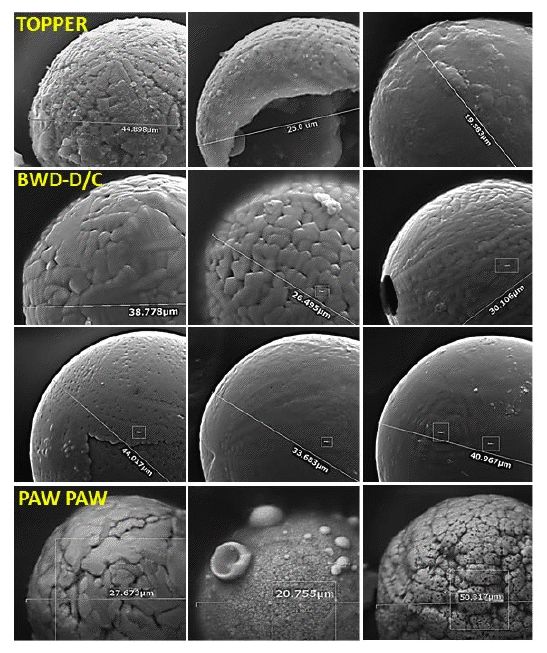
© University of South CarolinaSpherules from archaeological sites in the study. The microscopic particles have marred surface patterns from being crystallized in a molten state and then rapidly cooled.
Scientists say they have new evidence to support the idea that a space rock crashed into Earth about 12,900 years ago, wiping out some of North America's biggest beasts and ushering in a period of extreme cooling.

If such an impact took place, it did not leave behind any obvious clues like a crater. But microscopic melted rock formations called spherules and nano-sized diamonds in ancient soil layers could be telltale signs of a big collision. The mix of particles could only have formed under extreme temperatures, created by a comet or asteroid impact.

Researchers first reported in 2007 that these particles were found at several archaeological sites in layers of sediment 12,900 years old. Now an independent study published in the (Sept.17) in the Proceedings of the National Academy of Sciences (PNAS) says those findings hold up.

Clock

"There Is No Such Thing As Time"

The "rebels" who fight the Big Bang theory are mostly attempting to grapple with the concept of time. They are philosophers as much as cosmologists, unsatisfied with the Big Bang, unimpressed with string theory and unconvinced of the multiverse. Julian Barbour, British physicist, author, and major proponent of the idea of timeless physics, is one of those rebels--so thoroughly a rebel that he has spurned the world of academics.

Gamma-Ray Burst
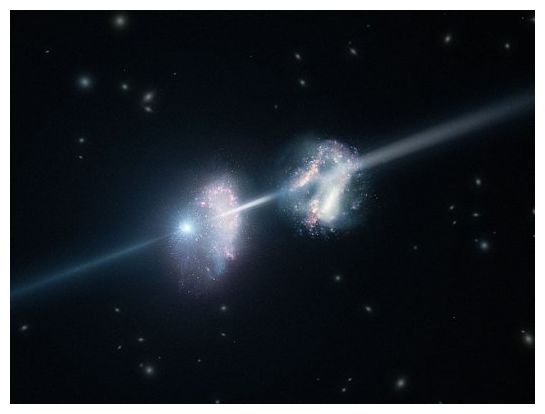
© European Southern Observatory Gamma-Ray Burst
Julian Barbour's solution to the problem of time in physics and cosmology is as simply stated as it is radical: there is no such thing as time.

"If you try to get your hands on time, it's always slipping through your fingers," says Barbour. "People are sure time is there, but they can't get hold of it. My feeling is that they can't get hold of it because it isn't there at all." Barbour speaks with a disarming English charm that belies an iron resolve and confidence in his science. His extreme perspective comes from years of looking into the heart of both classical and quantum physics.

Isaac Newton thought of time as a river flowing at the same rate everywhere. Einstein changed this picture by unifying space and time into a single 4-D entity. But even Einstein failed to challenge the concept of time as a measure of change. In Barbour's view, the question must be turned on its head. It is change that provides the illusion of time. Channeling the ghost of Parmenides, Barbour sees each individual moment as a whole, complete and existing in its own right. He calls these moments "Nows."

Eye 1

Eye Tracking Could Diagnose Brain Disorders

Baby
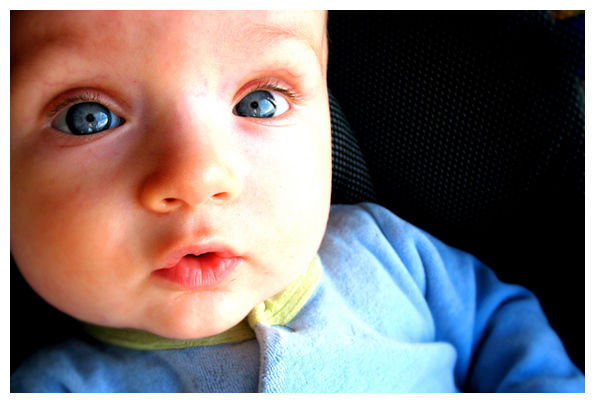
© sxc.hu, user maplecWhere little ones as young as 6 months focus their gaze may indicate whether they have a neurological disorder such as autism, researchers say.
The eyes may be windows into the soul, but following their movement also could allow doctors to make quick, accurate diagnoses for disorders like autism, schizophrenia, or attention deficit hyperactivity disorder, various research projects suggest.

Eye tracking, which records where subjects focus when watching visual displays, could diagnose brain disorders more accurately than subjective questionnaires or medical examinations do, researchers say. Exams are expensive and time-consuming, and subjective tests have been known to wrongly identify healthy people or misdiagnose disorders.

To make sense of all that people see, the brain filters huge amounts of visual information, fills in gaps and focuses on certain objects. That complex task uses many mental circuits, so differences in what people choose to look at ― differences so subtle that only a computer can spot them ― could provide unprecedented insight into common neurological problems.

"Eye tracking is a great way to assess somebody's spontaneous attention and preference. That's really fundamental to who you are as a person," said Karen Pierce, a researcher at the University of California, San Diego, Autism School of Excellence. And because eye tracking requires only a camera, a laptop and a brief test, the technology could be easier to use than traditional diagnostic tools, Pierce said.

Meteor

Did a massive comet explode over Canada 12,900 years ago in North America and propel the Earth into an Ice Age?

Image
Did a massive comet explode over Canada 12,900 years ago, wiping out both beast and man in North America and propelling the earth back into an ice age? That's a question that has been hotly debated by scientists since 2007, with the University of South Carolina's Topper archaeological site right in the middle of the comet impact controversy. However, a new study published today in the Proceedings of the National Academy of Sciences (PNAS) provides further evidence that it may not be such a far-fetched notion.

Albert Goodyear, an archaeologist in USC's College of Arts and Sciences, is a co-author on the study that upholds a 2007 PNAS study by Richard Firestone, a staff scientist at the Department of Energy's Lawrence Berkeley National Laboratory. Firestone found concentrations of spherules (micro-sized balls) of metals and nano-sized diamonds in a layer of sediment dating 12,900 years ago at 10 of 12 archaeological sites that his team examined. The mix of particles is thought to be the result of an extraterrestrial object, such as a comet or meteorite, exploding in the earth's atmosphere.

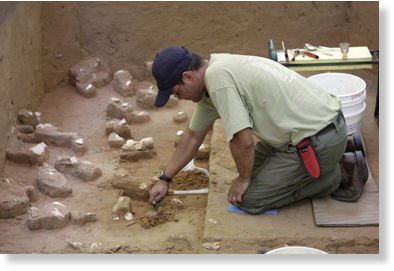
Among the sites examined was USC's Topper, one of the most pristine U.S. sites for research on Clovis, one of the earliest ancient peoples. "This independent study is yet another example of how the Topper site with its various interdisciplinary studies has connected ancient human archaeology with significant studies of the Pleistocene," said Goodyear, who began excavating Clovis artifacts in 1984 at the Topper site in Allendale, S.C. "It's both exciting and gratifying."

Comment:
The Younger Dryas Impact Event and the Cycles of Cosmic Catastrophes - Climate Scientists Awakening

Fire and Ice: The Day After Tomorrow

Meteorites, Asteroids, and Comets: Damages, Disasters, Injuries, Deaths, and Very Close Calls

Forget About Global Warming: We're One Step From Extinction!


Camera

Researchers Show Off Transparent Zinc Tin Oxide Memristors

Image
© Look Chem
Transparent thin film memory could soon be here

Zinc tin oxide (ZTO) has one big advantage over traditional thin-film semiconductor materials like gallium- or indium-containing compounds -- it's cheap.

ZTO, unlike the other thin-film candidates is based on elements that are plentiful in the Earth's crust. Plus it happens to be transparent, an added bonus when inspecting thin-film applications.

Previous work had already shown ZTO to make relatively good thin-film transistors -- now new research shows it's also a capable candidate for the memristor, a promising new circuit element.

Memristors are a new circuit element long theorized, but only recently implemented by Hewlett Packard Comp.'s (HPQ) research wing, HP Labs. Since that breakthrough things have proceeded rapidly, with licensed devices expected to launch as traditional SSD replacements as early as next year. Memristor RRAM (resistive random access memory) differs from NAND (not-and gate) memory in that it stores values as a resistance value, rather than a charge. Hence it saves power and offers some performance advantages.

Snowflake

Cosmic Climate Change: It's snowing on Mars!

Image
© NASA, Christine Daniloff/MIT NewsMan-made? Hardly!
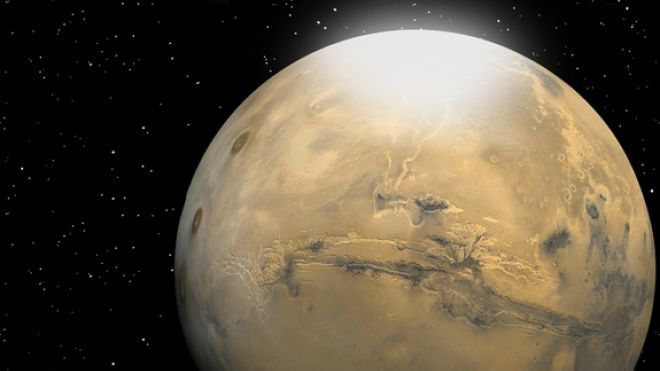
A spacecraft orbiting Mars has detected carbon dioxide snow falling on the Red Planet, making Mars the only body in the solar system known to host this weird weather phenomenon.

The snow on Mars fell from clouds around the planet's south pole during the Martian winter spanning 2006 and 2007, with scientists discovering it only after sifting through observations by NASA's Mars Reconnaissance Orbiter (MRO). The Martian south pole hosts a frozen carbon dioxide - or "dry ice" - cap year-round, and the new discovery may help explain how it formed and persists, researchers said.

"These are the first definitive detections of carbon-dioxide snow clouds," lead author Paul Hayne, of NASA's Jet Propulsion Laboratory (JPL) in Pasadena, Calif., said in a statement. "We firmly establish the clouds are composed of carbon dioxide - flakes of Martian air - and they are thick enough to result in snowfall accumulation at the surface."

Telescope

Electric 'Creation' in an Electric Universe

Orion Nebula
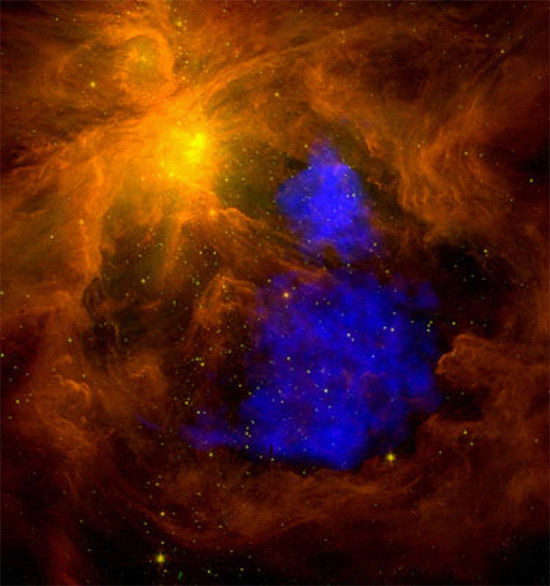
© AAAS/Science with ESA XMM-Newton and NASA Spitzer dataThe Orion Nebula in infrared and in x-ray light (blue).
Million-degree plasma in the Orion Nebula comes not from the kinetic excitation of cold gas, but from the electric currents of space.

For many years astrophysical theories of stellar and galactic development have been relegated to the processes of mechanical action. Everything we see and all the forces that shape the evolution of the incredible structures we have discovered have been attributed to the collapse of cold gas through gravitational influence. Conventional viewpoints attribute galaxies, stars, planets, comets and stardust itself to the whirling vortices of compressed matter.

Compression heats gas as it is drawn together by gravity, as the theory suggests. Clouds of hydrogen a thousands times less dense than a puff of smoke are somehow able to elicit an inflow toward a common center, creating a region of increased density that coaxes even more material to collect there and so on. Eventually, the atoms within the gas cloud can no longer resist the inward attraction - it falls into the well of nuclear fusion, converting the hydrogen into helium and releasing a self-sustaining storm of radiation. A star is born.