Science & TechnologyS


Einstein

Intelligence is in the genes, but where? Most genes thought to be linked to intelligence probably have no bearing on IQ

Intelligence
© iStockphotoA new study reveals the surprising fact that most of the specific genes long thought to be linked to intelligence probably have no bearing on one's IQ.
You can thank your parents for your smarts -- or at least some of them. Psychologists have long known that intelligence, like most other traits, is partly genetic. But a new study led by psychological scientist Christopher Chabris of Union College reveals the surprising fact that most of the specific genes long thought to be linked to intelligence probably have no bearing on one's IQ. And it may be some time before researchers can identify intelligence's specific genetic roots.

Chabris and David Laibson, a Harvard economist, led an international team of researchers that analyzed a dozen genes using large data sets that included both intelligence testing and genetic data.

In nearly every case, the researchers found that intelligence could not be linked to the specific genes that were tested. The results are published online in Psychological Science, a journal of the Association for Psychological Science.

"In all of our tests we only found one gene that appeared to be associated with intelligence, and it was a very small effect. This does not mean intelligence does not have a genetic component. It means it's a lot harder to find the particular genes, or the particular genetic variants, that influence the differences in intelligence," said Chabris.

Comment: For an interesting discussion of the 'missing heritability problem' and some of the problems with modern genetic theory, check out Rupert Sheldrake's most recent book Science Set Free.


Better Earth

Scientists say Earth is undergoing true polar wander?

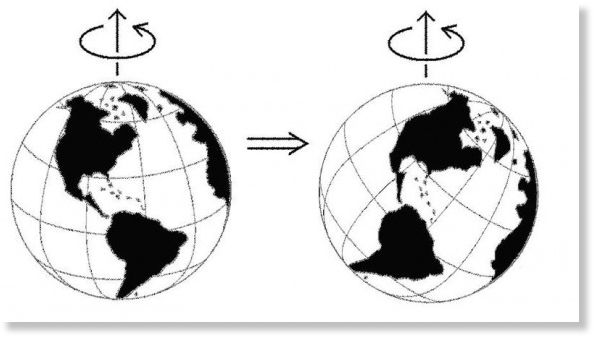
Scientists developed a computer model to identify four possible instances of true polar wander in the past. And, they say, true polar wander is happening now. Scientists based in Germany and Norway today published new results about a geophysical theory known as true polar wander. That is a drifting of Earth's solid exterior - an actual change in latitude for some land masses - relative to our planet's rotation axis. These scientists used hotspots in Earth's mantle as part of a computer model, which they say is accurate for the past 120 million years, to identify four possible instances of true polar wander in the past. And, they say, true polar wander is happening now. These scientists published their results in the Journal for Geophysical Research today (October 1, 2012).
Image
© Wikimedia CommonsDiagram showing solid-body rotation of the Earth with respect to a stationary spin axis due to true polar wander. This diagram is greatly exaggerated. According to Doubrovine and his team, Earth’s solid outer layers have been slowly rotating at a rate of 0.2 degrees every million years.
The scientists - including Pavel V. Doubrovine and Trond H. Torsvik of the University of Oslo, and Bernhard Steinberger of the Helmholtz Center in Potsdam, Germany - established what they believe is a stable reference frame for tracking true polar wander. Based on this reference frame, they say that twice - from 90 to 40 million years ago - the solid Earth traveled back and forth by nearly 9 degrees with respect to our planet's axis of rotation. What's more, for the past 40 million years, the Earth's solid outer layers have been slowly rotating at a rate of 0.2 degrees every million years, according to these scientists.

Arrow Down

Misconduct, not mistakes, causes most retractions of scientific papers

Retracted Papers
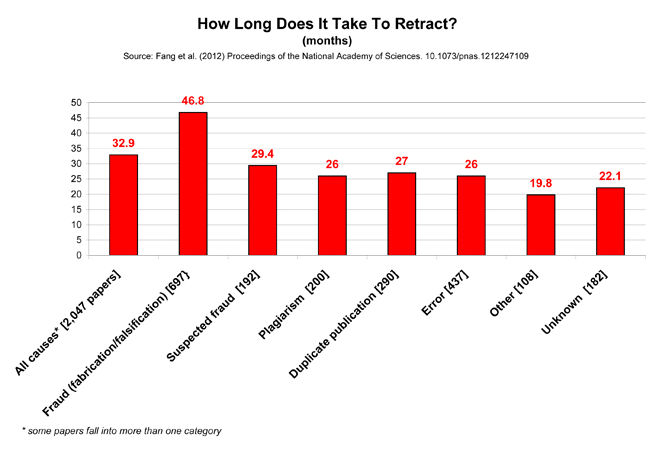
© F. Fang et al., PNASWhen to retract. The time it takes authors and journals to retraction scientific papers varies based on the reason, according to a new study, with fraud having the longest lead time.
Scientific misconduct, and not honest mistakes, account for more than two-thirds of retractions, a paper published today online in the Proceedings of the National Academy of Sciences (PNAS) suggests. The authors, microbiologists and journal editors Arturo Casadevall and Ferric Fang, set out to classify the errors that prompt researchers to yank published work - and came up with what they say is a surprising result.

Casadevall and Fang, who are fascinated by scientific integrity in publication, wanted to follow up on work published last year. Medical writer R. Grant Steen had reported in the Journal of Medical Ethics that 73.5% of 742 papers retracted between 2000 and 2010 were pulled because of errors. "What I was interested in was to see if we could understand the sources of error," says Casadevall, who runs a lab at Albert Einstein College of Medicine in the Bronx, New York, and is editor-in-chief of mBio. That way, he and Fang thought, "we may find a way to improve science" by giving researchers a heads up about where the most common pitfalls lie.

They asked Steen to join them, and together searched PubMed for all retractions, coming up with a total of 2047 dating back to 1977. (PubMed primarily covers biomedical research.) Rather than rely just on retraction notices from journals -- which in some cases they couldn't access without paying a fee, Casadevall says - they cross-referenced as many retractions as they could with other sources, including reports from the U.S. Office of Research Integrity (ORI), which investigates scientific misconduct.

Ladybug

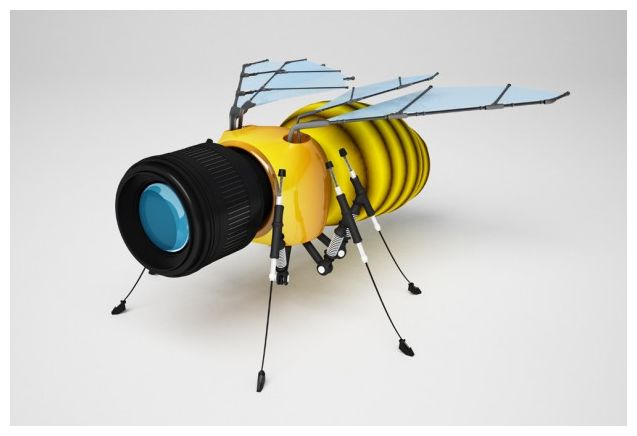
Robotic bees will one day kill us all

Robot Bee
© Andrej Vodolazhskyi / Shutterstock
Robotic scientists, it seems, are hell bent on creating autonomous, animalistic robots.

These machines, should the scientists have their way, would be capable of running faster than any human being, scaling all manner of rough terrain, and now, taking flight on their own, thinking like a bee in order to find certain sights and smells.

The robot take over is nigh.

A new report from the Universities of Sheffield and Sussex explains how scientists are looking at the way a bee's brain works in order to not only improve Artificial Intelligence, but to also create the world's first flying robot capable of acting on its own rather than waiting on the instructions of its human creators.

If doctors James Marshall and Thomas Nowotny are able to create such a bee-inspired brain, it will be the first time a robotic brain has been built to perform complex tasks similar to those carried out by actual animals and insects.

According to the report, these brains could then be used in search and rescue missions or even performing the jobs of bees (namely pollination) in case the great bee shortage continues.

Dr. Marshall explained why his team chose the brain of a bee instead of another creature in recent statement: "The development of an artificial brain is one of the greatest challenges in Artificial Intelligence. So far, researchers have typically studied brains such as those of rats, monkeys, and humans, but actually 'simpler' organisms such as social insects have surprisingly advanced cognitive abilities."

Info

Spacetime crystal could be a reality

Hand of Fear
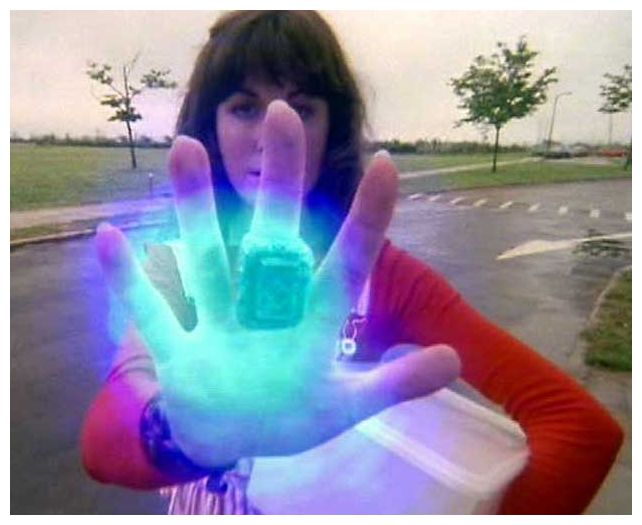
© YouTubeA screengrab from the Season 14 Dr. Who episode: "Hand of Fear."
Remember when we said that Doctor Who fans eager to build their own TARDIS would first need to obtain an odd little item called a trachoid time crystal? The exotic item was first mentioned in a 1976 episode called "The Hand of Fear" as being key to the machine's ability to travel through space and time.

Nobel Prize-winning physicist Frank Wilczek (MIT) suggested such a thing might be mathematically possible, giving hope to aspiring Time Lords everywhere.

Wilczek was teaching a class on 3D crystals: think salt, snowflakes, ice and similar sustances where the atoms or molecules are tightly bound in a very precise lattice-type structure.

He started wondering whether you could have a crystal-like structure in the fourth dimension of time -- i.e., a spacetime crystal. He concluded that you could. Theoretically, at least.
Spacetime Crystal
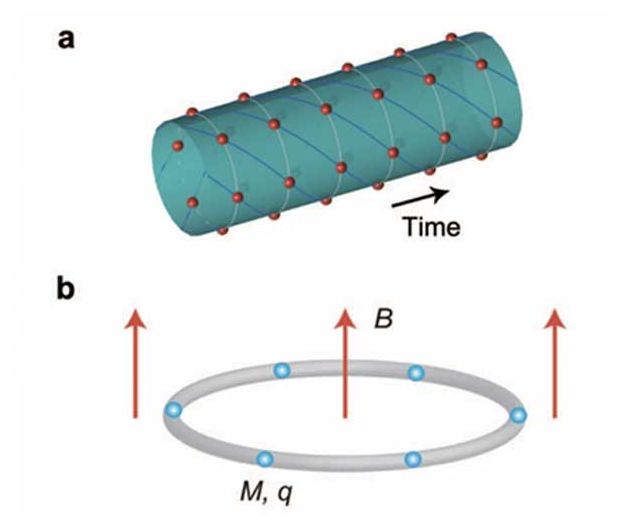
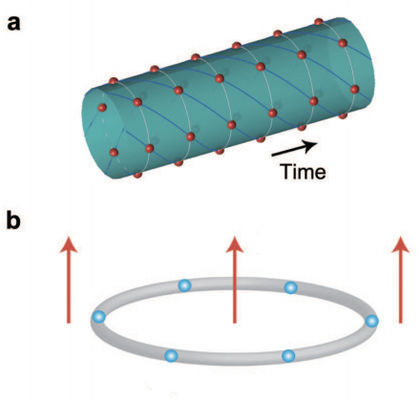
© Xiang Zhang group, Berkeley Lab/UC-BerkeleyDiagram of proposed spacetime crystal.
Now a team of physicists led by mechanical engineer Xiang Zhang and Tongcang Li think they have come up with an experimental design that would make Wilczek's spacetime crystals a viable reality. Wilczek's paper and the follow-up analysis by Zhang et al. will both be published in Physical Review Letters.

Meteor

Updated data for comet C/2012 S1 (ISON)

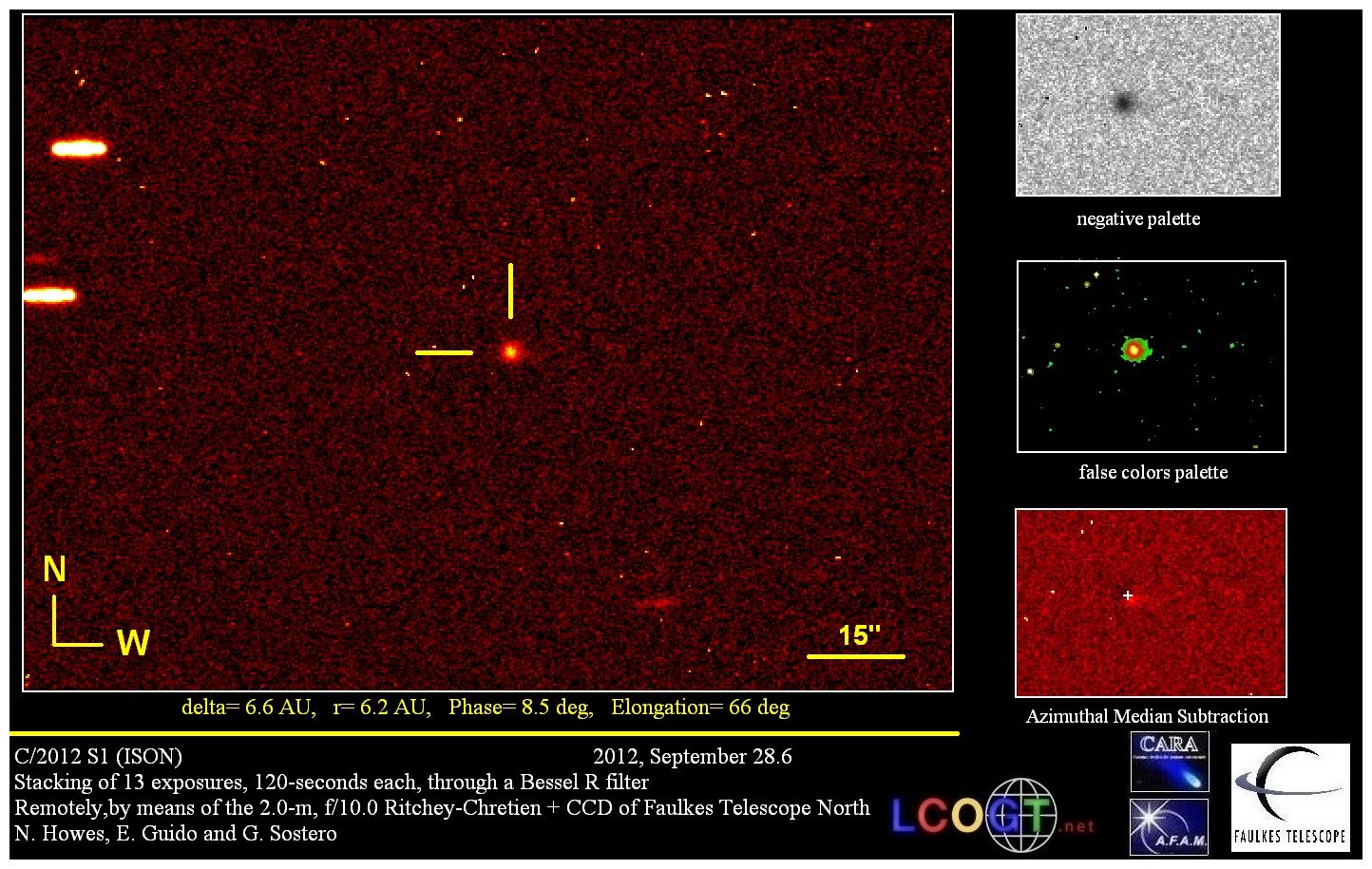
Our team performed follow-up observations of comet C/2012 S1 (ISON) on 2012, Sept. 28.6, remotely through the 2m, f/10 Ritchey-Chretien + CCD of Faulkes Telescope North (Haleakala) under good seeing conditions, and a scale of 0.3"/px. After stacking 13 R-filtered exposures, 120-seconds each, comet ISON appears as a pale blob of light, slightly elongated toward the south-west (this is particularly obvious looking at the azimuthal median subtraction rendition). Click on the image below to see a bigger version.
Comet C/2012 S1
© Remanzacco Observatory
The Afrho (proxy of dust abundance within the coma) calculation we performed on this dataset, using a few Tycho reference stars having colour indexes close to that of the Sun, provided rather puzzling results: in short, we found a significant variation of the Afrho amount, according to the dimension of the measurement window (something pretty different from the steady state coma model).

Sun

A large but relatively slow moving coronal mass ejection (CME) impact in progress

A large but relatively slow moving coronal mass ejection (CME) that erupted from the Sun on September 27 hit Earth September 30 causing a low level radio blackout and moderate geomagnetic storms. Although the blackout has passed, storm warnings continue through October 1.

In a couple weeks, the GOES-15 satellite which is the primary X-ray solar sensor used to monitor solar weather, will undergo a maintenance phase as its view of the sun is eclipsed by Earth. During that time GOES-14 is brought online to provide continuous coverage of solar activity. GOES-15 is expected to be operational again around October 30.


Clock

Developers envision a space time crystal for eternity

Image
© U.S. Dept. of Energy National Laboratory/Berkely
Researchers at Berkeley Lab of the U.S. Department of Energy National Laboratory have come forward with the idea to build the first space time crystal.

This device could deliver groundbreaking insight into physics and will be able to keep the correct time until after the universe dies.

The projected crystal will be a 4D construct that is characterized by a periodic structure in time as well as space. If built, scientists hope they will be able to study the properties and behaviors during interactions of large numbers of particles, which is commonly known as the many-body problem in physics. There is also the vision that a space time crystal would be useful to dive deeper into quantum physics, including particle entanglement over close and far distances.

Xiang Zhang, a faculty scientistwith Berkeley Lab's Materials Sciences Division who led the space time crystal research, explained that "the electric field of an ion trap holds charged particles in place and Coulomb repulsion causes them to spontaneously form a spatial ring crystal". He added: "Under the application of a weak static magnetic field, this ring-shaped ion crystal will begin a rotation that will never stop. The persistent rotation of trapped ions produces temporal order, leading to the formation of a space-time crystal at the lowest quantum energy state."

Since this crystal is already at its lowest quantum energy state, its time keeping will persist for eternity even until the universe reaches its "heat-death", the scientists said. Despite its continued motion, the scientists said that the crystal would not represent a perpetuum mobile as the structures does not deliver energy.

According to Zhang, the "main challenge" in creating the crystal "will be to cool an ion ring to its ground state." He believes that this will be possible "in the near future with the development of ion trap technologies."

Radar

Stanford scientists create biological Internet

Image
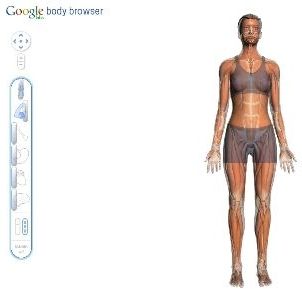
© Google™
Bioengineers at Stanford University have created a communication network to send commands to and from cells within a biological body.

Monica Ortiz, a doctoral candidate in bioengineering, and Drew Endy, an assistant professor of bioengineering said they succeeded in using the M13 bacteriophage as a carrier of genetic messages to build what they call a "biological Internet".

M13, a non-lethal virus which has the ability to "broadcast" DNA, can be used to pick up arbitrary DNA strands and transport them to certain cells over a distance of up to 7 cm, which is about 79,500 times its own length (880 nm). The researchers said that M13 transports messages in the form of commands, but does not care what the content of the message is. At its destination, M13 releases the command.

"Effectively, we've separated the message from the channel. We can now send any DNA message we want to specific cells within a complex microbial community," said Ortiz, the first author of the study.

According to the research, M13 can be used to create much more complex communication between cells and "include any sort of genetic instruction: start growing, stop growing, come closer, swim away, produce insulin and so forth." The vision is the creation of "biosynthetic factories in which huge masses of microbes collaborate to make more complicated fuels, pharmaceuticals and other useful chemicals." Even the regeneration of tissue and organs may be possible.

Propaganda

Cosmic COINTEPLRO: British astronaut to save world from asteroid

Image
Fantasy vs Reality: no, Bruce Willis can't save the day, and neither can your government.
A British astronaut will be part of a team to fly to space to investigate a cosmic rock, and if the asteroid is found to be on collision course for Earth, he would be the one to deflect it.

Major Tim Peake is part of a NASA team due to fly by the mid-2020s, The Sun reported.

He and three colleagues from the Extreme Environment Missions Operations could be flown to deflect the asteroid.

"Earth has close calls all the time. The work we are doing is without a doubt going to help prevent a catastrophic collision with one of them," Peake, a 40-year-old former Army Air Corps officer, was quoted as saying.

In February, a 45-metre-wide rock got closer than the artificial satellites around the earth, and in November 2011, a 360-metre-wide one came between earth and the moon.


Comment: ...and on a daily basis now fireballs are seen from the ground...


The team has spent 12 days simulating weightless conditions in a deep sea research station off Florida, US.

The team's main aim is to travel to an asteroid in a shuttle, spend up to 30 days on a smaller spacecraft so that they can take samples from it and place sensors.

Comment: This notion of saving Earth from incoming asteroids/meteors/comets has already been thoroughly debunked, but it doesn't seem to stop them putting these stories about there to calm people:
Can Bruce Willis save us from asteroid 'Armageddon'? No, and neither can your government

In the 1998 movie "Armageddon," Bruce Willis plays an oil-drilling platform engineer who leads a team that lands on an asteroid aimed at Earth, drills a hole into its center and explodes a nuclear device that splits the asteroid, saving the planet.

Could it actually happen? Definitely not, say physics graduate students at the University of Leicester in England.

Leaving aside the question of whether we have spacecraft that could transport the drilling team to intercept the asteroid, the group of four students concluded that we simply don't have a big enough bomb to split the asteroid so that the two halves would pass by the Earth.

Ben Hall, Gregory Brown, Ashley Back and Stuart Turner devised a formula to calculate how much energy would be needed to split an asteroid of the size depicted in the film. They reported in two related papers in the University of Leicester Journal of Special Physical Topics that it would require 800 trillion terajoules of energy to split the asteroid in two with both pieces clearing the planet. Unfortunately, the largest nuclear bomb known, a Russian monster known as Big Ivan, yields only 418,000 joules. Hence, they said, the project would require a bomb a billion times as powerful to save the Earth.