Science & TechnologyS


Comet 2

New Comet: P/2012 T7 (VOROBJOV)

Cbet nr. 3260, issued on 2012, October 18, announces the discovery of a new comet (discovery magnitude 20.1) by Tomas Vorobjov on three 120-s images that he took on October 15 remotely with Alexander Kostin (Houston, TX, U.S.A.) using a 0.81-m f/7 Ritchey-Chretien reflector located at the Mt. Lemmon SkyCenter via the Sierra Stars Observatory Network. The new comet has been designated P/2012 T7 (VOROBJOV).

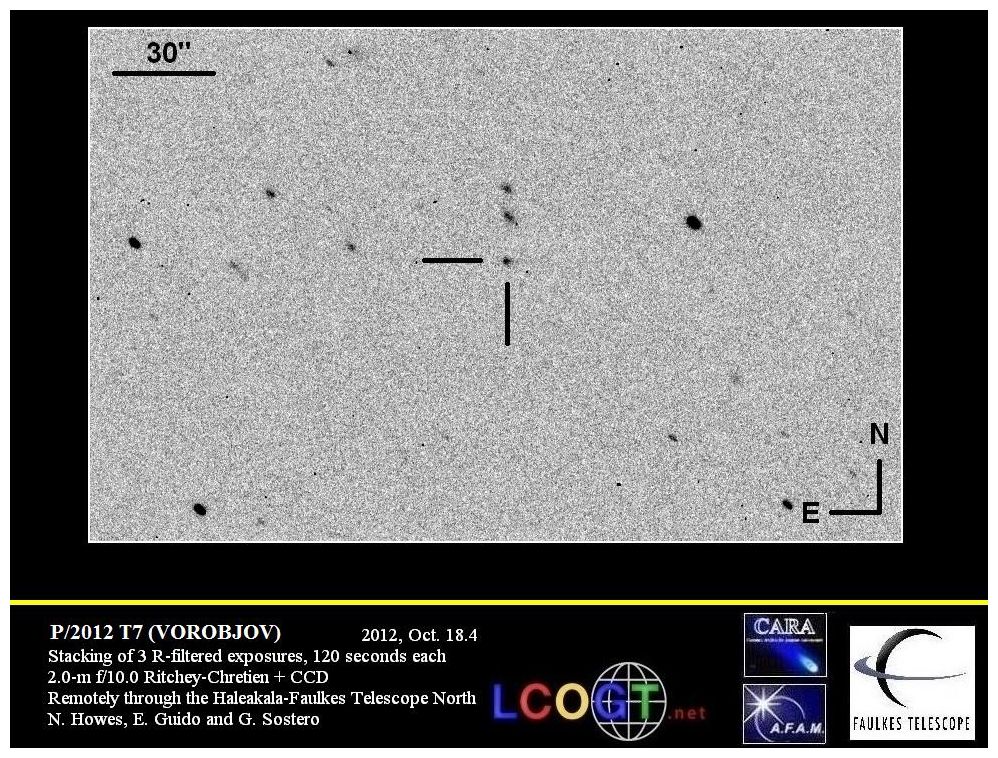
We performed some follow-up measurements of this object, while it was still on the neocp. Stacking of 3 R-filtered exposures, 120-sec each,obtained remotely,from Haleakala-Faulkes Telescope North on 2012, Oct. 18.43, through a 2.0-m f/10.0 Ritchey-Chretien + CCD under good seeing conditions, shows that this object is a comet: narrow tail nearly 15" long in PA 270 elongated coma 6"x4" in the same direction.

Our confirmation image:
P/2012 T7
© Remanzacco Observatory

M.P.E.C. 2012-U40 assigns the following preliminary elliptical orbital elements to comet P/2012 T7: T 2012 June 16.58; e= 0.33; Peri. = 174.76; q = 3.78 AU; Incl.= 13.55.

Info

Dolphins employ unihemispheric sleep tactics to stay vigilant for days on end

SAY
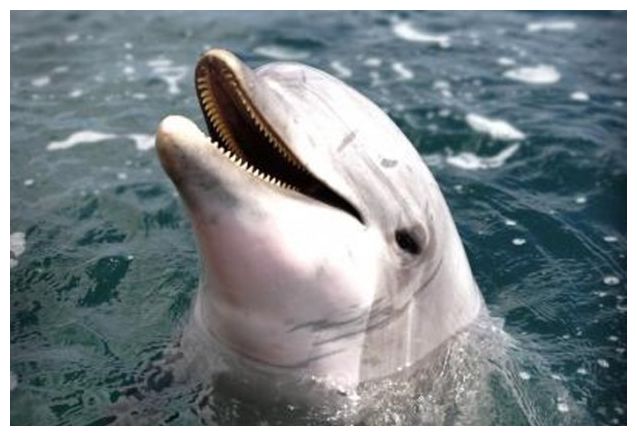
© Brian BranstetterThe female dolphin SAY who performed a continuous echolocation tasks for 15 days.
The demands of living at sea require constant vigilance, including when these animals' circadian rhythms dictate the need for sleep.

Dolphins meet these 24-hour security requirements by sleeping with one half of their brain while surfacing to breath and avoiding predators with the other half, according to new research published this week in PLoS ONE.

A group of San Diego researchers has shown that these marine mammals have evolved the ability for unihemispheric sleep, or the ability to sleep with either half of the brain.

"These majestic beasts are true unwavering sentinels of the sea," lead author Brian Branstetter, from the National Marine Mammal Foundation in San Diego told The Telegraph. "The demands of ocean life on air breathing dolphins have led to incredible capabilities, one of which is the ability to continuously, perhaps indefinitely, maintain vigilant behavior through echolocation."

In the study, the marine biologists used the dolphins' echolocation abilities to test their alertness over an extended period of time that would have left the animals sleep-deprived had they not rested.

Cloud Precipitation

Scientists link magnetic reversal, climate change and super volcano to same time period

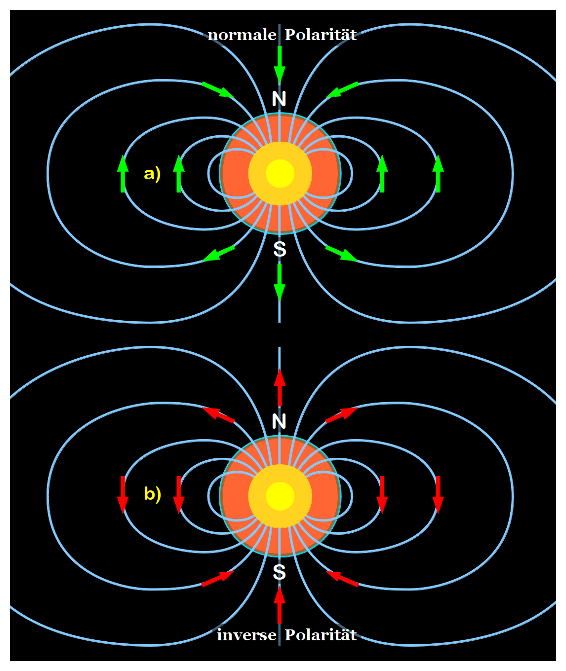
Normal_and_Reversed_Polarity
© Dr. Habil. Norbert R. Nowaczyk / GFZNormal_and_Reversed_Polarity
Confirms what I've been saying all along.

In a press release today, the GFZ German Research Centre for Geosciences described the connection between the Laschamp magnetic reversal, the Phlegrean Field (Campi Flegrei) volcanic eruption that devastated most of southeastern Europe, and periods of frequent rapid cooling and warming.

The largest volcanic eruption in the Northern hemisphere in the past 100,000 years, the Campi Flegrei eruption pumped out some 84 cubic miles (350 cu km) of rock and lava and distributed ash over the entire eastern Mediterranean and up to central Russia.

Some researchers think these eruptions drove the Neanderthals to extinction and cleared the way for anatomically modern humans - Homo sapiens - to thrive in Europe and Asia.

Today, the Campi Flegrei is an eight-mile-wide volcanic caldera on the outskirts of Naples, Italy, a city of nearly a million people.

As with the Yellowstone super volcano, the Campi Flegrei is a popular tourist attraction. Filled with lakes of boiling mud, sulphrous steam holes and small volcanic features, its name comes from the Greek word for 'burning.' The ancients believed the area to be the gateway to hell.

The Campi Flegrei's last major eruption took place about 12,000 years ago. I don't think it's a coincidence that the Gothenburg magnetic reversal also occurred about 12,000 years ago.

"What is remarkable is the speed of the reversal," the press release says.

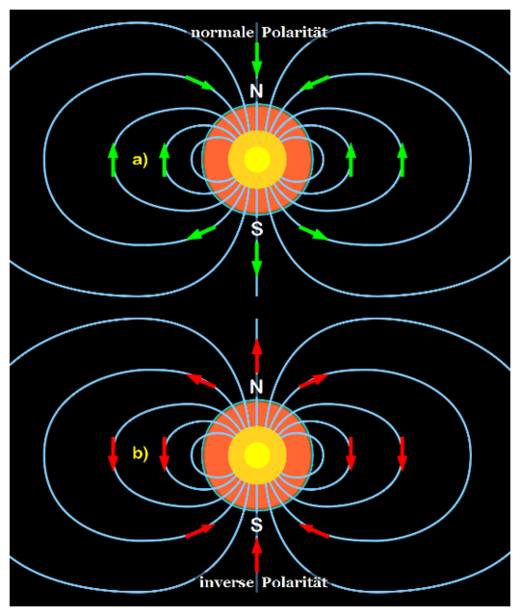
"The field geometry of reversed polarity, with field lines pointing into the opposite direction when compared to today's configuration, lasted for only about 440 years, and it was associated with a field strength that was only one quarter of today's field."

Jupiter

Jupiter photos reveal big changes on giant planet

Jupiter Impact
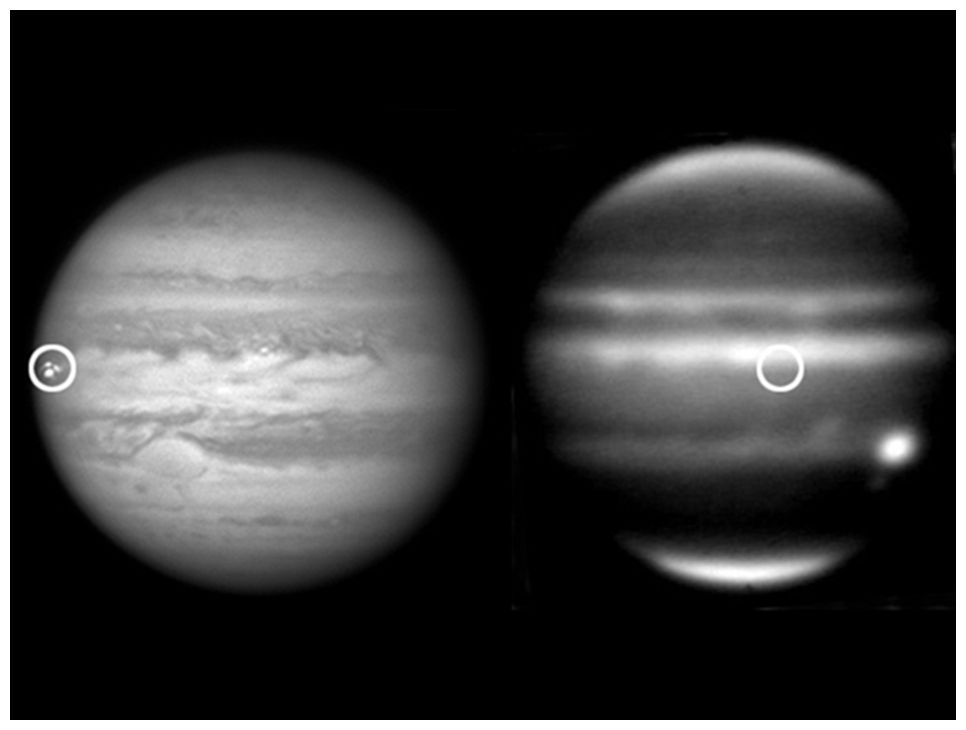
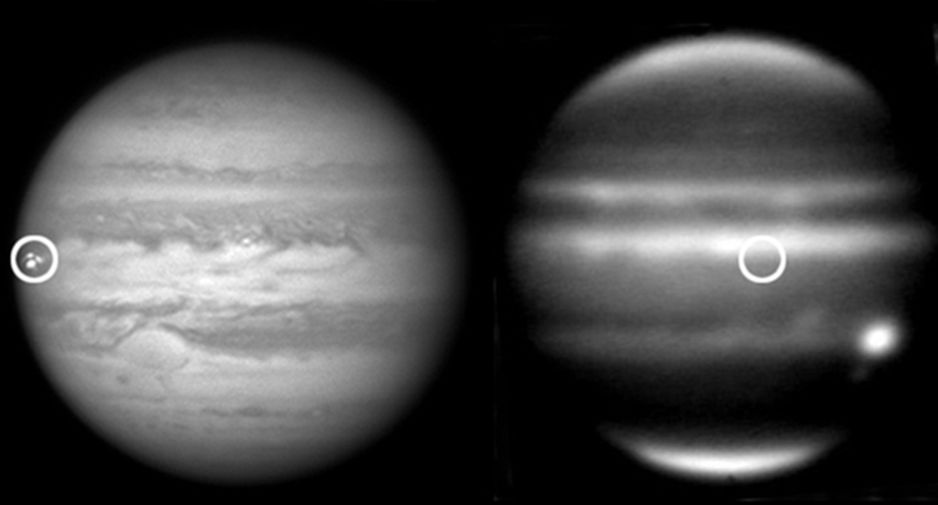
© NASA/IRTF/JPL-Caltech/G. Hall/University of the Basque CountryJupiter has been suffering more impacts over the last four years than ever previously observed, including this meteoroid impact on Sept. 10, 2012. The left-hand image was taken from a red-filtered video by amateur astronomer George Hall of Dallas, Texas, on Sept. 10 and processed by Ricardo Hueso (University of the Basque Country, Bilbao, Spain). The right-hand image is an infrared image from NASA’s Infrared Telescope Facility on Mauna Kea, Hawaii, taken on Sept. 11
Jupiter, the largest planet in our solar system, has made some dramatic transformations in recent years, a new study reveals.

Huge belts in the giant planet's atmosphere have changed color, radiation hotspots have faded and flared up again, and cloud levels have thickened and dissolved, all while space rocks have been hurtling into it the gas giant, astronomers said.

"The changes we're seeing in Jupiter are global in scale," Glenn Orton, a scientist at NASA's Jet Propulsion Laboratory, Pasadena, Calif., said in a statement today (Oct. 17). Orton and his colleagues have been snapping infrared images of Jupiter from 2009 to 2012 and comparing them with amateur astronomers' visible images.

Astronomers previously observed that from 2009 to 2011, a big brown belt just south of the equator, called the South Equatorial Belt, disappeared and returned.

Comet

Leading astrophysicists: Flu viruses arrive here on comets from outer space

Image
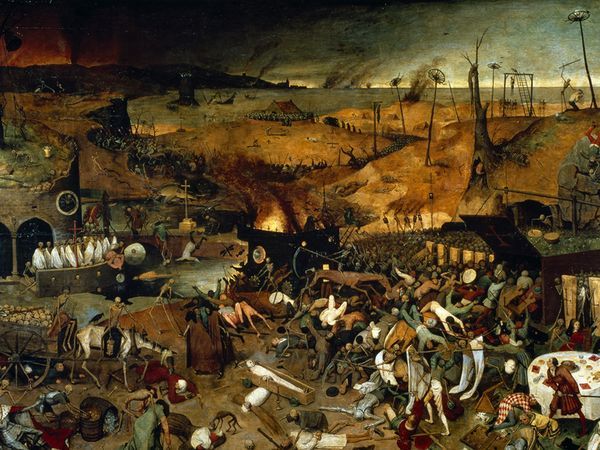
© Museo del Prado, MadridPieter Bruegel's "The Triumph of Death". Hell on Earth, the nightmare depicted by Flemish painter Pieter Bruegel in his mid-16th-century "The Triumph of Death" reflects the social upheaval and terror that followed the plague that devastated medieval Europe.
It made the festive season a misery for many and threw NHS policy into crisis. But the flu may have worse in store, according to scientists who claim to have discovered an alarming explanation for the epidemic - a virus from outer space.

Dismissing as dogma the conventional medical wisdom that flu is a virus passed by human contact, the distinguished astrophysicist Sir Fred Hoyle, and his colleague at Cardiff university, Chandra Wickramasinghe, warn that we may be on the brink of a global epidemic.

In a report to be published in the journal Current Science, they claim the outbreak was caused by dust deposited high in the atmosphere by passing comets being forced down to earth by energy generated by cooler patches on the sun's surface, known as sunspots.

They reach the peak of their activity, the maxima, every 11 years, coinciding, the scientists say, with all major flu outbreaks since 1761, including the 1918 Spanish flu pandemic blamed for 20m deaths worldwide. The latest cycle began to peak in September and the maxima is due sometime this year.

Comment: We're not too sure how much the 11-year Solar cycle can tell us about the impact of comet-borne viruses on seasonal flu outbreaks, but their main idea certainly makes a lot of sense.

New Light on the Black Death: The Viral and Cosmic Connection


Gear

Iranian Researchers Introduce New Theory for Interactions between Neutral Surfaces

Image
© Fars News Agency
Iranian theoretical physicist Ali Naji showed in a research how small random patches of disordered and frozen electric charges can make a difference when they are scattered on surfaces that are overall neutral.

The study led by Naji from the Iranian Institute for Research in Fundamental Sciences (IPM) in Tehran and the University of Cambridge and his colleagues were published in the European Physical Journal E (EPJ E). DOI 10.1140/epje/i2012-12024-y.

These charges induce a twisting force that is strong enough to be felt as far as nanometers or even micrometers away. These results could help to understand the phenomena that occur on surfaces such as those of large biological molecules.

To measure the strength of the twist that acts on a randomly charged surface, the authors used a sphere which was mounted like a spinning top next to a randomly charged flat substrate. Because small amounts of positive and negative charges were spread in a disordered mosaic throughout both surfaces, they induced transient attractive or repulsive twisting forces. This was regardless of the surfaces' overall electrical neutrality, thus making the sphere spin. Using statistical averaging methods, the authors studied the fluctuations of these forces.

The authors found that the twisting force, created by virtue of the disorder of surface charges, is expected to be much stronger and far-reaching than the remnant forces. The latter are always present, even in the absence of charge disorder, and are due to fluctuations at the atomic and molecular levels.

This could have implications for large randomly charged surfaces such as biological macromolecules, which may be exposed to strong electrostatic forces, inducing attraction and/or repulsion, even if they carry no overall net charge.

For instance, this phenomenon could partly explain biological pattern recognition, such as lock and key phenomena. In that context, the twisting force could explain the attraction between biological macromolecules that lead to pre-alignment prior to their interaction.

Comet 2

NASA scientists struggle to understand signs of massive climate shift on Jupiter as giant planet is bombarded with cometary debris

Image
© NASA/IRTF/JPL-Caltech/G. Hall/University of the Basque CountryJupiter has been suffering more impacts over the last four years than ever previously observed, including this meteoroid impact on Sept. 10, 2012. The left-hand image was taken from a red-filtered video by amateur astronomer George Hall of Dallas, Texas, on Sept. 10 and processed by Ricardo Hueso (University of the Basque Country, Bilbao, Spain). The right-hand image is an infrared image from NASA’s Infrared Telescope Facility on Mauna Kea, Hawaii, taken on Sept. 11. Scientists compare the visible-light images to the infrared images to learn about the fireball's disruption of the Jovian atmosphere. In this case, the infrared view reveals no long-term disturbance. The circles in the annotated version indicate where the impact occurred. Scientists think the fireball was caused by an object less than 45 feet (15 meters) in diameter.
Jupiter, the mythical god of sky and thunder, would certainly be pleased at all the changes afoot at his namesake planet. As the planet gets peppered continually with small space rocks, wide belts of the atmosphere are changing color, hotspots are vanishing and reappearing, and clouds are gathering over one part of Jupiter, while dissipating over another. The results were presented today by Glenn Orton, a senior research scientist at NASA's Jet Propulsion Laboratory, Pasadena, Calif., at the American Astronomical Society's Division for Planetary Sciences Meeting in Reno, Nev.

"The changes we're seeing in Jupiter are global in scale," Orton said. "We've seen some of these before, but never with modern instrumentation to clue us in on what's going on. Other changes haven't been seen in decades, and some regions have never been in the state they're appearing in now. At the same time, we've never seen so many things striking Jupiter. Right now, we're trying to figure out why this is all happening."

Comment: For how much longer can Jupiter vacuum the larger incoming chunks and take the hit for us?

Just remember where you heard it first folks, Something Wicked This Way Comes...


Info

Scientist claims moon was result of earth collision with planetary body

Collision
© NASA/JPL-Caltech Artist's depiction of a collision between two planetary bodies. Such an impact between the Earth and a Mars-sized object likely formed the Moon.
One scientist is claiming that the Moon was created when a planetary body the size of Mars collided with the early Earth.

Planetary scientist Frédéric Moynier of Washington University in St. Louis reports that he has found evidence which backs up the Giant Impact Theory, which was first proposed at a conference in 1975.

The Giant Impact Theory says that Earth's moon was created in an apocalyptic collision between a planetary body called Theia and the early Earth.

According to the theory, the planet smashed up against Earth, releasing so much energy that it melted and vaporized Theia and much of the proto-Earth's mantle.

The Moon then condensed out of the cloud of rock vapor, some of which also re-accreted to the Earth, according to the Giant Impact Theory.

Moon rocks brought back to Earth show that they are very poor in sodium, potassium, zinc and lead, Moynier said.

"But if the rocks were depleted in volatiles because they had been vaporized during a giant impact, we should also have seen isotopic fractionation," Moynier said. Isotopes are variants of an element that have slightly different masses.

Info

Complex body parts could soon be lab-grown

Human Organs
© CorbisScientists are getting better and better at creating human organs in the lab -- soon it may be possible to grow complex organs such as kidneys and hearts.
Various groups of scientists have recently created thyroid cells in the lab, grown a new ear in the skin a woman's own arm, and won a Nobel Prize for figuring out how to reprogram cells so that they can turn into a variety of cell types.

In the future, there may be no limit to the kinds of organs and body parts that can be created from scratch.

One hope is to make donor organs obsolete, or at least far less necessary, eliminating long waiting lists for transplants. By using a patient's own cells, the new wave of regenerative medicine also circumvents ethical arguments and reduces the chance that recipients will reject their new parts.

"We now have the ability for the first time to create a virtually unlimited supply of all the cell types and building blocks we need to make what we want to make," said stem cell researcher Robert Lanza, chief scientific officer at Advanced Cell Technology, a biotechnology company in Marlborough, Mass. "Now we just have to put it all together."

The concept of growing new organs first cropped up in the scientific literature in the 1930s, said Anthony Atala, director of the Wake Forest Institute for Regenerative Medicine in Winston-Salem, North Carolina. Real-life applications, however, began to appear only more recently.

With bladders grown from the cells of sick children and teenagers, Atala's group was the first to successfully implant lab-grown organs into people, beginning in 1998. In a paper in the Lancet in 2006, the team reported the promising long-term results of those procedures.

According to Atala, researchers have been able to grow and implant three kinds of parts: flat tissues like skin, tubular structures like blood vessels, and hollow organs like stomachs and bladders.

Play

GMO video Monsanto does NOT want you to see!

What is a GMO, and how do GMOs effect you and your family?

The same corporations that said DDT and Agent Orange were safe have now put millions of dollars into the campaign against our right to know what's in our food.

In November, Californians will vote on the most important issue to ever effect our food supply. As Goes California, So Goes the Nation.

Vote YES ON 37 Because We Have The Right To Know What's In Our Food!