Science & TechnologyS


Comet 2

Yet another house-size asteroid comes closer to Earth than the Moon

Image
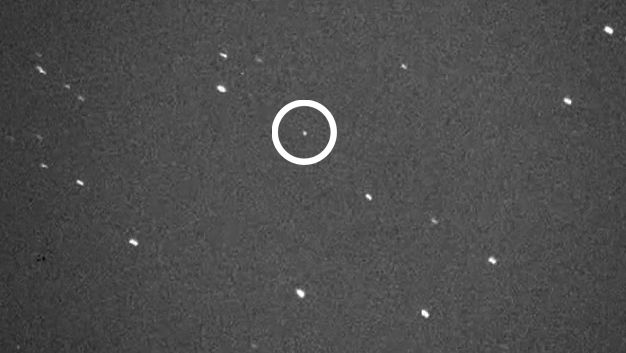
© Gianluca Masi/Virtual Telescope ProjectAstrophysicist Gianluca Masi of the Virtual Telescope project snapped this image of yet another near-Earth asteroid, 2012 TC4, on Oct. 10, 2012. The asteroid will fly within an astonishing 59,000 miles of Earth on Oct. 12.
A newfound asteroid the size of a house will fly closer to Earth than the moon on Friday (Oct. 12), but poses no danger of impacting our planet, NASA says.

The space rock, called asteroid 2012 TC4, is about 56 feet wide (17 meters) and will come within 59,000 miles (95,000 kilometers) of Earth at its closest point when it zips harmlessly by on Friday. That's about one-fourth the distance to the moon.

But you don't have to wait to see live views of the interloping space rock: There are two live webcasts of the asteroid today (Oct. 11). The Virtual Telescope Project and Slooh Space Camera, two groups that offer live telescope views of space via the Internet, will be providing the asteroid imagery.

Comet

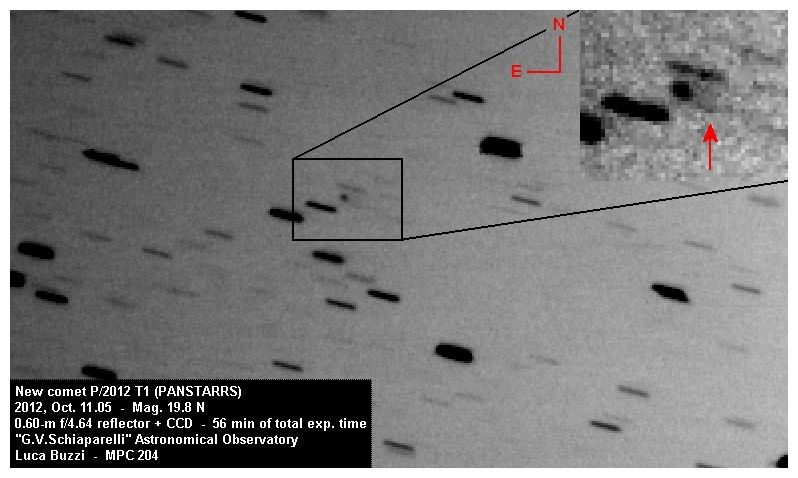
New Comet P/2012 T1 (PANSTARRS)

New Comet P/2012 T1
© "G.V.Schiaparelli" Astronomical Observatory
P/2012 T1 (PANSTARRS) was discovered by the PAN-STARRS survey on 2012, Oct. 06.53 with a 1.8-m reflector + CCD located at Haleakala, HI, USA.

Richard Wainscoat, Henry Hsieh and Larry Denneau described the object to have a PSF larger than stars nearby (1.5″ vs 1.07″). The object was posted on the NEO Confirmation Page under the temprary designation P104kFN.

Apart from their internal confirmation team from Hawaii (Dave Tholen, Marco Micheli and Garrett T. Elliott using the UoH 2.24-m reflector), observatories from the "T3 project" were the only ones to confirm it as a comet.

The first who reported to us cometary activity was Hidetaka Sato, using a 0.43-m remotely from New Mexico on Oct. 10.3, noted that "P104kFN is a potential comet with a round coma of 10″ in diameter. A tail was 12″ toward PA 250 degree."

After his observation I managed to observe it under a clear sky the following night (the first after three weeks of bad weather in northern Italy!), confirming its clear cometary appearance: in a stack of 56 minutes of total exposure time in good conditions, it has a diffuse aspect, with a coma 10″ wide elongated in PA 253° for at least 15″.

Fireball

"It came from outer space" -- Remarkable space rock that looks almost human goes up for auction

At first look it appears as though this artefact was part of some statue from roman times. But in fact it was not the work of some ancient artist - rather it came from outer space. It is an iron meteorite, an an incredibly rare one at that. The matchless specimen was found in 1992 by indigenous tribesmen in Namibia's Kalahari with the aid of a metal detector.
Image
© Heritage AuctionsThe eyes have it: The two holes in the meteorite make it extremely rare - and give it the appearance of an owl
Part of the The Macovich Collection in New York City, it is going up for sale on Sunday at the Natural History Signature Meteorite Auction. It is estimated to fetch between £85,000 and £100,000. The auction website said: 'It is extremely rare for meteorites to have naturally formed holes, and rarer still when the holes are positioned in the matrix in such a way as to yield a magnificent aesthetic specimen-let alone the highly zoomorphic example seen here.

Blackbox

The Mysterious Case of the Missing Noble Gas

Image
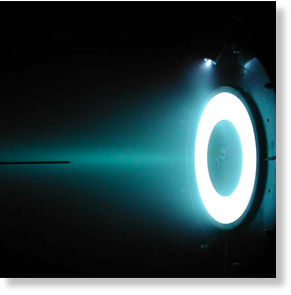
© htx.pppl.gov
Xenon has almost vanished from Earth's atmosphere. Geoscientists think it might have disappeared in space.

The evidence is in every breath of air, but answers are harder to come by. Xenon, the second heaviest of the chemically inert noble gases, has gone missing. Our atmosphere contains far less xenon, relative to the lighter noble gases, than meteorites similiar to the rocky material that formed the Earth.

The missing-xenon paradox is one of science's great whodunits. Researchers have hypothesized that the element is lurking in glaciers, minerals or Earth's core, among other places.

"Scientists always said the xenon is not really missing. It's not in the atmosphere, but it's hiding somewhere," says inspector, sorry, professor Hans Keppler, a geophysicist at the University of Bayreuth in Germany. He and his colleague Svyatoslav Shcheka are the latest geoscientists to tackle the case, in a report published today in Nature.

Elementary, my dear Watson

They went looking for answers in minerals. Magnesium silicate perovskite is the major component of Earth's lower mantle - the layer of molten rock between the crust and the core, which accounts for half the planet's mass. The sleuthing scientists wondered whether the missing xenon could be squirreled away in pockets in this mineral. "I was quite sure that it must be possible to stuff noble gases into perovskite," says Keppler. "I suspected xenon may be in there."

Magic Wand

New studies reveal connections between animals' microbial communities and behavior

Image
© Unknown
New research is revealing surprising connections between animal microbiomes - the communities of microbes that live inside animals' bodies - and animal behavior, according to a paper by University of Georgia ecologist Vanessa O. Ezenwa and her colleagues. The article, just published in the Perspectives section of the journal Science, reviews recent developments in this emerging research area and offers questions for future investigation.

The paper grew out of a National Science Foundation-sponsored workshop on new ways to approach the study of animal behavior. Ezenwa, an associate professor in the UGA Odum School of Ecology and College of Veterinary Medicine department of infectious diseases, and her coauthors were interested in the relationship between animal behavior and beneficial microbes.

Most research on the interactions between microbes and their animal hosts has focused on pathogens, Ezenwa said. Less is known about beneficial microbes or animal microbiomes, but several recent studies have begun to explore these connections.

"We know that animal behavior plays a critical role in establishing microbiomes," she said. "Once they're established, the microbiomes then influence animal behavior in lots of ways that have far-reaching consequences. That's what we were trying to highlight in this article."

Bumble bees, for example, obtain the microbes they need through social contact with nest mates, including consuming their nest mates' feces - a not uncommon method for animals to acquire microbes. Green iguanas establish their intestinal microbiomes by feeding first on soil and later on the feces of adult ig
uanas.

Eye 2

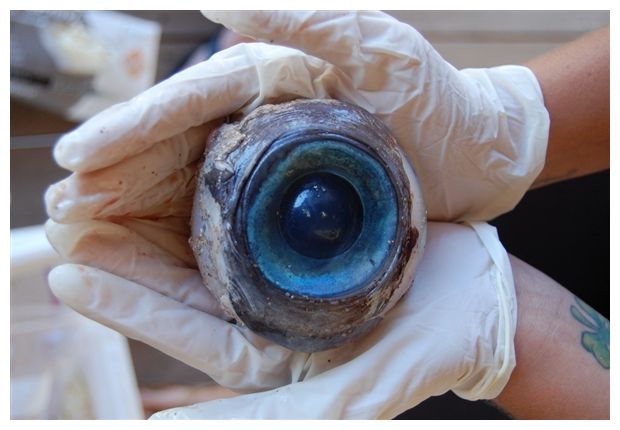
Giant eyeball found on beach, posing mystery for marine biologists

Eyeball?
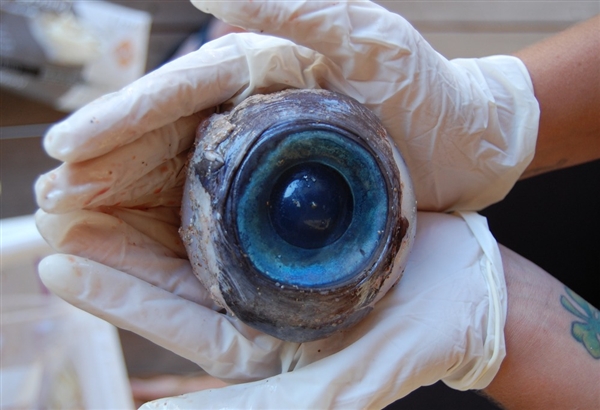
© Carli Segelson / Fla. FWCC via APA photo from the Florida Fish and Wildlife Conservation Commission shows a giant eyeball from a mysterious sea creature that washed ashore and was found by a man walking the beach in Pompano Beach, Fla., on Wednesday. The eyeball will be sent to the Florida Fish and Wildlife Research Institute in St. Petersburg, Fla.
A giant eyeball that washed ashore and was found by a beachcomber in Pompano Beach, Fla., is mystifying wildlife officials - but probably not for long.

The softball-sized eyeball was reported to the Florida Fish and Wildlife Conservation Commission on Wednesday, and wildlife officers put the specimen on ice. It will be preserved and sent to the Fish and Wildlife Research Institute in St. Petersburg, Fla., for analysis.

Marine biologists couldn't immediately identify which species of sea creature would be associated with the eye, but researchers will use genetic testing if necessary to solve the mystery, said Carli Segelson, a spokeswoman for the commission. "I shouldn't say this, but they may be able to eyeball it," she told me today.

Segelson said she's been fielding tons of inquiries about the case, especially since a picture of "THE MYSTERY EYEBALL" was posted to the commission's Facebook page. "It's just gone viral," she said. There are more pictures in the commission's Flickr photo gallery.

Some have suggested that the eye came from a monster fish, a giant squid or even a whale. It does look a bit like this picture of an eye from a giant squid, but Segelson said wildlife officers are leaning toward a different scenario.

"The primary suspect right now is that it would be a large fish," she said. Among the possibilities are a swordfish, or a tuna, or some sort of deep-water fish species.

What do you think it is? Feel free to give it your best shot a comment below, and keep your eyes peeled for the answer.

Question

Mysterious elk-shaped structure discovered in Russia

Russian Geoglyph
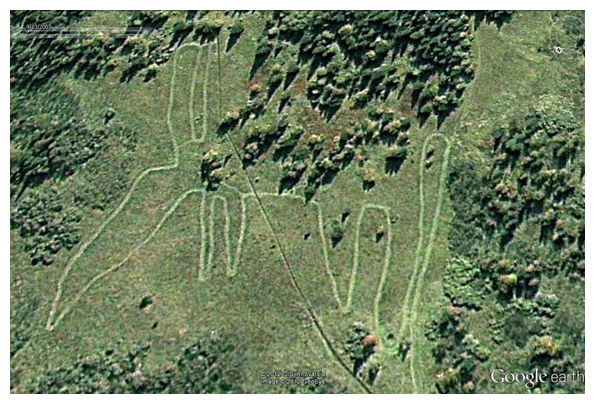
© 2012 Geoeye, 2012 GIS Innovatsia, courtesy Google EarthA historical Google Earth image from 2007 showing the animal-shaped geoglyph in Russia, which may predate Peru's famous Nazca Lines.
A huge geoglyph in the shape of an elk or deer discovered in Russia may predate Peru's famous Nazca Lines by thousands of years.

The animal-shaped stone structure, located near Lake Zjuratkul in the Ural Mountains, north of Kazakhstan, has an elongated muzzle, four legs and two antlers. A historical Google Earth satellite image from 2007 shows what may be a tail, but this is less clear in more recent imagery.

Excluding the possible tail, the animal stretches for about 900 feet (275 meters) at its farthest points (northwest to southeast), the researchers estimate, equivalent to two American football fields. The figure faces north and would have been visible from a nearby ridge.

"The figure would initially have looked white and slightly shiny against the green grass background," write Stanislav Grigoriev, of the Russian Academy of Sciences Institute of History & Archaeology, and Nikolai Menshenin, of the State Centre for Monument Protection, in an article first detailing the discovery published last spring in the journal Antiquity. They note that it is now covered by a layer of soil.

Fieldwork carried out this past summer has shed more light on the glyph's composition and date, suggesting it may be the product of a "megalithic culture," researchers say. They note that hundreds of megalithic sites have been discovered in the Urals, with the most elaborate structures located on a freshwater island about 35 miles (60 km) northeast of the geoglyph. [See Photos of Russia's Nazca Lines]

Pills

Red Pill or Blue Pill: Do we live in the Matrix? Researchers say they have found a way to find out

Image
© Warner BrosIs the real world real? Physicists say they have come up with a way of determining whether the world we experience is actually a computer simulation, as imagined in The Matrix trilogy of films
If the Matrix left you with the niggling fear that we might indeed be living in a computer generated universe staged by a malevolent artificial intelligence using the human race as an energy farm, help is at hand. A team of physicists have come up with a test which they say could prove whether or not the universe as we know it is a virtual reality simulation - a kind of theoretical red pill, as it were.

Silas Beane of the University of Bonn, Germany, and his colleagues contend that a simulation of the universe, no matter how complex, would still have constraints which would reveal it. All we have to do to identify what these constraints would be is to build our own simulation of the universe, which is close to what many researchers are trying to do on an incredibly miniscule scale.

Computer simulations have been run to recreate quantum chromodynamics - the theory that describes the nuclear forced that binds quarks and gluons into protons and neutrons, which then bind to form atomic nuclei. It is believed that simulating physics on this fundamental level is equivalent, more or less, to simulating the workings of the universe itself.

Telescope

Curiosity discovers unidentified, metallic object on Mars

Curiosity metallic object mars
© NASA

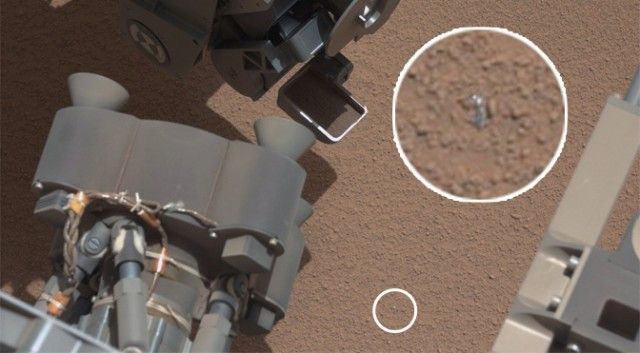
A few hundred million miles away on the surface of the Red Planet, Mars rover Curiosity has discovered... an unidentified, shiny, metallic object.

Now, before you get too excited, the most likely explanation is that bright object is part of the rover that has fallen off - or perhaps some debris from MSL Curiosity's landing on Mars, nine weeks ago.

There is the distinct possibility, however, that this object is actually native to Mars, which would be far more exciting. It could be the tip of a larger object, or perhaps some kind of exotic, metallic Martian pebble (a piece of metal ore, perhaps).

Info

'Jurassic Park' extraction may be impossible, but fossil DNA lasts longer than thought

Moa
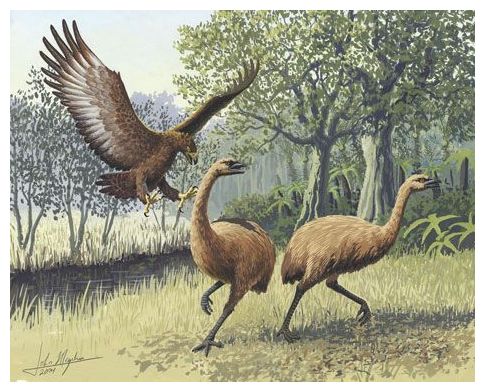
© John MegahanAn artist's rendition of an eagle attacking two extinct New Zealand moa.
In Jurassic Park, scientists extract 80-million-year-old dino DNA from the bellies of mosquitoes trapped in amber. Researchers may never be able to extract genetic material that old and bring a T. rex back to life, but a new study suggests DNA can survive in fossils longer than previously believed.

The oldest DNA samples ever recovered are from insects and plants in ice cores in Greenland up to 800,000 years old. But researchers had not been able to determine the oldest possible DNA they could get from the fossil record because DNA's rate of decay had remained a mystery.

Now scientists in Australia report they've been able to estimate this rate based on a comparison of DNA from 158 fossilized leg bones from three species of the moa, an extinct group of flightless birds that once lived in New Zealand. The bones date between 600 and 8,000 years old and importantly all come from the same region.

Temperatures, oxygenation and other environmental factors make it difficult to detect a basic rate of degradation, researcher Mike Bunce, from Murdoch University's Ancient DNA lab in Perth, explained in a statement.

"The moa bones however have allowed us to study the comparative DNA degradation because they come from different ages from a region where they have all experienced the same environmental conditions," Bunce said.