© My Modern Met
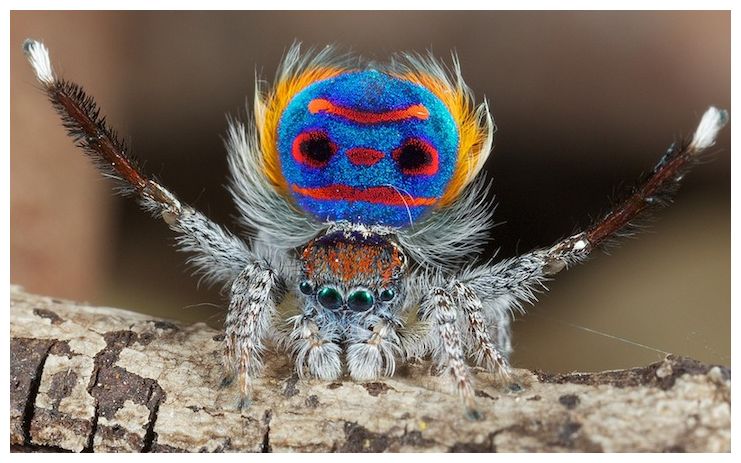
Like male peacocks with their exuberant tail feathers, the male peacock spiders are equipped with beautifully colorful flaps that rise up like a fan, displaying an unbelievable radiance and richness in breathtaking patterns. The males of this species are the only gender with colorful flaps so as to attract the females. They put on a bit of a show to win them over. Otto manages to capture these stunning spiders up-close just as they partake in an elaborate mating ritual.
As can be observed through these collection of photos, the spider peacock's performance involves revealing its colorful extensions. Additionally, the spider raises two legs and vibrates while shifting from side to side, in an attempt to woo its female counterpart. Unfortunately, if the dance does not impress the female spider, the male could wind up becoming the female's prey. Be sure to check out Otto's video, below, displaying the exotic creature's incredible process.