Science & TechnologyS


Solar Flares

Electric universe: Sun-diving comet unleashes solar flare

Image
© Spaceweather.comIn these time-lapse images from a sun-monitoring satellite, a massive cloud of charged particles is hurled off the sun this week only hours before a tiny comet makes a death dive towards the sun.
A tiny comet's spectacular death dive into the sun has been captured by cameras aboard NASA's SOHO (Solar and Heliospheric Observatory) sun-monitoring satellite this week.Click here for the animation.

In the early hours of Tuesday, August 20, a comet estimated to be only a few tens of meters across made the kamikaze dive and did not seem to survive it's fiery encounter. (See also Comet Seen Vaporizing in Sun's Atmosphere - A First)

If you look at the lower right corner of the last few frames in the above movie, which was created from individual snapshots from SOHO, you can watch the icy interloper quickly vaporize while producing a thin-long trail behind it as it plunges into the sun.

Comment: Indeed, Lovejoy did what their theories say it shouldn't have done: the 'dirty snowball' didn't melt as it passed through one end of the sun and out the other side!


Comet

Largest piece so far of Chelyabinsk meteorite found - scientists

Chelyabinsk meteorite
© Ria NovostiLargest Piece So Far of Chelyabinsk Meteorite Found – Scientists
Russian scientists have confirmed the authenticity of a 3.4-kilogram (7.5-pound) fragment of the Chelyabinsk meteorite - the largest piece found so far from the meteorite that hit the Urals region in February.

An unnamed resident of the Chelyabinsk region in Russia's Urals found the fragment near the village of Timiryazevsky and submitted it for analysis and authentication to Chelyabinsk State University.

"Yes, it is a meteorite. This is the largest [Chelyabinsk] fragment analyzed so far by scientists," Andrei Kocherov, an official from the university, told RIA Novosti.

The lucky owner was given an official certificate confirming the authenticity of the celestial fragment, Kocherov said.

Question

Fairy circle mystery gets new explanation

Fairy Circle
© ScienceNow
Every time a scientist thinks he's solved the mystery of the fairy circles, someone else comes up with another answer. The bare, circular patches of land - some as wide as a helicopter landing pad and ringed by a border of tall grasses - freckle the landscape from Angola to South Africa. In 2012, a researcher claimed the circles were "alive," finding that they appeared and disappeared at regular intervals; he saw no evidence that insects or lack of nutrients were causing the formations. But in March, another researcher blamed termites, citing termite tunnels and specimens that he found within the circles.

Now, there's a new hypothesis.

Info

A blood test for suicide?

Suicide Warning
© Jupiter Images/ThinkstockAdvanced warning. Do early signs of suicide risk run in the blood?
What if a psychiatrist could tell whether someone was about to commit suicide simply by taking a sample of their blood? That's the promise of new research, which finds increased amounts of a particular protein in the bloodstream of those contemplating killing themselves. The test was conducted on only a few people, however, and given that such "biomarkers" often prove unreliable in the long run, it's far from ready for clinical use.

Suicide isn't like a heart attack. People typically don't reveal early symptoms to their doctor - morbid thoughts, for example, instead of chest pain - and there's no equivalent of a cholesterol or high blood pressure test to identify those at most risk of killing themselves. "We are dealing with something more complex and less accessible," says Alexander Niculescu III, a psychiatrist at the Indiana University School of Medicine in Indianapolis. So some researchers are eager to find physical signs, called biomarkers, that can be measured in the bloodstream to signal when a person is at a high likelihood of committing suicide.

Over the past decade, Niculescu and his colleagues have been refining a method for identifying biomarkers that can distinguish psychological states. The technique depends on blood samples taken from individuals in different mental states over time - for example, from people with bipolar disorder as they swing between the disorder's characteristic high and low moods. The researchers test those samples for differences in the activity, or expression, of genes for of different proteins. After screening the blood samples, the scientists "score" a list of candidate biomarker genes by searching for related results in a large database of studies by other groups using a program that Niculescu compares to the Google page-ranking algorithm. In previous published studies, Niculescu and other groups have used the technique to probe for biomarkers in disorders such as bipolar disorder, psychosis, and alcoholism.

Info

Oceanic black holes found in Southern Atlantic

Black Hole
© Alain RSimulation of the distortions in space time caused by a black hole.
Black holes are a tear in the fabric of space-time from which nothing escapes, not even light. They take on a mythic significance in popular culture as portals to alternate dimensions or grave threats to space travel. Astronomers are certain they exist out there in the universe, formed by the collapse of dead stars.

Now, physicists have found mathematical analogs to black holes here on Earth, specifically in the southern Atlantic Ocean where eddies whirl about. The work was posted to arXiv and reported first by the The Physics arXiv Blog.

Satellite

NASA astronaut spots Russian 'UFO' near space station

Image
© RIA NovostiInternational Space Station (ISS)
A NASA astronaut reported an unidentified flying object outside the International Space Station (ISS), which was later identified as an antenna shield from the ISS' Russian module.

Astronaut Chris Cassidy recorded the object flying near the Progress cargo ship docked to the ISS and alerted ground controllers Monday.

Comet 2

Sundiving Comet

A small comet is diving toward the sun today, and it is visible in SOHO coronagraphs. Click here to see the death plunge in action:

Sundiving Comet
© SpaceWeatherAnimated Image Here
The tadpole-shaped comet vaporizing furiously as it approaches the sun. It is probably too small to survive closest approach, but we won't know for sure until the encounter actually happens later today or tomorrow. Join SOHO for a ringside seat.

The comet appears to be a member of the Kreutz family. Kreutz sungrazers are fragments from the breakup of a single giant comet many centuries ago. They get their name from 19th century German astronomer Heinrich Kreutz, who studied them in detail. Several Kreutz fragments pass by the sun and disintegrate every day. Most, measuring less than a few meters across, are too small to see, but occasionally a bigger fragment like this one attracts attention.

Laptop

Google, Russian senators to talk data protection

Image
© AFP 2013/ POOL/ Robert GalbraithGoogle, Russian Senators to Talk Data Protection
A delegation of tech giant Google will arrive in Russia in mid-September to discuss the data protection of Gmail users in Russia, a Russian lawmaker said on Sunday.

"In mid-September we expect the delegation representatives from the United States," Senator Ruslan Gattarov, who chairs the commission on the information society development in the Federation Council, the upper house of the Russian parliament, said.

In his letter to the head of Google Russia, Gattarov said that Google's official position on the issue, according to media reports, is that it "reserves the right to get access to correspondence of Gmail users and to use these data," adding that this violates Russia's personal data protection legislation and the constitution.

Comet

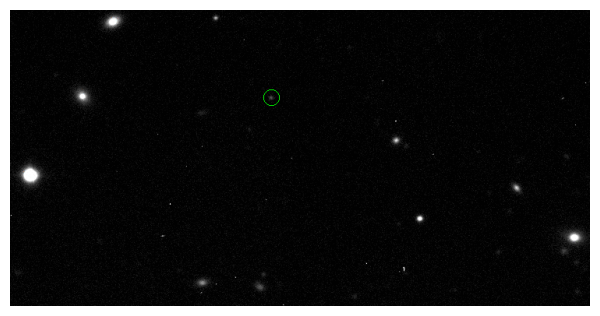
New comet discovered: C/2013 P3 (Palomar)

Discovery Date: August 9, 2013

Magnitude: 18.9 mag

Discoverer: Palomar Transient Factory

C/2013 P3
© Aerith NetMagnitudes Graph
The orbital elements are published on M.P.E.C. 2013-Q02.

Fish

What's this mysterious circle on the seafloor?

What creates mysterious circles on the seafloor? No, it's not aliens of the deep - it's actually pufferfish hoping to snag a mate, a new study says.

Divers first noticed the 6.5-foot-wide (2-meter-wide) circular structures near Japan's Amami-Oshima Island about 20 years ago. But no one knew how these so-called mystery circles were constructed - or what was creating them - until now.
Image
© Kimiaki ItoA male pufferfish (center) made this nest to lure females in Japan in 2012.
The circles, scientists say, are actually nests created by male pufferfish, which spend about ten days carefully constructing and decorating the structures to woo females. What's more, this industrious pufferfish is thought to be a new species in the Torquigener genus, according to the study, published July 1 in the journal Scientific Reports.

Nesting Instinct

The male fish, which measures less than 5 inches (13 centimeters) long, first uses his body to create peaks and valleys in the sandy bottom around a central circle of smooth sand. He accomplishes this feat by swimming in toward the center of the circle in a straight line and then back around the center in a circular motion. (Watch a pufferfish video.)

Before the female fish arrive to inspect his handiwork, the male forms irregular patterns in the fine sand particles of the central circle. He also decorates the peaks of the outer portion with shell and coral fragments.