Science & TechnologyS


Arrow Down

Motorola wants you to tattoo a smartphone microphone onto your throat

Microphone
© Engadget
Okay, where to start on this one? Simply put, Motorola has applied for a patent of a microphone with a tranceiver and power supply that is designed to be tattooed onto your throat. The idea is to capture vibrations directly from your larynx in order to cut out background noise -- while eliminating something else you could lose, we imagine.

The skin-borne device could communicate with your handset or other portable device by Bluetooth, NFC or other wireless protocols and would pack a battery that "may or may not be rechargeable." The patent adds that the technology could also be applied to "other animals," so we're a bit concerned that Motorola is taking its wearable schemes in the wrong direction.

Source: USPTO

Telescope

NASA's Hubble sees 'asteroid' spouting six comet-like tails "dust radiating from it like spokes on a wheel"

Astronomers viewing our solar system's asteroid belt with NASA's Hubble Space Telescope have seen for the first time an asteroid with six comet-like tails of dust radiating from it like spokes on a wheel. Unlike all other known asteroids, which appear simply as tiny points of light, this asteroid, designated P/2013 P5, resembles a rotating lawn sprinkler. Astronomers are puzzled over the asteroid's unusual appearance.

"We were literally dumbfounded when we saw it," said lead investigator David Jewitt of the University of California at Los Angeles. "Even more amazing, its tail structures change dramatically in just 13 days as it belches out dust. That also caught us by surprise. It's hard to believe we're looking at an asteroid."
Image
© NASA

Comment: See also:

Rare 'asteroid' sporting tail spotted

Crashed asteroid has a tail that keeps getting longer

Asteroid 3200 Phaethon behaving like a comet

The evidence is staring them in the face, but because they cling to the old assumptions, they are unable to see that all space rocks can become electrically charged in an Electric Universe!

To learn the truth about asteroids and comets, get your copy of The Apocalypse: Comets, Asteroids and Cyclical Catastrophes, by Laura Knight-Jadczyk.


Beaker

Genome hacker uncovers largest-ever family tree linking 13 million people

Image
© Andrew Bret Wallis/Getty Images
Gigantic genealogy linking 13 million people sheds light on how genes influence complex traits.

Using data pulled from online genealogy sites, a renowned 'genome hacker' has constructed what is likely the biggest family trees ever assembled. The researcher and his team now plan to use the data - including a single uber-pedigree comprising 13 million individuals, which stretches back to the fifteenth century - to analyse the inheritance of complex genetic traits, such as longevity and fertility.

In addition to providing the invitation list to what would be the world's largest family reunion, the work presented by computational biologist Yaniv Erlich at the American Society of Human Genetics annual meeting in Boston could provide a new tool for understanding the extent to which genes contribute to certain traits. The pedigrees have been made available to other researchers, but Erlich and his team at the Whitehead Institute in Cambridge, Massachusetts, have stripped the names from the data to protect privacy.

Comet

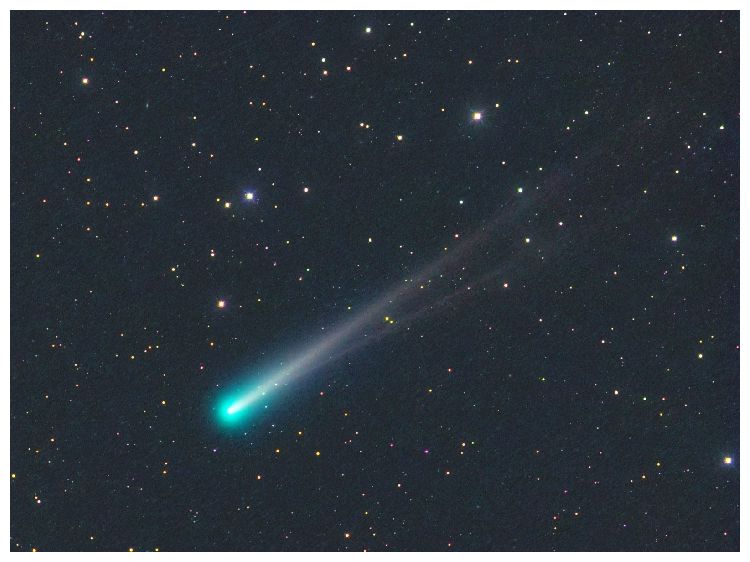
New Comet: C/2013 V1 (BOATTINI)

Cbet nr. 3689, issued on 2013, November 06, announces the discovery of a new comet (discovery magnitude ~15.6) by A. Boattini on CCD images obtained with the Catalina Sky Survey's 0.68-m Schmidt telescope. The new comet has been designated C/2013 V1 (BOATTINI).

We performed follow-up measurements of this object, while it was still on the neocp. Stacking of 3 R-filtered exposures, 20-sec each, obtained remotely from MPC code Q62 (iTelescope Observatory, Siding Spring) on 2013, November 05.75 through a 0.50-m f/6.8 astrograph + CCD + f/4.5 focal reducer, shows that this object is a comet: diffuse coma about 18" in diameter.

We imaged again this object on 2013, November 06.35 remotely from MPC code H06 (iTelescope Observatory, New Mexico) through a 0.50-m f/6.8 astrograph + CCD + f/4.5 focal reducer. The comet is showing a nice curved tail ~1' long in p.a. 240 deg. Below our image of November 06. Click on it for a bigger version.
C/2013 V1
© Remanzacco Observatory
M.P.E.C. 2013-V32 assigns the following preliminary parabolic orbital elements to comet C/2013 V1: T 2014 Apr. 8.42; e= 1.0; Peri. = 50.83; q = 1.50; Incl.= 62.39

Eye 1

Big Brother blinded: Smog disrupts surveillance cameras in China

Image
© China Foto PressAs well as health issues, heavy smog in cities such as Jilin is creating serious security concerns for authorities.
Teams of scientists assigned to find a solution as heavy pollution makes national surveillance network useless, raising fear of terror attack

To the central government, the smog that blankets the country is not just a health hazard, it's a threat to national security.

Last month visibility in Harbin dropped to below three metres because of heavy smog. On days like these, no surveillance camera can see through the thick layers of particles, say scientists and engineers.

To the authorities, this is a serious national security concern. Beijing has invested heavily to build up a nationwide surveillance network that lets police watch every major street and corner in main cities.

But with smoggy days becoming more frequent, the effectiveness of the system has been greatly compromised. Some fear terrorists may choose a smoggy day to launch attacks.

Kong Zilong, a senior project engineer with Shenzhen Yichengan Technology and an expert in video surveillance technology, said the security devices that could function in heavy smogs had yet to be invented.

Blue Planet

New NASA map shows where you are most likely to die from air pollution

Image
© Map made by NASA’s Robert Simmon based on data from Jason West
Each year millions of premature deaths world-wide result from various forms of air pollution. According to a new atmospheric pollution model designed by earth scientist Jason West of the University of North Carolina (data from which informs the NASA map shown above), some 2.1 million deaths per year result from just one particular form of atmospheric pollution: fine particulate matter, or PM2.5, which is emitted in car exhaust and smokestack effluent (and other industrial, domestic and natural sources).

In general, these polluting particles in the atmosphere are referred to as aerosols (a mixture of particulate matter and air). Aerosols can take the form of suspended particulate matter (SPM), respirable suspended particles (RSP), which are particles with a diameter of 10 micrometers (microns) or less, and, the aforementioned fine PM2.5...the '2.5′ refers to particles of 2.5 microns or less and may include ultrafine particles, and some forms of soot (such as black carbon soot from cooking stoves and biomass burning).

Sometimes transient, natural, meteorological conditions combine with human pollution, resulting in "extreme outbreaks of air pollution." For example, in January, 2013, a blanket of industrial pollution enveloped northeastern China, and, in June, 2013, smoke from agricultural fires in Sumatra engulfed Singapore.

Network

Coast Guard visits mysterious 'Google barge'


The Coast Guard on Wednesday visited the mysterious "Google barge" floating in San Francisco Bay, but the agency would not reveal anything about the tech giant's hush-hush vessel.

Google has refused to acknowledge any connection to the barge and three others like it. But it is zealously guarding its privacy around the four-story stack of containers docked at a pier on Treasure Island and a companion in Portland, Maine.

At least one Coast Guard employee has been required to sign a non-disclosure agreement with the company regarding the San Francisco project, Petty Officer 2nd Class Barry Bena told Reuters. An inspector with an unidentified California agency said he, too, had to sign such a document.

Sun

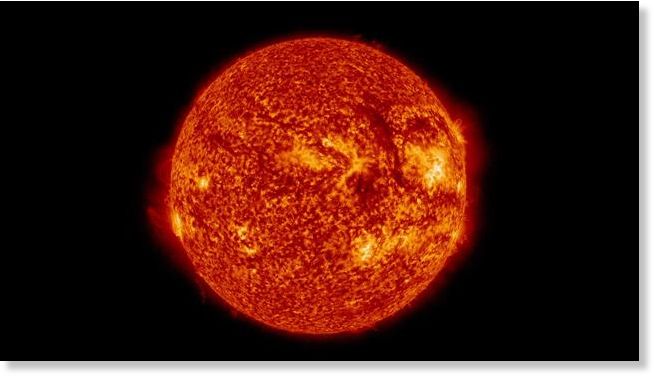
Sun sent 28 solar flares erupting through space in a week... and there may be more on the way

Image
© NASA SDOViolent: The fourth of the Sun's massive X-class flares in a fortnight, which peaked on October 29 is pictured. The image by NASA's Solar Dynamics Observatory shows light in wavelengths of both 304 and 193 Angstroms

More than two dozen solar flares have erupted from the Sun in the past seven days, catapulting radiation towards the Earth that could potentially play havoc with global communications.

The U.S. National Oceanic and Atmospheric Administration issued four radio blackout warnings in the past two days after solar weather suddenly turned turbulent.

Radiation from flares cannot penetrate Earth's atmosphere to harm life on the ground, but when intense enough it can disturb the atmosphere in the ionosphere, where GPS and radio signals travel.

Since October 23 the Sun has let loose with 24 medium-strength M-class solar flares, and four X-class flares - the most powerful kind.

In fact, with our local star heading towards the peak of its 11-year cycle, a period known as the solar maximum, this shouldn't be unusual. But lead up to the solar max has been unusually subdued this year.

Info

Girls reaching puberty earlier, study finds

Classroom
© Shutterstock

Many girls in the U.S. may be entering puberty at younger ages now than in previous decades, and obesity appears to be the major factor contributing to this shift, a new study finds.

The researchers looked at more than 1,200 girls ages 6 to 8 in the San Francisco area, the Cincinnati area and New York City, and examined them multiple times between 2004 and 2011. Entering puberty was defined as the age at which a girl's breasts started to develop.

The results showed that white girls entered puberty on average at 9.7 years old, which is three to four months younger than the average age reported by scientists in a 1997 study, and much younger than the average age suggested by data from the 1960s.

Black girls started puberty at 8.8 years old on average, which was not different from the results of the previous study. The average age of entering puberty for Hispanic girls was 9.3 years, and 9.7 years for Asian girls, the researchers found.

In line with previous studies, the researchers also found that obesity was strongly linked to early puberty, and girls with higher body mass indexes (BMIs) were more likely to have reached puberty at younger ages, according to the study published today (Nov. 4) in the journal Pediatrics.

2 + 2 = 4

Train the brain: Using neurofeedback as a treatment for ADHD

ADHD
© Katherine EllisonKatherine Ellison and her son, whom she refers to as "Buzz" in her book, both have ADHD. Buzz was diagnosed at age 12.
Katherine Ellison 's son was 12 when he was diagnosed with attention deficit hyperactivity disorder, or ADHD.

"He was getting into fights. He wasn't doing his homework. He was being very difficult with his little brother. And he was just melting down day after day," Ellison says. "So I decided to devote a year to trying out different approaches to see if we could make it any better."

In recent years, more people have been trying an alternative approach called neurofeedback, a type of therapy intended to teach the brain to stay calm and focused. Neurofeedback is expensive, time consuming and still scientifically unproved. But, there's growing evidence that it can help.

Ellison says the idea appealed to her immediately.

"Because I was always wary about using meds as a single approach or for very long, it seemed to be an interesting alternative. It's really like meditation on steroids," says Ellison, a journalist who won a Pulitzer Prize for International Reporting - and who has ADHD herself.

Ellison has written a book about living with ADHD called Buzz: A Year of Paying Attention. And one chapter of the book is devoted to neurofeedback.