Science & TechnologyS


Fish

SOTT Focus: Farewell to 'psychic research'?

Cosmos. Earth. Man.

Four weeks ago I ordered the book "Cosmos. Earth. Man" by A. G. Parkhomov[1]. Two days ago it arrived from Moscow.

Cosmos. Earth. Man. by A. G. Parkhomov
I was excited. I started reading it right away.... the last chapter first. Actually, I read the back cover first, so let me quote from that so you'll have an idea of where we might be going today.
Aleksandr Georgievich Parkhomov (Александр Георгиевич Пархомов) completed his education at the Moscow Engineering Physics Institute. He then worked at the Division of Radiation Physics of this institute. He directed the research group investigating of the properties of ultra-weak neutrinos at the Moscow Aviation Institute. He is Professor of the International Slavic Academy, Head of the Laboratory ''Rhythms and Fluctuations" of the Institute for Time Nature Explorations and author or co-author of more than 130 scientific publications.
A. G. Parkhomov
A. G. Parkhomov
Parkhomov's scientific career is very different from my own. He is mainly an experimental physicist, dealing first of all with facts and data and trying to understand them using the simplest possible explanations. Only when they fail would he then look for more sophisticated explanations. He has almost twice as many scientific publications as I do! And yet, in spite of these differences there is something that we both share: scientific curiosity that drives one to seek scientific explanations of the unexplained. That is what I was always looking for: the high-level scientific research into "paranormal" stuff. That is why I started reading his book from the last chapter, Ch. 4, entitled "Where physics is powerless". He has done what I always wanted to do (but never did): real, first-hand research, rather than just speculations.

The first three chapters of the book deal with those phenomena where physics still has something to say, some explanatory ability: all kinds of radiations and their strange properties, radioactivity, electronics, physical and chemical reactions of biological systems, noise, information, dark matter and dark energy, neutrinos etc.; all relatively normal. But the last chapter describes his experimental research into "psychic" phenomena. It also describes his conclusions.

So, let me start with a description of just one type of experiment that needed to be done at the early stage of this research, probably the least spectacular.

Satellite

'Gravity Waves' in Venus clouds spotted by spacecraft

venus gravity waves 1
© UnknownThe European Space Agency's Venus Express orbiter have has spotted many small-scale 'gravity' wave trains in the planet's clouds. The waves are mostly found at high northern latitudes, particularly above Venus' Ishtar Terra
A European spacecraft circling Venus has captured high-resolution images of strange waves in the clouds whirring above Earth's nearest neighbor. These ripples could help scientists understand how Venus' hellish surface shapes its atmosphere.

On Venus, mountains and volcanoes rise above vast lava plains and temperatures are hot enough to melt lead. But this hostile landscape is largely obscured by the planet's dense, toxic atmosphere with clouds blown by winds up to 186 to 248 mph (300 to 400 km/h).

The European Space Agency's Venus Express snapped images of gravity waves in those clouds. Not to be confused with ripples in space and time known as gravitational waves, the gravity waves in a planet's atmosphere can occur when winds whip over geological features like a mountain's face or crater wall and the updraft rises and sinks in a layer of stable air above. Condensation in the rising air can produce clouds, creating a pattern of waves moving in the same direction, spaced at regular intervals.

Scientists looking at Venus Express data confirmed that gravity waves in Venus' clouds are concentrated near the planet's high northern latitudes, especially above Ishtar Terra, one of two continental landmasses on Venus, which is about the size Australia. These patterns occur in the planet's uppermost clouds, some 37 to 43 miles (60 to 70 km) high.

"We believe that these waves are at least partly associated with atmospheric flow over Ishtar Terra, an upland region which includes the highest mountains on Venus," researcher Silvia Tellmann of the University of Cologne said in a statement from ESA. "We don't yet fully understand how such topographic forcing can extend to high levels, but it seems likely to be one of the key processes for the generation of gravity waves at high northern latitudes on Venus. The waves may form when a stable air flow passes over the mountains."

Bizarro Earth

New Madrid fault zone alive and active

Madrid Fault
© AP Photo/U.S. Geological Survey,FileThis undated photo provided by the U.S. Geological Survey shows a landslide trench and ridge east of Reelfoot Lake in Obion County, Tenn., made by the New Madrid earthquakes in the early 1800s. U.S. Geological Survey scientists reported Thursday Jan. 23, 2014 that the New Madrid fault zone is still active and could unleash future powerful earthquakes. The zone in the U.S. Midwest produced three strong quakes in 1811 and 1812.
The New Madrid fault zone in the nation's midsection is active and could spawn future large earthquakes, scientists reported Thursday.

It's "not dead yet," said U.S. Geological Survey seismologist Susan Hough, who was part of the study published online by the journal Science.

Researchers have long debated just how much of a hazard New Madrid (MAD'-rihd) poses. The zone stretches 150 miles, crossing parts of Arkansas, Illinois, Indiana, Kentucky, Mississippi, Missouri and Tennessee.

In 1811 and 1812, it unleashed a trio of powerful jolts - measuring magnitudes 7.5 to 7.7 - that rattled the central Mississippi River valley. Chimneys fell and boats capsized. Farmland sank and turned into swamps. The death toll is unknown, but experts don't believe there were mass casualties because the region was sparsely populated then.

Meteor

NASA's NeoWise telescope finds three massive asteroids "hundreds of meters in diameter and black as coal"

Nasa has reactivated a space telescope only to discover three new, "coal black" asteroids near to the Earth. The re-awoken Wide-field Infrared Survey Explore telescope (NeoWise), which entered hibernation in early 2011, has detected 857 "minor bodies" in our Solar System in 25 days, Nasa said. They include four comets, and 22 Near Earth Objects (NEOS), of which three are large asteroids "hundreds of meters in diameter and black as coal".
Image
© NASAMore than 100 asteroids were captured in this view from NASA's Wide-field Infrared Survey Explorer, or WISE, during its primary all-sky survey.
So far there is no indication that any of those asteroids will hit the Earth any time soon - but it is a reminder that there are still many, many things in nearby space that we either haven't seen, or haven't measured. NeoWise gives Nasa the ability to measure the position and brightness of objects in the Solar System in a more precise and complete manner than previously.

Nasa said that of the 10,500 NEOs so far known about, only 10% have been measured. NeoWise will double that number to about 20%. Better, but probably not that reassuring in the long run. Still, it's a start. Head over to Nasa for more details about the NeoWise mission.

Info

Massachusetts physicist claims he solved mystery of how life emerged from matter

Matter
© Reuters/Toby Melville
The origin of life is often attributed to luck or labeled as some kind of miracle, but one physicist believes that under the right conditions the creation of life is predictably unavoidable.

According to Jeremy England, an assistant professor at the Massachusetts Institute of Technology, matter naturally reorganizes itself to acquire the crucial physical characteristic of life - the ability to disperse great quantities of energy - when driven by an outside source such as the sun and bathed in the right atmospheric or oceanic conditions.

As the 31-year-old physicist explained to the science publication Quanta Magazine, if that's the case, if matter consistently changes to disperse more and more energy, then the existence of life "should be as unsurprising as rocks rolling downhill."

"You start with a random clump of atoms, and if you shine light on it for long enough, it should not be so surprising that you get a plant," England said.

The new theory posits that matter is most likely to react to the external energy sources that are bearing down on it. If a particular energy source is constantly surrounding a group of atoms, over time they will inevitably restructure themselves to better consume and disperse the energy around them. This process, England proposes, is the driving force that ultimately led to life.

Comet

Mainstream science slowly catching on: a comet may have caused the winter of 536 to last for 10 years

Game of thrones
Winter is coming....
Oh, that's why it's called the Dark Ages

General consensus is that the Dark Ages were the worst of all the ages. Unicorns went extinct, you were either a witch or had the plague, and oh yeah, winter lasted for ten years once.

A recent article in New Scientist is giving some scientific validity to the big chill recounted in ancient medieval texts such as this one:
"And it came about during this year that a most dread portent took place. For the sun gave forth its light without brightness, like the moon, during this whole year, and it seemed exceedingly like the sun in eclipse, for the beams it shed were not clear nor such as it is accustomed to shed" - Procopius (Wars, 4.14.5)

Comment: Back in 2004 another team of scientists came to this conclusion and gave even more information:
The surprising result of the new work is just how small a comet is needed to cause such dramatic effects. The scientists calculate that a comet not much more than half a kilometre across could cause a global nuclear winter effect. This is significantly smaller than was previously thought.

Dr. Ward-Thompson said: "One of the exciting aspects of this work is that we have re-classified the size of comet that represents a global threat. This work shows that even a comet of only half a kilometre in size could have global consequences. Previously nothing less than a kilometre across was counted as a global threat. If such an event happened again today, then once again a large fraction of the earth's population could face starvation."

The comet impact caused crop failures and wide-spread starvation among the sixth century population. The timing coincides with the Justinian Plague, widely believed to be the first appearance of the Black Death in Europe. It is possible that the plague was so rampant and took hold so quickly because the population was already weakened by starvation.


Info

What is Adam's rightful place in evolutionary history?

Chromosomes
© Thinkstock
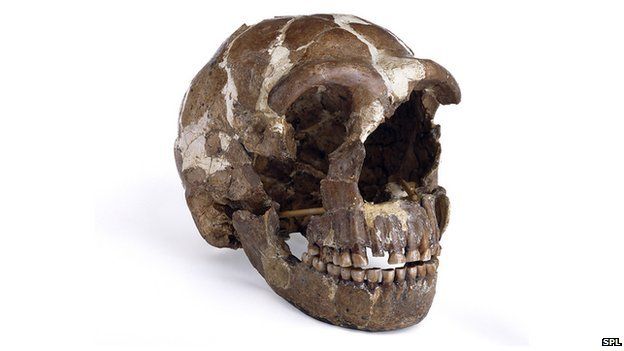
Our most common male ancestor walked the earth 209,000 years ago - earlier than scientists commonly thought - according to new research from the University of Sheffield.

The pioneering study, conducted by Dr Eran Elhaik from the University of Sheffield and Dr Dan Graur from the University of Houston, also debunked the discovery of the Y chromosome that supposedly predated humanity.

In the new research, published in the European Journal of Human Genetics, Dr Elhaik and Dr Graur used conventional biological models to date our most common male ancestor 'Adam' in his rightful place in evolutionary history. The ground breaking results showed that this is 9,000 years earlier than scientists originally believed.

Their findings put 'Adam' within the time frame of his other half 'Eve', the genetic maternal ancestor of mankind. This contradicts a recent study which had claimed the human Y chromosome originated in a different species through interbreeding which dates 'Adam' to be twice as old.

Debunking unscientific theories is not new to Dr Elhaik. Earlier this year he debunked Hammer's previous work on the unity of the Jewish genome and together with Dr Graur they refuted the proclamations made by the ENCODE project on junk DNA.

Galaxy

Exploding star suddenly appears in the night sky- a supernova 'Holy Grail'

An exploding star has suddenly appeared in the night sky, dazzling astronomers who haven't seen a new supernova so close to our solar system in more than 20 years.

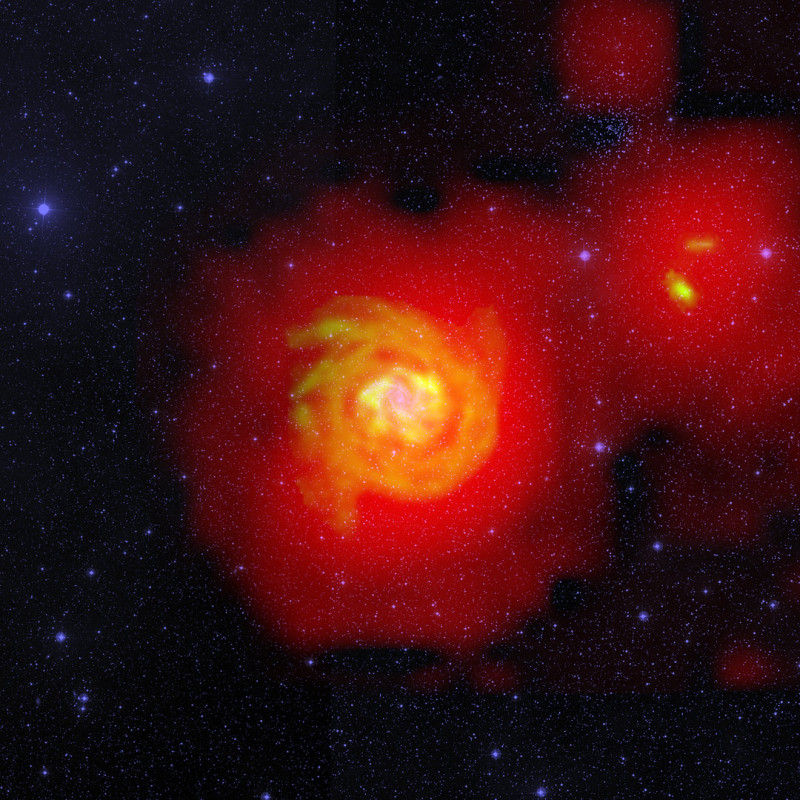
In just the last few days, a the supernova emerged as a bright light in Messier 82 - also known as the Cigar Galaxy - about 12 million light-years away in the constellation Ursa Major, or the Great Bear. The supernova, which one astronomer described as a potential "Holy Grail" for scientists, was first discovered by students at the University College London.

Positioned between the Big Dipper and the Little Dipper, the new supernova should be easy for skywatchers in the Northern Hemisphere to spot; it may even brighten enough to be visible through a small pair of binoculars, said astronomer Brad Tucker, of the Australian National University and the University of California, Berkeley. Beyond creating a skywatching spectacle, the cosmic event may also afford astronomers a rare opportunity to study an object that might help them understand dark energy.
Image
© UCL/University of London Observatory/Steve Fossey/Ben Cooke/Guy Pollack/Matthew Wilde/Thomas WrightThis comparison image shows a supernova suddenly appearing in the nearby galaxy M82.

Comet 2

Is first 'asteroid' discovered in modern times, Ceres, turning into a 'comet'? Solar system's 'biggest' asteroid is 'spewing jets'

Image
Ceres: Asteroid, planet, comet, moon? Do official scientists really have any clue?
Observations of the Solar System's biggest asteroid suggest it is spewing plumes of water vapour into space.

Ceres has long been thought to contain substantial quantities of ice within its body, but this is the first time such releases have been detected.

The discovery was made by Europe's infrared Herschel space telescope, and is reported in the journal Nature.

Scientists believe the vapour is coming from dark coloured regions on Ceres' surface, but are not sure of the cause.

One idea is that surface, or near-surface, ice is being warmed by the Sun, turning it directly to a gas that then escapes to space.


Comment: This is absurd. If it is water and ice they're seeing, it cannot be "warmed" into a gas in the near-absolute zero of space! Ceres would have no atmosphere, remember?...


Comment: Since when is it "widely known" that asteroids hold water?

Until ten years ago, these same scientists believed water was only found on Earth!

Far more likely is that Ceres is electrically discharging...

Why didn't Comet ISON melt in the Sun? How NASA and Official Science got it all wrong (again)


Ice Cube

Why did Antarctic expedition ship get stranded in ice?

Image
The Akademik Shokalskiy was trapped in thick ice for 10 days
BBC producer Andrew Luck-Baker was on board a Russian research vessel when it became trapped in pack ice over Christmas. Here, Andrew, who was covering an expedition for the BBC World Service's Discovery programme, examines the events that led up to the ship being stranded.

As the members of the Australasian Antarctic Expedition (AAE) reach the end of their travels together, investigations will soon begin to establish why their Russian expedition ship, the MV Akademik Shokalskiy, became trapped in thick and extensive pack ice for 10 days.

The ship's entrapment at Christmas time led to an Australian icebreaker being diverted from its own operations hundreds of kilometres along the coast and a Chinese icebreaker also coming to the rescue.

That vessel ended up stuck in the ice itself for many days. A smaller French icebreaker ship was also summoned to the scene. It retreated when it became clear that the ice was much too thick for it to help.

The 52 members of the Australasian Antarctic Expedition were trapped until 2 January when a helicopter team from the Chinese vessel airlifted the scientists, tourists and operational staff to the Aurora Australis.

The expedition leaders could have some tough questions to face about logistical shortcomings that may have put the vessel at increased risk of becoming trapped. These were operational errors and mishaps during a visit by scientists and tourists to a location close to the Antarctic shore on 23 December.

Ship insurance companies along with the Australian Maritime Rescue Coordination Centre will be keen to establish what happened and whether human error contributed to the Akademik Shokalskiy becoming encased.

Comment: This silly tourist expedition put many people in danger and disrupted serious scientific research programs:
French Le Monde blasts Chris Turney's Antarctic joy ride for disrupting real Antarctic science!
Rescue efforts for trapped Antarctic voyage disrupt serious science
Ship of fools: Icebound expeditioners apologise for Antarctic rescue mission
'Stuck in our own experiment': Leader of trapped team insists polar ice is melting against evidence of his own experience