Science & TechnologyS


Telescope

Controversy reignites over distance of Pleiades star cluster

Pleiades by Hubble
© NASA/ESA/AURA/CaltechThe Pleiades, also known as the Seven Sisters, in a Hubble Space Telescope image.
New measurement points to possible error in ESA survey that could also affect the agency's new Gaia mission.

The most precise measurement yet of the distance to the Pleiades star cluster is reviving a dispute that has split the astronomy community largely down a trans-Atlantic divide for the past 17 years.

The latest result, from a US team using a worldwide network of radio telescopes, is in good agreement with more than a dozen previous measurements to the Pleiades, made using multiple techniques. But it stands in sharp contrast to a figure from the Hipparcos satellite of the European Space Agency (ESA).

The authors of the latest study, published today in Science, say they believe that the Hipparcos measurement is an error, and worry that the same problem could affect its successor mission, ESA's Gaia space telescope, which began taking data last month. The alternative is even less appealing: if Hipparcos is right, then accepted theories of the physics of stars could require some mending.

Comment: A preprint of the paper published in Science can be read here.


Snowflake Cold

Failed climate prediction: 'World will warm faster than predicted in next five years, study warns'

That now failed headline is from Duncan Clark in the Guardian.
Image
© Wattsupwiththat.com
And, for good measure he added:
"New estimate based on the forthcoming upturn in solar activity and El Niño southern oscillation cycles is expected to silence global warming skeptics"
Just a few small problems there:
  1. Climategate gave skeptics a worldwide voice and stage
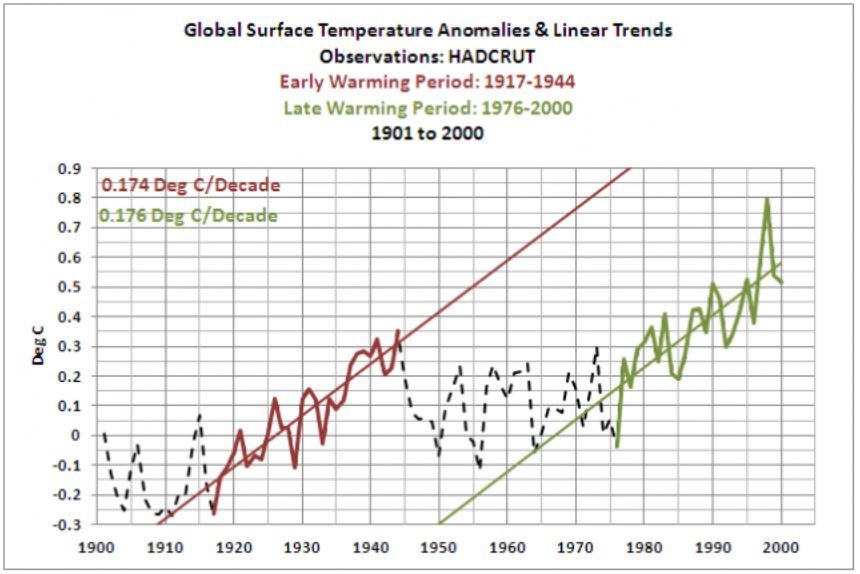
  2. Actual temperature has been flat, not increasing
  3. Actual solar activity has been far lower than predicted, not increasing
  4. What El Niño?
Let's take them one by one.

Fish

Search for secret to everlasting life may be found in 'immortal' jellyfish

Image
For many beach-goers, jellyfish are a nuisance that blights the seashore. But some scientists believe they could hold the key to immortality.
For centuries, man has been on a quest to find the elixir to eternal life. Alchemists struggled fruitlessly to create the legendary philosopher's stone, a mythical substance capable of turning base metals into precious gold and said to hold the key to immortality.

But perhaps they were going about it the wrong way. Instead of searching for answers on land, maybe they should have been looking to the sea.

In the seaside town of Shirahama, in Japan, one man thinks he knows what holds the key to everlasting life: jellyfish.

Moon

The Moon smells: Apollo astronauts describe the odoriferous nature of lunar dirt

Image
© NASAApollo 11 lunar module pilot Buzz Aldrin kicks up moon dust during a moonwalk on NASA"s historic first manned lunar landing mission in July 1969.
The moon has a distinctive smell. Ask any Apollo moonwalker about the odoriferous nature of the lunar dirt and you'll get the same answer.

With NASA's six Apollo lunar landing missions between 1969 and the end of 1972, a total of 12 astronauts kicked up the powdery dirt of the moon, becoming an elite group later to be tagged as the "dusty dozen."

From the modest 2.5 hour "moonwalk" of Apollo 11 to the forays totaling just over 22 hours outside a spacecraft on Apollo 17, NASA's Apollo landing crews could not escape tracking lunar material inside their moon lander homes.

Decades later, moonwalkers and lunar scientists are still trying to appreciate exactly what the moon's aroma brings to the astronaut's nose.

That fresh lunar regolith smell

"All I can say is that everyone's instant impression of the smell was that of spent gunpowder, not that it was 'metallic' or 'acrid'. Spent gunpowder smell probably was much more implanted in our memories than other comparable odors," said Apollo 17's Harrison "Jack" Schmitt, a scientist-astronaut who walked the moon's surface in December of 1972.

Fireball 2

If half of all species go extinct, will humans be next?

Image
© Unknown
How many animal species do you think go extinct every year? Last week I conducted a highly unscientific polling of around 20 of my Facebook and Google Chat contacts, asking that same question. I'm not trying to brag, but I have some really smart friends, many of them with degrees in biology. Typical answers ranged from about 17 to a seemingly ludicrous 400. They were all wrong though - off by orders of magnitude*. In July, a summary article of nearly 80 papers, published in Science, stated that, "Of a conservatively estimated 5 million to 9 million animal species on the planet, we are likely losing ~11,000 to 58,000 species annually."

If that finding is true, then every year, between .12% and 1.16% of all the animals on Earth vanish. Rodolfo Dirzo, the lead researcher on the Science study from Stanford University, points out that we've already lost 40% of the Earth's invertebrate species in the last 40 to 50 years. Almost half the animals without skeletons have gone extinct within half a human lifetime. The wide range of these estimates reflects our own uncertainty on this subject, but even our low-end assessments are alarming.

Bugs and worms are gross, though; who cares if there are fewer spiders in my house now than in the arachnid-infested '60s? Unfortunately the future looks just as bleak for mammals. Dirzo says that if current trends hold, "in 200 years, 50% of the [mammal] species are going to be driven to the very edge of extinction."

Comment: It won't be so easy to ignore. Cyclic cometary bombardments have wiped out this planet before:

Forget About Global Warming: We're One Step From Extinction!

Fireballs reported since June 1, 2014:


Network

GPS shoes: Indian start-up launches shoes that show you the way

"Wizard of Oz" heroine Dorothy only had to click her ruby red slippers together and they would spirit her home to Kansas.

GPS shoes
© UnknownKrispian Lawrence, CEO of Ducere Technologies, tries on a pair of GPS-enabled smart sports shoes called LeChal in his office in Hyderabad on August 11, 2014
Now, an Indian high-tech start-up is promising to do the same in real life with a new, GPS-enabled smart sports shoe that vibrates to give the wearer directions.

The fiery red sneakers, which will also count the number of steps taken, distance travelled and calories burned, will go on sale in September under the name LeChal, which means "take me along" in Hindi.

The shoes come with a detachable Bluetooth transceiver that links to a smartphone app to direct the wearer using Google maps, sending a vibrating signal to indicate a left or right turn.

They are the brainchild of 30-year-old Krispian Lawrence and Anirudh Sharma, 28, two engineering graduates who founded their tech start-up Ducere in a small apartment in 2011 with backing from angel investors and now employ 50 people.

"We got this idea and realised that it would really help visually challenged people, it would work without any audio or physical distractions," said Lawrence in an interview with AFP.

Comment: What about the safety of the patient immersed in wireless technology?

WiFi detrimental to health, New Zealand study suggests

Cell phone could damage your sperm

Cell Phone Use Increases Likelihood of Mouth Cancer


Sun

'Soul of the sun' revealed - deep neutrinos detected for the first time

solar neutrinos detected
© borex.lngs.infn.it
Scientists have for the first time detected the solar neutrino particles forged in the sun's heart that are eventually emitted into the galaxy as light.

More than 100 international scientists from the University of Massachusetts Amherst worked together using the Borexino detector in Italy to make the discovery, which provides humans with a peak into the process of nuclear fusion that is responsible for bathing the Earth with light. The findings were first reported in the latest issue of the Nature journal.

Although it only takes eight minutes for light from the sun to hit Earth, there is a substantially longer process that takes place before that can happen. After the solar neutrinos are formed in the sun's core, another 100,000 years must pass before they make their way to the star's surface and shoot out at the speed of light.

"The first step in the dominant fusion process in the sun starts when two protons in its core fuse into a deuteron, creating a [proton-proton] neutrino," wrote Nola Redd at Space.com. "Other neutrinos are created in subsequent steps of the process, several of which have been detected, but the first-step neutrinos remained elusive."

Now that these neutrinos have been detected, though, scientists are hoping to learn even more about the sun's energy-forming processes.
"[The neutrinos] are the most direct confirmation that nuclear fusion is the source of energy [for the sun]," said Wick Haxton of University of California, Berkeley, to the website.


Comment: Hopefully this research will shed more light on the sun's role in climate change.


Recycle

Rainforest fungus capable of eating plastic pollution

Image
© pmf.sc.gov.br
One of the biggest problems facing the earth, plastic pollution, could soon meet its match if students at Yale University are able to breed a recently discovered plastic-eating fungus on a large scale.

Plastic pollution, exemplified by the giant floating island of trash the size of Texas in the Pacific ocean, is highly detrimental to the world's ecosystem because it breaks down extremely slow. In fact, according to the National Center for Biotechnology Information, plastic doesn't actually biodegrade:
"Plastics do not biodegrade, although, under the influence of solar UV radiations, plastics do degrade and fragment into small particles, termed microplastics."
This presents humans with a challenge that must soon be met, considering much of our plastic trash ends up in the ocean where it breaks down into toxic microplastics, winding up in sea life. Not only is this dangerous to the sea life, but it's also dangerous to people because we end up consuming these very fish which we are poisoning with our trash.

Telephone

How nerve cells communicate with each other over long distances: Travelling by resonance

Image
© Gunnar Grah/BrainLinks-BrainToolsResonance in the activity of nerve cells (left) allows activity within the brain to travel over large distances, e.g. from the back of the head to the front during the processing of visual stimuli.
How nerve cells within the brain communicate with each other over long distances has puzzled scientists for decades. The way networks of neurons connect and how individual cells react to incoming pulses in principle makes communication over large distances impossible. Scientists from Germany and France provide now a possible answer how the brain can function nonetheless: by exploiting the powers of resonance.

As Gerald Hahn, Alejandro F. Bujan and colleagues describe in the journal PLoS Computational Biology, the ability of networks of neurons to resonate can amplify oscillations in the activity of nerve cells, allowing signals to travel much farther than in the absence of resonance. The team from the cluster of excellence BrainLinks-BrainTools and the Bernstein Center at the University of Freiburg and the UNIC department of the French Centre national de la recherche scientifique in Gif-sur-Yvette created a computer model of networks of nerve cells and analyzed its properties for signal propagation.

Info

"Spooky" quantum entanglement reveals invisible objects

Cat outline etchings
© Gabriela Barreto LemosThese cat outline etchings are normally invisible to the wavelength of light that made the pictures.
Like twins separated at birth who are later reunited, two laser beams revealed invisible objects in a display of their weird quantum connection, researchers reported on Wednesday.

The images, of tiny cats and a trident, are an advance for quantum optics, an emerging physics discipline built on surprising interactions among subatomic particles that Einstein famously called "spooky."

A conventional camera captures light that bounces back from an object. But in the experiment reported in the journal Nature, light particles, or photons, that never strike an object are the ones that produce its picture.

"Even other physicists say 'you can't do that' at first, but that is quantum behavior for you, very strange," says Gabriela Barreto Lemos of the Institute for Quantum Optics and Quantum Information in Vienna, Austria, who led the study.

A 2009 University of Glasgow experiment with a divided laser beam first demonstrated such "ghost imaging." But experts say the new technique, which uses two laser beams of different colors, offers new visualization advantages.

The two laser beams are "entangled" in quantum physics terms, meaning their photons share characteristics even when far apart. So broadly speaking, altering one alters the other.

"What they've done is a very clever trick. In some ways it is magical," says quantum optics expert Paul Lett of the National Institute of Standards and Technology in Gaithersburg, Maryland, who was not part of the experiment team. "There is not new physics here, though, but a neat demonstration of physics."