Science & TechnologyS


Nebula

It's a planet! Two newborn exoplanets caught sucking in matter from distant star

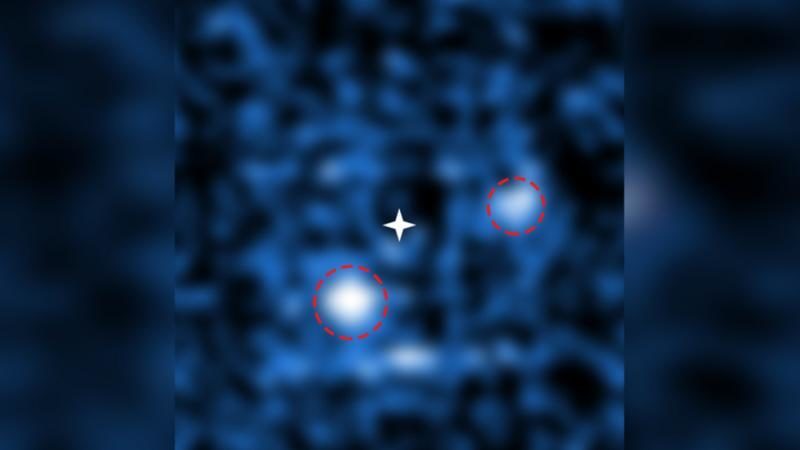
Exoplanets PDS 70 b and c
© Space Telescope Science InstituteExoplanets PDS 70 b and c. Astronomers were able to cancel out the light from the central star (marked by a white star) to reveal two orbiting exoplanets.
Astronomers have released images of a nascent two-planet system being formed around a young star, a bit smaller than the Sun. It's the first time a duo of planets orbiting the same star have been spotted while still in the making.

The photos offer a rare glimpse into the process of planet birth, showing the gas planets, named PDS 70b and PDS 70c, accumulating matter from within a disk of dust and gas encircling their host star, PDS 70.

It is only the second time a multi-planet system has been photographed in its toddler state, and the first time for a two-planet system.

"This is the first unambiguous detection of a two-planet system carving a disk gap," Julien Girard of the Space Telescope Science Institute in Baltimore, Maryland, a co-author of the study, said in a statement.

While PDS 70b, the bigger of the pair, was discovered last year, its companion, PDS 70c, was not known to scientists before. Being twice as far from its star as PDS 70b, PDS 70c might be less massive than PDS 70b, but is far from lightweight in planetary terms. PDS 70c weighs in at up to 10 times the mass of Jupiter, the largest planet in our Solar System, itself two-and-a-half times as heavy as all other Solar System planets combined.

Rocket

Russian MoD publishes test launch video of impossibly fast missile

russian missile hypersonic
A rocket flying at vertiginous speed appears on a fresh MoD video as the Russian military successfully tests a new addition to the missile defense shield.

Launches of the new air defense missile were held at the Sary Shagan testing range in Kazakhstan. A brief statement from the Ministry of Defense did not disclose the name and specifications of the weapon, only indicating that the missile confirmed its characteristics by hitting its test target.

The 34-second video shows different angles of the moment the rocket cruises up to the sky, leaving behind a burst of flame and thick plumes of smoke on the ground. The spectacular footage was uploaded to the official YouTube channel of the Russian Defense Ministry on Tuesday morning.


Comment: Yes, it appears to be supersonic at launch.

US generals must be soiling their pants.

In fact, CNN is reporting that an emergency shipment of underwear and new desk chairs arrived at the Pentagon today.

And John Bolton's mustache had a seizure...


Microscope 1

Physicists say they can predict quantum jumps, 'save Schrödinger's cat'

schrodinger's cat
© Kat Stockton
Yale researchers have figured out how to catch and save Schrödinger's famous cat, the symbol of quantum superposition and unpredictability, by anticipating its jumps and acting in real time to save it from proverbial doom. In the process, they overturn years of cornerstone dogma in quantum physics.

The discovery enables researchers to set up an early warning system for imminent jumps of artificial atoms containing quantum information. A study announcing the discovery appears in the June 3 online edition of the journal Nature.

Schrödinger's cat is a well-known paradox used to illustrate the concept of superposition - the ability for two opposite states to exist simultaneously - and unpredictability in quantum physics. The idea is that a cat is placed in a sealed box with a radioactive source and a poison that will be triggered if an atom of the radioactive substance decays. The superposition theory of quantum physics suggests that until someone opens the box, the cat is both alive and dead, a superposition of states. Opening the box to observe the cat causes it to abruptly change its quantum state randomly, forcing it to be either dead or alive.

The quantum jump is the discrete (non-continuous) and random change in the state when it is observed.

The experiment, performed in the lab of Yale professor Michel Devoret and proposed by lead author Zlatko Minev, peers into the actual workings of a quantum jump for the first time. The results reveal a surprising finding that contradicts Danish physicist Niels Bohr's established view - the jumps are neither abrupt nor as random as previously thought.

Nebula

Human evolution is still happening - possibly faster than ever

evolution
© watchara/ShutterstockYes, we're still evolving.
Modern medicine's ability to keep us alive makes it tempting to think human evolution may have stopped. Better healthcare disrupts a key driving force of evolution by keeping some people alive longer, making them more likely to pass on their genes. But if we look at the rate of our DNA's evolution, we can see that human evolution hasn't stopped - it may even be happening faster than before.

Evolution is a gradual change to the DNA of a species over many generations. It can occur by natural selection, when certain traits created by genetic mutations help an organism survive or reproduce. Such mutations are thus more likely to be passed on to the next generation, so they increase in frequency in a population. Gradually, these mutations and their associated traits become more common among the whole group.

By looking at global studies of our DNA, we can see evidence that natural selection has recently made changes and continues to do so. Though modern healthcare frees us from many causes of death, in countries without access to good healthcare, populations are continuing to evolve. Survivors of infectious disease outbreaks drive natural selection by giving their genetic resistance to offspring. Our DNA shows evidence for recent selection for resistance of killer diseases like Lassa fever and malaria. Selection in response to malaria is still ongoing in regions where the disease remains common.

Comment: In Paleo diet? Science has moved on since the stone age Tim Spector writes:
Other genetic evidence of recent changes to our digestive genes comes from a worldwide study of the amylase gene which is key to breaking down starch in carbohydrates. People in areas with starch as a major part of the diet evolved to have multiple copies of the gene to help them digest it better. We found in a collaborative study using our twins that this mutation also strangely protected against obesity, and importantly we think this change only happened in the last few hundred generations.

Other genes key to how we digest food can change even more rapidly. These are the 2m or so genes in the DNA of the trillions of microbes in our gut. Although they are not human genes they are crucial to our health as they control our microbiome which digests our food and produces many of our vitamins and blood metabolites. These bacterial genes in our guts can respond rapidly to changes in our diet, and as they can produce a new generation every 30 minutes, they can evolve very fast indeed.

They also have a secret weapon called horizontal gene transfer which means they can rapidly swap genes between them to mutual advantage, without waiting for natural selection. They use this very effectively to become resistant to new antibiotics and the same process is likely for new foods.
And so, while it does appear that a large majority of people do benefit from returning to a diet that would be more akin to what their ancestors ate, it's notable that there are a number of other aspects to consider.

Either way, it's apparent that 'natural selection' and 'chance' are unlikely to be the drivers in the changes discussed above: Also check out SOTT radio's:


Eye 1

Why the world looks different from one person to the next

Eye Movement
People constantly move their eyes to fix their gazes on items of interest, making about two to four eye movements every second for some 150,000 motions daily, but it remains uncertain how we choose what to focus on.
If a picture is worth a thousand words, scientists now find that not everybody looks at the same words first. When shown a series of pictures some people might focus more on, say, faces, while others might fixate on food. The new findings emphasize how the world might look different from one person to the next.

Much remains a mystery about how we look at the world. People constantly move their eyes to fix their gazes on items of interest, making about two to four eye movements every second for some 150,000 motions daily, but it remains uncertain how we choose what to focus on.

Scientists attempting to predict which parts of a scene will attract the eye have often tried modeling a "typical observer" based on aggregated data from many people. A common assumption was that any differences between the gazes of people could "safely be ignored," said study lead author Benjamin de Haas, a neuroscientist at Justus-Liebig University Giessen in Germany.

Jupiter

What's happening to Jupiter's Great Red Spot? Astronomers see unravelling of 400-year-old storm

Jupiter great red spot
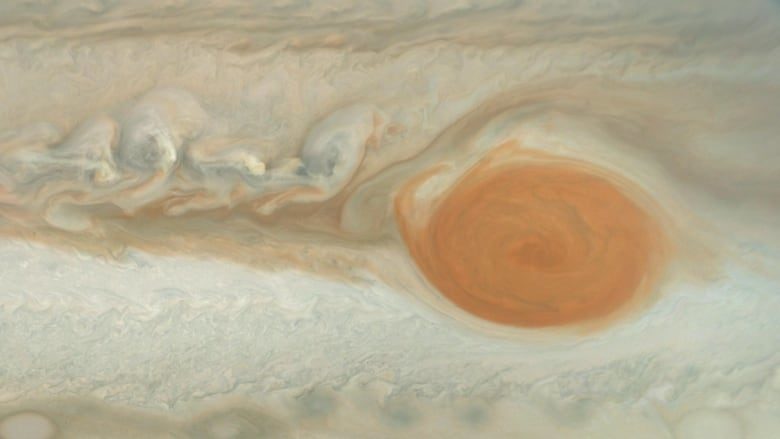
© NASA/JPL-Caltech/SwRI/MSSS/Björn JónssonNASA's Juno spacecraft, currently in orbit around Jupiter, captured the Great Red Spot on Feb. 28, 2019. To the storm's left edge, a region of the 400-year-old storm is seen mixing with the surrounding cloud of gases.
Jupiter's iconic storm is dying.

Over the past week, amateur astronomers around the world have seen some unusual activity around the solar system's largest and longest-lasting storm, known as the Great Red Spot (GRS).

The swirling red clouds that have been raging over the giant planet for centuries have been spotted forming "propellers" along the storm's edges, with these blade-like shapes spinning off and ultimately dissipating.

"This is very uncharted territory," said Glenn Orton, a senior research scientist at NASA's Jet Propulsion Laboratory who studies Jupiter. "We've never seen it like this before."

Comment: See also:


Telescope

Scientists spot 1,800 new supernovae in remarkable discovery using the Subaru Telescope

1,800 new supernovae
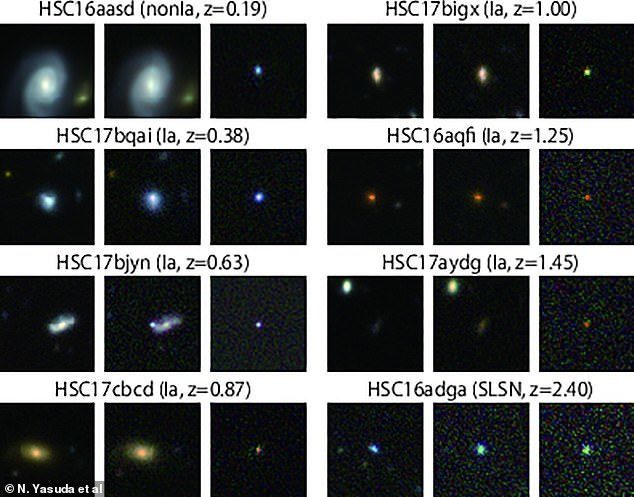
© N. Yasudu et alScientists have spotted thousands of dying stars in the process of exploding out of existence. A team operating the 8.2-meter Subaru Telescope in Hawaii say they’ve identified roughly 1,800 new supernovae sitting as far as eight billion light years away
Scientists have spotted thousands of dying stars in the process of exploding out of existence.

A team operating the 8.2-meter Subaru Telescope in Hawaii say they've identified roughly 1,800 new supernovae sitting as far as eight billion light years away.

The trove of new data, including several supernovae of a type known to be useful in calculating star distance, could help to unlock new clues on the expansion of the universe, researchers say.

A team including researchers from the Kavli Institute for the Physics and Mathematics of the universe (Kavli IPMU), Tohoku University, Konan University, the National Astronomical Observatory of Japan, School of Science, the University of Tokyo, and Kyoto University published the findings this week in the Publications of the Astronomical Society of Japan.

Microscope 2

SOTT Focus: Evolution's Struggle with Complexity and New Genes

Flagellum
One of Darwin's famous quotes is:
"If it could be demonstrated that any complex organ existed which could not possibly have been formed by numerous, successive, slight modifications, my theory would absolutely break down."
Such complex organs, not mentioning processes, exist in abundance, and they do absolutely break Darwin's theory down. His theory is about as broken as it gets, and this has been obvious for decades. Yet Darwinists refuse to accept it because they are more focused on maintaining their ideology and dogma than on the facts. In order to preserve the dogma, they usually ignore things that are inconvenient for them or misrepresent facts so that they can explain them away.

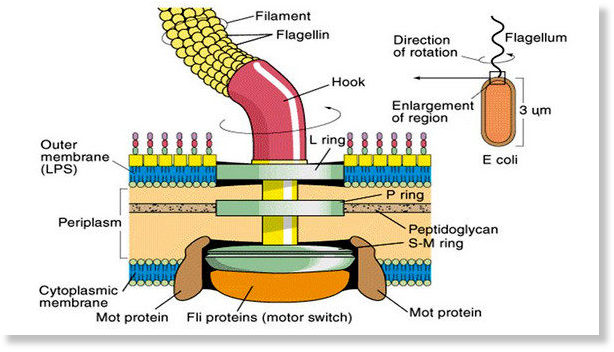
One of the many things that show the impossibility of organisms evolving step by step is the concept of Irreducible Complexity (IC). The point of the IC argument is that each part of a particular organ or process is necessary for the whole organ or process to work. If you take any one part away, the whole system stops functioning. It is not possible for parts of a system to be selected, step by step, when most of those steps do not produce a functional system. Several (or all of the) parts would have to evolve together, which contradicts the Darwinian model.

Comment: This article is the second in a series. For part 3, go here:

Evolution - A Modern Fairy Tale


Eye 1

No boarding cards here: Facial recognition is transforming these airports

Face recognition
© Reuters / Thomas Peter
Facial recognition has been heralded a key innovation in surveillance and security, but the technology may be coming to an airport near you in a bid to cut queues and speed up passenger travel.

Its detractors warn that facial recognition systems could wind up going full Skynet, resulting in some kind of robo-apocalypse even Arnie can't save us from. But it's supporters say that it could transform travel by allaying security concerns while making for a much smoother passenger experience.

Here are some of the airports having a run at the futuristic tech in a bid to banish passenger backlogs:

Trendsetting Singapore

Singapore was among the first in the world to pioneer such technology to shuttle passengers through its airports more swiftly. Changi Airport launched its facial recognition support systems in late 2017, using biometric technology to free up passenger queues from check-in, through to immigrant checks and boarding.

Info

NASA to form artificial night-time clouds over Marshall Islands to study atmosphere

WINDY Launcher
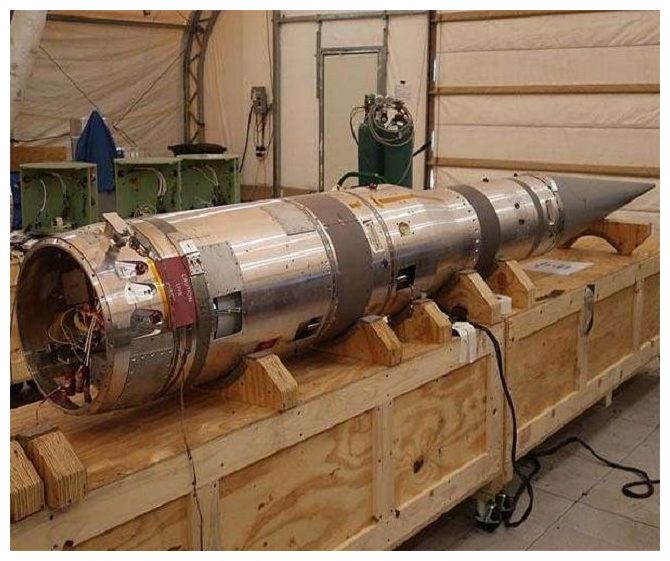
© Space DailyFile image of a WINDY payload launcher.
A NASA rocket mission to study disturbances in the upper atmosphere, which interfere with communication and technology systems, will form night-time white artificial clouds visible by residents of the Republic of the Marshall Islands during two rocket flights to occur between June 9 - 21, 2019.

This the second flight of the Waves and Instabilities from a Neutral Dynamo, or WINDY, mission. The mission this time is referred to as Too-WINDY - it's catchier than WINDY 2.

Too-WINDY will study a phenomenon that occurs in the ionosphere - a layer of charged particles in the upper atmosphere. Known as equatorial spread F, or ESF, these disturbances occur after sunset at latitudes near the equator in part of the ionosphere known as the F region. The disturbances can interfere with radio communication, navigation and imaging systems and pose a hazard to technology and society that depends on it.

The Too-WINDY mission consists of two NASA suborbital sounding rockets that will be launched five minutes apart in a window between 8 p.m. and 3.a.m. local time (4 a.m. and 1 p.m. EDT) June 9 - 21 from Roi-Namur. The Kwajalein Atoll in the Marshall Islands is near the magnetic equator, where post-sunset ionosphere storms are more intense, making the site an ideal location for these studies.