Best of the Web:


Russian Flag

Best of the Web: Merkel and Macron's presence at Syria talks will seal Putin's diplomatic triumph - on one condition

merkel macron putin
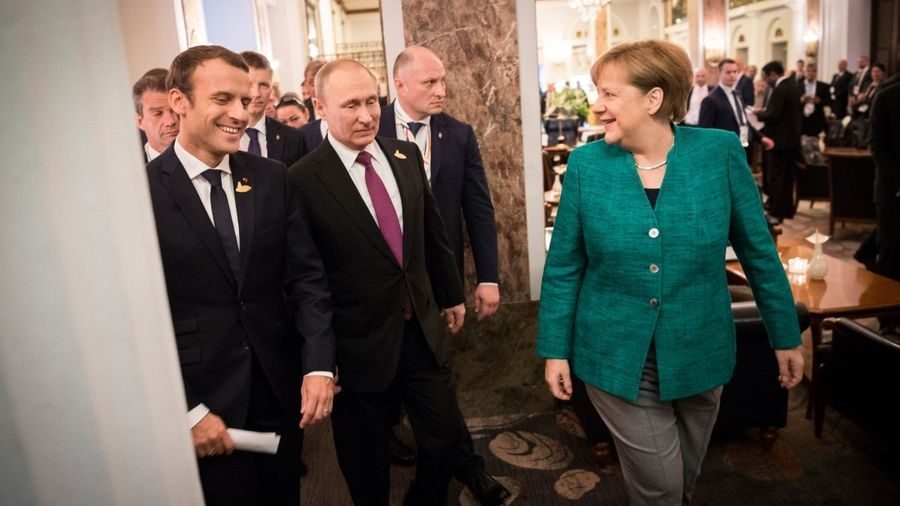
By coming to Saturday's summit in Istanbul, European leaders are admitting that Russia is now dictating the terms on Syria. But Vladimir Putin's 3-year gambit won't be vindicated until a resolution comes in Idlib and beyond.

While all parties in the so-called quadrilateral talks have been given equal billing, Angela Merkel and Emmanuel Macron's role will be to salvage the best deal for Europe from the accord that was struck without them by Putin and Recep Tayyip Erdogan last month.

In 2018, sitting at the table headed by the Russian and Turkish presidents seems like pragmatism, as Europe outspokenly quakes in fear of a new wave of refugees in the aftermath of the inevitable government assault on Idlib, the last substantial rebel stronghold in Syria.

But did such a scenario seem plausible after the Syrian conflict broke out in 2011, and the West demanded nothing but Bashar Assad's removal, in the summer of 2015 when the Syrian president's forces reached a point of depletion, or November the same year, when Turkish forces shot down a Russian Su-24, setting off a 9-month diplomatic rift between the countries?

Comment: Vladimir Putin always seems to be able to 'work with what he's got' in a positive-guiding manner. Achieving resolution and a way forward for Syria is paramount, but until then it's worth noting the historic magnitude of the moment: the Anglo-Americans are not involved in a major meeting about the Middle East mess, which they themselves created.


Books

Best of the Web: Identity politics is devouring itself: The Harvard admissions process

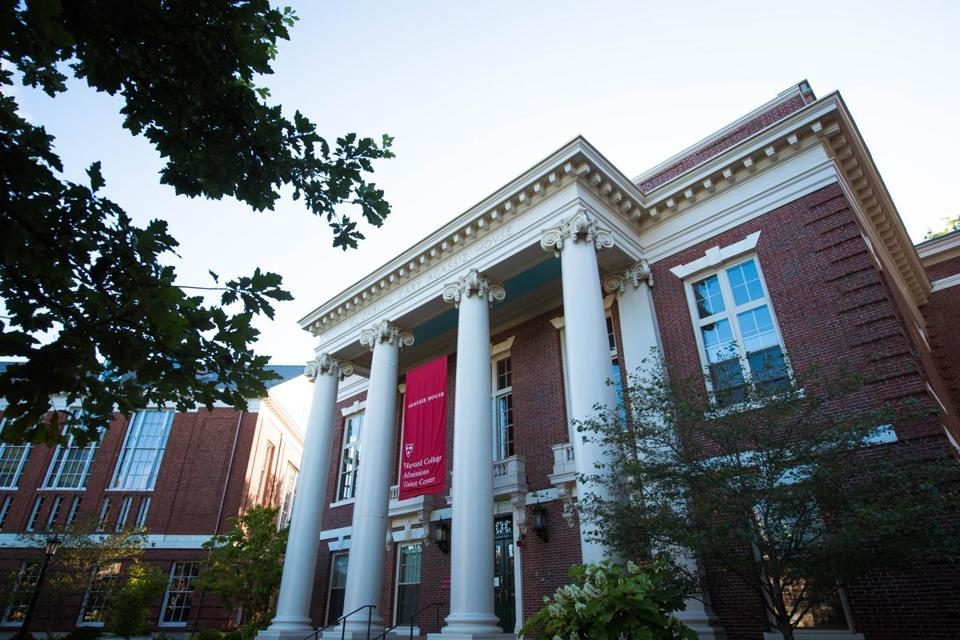
The Harvard University admissions office.
© GRETCHEN ERTL/THE NEW YORK TIMESThe Harvard University admissions office.
It was the week we learned that US Senator Elizabeth Warren of Massachusetts is between 1/1,024th and 1/64th Native American Indian. It was also the week that Harvard University - universally acknowledged as a bastion of American liberalism - was taken to court for discriminating against Asian-American applicants.

Savor last week. It may mean that we have reached a long overdue turning point.

Looking back, you can see why Warren was tempted to turn the family lore that her great-great-great-grandmother was part Native American into a full-blown claim to minority status. She built her career as a law professor during the 1980s and 1990s, when the first great wave of political correctness was sweeping American campuses. At that time, as liberal academia scrambled to appear more "diverse," being both a woman and a Native American suddenly became the opposite of disadvantageous.

Comment: See also:


Info

Best of the Web: Individuals and symbols: Mob mentality versus the individual as sacrosanct

Brett Kavanaugh family
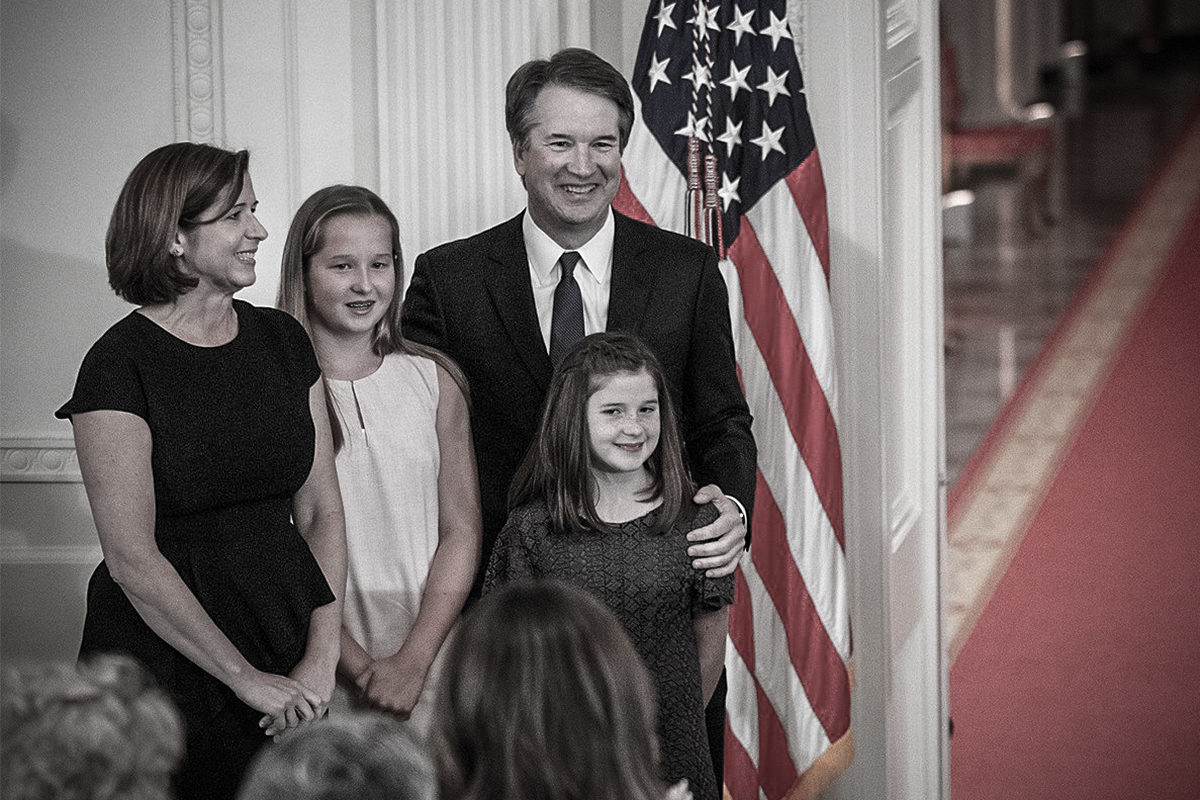
In the past few weeks, we have been watching the fall out of what has been dubbed Sokal Squared, the effort by James Lindsay, Helen Pluckrose, and Peter Boghossian to expose the low standards and hateful ideology to which much of the humanities have been in thrall in recent decades. In my response, I highlighted the postmodern assault on epistemology. I said, it has been "the explicit goal of post-modernity to reject reason and evidence: they want a 'new paradigm' of knowledge." During this same period, we also saw a sad episode in US history, in which this rejection of reason and evidence arrested the Democratic Party, as well as the media, academia, Hollywood, and several notable legal institutions, who each marched in quasi-fascistic lock-step in their attempt to eviscerate Brett Kavanaugh, now a Supreme Court Justice. It has been notable after the confirmation how quickly the media-who were nothing less than Orwellian in their complicity-have sought to move on from this ugly affair. They lost, but the toll that the nation had to pay for their struggle, was severe.

Laptop

Best of the Web: The Mecca bots: Inside Saudi Arabia's troll army

mbs saudi arabia
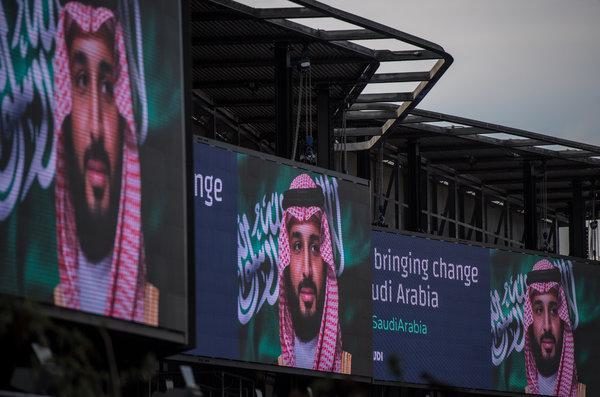
© Chris J. Ratcliffe/Getty ImagesOnline attackers who targeted Jamal Khashoggi were part of a broad effort ordered by Crown Prince Mohammed bin Salman and his close advisers to silence Saudi critics.
Each morning, Jamal Khashoggi would check his phone to discover what fresh hell had been unleashed while he was sleeping.

He would see the work of an army of Twitter trolls, ordered to attack him and other influential Saudis who had criticized the kingdom's leaders. He sometimes took the attacks personally, so friends made a point of calling frequently to check on his mental state.

"The mornings were the worst for him because he would wake up to the equivalent of sustained gunfire online," said Maggie Mitchell Salem, a friend of Mr. Khashoggi's for more than 15 years.

Mr. Khashoggi's online attackers were part of a broad effort dictated by Crown Prince Mohammed bin Salman and his close advisers to silence critics both inside Saudi Arabia and abroad. Hundreds of people work at a so-called troll farm in Riyadh to smother the voices of dissidents like Mr. Khashoggi. The vigorous push also appears to include the grooming - not previously reported - of a Saudi employee at Twitter whom Western intelligence officials suspected of spying on user accounts to help the Saudi leadership.

The killing by Saudi agents of Mr. Khashoggi, a columnist for The Washington Post, has focused the world's attention on the kingdom's intimidation campaign against influential voices raising questions about the darker side of the crown prince. The young royal has tightened his grip on the kingdom while presenting himself in Western capitals as the man to reform the hidebound Saudi state.

Comment: The knives are out for the Saudis. Of course, there are agendas within agendas behind this sudden change in media sentiment, but really, it's Saudi Arabia. They had it coming.


Light Sabers

Best of the Web: China on notice as the Deep State's next big enemy, right after Russia

destroyer ship
© Reuters
One wonders what went on in Russian minds during last month's spectacle of US President Trump raking Beijing over the coals on accusations of meddling, in the upcoming US midterm elections, to try to undermine his trade policies.

Certainly the Chinese, who evidently didn't expect it, were shocked and outraged, but it was behavior to which Moscow was accustomed to being on the receiving end of - this time aimed at someone else for a change.

Geng Shuang, China's Foreign Ministry spokesman, called Donald Trump's claims "totally far-fetched and fictional," and advised the "US side to stop its unwarranted accusations and slander against China and refrain from wrong words and deeds that might hurt our bilateral relations and fundamental interests."

Undeterred, Vice President Mike Pence picked up the same theme earlier this month, even accusing Beijing of what amounts to an effort at regime change in the United States: "China has initiated an unprecedented effort to influence American public opinion, the 2018 elections, and the environment leading into the 2020 presidential elections," said Trump's No. 2. "To put it bluntly, President Trump's leadership is working; and China wants a different American President." Beijing called the charge "ridiculous" and "malicious slander."

Better Earth

Best of the Web: Finian Cunningham: Time for a United Ireland

ireland
© AP Photo / Peter Morrison
It is nearly 100 years since British rulers inflicted a grievous blow to Irish sovereignty, when they forcibly partitioned the neighboring island nation into two separate states.

Now, with the Brexit debacle intensifying, it is evidently time for Ireland to be reunited as one country, as it had been for millennia before.

This week, it is apparent again that British Prime Minister Theresa May can't get her fractious London government to agree on terms to leave the European Union.

Some within her ruling Conservative party want a "hard Brexit" - that is, a clean break from the EU - while others in, and outside, the party want a "soft Brexit". The latter would involve an ongoing trade association with Europe.

However, it is on the island of Ireland that the political squabbling in London is most manifest. A hard Brexit could mean the reimposition of an official border between the Republic of Ireland, a member of the EU, and Northern Ireland, which is under British rule and is therefore due to leave the European bloc in the coming months.

Comment: See also: And check out SOTT radio's:


Snowman

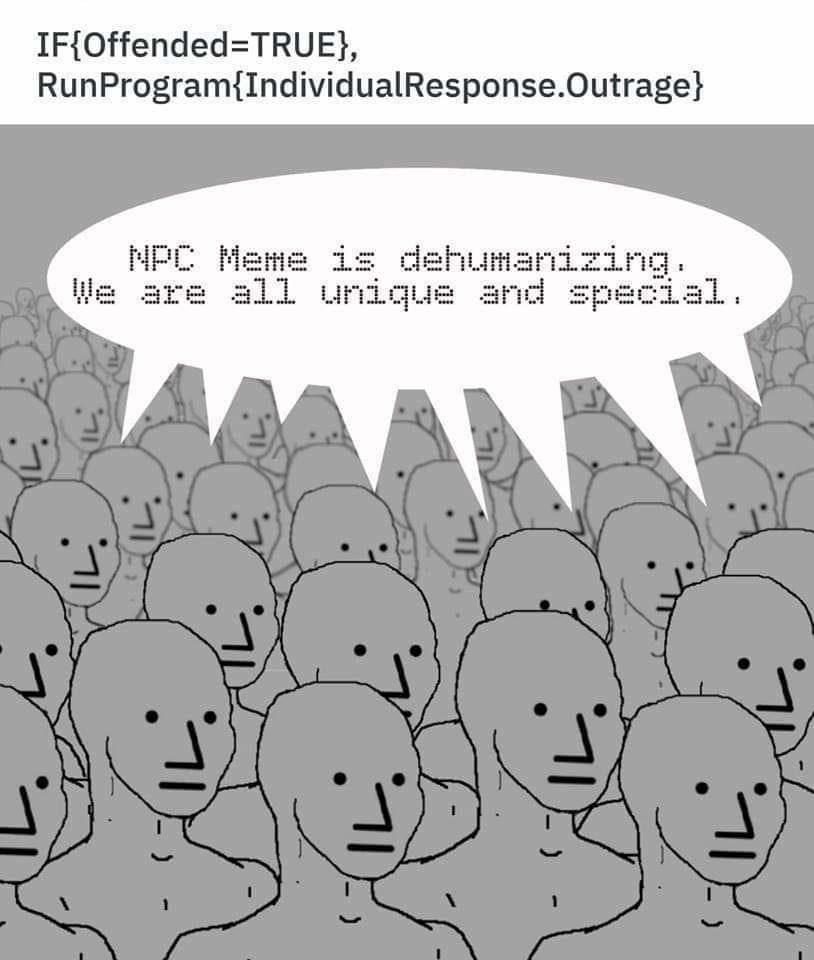
Best of the Web: Why the NPC memes FREAKS OUT the Lefties

4Chan NPC
Because it's funny, effective and mostly true.


Comment: Nothing has brought the scripted, humorless, mindless group-think of the SJW community home as the NPC meme has.
"Part crackpot social theory and part elementary school insult, the NPC meme originated from a deeply comical medley of bogus physics and stupid religion found on the messaging board 4Chan. Originally posted in 2016, it resurfaced last month."
4chan may have done humanity a service.


Eye 1

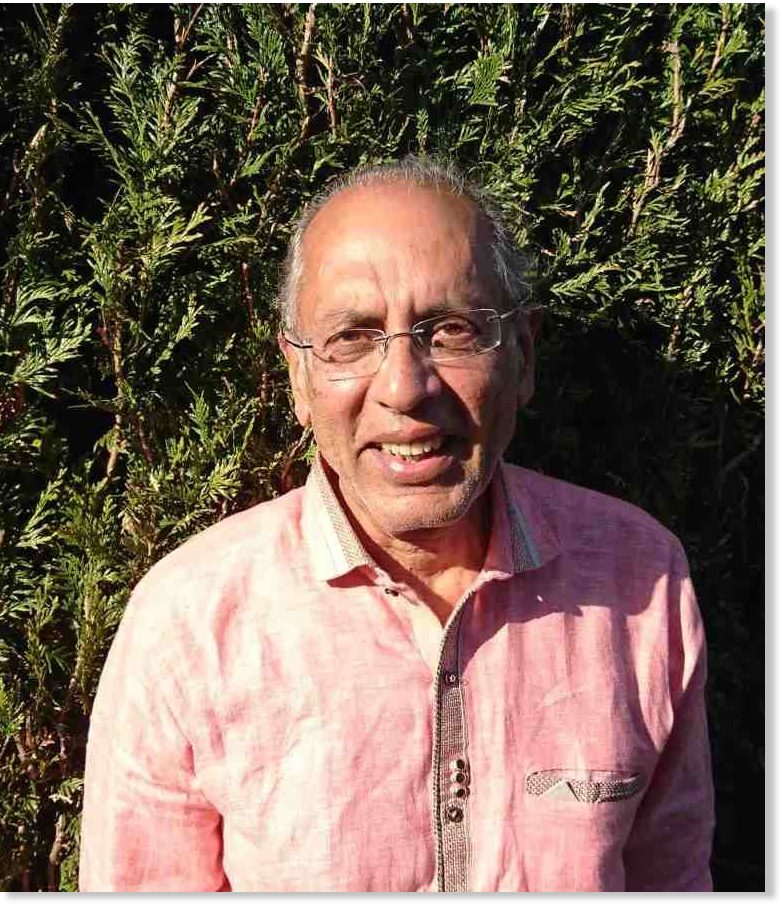
Best of the Web: Neelam Makhija: Wrongly Accused of Being an Indian Guru by Secular French Government Fanatics

Neelam Makhija
© J-L M-LNeelam Makhija. He had the misfortune in France to have the look of an Indian guru
Retired Indo-Canadian engineer, Neelam Makhija, 71, spent two months in prison and was held against his will in France for two and a half years. His crime? Being a friend of a coach who hosted, once a year, meditation seminars. Despite his acknowledged innocence before the court, he cannot obtain compensation (financial or moral) for the way he was treated by the French state.

Megaphone

Best of the Web: Deepities and the Politics of Pseudo-Profundity

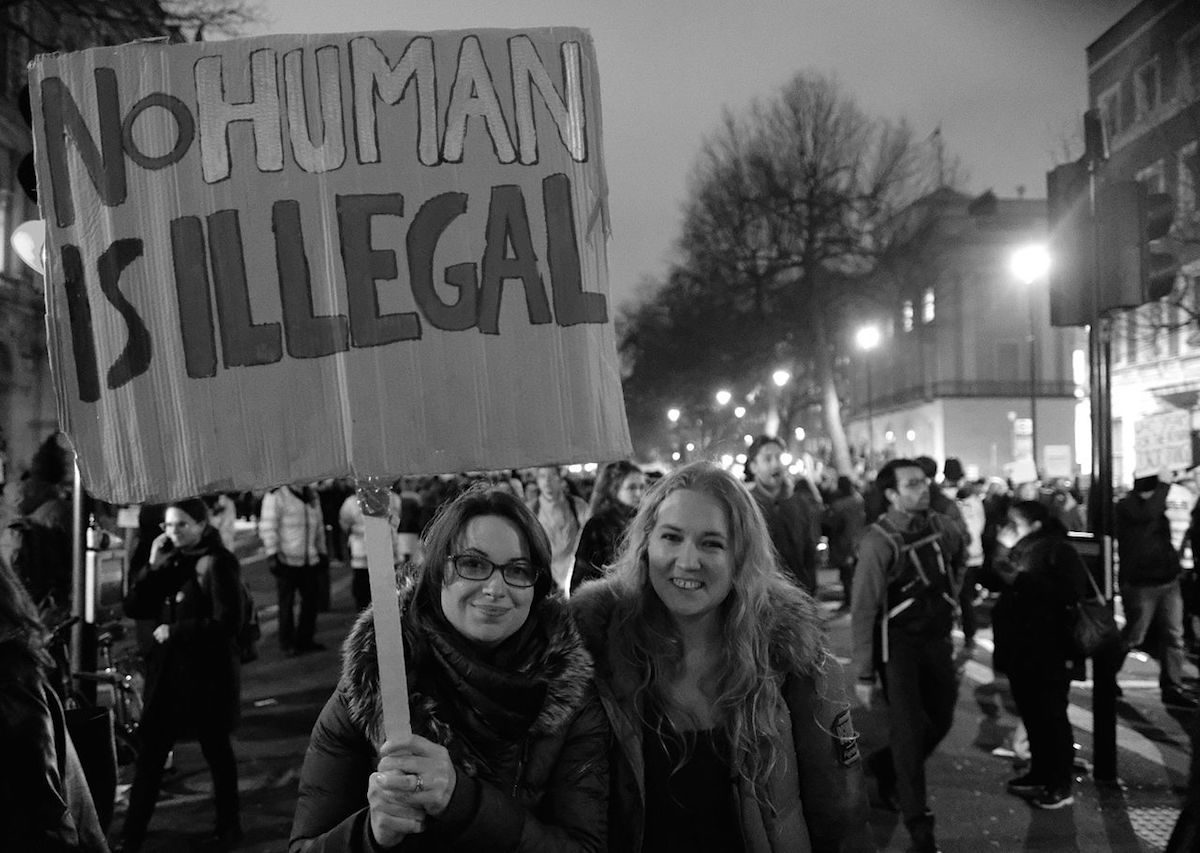
anti-Trump rally London
The word deepity, coined by the philosopher Daniel Dennett, refers to a phrase that seems true and profound but is actually ambiguous and shallow. Not to be confused with lies, clichés, truisms, contradictions, metaphors, or aphorisms, deepities occupy a linguistic niche of their own. The distinguishing feature of a deepity is that it has two possible interpretations. On the first reading, a deepity is true but trivial. On the second, it's false but would be mind-blowing if it were true.

Consider, for instance, the phrase "love is just a word." On one reading, this is true but trivial. It's no deep insight that "love" - like "Ethiopia" or "subdermatoglyphic" or "word" - is just a word in the English language. But on a second reading, "love is just a word" asserts something mind-blowing if true: there is no emotion called "love," and everyone who thinks they've felt love is either lying or self-deceived. If true, this would change everything we thought we knew about our emotional lives. But it's plainly false. Whatever love is - an emotion, an illusion, a pattern of neuronal firings - it's not "just a word." By virtue of its ambiguity, the phrase "love is just a word" doesn't even achieve coherence, much less profundity.

The problem with deepities is not that they are arguments that initially seem convincing but collapse under scrutiny; it's that they aren't even arguments to begin with. Once you disambiguate a deepity - that is, once you notice it has two distinct meanings - you see that it contains no real argument at all, only an empty space where an argument should be. (Think of phrases like "love trumps hate" and "everything happens for a reason." Do they seem both true and important after you disambiguate them?)

Comment: See also:


Bulb

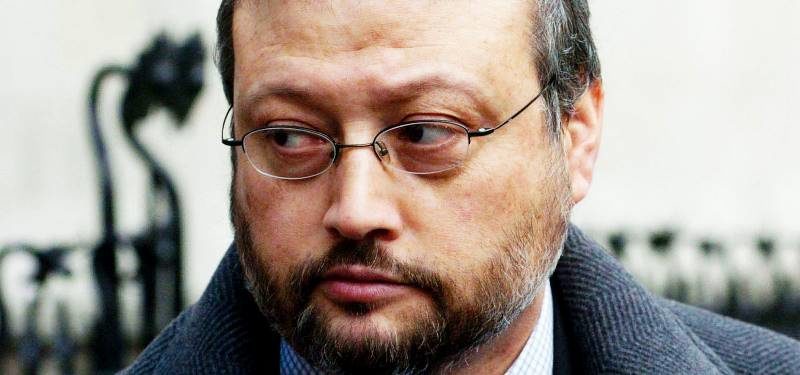
Best of the Web: Khashoggi a critic of the Saudi regime? Only in western journalists' dreams

Jamal Khashoggi
© Johnny Green / Press AssociationJamal Khashoggi, media advisor to Prince Turki Al-Faisal, leaves the Royal Courts of Justice in central London.
Jamal Khashoggi, the Saudi journalist, who disappeared in the Saudi consulate in Istanbul last week is not quite the critic of the Saudi regime that the Western media says he is.

The disappearance of Jamal Khashoggi, the Saudi journalist, in the Saudi consulate in Istanbul last week has generated huge international publicity, but unsurprisingly, little in Saudi-controlled, Arab media. The Washington Post, for whom Khashoggi wrote, and other Western media, have kept the story alive, increasing the pressure on Riyadh to explain its role in the affair.

It's been odd to read about Khashoggi in Western media. David Hirst in The Guardian claimed Khashoggi merely cared about absolutes such as "truth, democracy, and freedom". Human Rights Watch's director described him as representing "outspoken and critical journalism."

But did he pursue those absolutes while working for Saudi princes?

Comment: See also: