
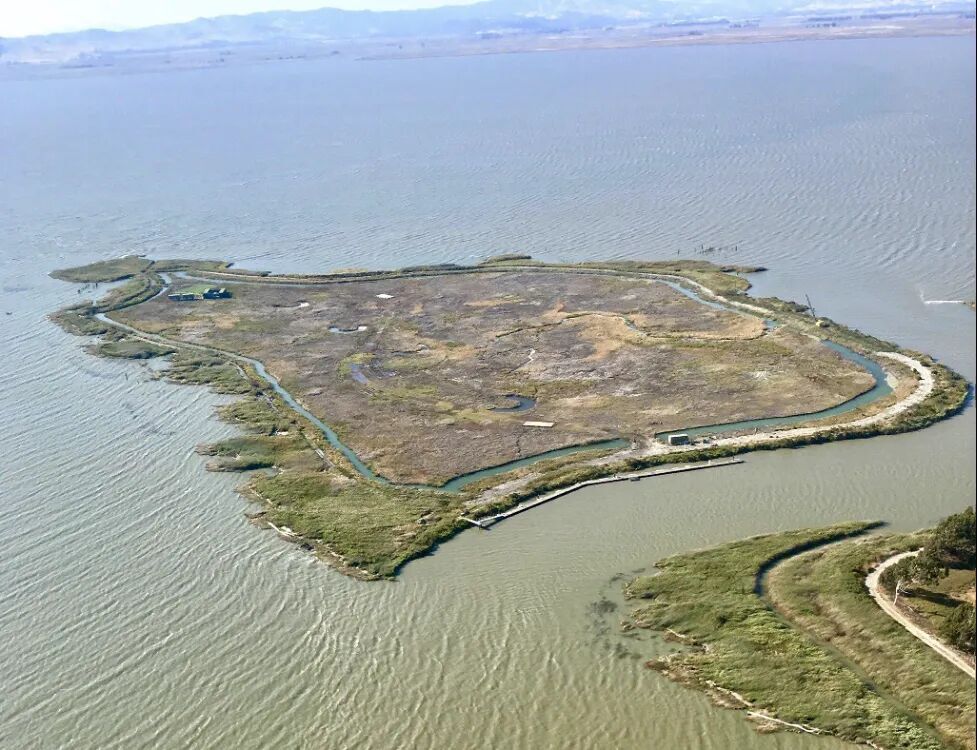
Point Buckler Island, California
Shocking new evidence uncovers that these supposed efforts were based on fraudulent permits and fabricated reports.
This deception not only jeopardizes a key species but also exposes serious flaws in California's environmental governance, making it a critical issue for anyone concerned about ecological integrity and responsible stewardship of natural resources.
However, newly uncovered documents reveal that these restoration projects, purportedly designed to save the Delta Smelt — a cornerstone species on the brink of extinction — were nothing more than well-crafted reports and fraudulent permits.
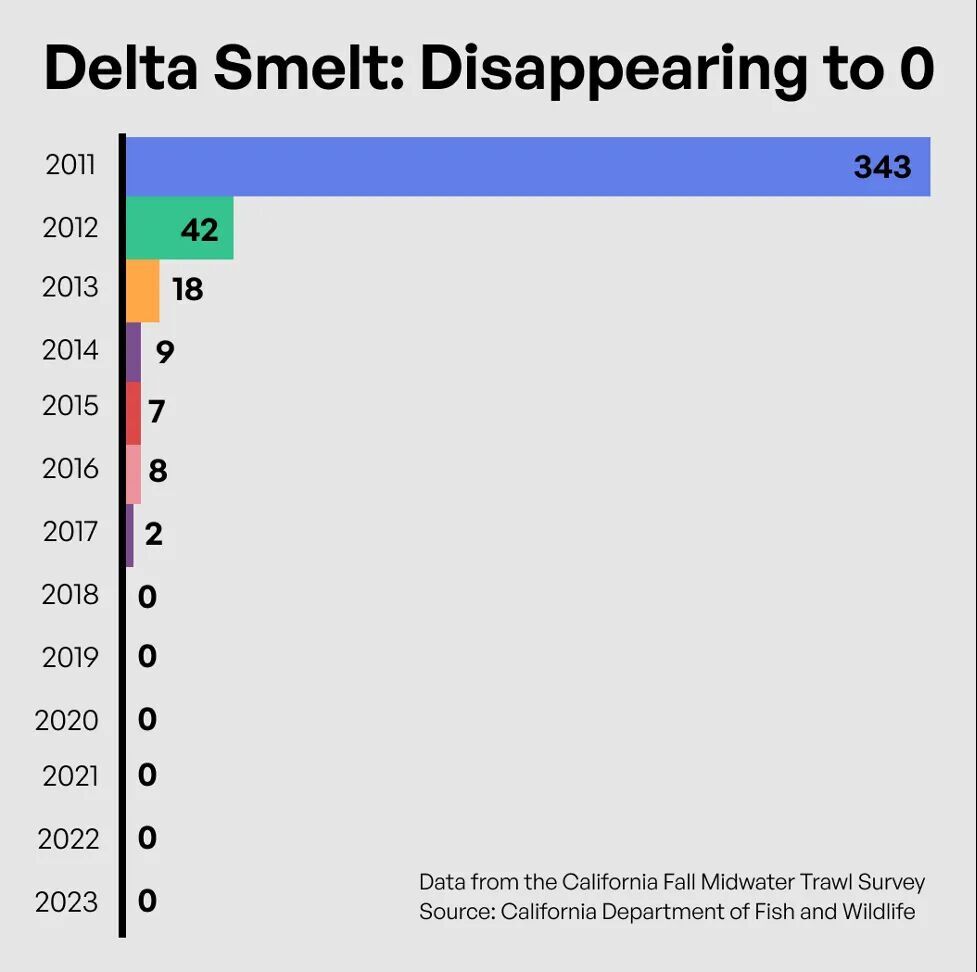
© The Daily MuckCalifornia Department of Fish & Wildlife data (Fall Midwater Trawl Survey)
Point Buckler Island: A $39 Million Levee Controversy
Point Buckler Island, 50 acres in the Suisun Marsh, was once just a small duck-hunting club. In 2014, owner John Sweeney repaired a dilapidated levee to protect the island from tidal flooding.
That repair triggered a legal onslaught from multiple agencies — including the California Water Board, BCDC, the EPA, and the DOJ — leading to proposed fines of nearly $39 million for alleged Clean Water Act violations.
What Sweeney discovered next suggests something more troubling than a standard regulatory dispute.
Official databases recorded Point Buckler as a "completed tidal restoration" project — yet he found no evidence of any actual habitat work on the island. If the Smelt is gone, how many other "restored" wetlands were similarly faked?
The EcoAtlas Scandal: 2,500 Acres of Phantom Habitat
Central to this controversy is EcoAtlas, an EPA-funded database overseen by the San Francisco Estuary Institute (SFEI) and Calfed.
In 2004, under scientist Stuart Siegel's direction, projects like Point Buckler Island and Chipps Island — both privately owned by Sweeney — appeared on the map as finished restorations.
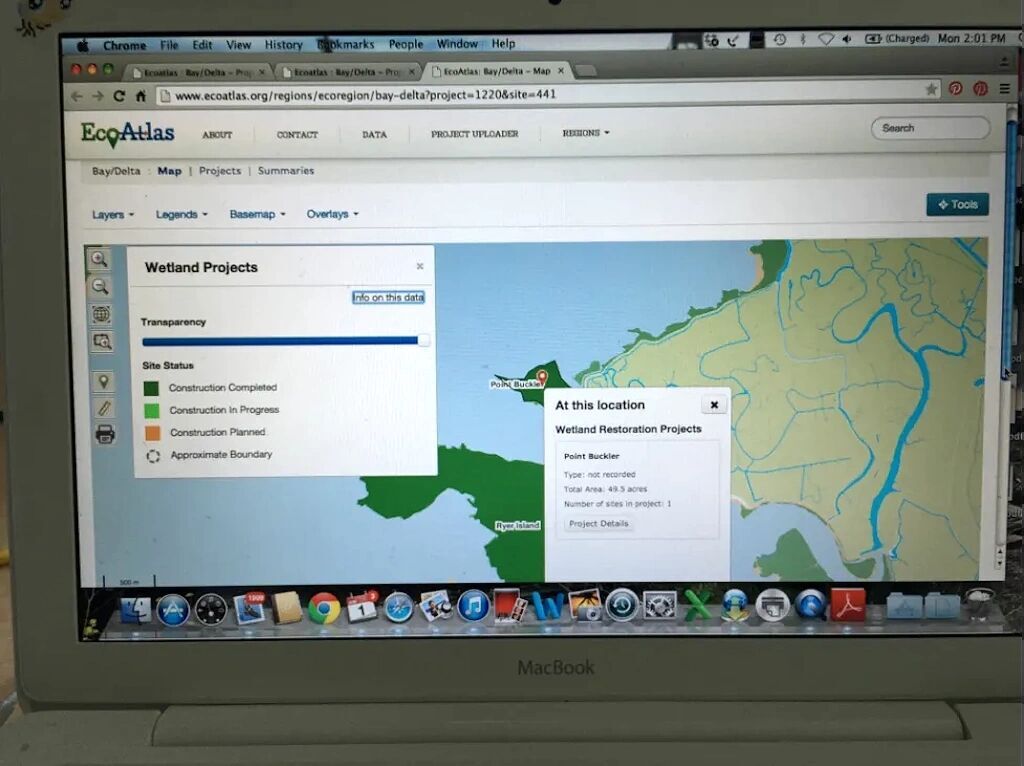
© John SweeneyPhoto taken by John Sweeney in 2015 of the Eco-Atlas website shows Point Buckler as a Wetland Project whose site status is “Construction Completed”
Shocked, Sweeney confronted SFEI with proof that his land had been included in EcoAtlas without his knowledge or consent. Under scrutiny, the institute confessed that more than 1,000 acres, including Point Buckler and Chipps, had no supporting records at all.
Who Stood to Benefit?
Labeling a wetland as "completed" opens the door to millions in grants, mitigation credits and other incentives — all of which hinge on proving genuine ecological progress.
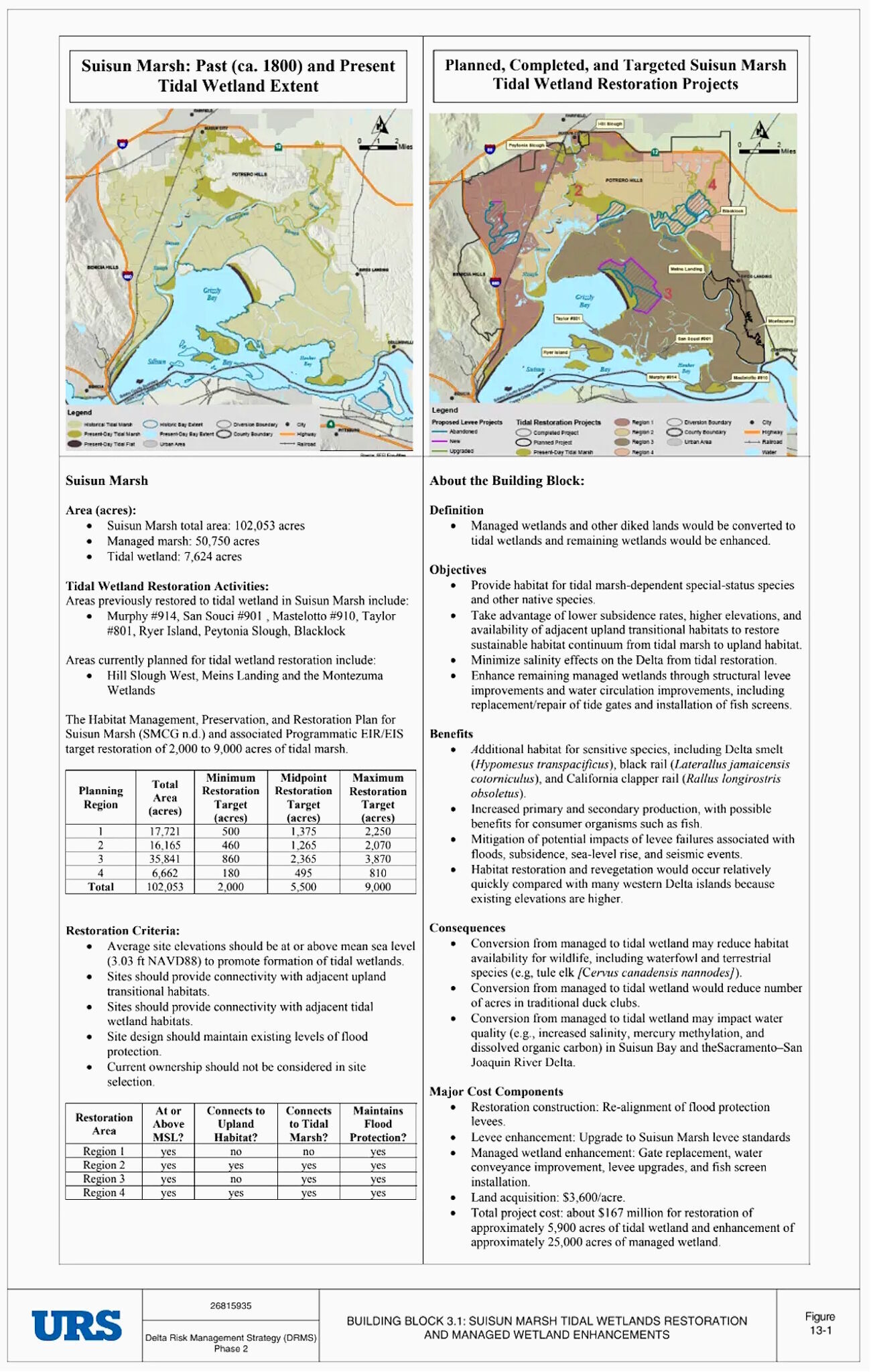
© SFEI Eco-Atlas.Screenshot: California Department of Water Resources’ Delta Risk Management Strategy (DRMS) Phase 2 report
It cites data from SFEI Eco-Atlas, the very tool Sweeney alleges is riddled with fictitious restoration entries.
DRMS strategies influence hundreds of millions in state funding for wetland improvement and flood control. A single erroneous data source could undermine the entire planning process.
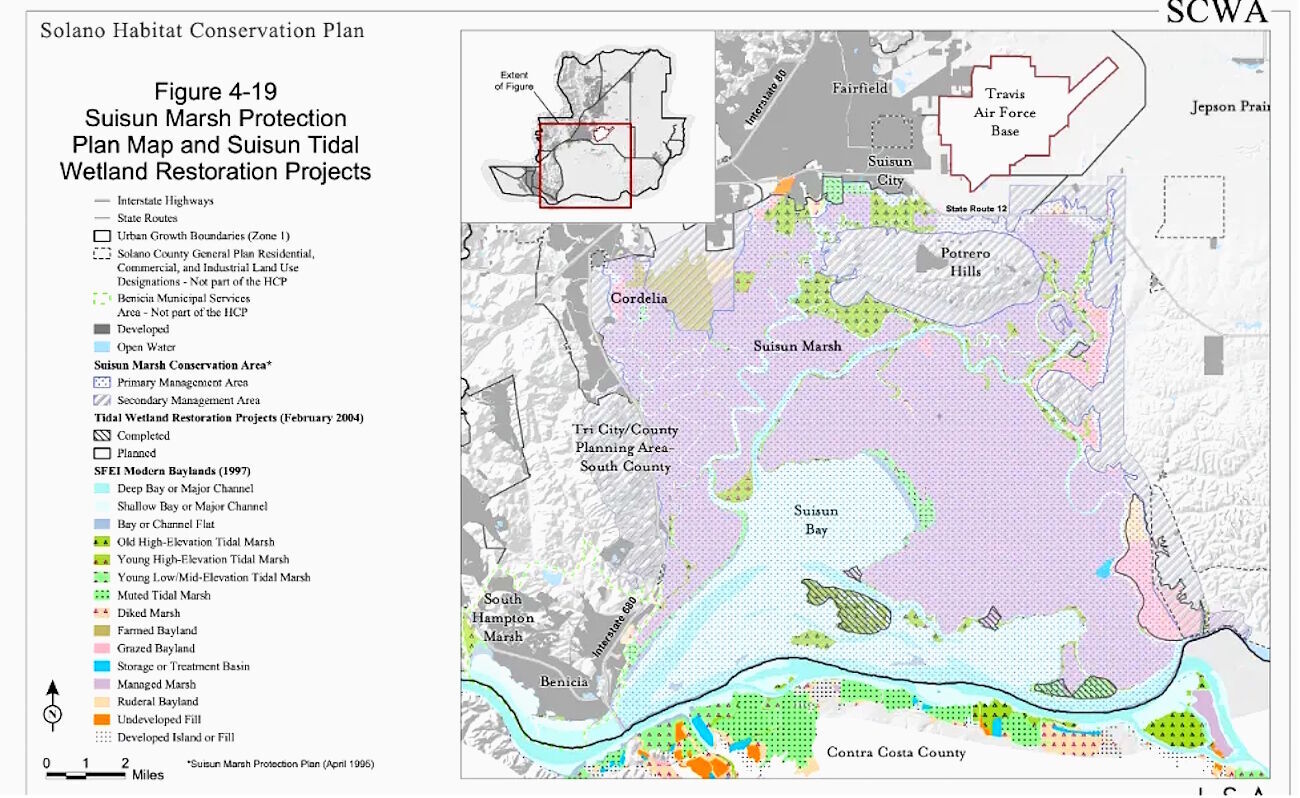
© Solano County Water AgencyFigure from the Solano County Water Agency's Habitat Conservation Plan (HCP) including Point Buckler as a "Completed Tidal Restoration Project."
On paper, each area was meant to bolster habitat for endangered species like the Delta Smelt. Yet if Point Buckler's alleged restoration never happened, how many other "completed" sites similarly fell short of real work?
Regulatory Fury or Coordinated Cover-Up?
Once Sweeney publicized these discrepancies, the California Water Board, BCDC, EPA and DOJ — hit hard. In 2016, they charged him with a $39 million civil penalty for his levee repair and demanded a fish restoration plan to offset his "violations."
In a twist worthy of a thriller, Stuart Siegel — the same scientist responsible for the dubious EcoAtlas entries — became the agencies' star witness against Sweeney.
"It was never about the levee," Sweeney insists. "It was about covering up fake restoration permits. They needed a scapegoat, and I was convenient."
The Fallout and a Call for Accountability
The Delta Smelt's abrupt collapse underscores the consequences of paper-only restorations. Taxpayer dollars that could have saved the fish appear to have funded illusions instead.
"If even half these 'completed' projects were real, we might have stabilized the smelt," says an environmental scientist involved early on who previous to stay anonymous. "Instead, it's extinct — proof that maps and spreadsheets don't revive ecosystems."
Where It Stands: A Looming Auction
After years of back-and-forth legal battles — and a series of initial courtroom wins — Sweeney's fortunes reversed in 2021 when an appeals court decision left him bankrupt and stripped of the island he had hoped to restore as a managed wetland and kiteboarding club.
Now the final chapter of Point Buckler's saga may be unfolding on the courthouse steps in Fairfield.
On January 22, 2025, Point Buckler Island heads to a court-ordered levy sale, forcing Sweeney off the land he purchased for $150,000 in 2011. Sweeney calls the sale a "government land grab."
"They weaponized fines, bureaucracy, and the courts to take away private property without due process. This sets a dangerous precedent," Sweeney stated to The Daily Republic. "It could happen to anyone."
As of press time, the plan is to auction the property at 10 a.m. in front of the Solano County courthouse. Whether any new owner will attempt genuine restoration — or follow through on the alleged habitat credits — remains to be seen.
Next Steps: A Deeper Investigation
This is just the start of our deep dive into Point Buckler, the disappearing Delta Smelt, and the teetering ecosystem at stake in Suisun Marsh.
In our most recent article we delve deeper into the controversial seizure of Point Buckler Island and the arrest of its owner: Eco-Tyranny in California: Land Seized and Owner Arrested Amid Delta Smelt Scandal.
Stay tuned as day by day we peel back the layers of California's marshland controversy, where multi-million-dollar fines, high-stakes water diversions and a tiny fish slipping into extinction are just the beginning.
Editorial Note: This article is based on verified documents, public records and multiple interviews. Investigations are ongoing. If you have information on this case, please contact our team at info@dailymuck.com.


Reader Comments
Even today continues to burn to the ground.
A mega industry, of created reality...Out of a job one Wonders why...AI according the Chinese, it can be created in...weeks.
California burned because of a fraud.