
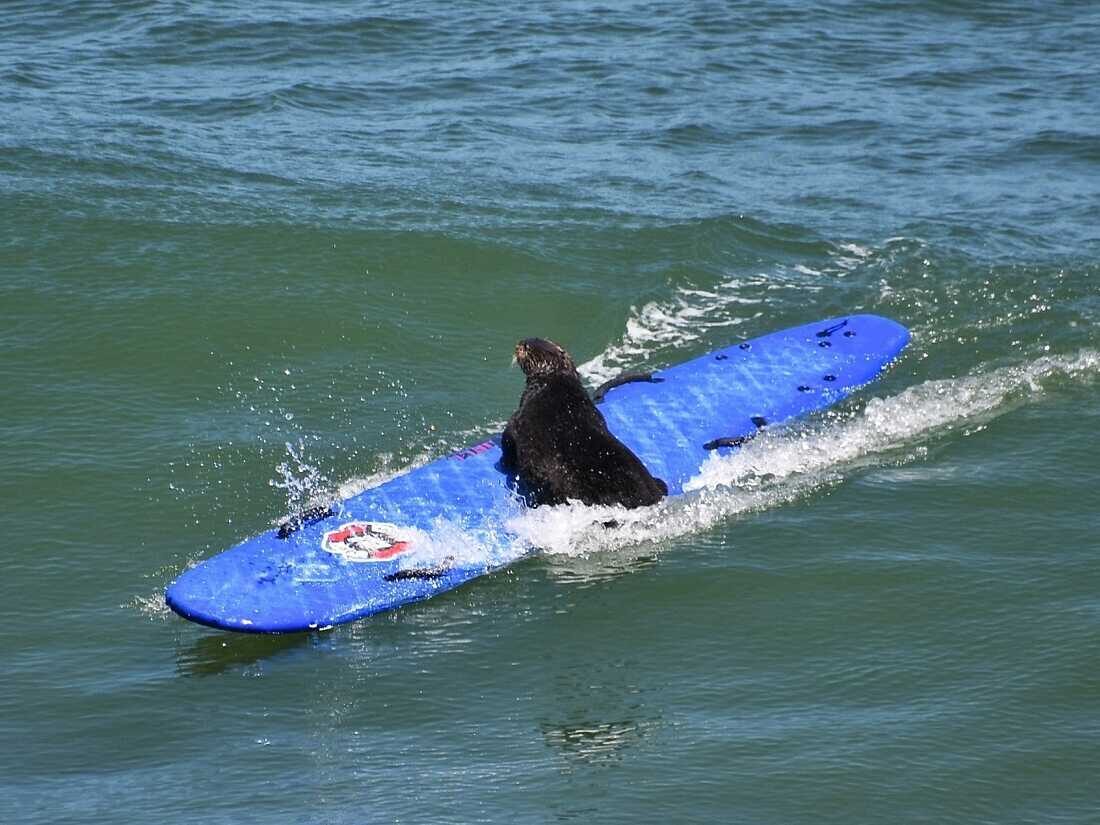
© Mark Woodward/@NativeSantaCruzA southern otter in Santa Cruz, Calif., catches a wave after stealing a surfer's board.
Steamer Lane is a legendary point break nestled along the rocky shores of Santa Cruz, home to swaths of experienced surfers, as well as a 5-year-old female sea otter with a growing reputation for repeatedly confronting surfers and kayakers.
Videos across social media show the otter hoisting itself out of the ocean and onto boards while surfers sit back in awe. At times she's chewed on the boards or forced surfers to surrender their boards altogether.
Onlookers in the videos can be heard laughing in jest at surfers' misfortune, but officials with the U.S. Fish and Wildlife Service say the otter poses a public safety risk.
"While there have been no confirmed reports of injury, due to the highly unusual behavior of this otter, kayakers, surfers, and others recreating in the area should not approach the otter or encourage the otter's interactions," the USFWS said in a statement.
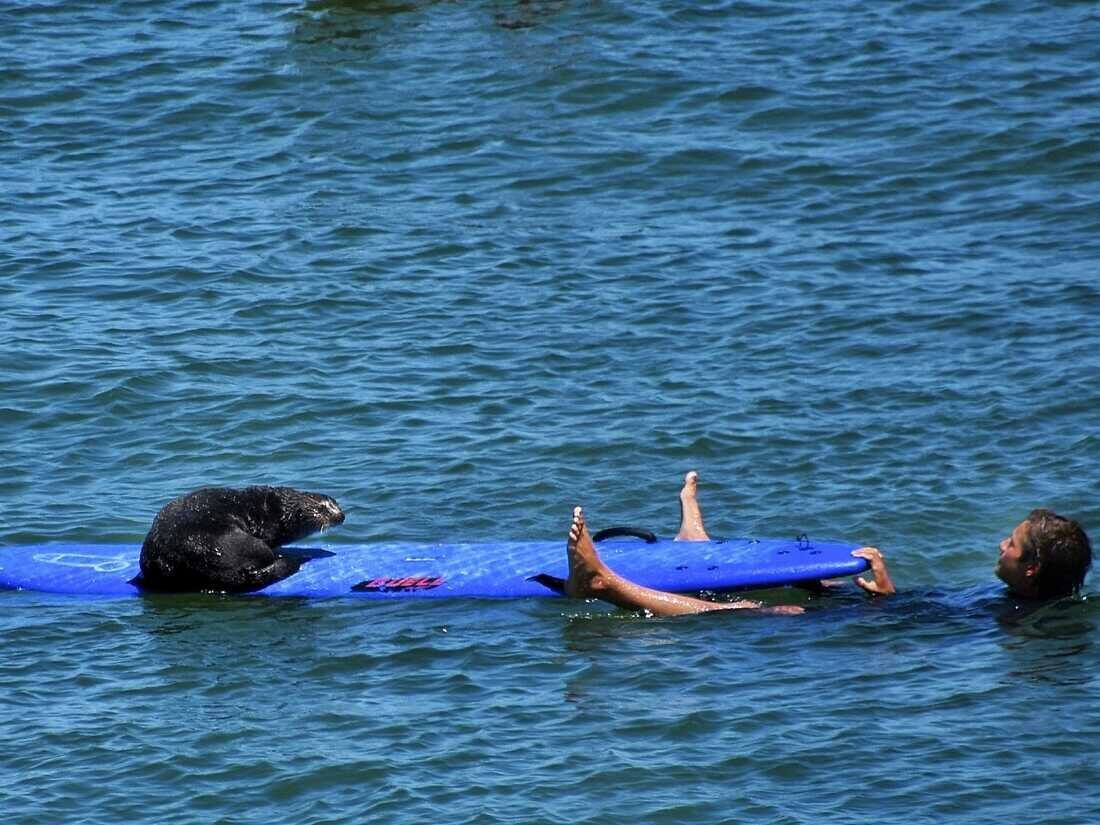
© Mark Woodward/@NativeSantaCruzJuly, 2023: An otter at a popular surf break in Santa Cruz has been confronting surfers, going as far as stealing their boards and riding waves. Mark Woodward/@NativeSantaCruz
"I saw the first incident on June 18 and I didn't know what was happening," Woodward told NPR. "... It was quite astounding."
The USFWS said the otter's behavior is "concerning and unusual," and though the exact cause is unknown, officials said it could be associated with hormonal surges or being fed by humans.
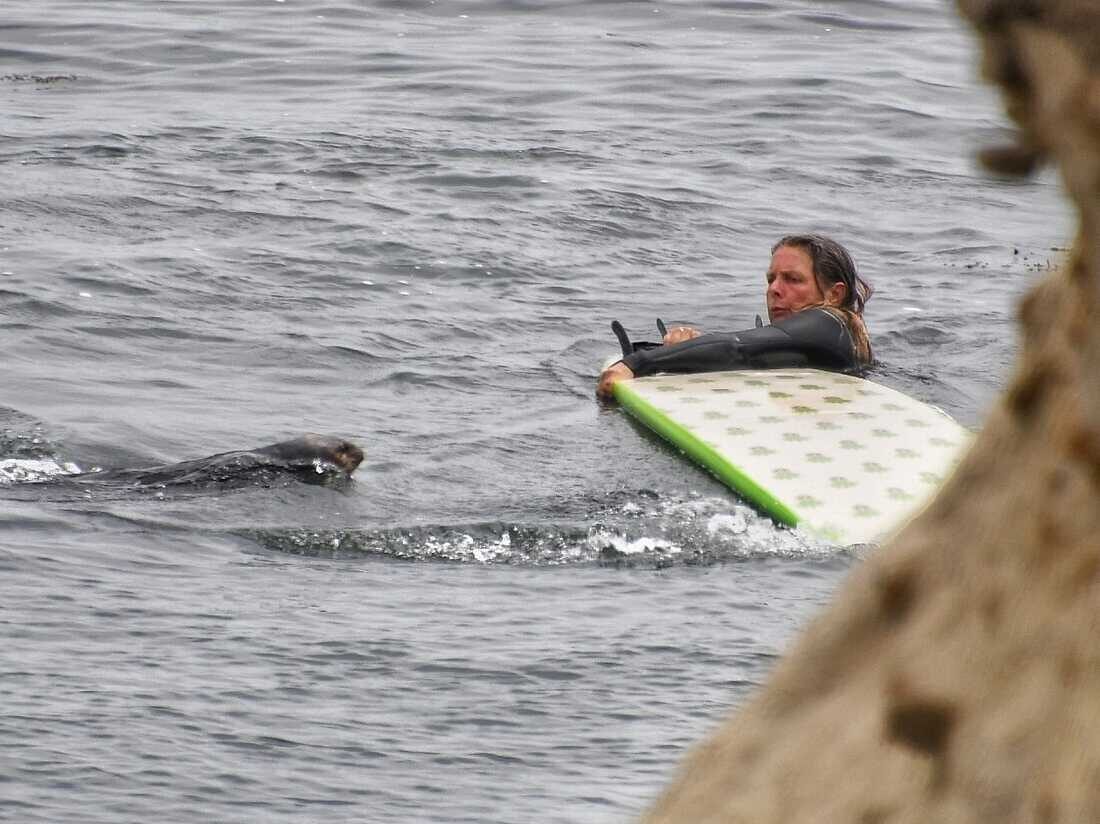
© Mark Woodward/@NativeSantaCruzThe otter at Steamer Lane will live out the rest of its life in captivity once caught by the USFWS and aquarium staff. She's no longer afraid of humans, and if the otter were to bite or harm a person, she would have to be euthanized
A team from the California Department of Fish and Wildlife (CDFW) and the Monterey Bay Aquarium is looking for the otter to catch and rehome her. Unfortunately once the otter is caught, Monterey Bay Aquarium spokesperson Kevin Connor told NPR, she won't be able to return to the wild.
The animal, officially known as otter 841, was born in captivity — because it's mother had also been too friendly with humans — and then successfully released into the wild in June 2020, Connor told NPR. It wasn't until September 2022 that she started exhibiting her bizarre behavior at Steamer Lane.
At the time, CDFW and aquarium staff were able to drive the animal out of the area, a process called hazing, in hopes of deterring her from interacting with people. But her most recent interactions show she's no longer afraid of humans, Connor said.
"Trying to recapture the otter is an effort to avoid anything more drastic. If the otter were to harm or bite a person, the USFW, which is responsible for managing the population of these animals, would have to begin discussions of euthanizing the animal," Connor said. "That's the reality, and nobody wants to see that."
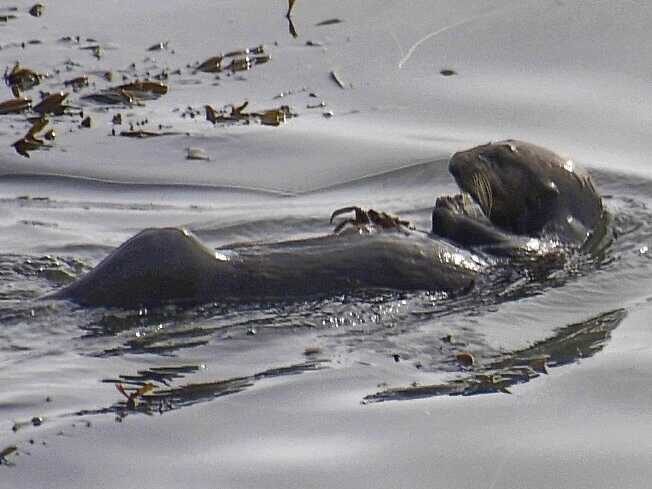
© Mark Woodward/@NativeSantaCruzThe southern sea otter was believed to be extinct until a family of 50 was found in Big Sur in 1938. Since being labeled an endangered species, they have bounced back from near extinction.
The southern sea otter was believed to be gone forever, until a family of 50 were found in Big Sur in 1938, Connor said. Today, they number approximately 3,000, a mere 30% of what scientists believe the original population was before their near brush with extinction.
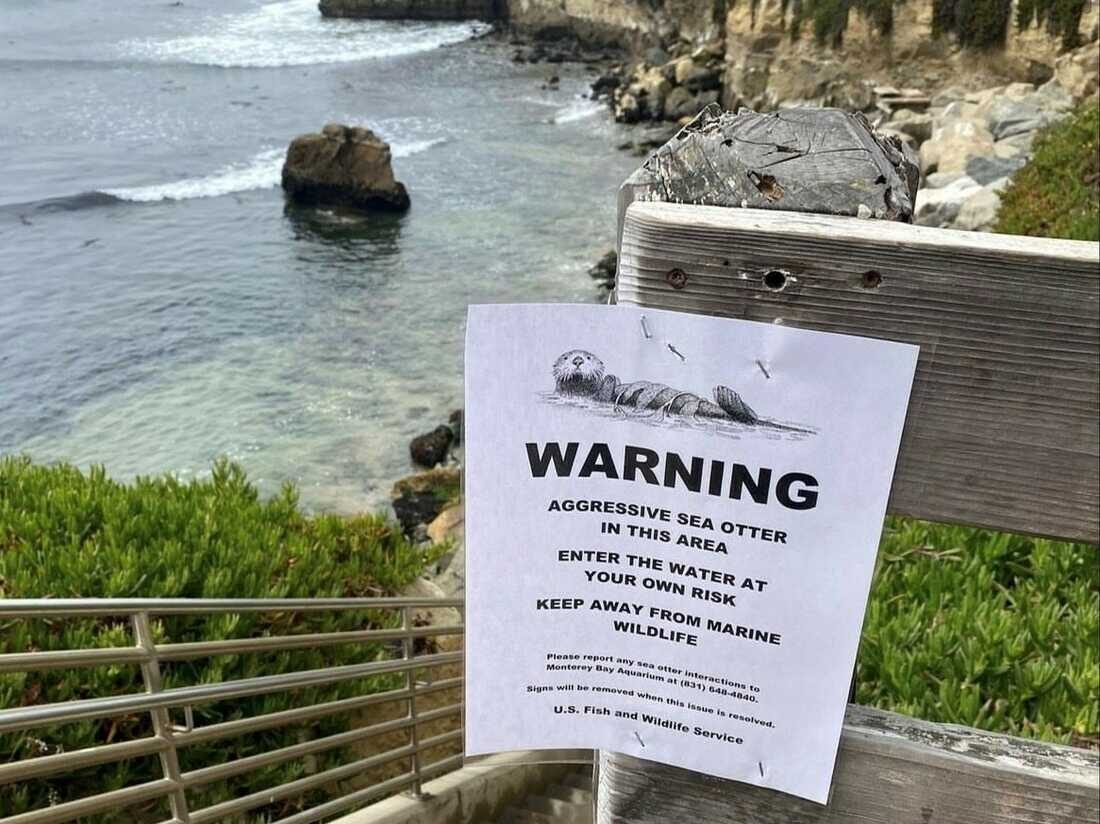
© Santa Cruz Police DepartmentThe Santa Cruz Police Department warned locals about an ill-tempered southern sea otter confronting people at a popular surf spot known as Steamer Lane along West Cliff Drive. Santa Cruz Police Department



Reader Comments