

Jon Snow
A reader lives a thousand lives before he dies...The man who never reads lives only one.Abstract
-George R. R. Martin, A Dance with Dragons
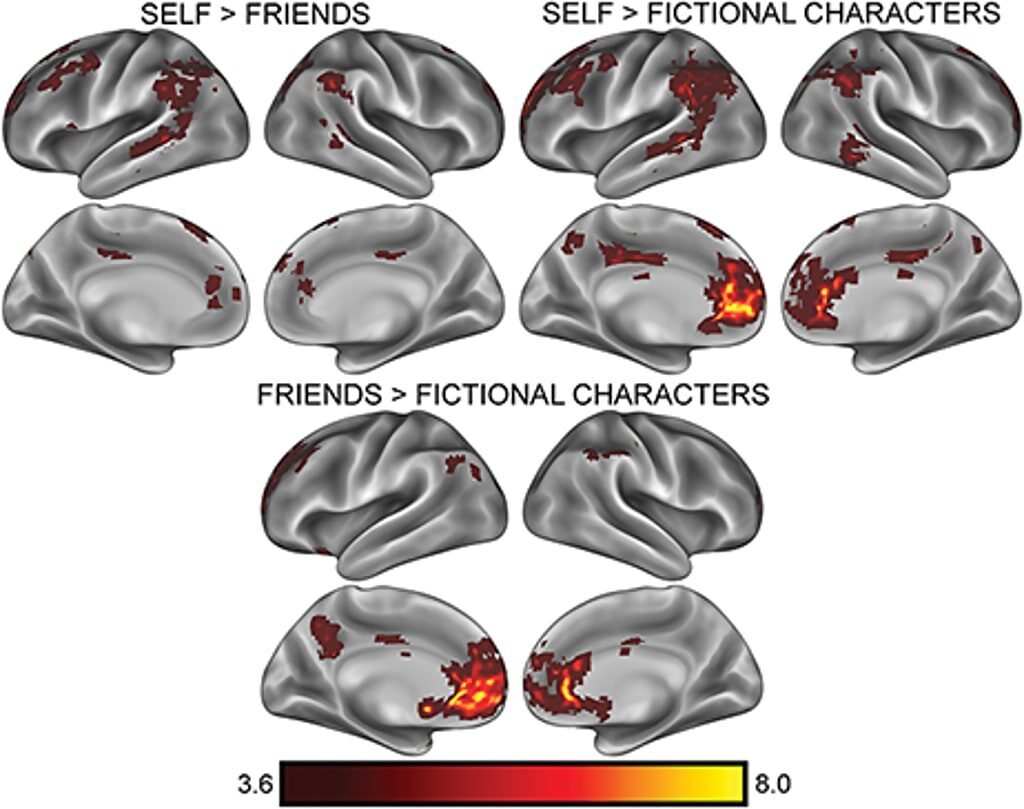
During narrative experiences, identification with a fictional character can alter one's attitudes and self-beliefs to be more similar to those of the character. The ventral medial prefrontal cortex (vMPFC) is a brain region that shows increased activity when introspecting about the self but also when thinking of close friends. Here, we test whether identification with fictional characters is associated with increased neural overlap between self and fictional others. Nineteen fans of the HBO series Game of Thrones performed trait evaluations for the self, 9 real-world friends and 9 fictional characters during functional neuroimaging. Overall, the participants showed a larger response in the vMPFC for self compared to friends and fictional others. However, among the participants higher in trait identification, we observed a greater neural overlap in the vMPFC between self and fictional characters. Moreover, the magnitude of this association was greater for the character that participants reported feeling closest to/liked the most as compared to those they felt least close to/liked the least. These results suggest that identification with fictional characters leads people to incorporate these characters into their self-concept: the greater the immersion into experiences of 'becoming' characters, the more accessing knowledge about characters resembles accessing knowledge about the self.
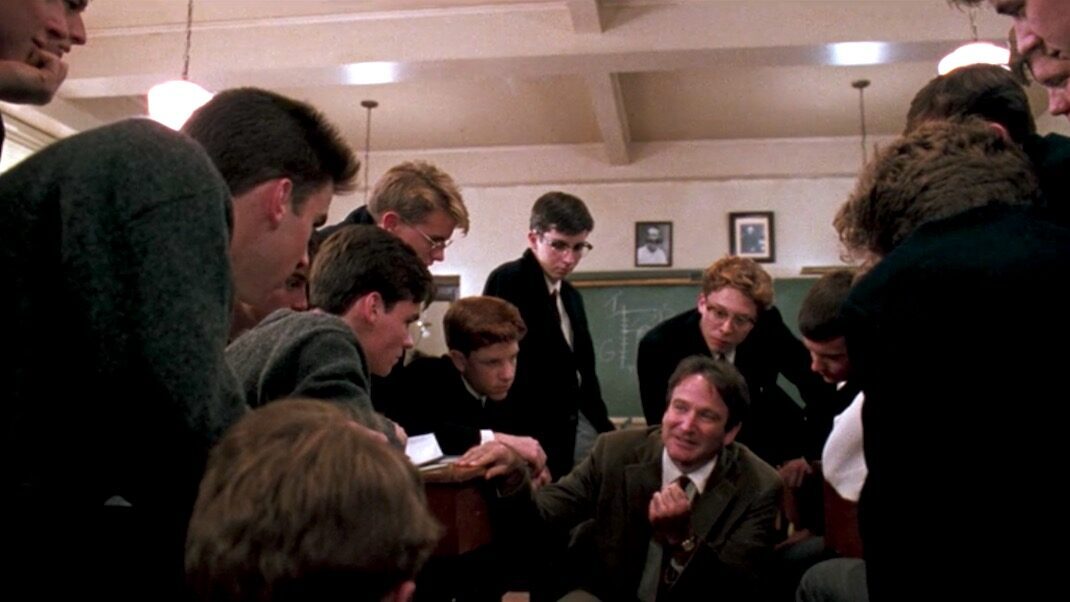
Fictional characters — whether encountered in films, television or literature — can have profound influences on people. When Robin Williams died in 2014, social media was flooded with messages from saddened educators stating that they had been inspired to teach by Williams's portrayal of Mr Keating in the film Dead Poets Society (Townsend, 2014). Similarly, a number of women in medicine have publicly expressed that Ellen Pompeo's character on Grey's Anatomy sparked their interest in health professions (ABC News, 2017). And many attorneys have pursued a law career in part because of Harper Lee's Atticus Finch (e.g. Chakrabarti, 2015). But how is it that fictional characters can have these effects on people?
Research on the functional neuroanatomy of self-referential processing (e.g. self-knowledge, introspection and prospection) has long implicated a role for the ventral portion of the medial prefrontal cortex (vMPFC) in representing knowledge about the self. Across a wide range of tasks, the vMPFC has been shown to have a greater response during the retrieval of self-knowledge than knowledge of others (for reviews, see Jenkins and Mitchell, 2011; Denny et al., 2012; Wagner et al., 2012). Moreover, damage to this region has been shown to impair the ability to retrieve self-knowledge (Philippi et al., 2012) while leaving trait knowledge concerning others intact (Marquine et al., 2016), suggesting a causal role for this region in accessing self-relevant information. Although this work demonstrates that the vMPFC is recruited preferentially during self-referential processing, activation in this region is also observed when thinking of social targets other than the self. Research has shown that greater vMPFC activation is elicited when individuals think of similar over dissimilar others (Mitchell et al., 2006; Jenkins et al., 2008) as well as interpersonally close others relative to strangers (Krienen et al., 2010). Mitchell and colleagues have proposed that vMPFC activation in response to others reflects a mechanism whereby we draw on our own self-knowledge as a model to make inferences about others, but only when such knowledge is deemed relevant such as when others are similar to ourselves (Mitchell et al., 2006; Jenkins et al., 2008; Mitchell, 2008). But what about when those others are fictional characters? If identification with fictional others increases the degree to which people experience a character's mental and emotional states as their own, might they then similarly draw on the vMPFC when later making judgments of fictional characters?
In the present study, we used functional neuroimaging to examine the activity in the vMPFC for the self, real-world friends and fictional characters during a commonly used personality-trait-evaluation task (e.g. Krienen et al., 2010; Mitchell et al., 2011; Ganesh et al., 2012; Tamir and Mitchell, 2012; Chavez et al., 2017; Kang et al., 2018; Chavez and Wagner, 2020) to test whether individual differences in identification with fictional characters are associated with increased neural overlap between self and fictional others within the vMPFC. Participants were self-identified fans of the popular HBO television series Game of Thrones, a series that is known for having a passionate fan base that forms strong emotional ties with the show's characters as evidenced by their extreme reactions when those characters are inevitably killed off (e.g. https://twitter.com/RedWeddingTears). In line with the work reviewed above, we hypothesized that the tendency to inhabit the first-person experiences of fictional characters during narrative engagement (i.e. trait identification) would lead to downstream consequences of the neural representation of these characters when brought to mind outside of the narrative context. Using an independent localizer task to identify the region of the vMPFC involved in self-referential processing, we hypothesized that this region's response for self and fictional characters would be more similar for participants high in trait identification. Moreover, because different forms of engagement with fictional characters can be closely related — parasocial processes, for example, can lead to identification with characters (Brown, 2015) — we additionally tested whether trait identification was associated with increased neural overlap between fictional characters and real-life friends. If differences in the neural representation of fictional characters at different levels of trait identification were due to parasocial attachment instead of or in addition to identification, one would expect these differences to take the form of more similar neural responses between friends and fictional characters rather than between the self and fictional characters, as identification would predict.
Materials and methods
Participants
Twenty-six right-handed magnetic resonance imaging (MRI) eligible fans of the HBO series Game of Thrones were recruited to participate in the present study. Seven participants were excluded due to insufficient variance in character ratings across the 9 television show characters selected for inclusion in the study (see below for further details), leaving a total of 19 healthy right-handed participants (10 female; median age = 24; range: 18-37 years) with normal or corrected-to-normal visual acuity who underwent functional neuroimaging. Participants were scanned during the airing of the seventh season of the television series as it was expected that thoughts and feelings about the characters would be at their most accessible while a season was ongoing. All participants were self-reported fans of the series as determined by an adapted six-item measure of consumer devotion (Ortiz et al., 2013, p. 28; items 1, 2, 3, 7, 8 and 9) and were up to date on the current events of the series (i.e. had previously viewed all 60 episodes prior to the airing of the seventh season). Participants gave informed consent in accordance with the guidelines set by the Office of Responsible Research Practices at The Ohio State University.
Stimuli and fictional character selection
Characters from Game of Thrones were selected as targets due to the comparatively large cast of characters from which to select as well as the propensity of fans to form attachments to different characters (e.g. some fans love the conniving Lannisters, whereas others align themselves with the honorable Starks). This allowed us to select a subset of characters to use in the present study that were the same across all participants but toward which individual participants reported varying degrees of closeness (e.g. some participants felt closest to Jaime Lannister and others to Jon Snow). Prior to participation in the study, participants provided ratings on scales from 0 to 100 of familiarity, closeness, similarity to self, liking, emotional attachment and the extent to which they viewed each character as a friend for 25 Game of Thrones characters. These last two items, the second of which was adapted from a measure of parasocial interaction (et al., 1985, were highly correlated with the closeness measure (closeness and emotional attachment: r = 0.83; closeness and extent to which characters were viewed as friends: r = 0.84), indicating that subjects correctly understood the intended meaning of the closeness measure as indicating a feeling of interpersonal connection and attachment. These ratings were then used to determine which of 25 principle television show characters to select as targets for the study. The following nine characters were chosen based on their overall familiarity and the degree to which they exhibited variance in closeness ratings (closeness range: 65-100; s.d.: 16.39-32.67): Bronn, Catelyn Stark, Cersei Lannister, Davos Seaworth, Jaime Lannister, Jon Snow, Petyr Baelish, Sandor Clegane and Ygritte (Figure 1A). Finally, to be included in the study, subjects had to have a range of at least 50 and s.d. of at least 17 in their closeness ratings of the 9 target characters. These criteria ensured that each participant exhibited variance in closeness ratings, which allowed us to test the extent to which differences in the neural representation of fictional characters for individuals high vs low in trait identification were driven by participants' feelings toward particular characters.
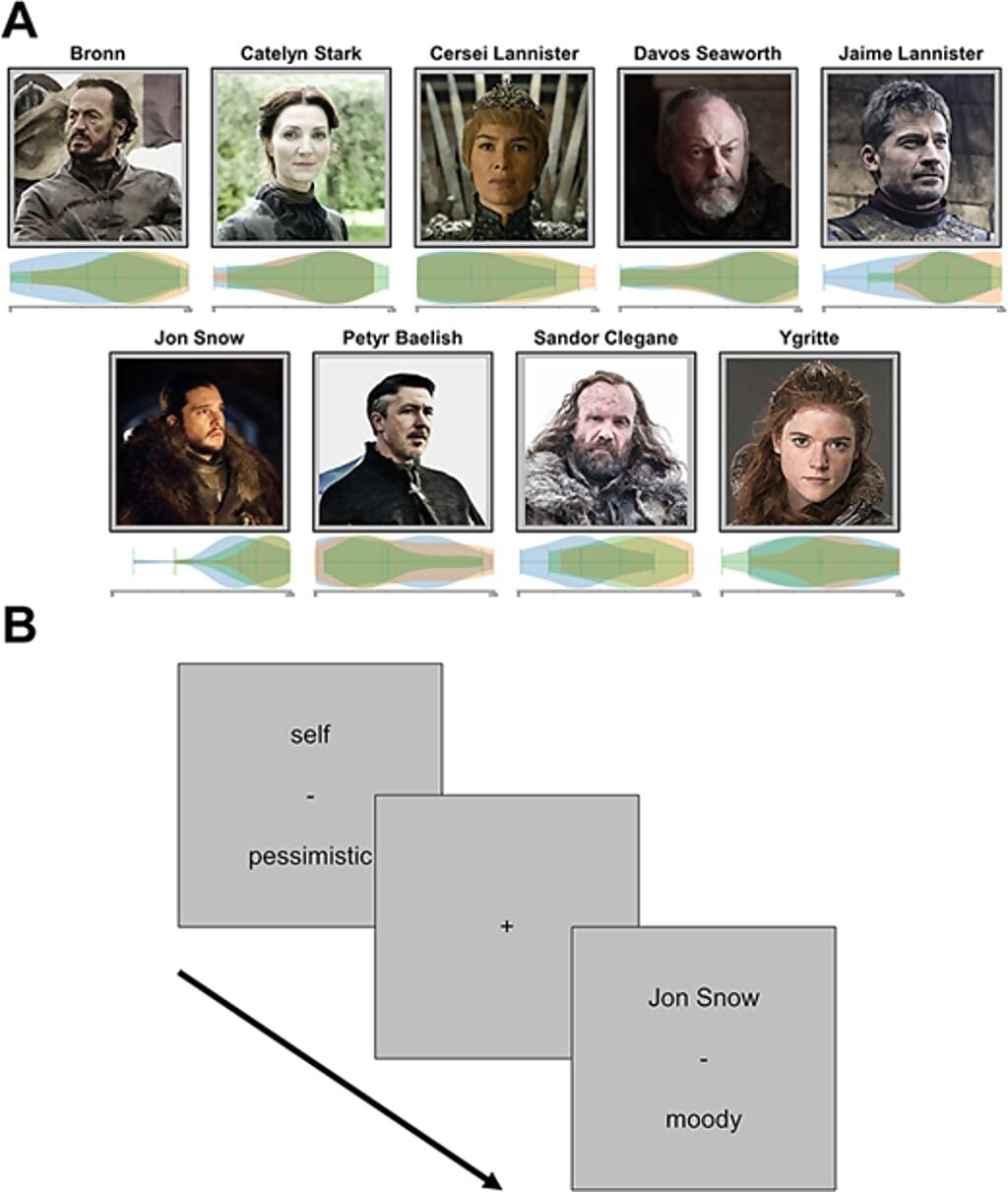
(A) The nine Game of Thrones characters selected as targets in the study based on the high levels of variance in participants’ ratings of closeness.
Procedure
Prior to participating, participants completed a survey asking them to provide information on 9 self-selected friends/acquaintances with whom they were personally familiar. Participants were asked to select a set of people who varied in terms of how close they felt to them (closeness range: 32-100) and were asked not to include romantic partners or immediate family members. They reported each target person's name, their relationship to that person (e.g. friend and coworker) and how long they had known them. They also provided the same 0-100 scale ratings of familiarity, closeness, similarity to self and liking as they had for the fictional characters. These 9 real-world friends were included in the task described below.
Prior to undergoing functional MRI, participants were tested to ensure they were familiar with the nine target characters. They did this first by completing a matching task where they had to match each character's name to the correct corresponding picture from a set of character photos. Next, they were asked to verbally provide one fact about each target character. Participants providing incorrect responses for any of the characters were asked to review biographies for those characters (adapted from fansites, e.g. http://www.westeros.org/GoT/Characters/) to refresh their memories. This was necessary for only 4 of the 19 participants, with 3 characters being the highest number of errors on the matching task. All four of these participants were able to provide an additional novel fact for each of the mismatched characters after reviewing their biographies, suggesting that they then recalled who the characters were.
See here for project methodology
Discussion
When individuals engage in narrative experiences, they have the chance to take on countless new identities, to see worlds through others' eyes and to return from these experiences changed. The notion that narrative fiction has such an impact on individuals, long argued by literary scholars, is strongly supported by empirical evidence that identification with a fictional character can lead to changes in individuals' self-beliefs, attitudes and behaviors (Igartua, 2010; Sestir and Green, 2010; Kaufman and Libby, 2012; Djikic and Oatley, 2014). The current study expands on this behavioral work by highlighting a potential neural mechanism by which these changes can occur. Here, we demonstrate that individuals higher in trait identification exhibit greater self-other neural overlap with fictional characters in the vMPFC, a brain region that is commonly implicated in self-referential processing (Jenkins and Mitchell, 2011; Denny et al., 2012; Wagner et al., 2012) and in which damage is associated with impaired accessibility of self-referential knowledge (Philippi et al., 2012; Marquine et al., 2016). Specifically, we show that neural responses for Self and Fictional Characters are more similar among individuals who regularly mentally simulate narrative experiences from the first-person psychological perspective of characters within the story (i.e. trait identification). This finding suggests that the more immersed people tend to get in experiences of 'becoming' a fictional character, the more likely they are to access knowledge about that identity using the same neural machinery as they do to access knowledge about themselves. This is consistent with the theoretical definition of identification as a merging of self and other (Oatley, 1999; Cohen, 2001; Kaufman and Libby, 2012). Because these individuals internalize the experiences of the character as their own, accessing knowledge about those characters more closely resembles accessing autobiographical knowledge. Further, the results of the current study provide preliminary evidence that this may be especially likely to be true for the characters to which individuals feel closest/who they like the most.
It has been proposed that vMPFC activity in response to evaluations of others reflects the extent to which the self is being drawn on as a model to understand the mental states and/or traits of the target (Mitchell et al., 2006; Jenkins et al., 2008; Mitchell, 2008), as suggested by simulation theories of social cognition (e.g. Gordon, 1986). This previous work relies primarily on paradigms using novel targets that are manipulated to be perceived as either similar or dissimilar to the participant. In the current study, however, the targets were not novel but rather well-known fictional characters. It is unclear, therefore, whether individuals higher in trait identification were more likely to draw on the self as a model when evaluating fictional characters, or if accessing knowledge about fictional characters is, in a sense, the same as accessing self-knowledge. An altogether different interpretation of the finding comes from the proposal of Buckner and colleagues that the vMPFC reflects the personal significance of stimuli (Andrews-Hanna et al., 2010), e.g. in the case of judgments of others, the relevance of those others to one's own survival (Krienen et al., 2010). Under this interpretation, the greater self-other neural overlap observed for individuals higher in trait identification simply reflects the greater personal significance/relevance of fictional characters to these individuals. This interpretation is arguably more consistent conceptually with a parasocial processes explanation of the current findings, for which there was some evidence in the form of an association between trait identification and neural overlap between friends and fictional characters.
According to Mitchell and colleagues, the self is drawn on to understand others only if the self is deemed an appropriate proxy as tends to occur when we perceive others to be similar to ourselves (Mitchell et al., 2006; Jenkins et al., 2008). Moreover, behavioral work on identification with fictional characters has also focused on perceived similarity to self as a predictor of the ease with which one is able to inhabit the role of a given character (e.g. Oatley, 1999; Kaufman and Libby, 2012). The current findings, however, provide initial evidence for perceived closeness and liking rather than perceived similarity as potentially important factors in the association between trait identification and self-other neural overlap with fictional characters. It may be the case that perceived similarity is a strong predictor when narrative experiences are short, and there is little time to form a meaningful emotional attachment to a character. In this way, studies relying on short narrative experiences are somewhat analogous to the work discussed above (e.g. Mitchell et al., 2006; Krienen et al., 2010), in which participants quickly form impressions of novel identities. However, when narrative experiences become longer, it may be the case that closeness and liking become more important for identification. There are several reasons why individuals higher in trait identification might be better able to inhabit the first-person perspective of a character, regardless of that character's similarity to the self. Because these individuals regularly and readily mentally simulate the mental states of fictional characters, it may simply be a matter of being more practiced at simulating the thoughts and feelings of a diverse set of identities (Mar and Oatley, 2008). A recent work by Tamir and colleagues suggests that individuals who read more fiction perform better on social cognitive tasks and that this association is mediated by the extent to which the dorsomedial prefrontal cortex (dMPFC) subnetwork of the default mode network (Andrews-Hanna et al., 2010) is recruited during reading of social passages (Tamir et al., 2016). This work supports the idea that certain individuals are more practiced at simulating the mental states of others and suggests a potential antecedent to self-other neural overlap with fictional characters (i.e. greater recruitment of the dMPFC subnetwork during portions of the story featuring a given character). In addition to being a matter of ability, individuals higher in trait identification may also be especially motivated to simulate identities that are different from their own as previous research suggests that a strong motivation to engage with narratives is to explore alternate identities in order to expand the boundaries of the self (Slater et al., 2014). Feelings of closeness/liking to characters, then, might in some cases motivate identification and in other cases be a consequence of it.
Our results showed that transportability was also associated with self-other neural overlap with fictional characters, but this association disappeared when including identification in the model. Narrative transportation is a state of immersion in the events occurring within a story, which, like identification, can lead to changes in attitudes (Green and Brock, 2000) and self-beliefs (Green et al., 2004; Shedlosky-Shoemaker et al., 2014). Identification and narrative transportation are related constructs (e.g. Hall and Bracken, 2011), but whereas transportation captures immersion into the story in general, identification involves immersion specifically into the psychological perspective of a character. Trait identification explained unique variance in self-other neural overlap with fictional characters beyond that explained by transportability, suggesting that being immersed in the narrative events as a spectator is not sufficient for the internalization of characters' experiences; one must be actively immersed in the roles and mental states of the characters (Oatley, 1999). Although there were concerns regarding conceptual overlap between our measures of trait identification and trait transportability, the relative emphasis of each measure on identification specifically as opposed to transportation more generally was consistent with its labeling (i.e. the trait identification measure had a larger proportion of items clearly capturing identification; Supplementary Table S8). Further, after recategorizing all scale items to more directly target each construct, trait identification still explained unique variance in self-other neural overlap with fictional characters beyond trait transportability (Supplemental Materials, p. 13). Although Game of Thrones provided an ideal text from which to draw stimuli due to its wide cast of characters toward which different fans form different impressions, the findings reported herein are inherently limited in their generalizability due to the focus on a single television series. In addition, recent evidence suggests that there are differences in the neural representation of romantic partners compared to other close attachment figures (Laurita et al., 2017), highlighting the need for future work in this vein to be sensitive to the nature of the attachment involved as other recent work has similarly identified distinct effects of romantic parasocial attachment as compared to parasocial attachment in general (Erickson and Dal Cin, 2018; Erickson et al., 2018). In the current study, we cannot distinguish between these attachment types as we did not assess the potential for romantic parasocial attachment to the fictional characters chosen as targets.












Comment: