
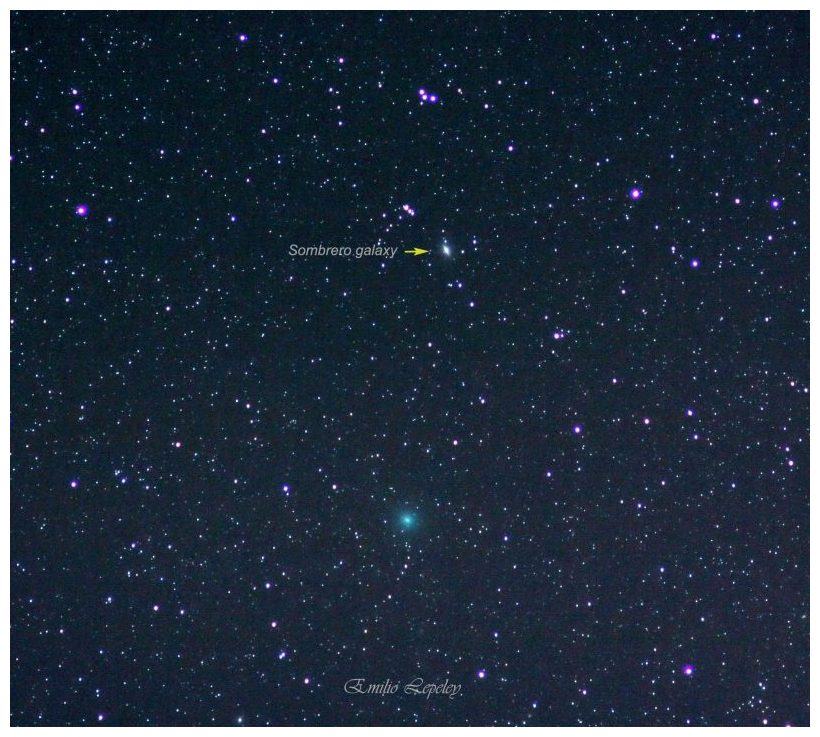
© Emilio LepeleyEmilio Lepeley in Elqui Valley, Vicuna, Chile, caught comet C/2018 Y1 (Iwamoto) – the green fuzzball at bottom center – on February 3, 2019, in the same field of view as the famous Sombrero Galaxy. Thank you, Emilio!
This comet is fast! Comet C/2018 Y1 (Iwamoto) is traveling through space at the amazing speed of 147,948 miles per hour (238,099 km/h) or 66 km per second, relative to Earth.
The best nights for observing the comet (with binoculars and small telescopes) should be on February 11 and 12. Preliminary estimates suggest the newly found comet might reach a brightness or magnitude between 7 and 7.8 , which means it should be easily seen with small telescopes and binoculars. It will not be visible to the eye alone.
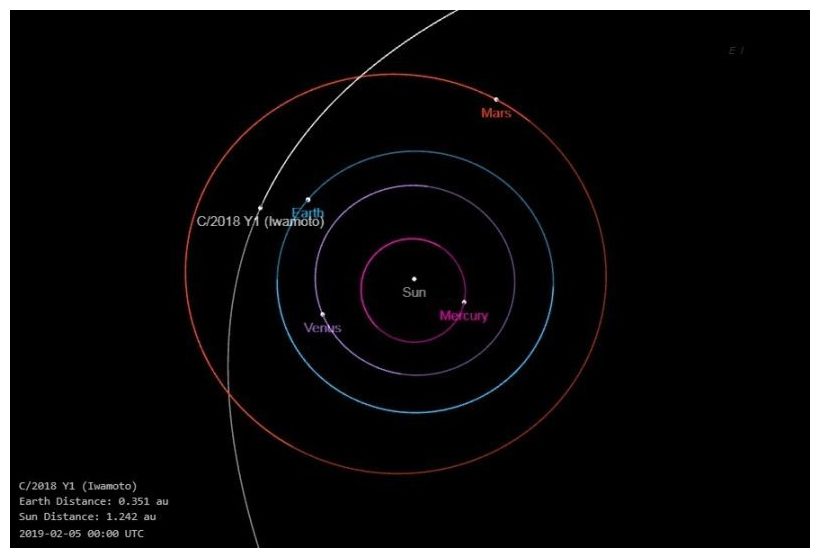
© NASA/JPLA closer look at comet C/2018 Y1 (Iwamoto)’s orbit.
Astrophotographers might be able to capture this comet passing close to some galaxies, as seen from our perspective. See the illustrations below:

© Illustration by Eddie Irizarry using StellariumLate on the night of Saturday, February 2, 2019, Comet C/2018 Y1 (Iwamoto) passed close to M104 (Sombrero Galaxy), providing a nice opportunity to astrophotographers.

© Illustration by Eddie Irizarry using StellariumFacing east on February 10, 2019, at around 10 p.m. CST as seen from the central US. Comet C/2018 Y1 (Iwamoto) will pass close to some galaxies in Leo, especially Messier 95..
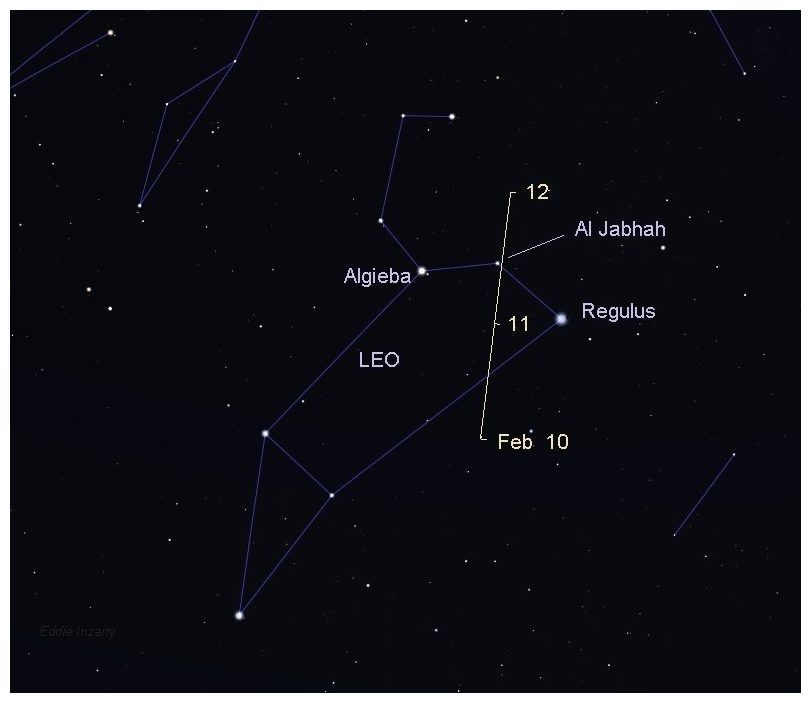
© Illustration by Eddie Irizarry using StellariumLocation of comet C/2018 Y1 (Iwamoto) from February 10 to 12, 2019. Binoculars should provide a nice view of the fuzzy patch of light, while telescopes might allow seeing a hint of a green color. Facing east at 10 p.m. CST as seen from central U.S.

© Rolando LigustriComet C/2018 Y1 (Iwamoto) looks great in this image taken on January 17, 2019, by Rolando Ligustri.
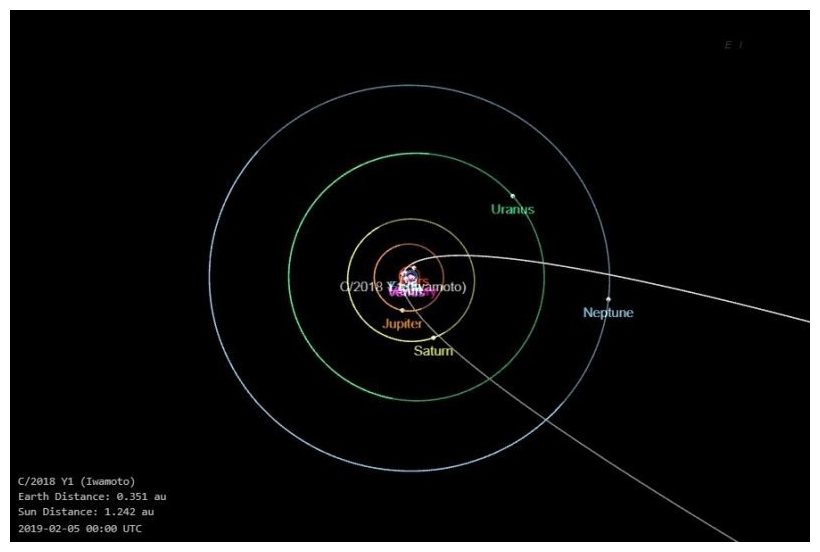
© NASA/JPLThe orbit of comet C/2018 Y1 (Iwamoto) is very elliptical (elongated). Its orbit suggests that this comet came from the Oort cloud of comets surrounding our solar system.








Javed?