

© Jacques Demarthon · AFP · GettyShe's probably part-time, and doesn't want to be.
But once again, the monthly jobs tally eclipsed how that miracle was achieved. "Headline" unemployment is only at a record low because of a 42% increase in the number of people who are in "involuntary" part-time work.
"Involuntary" means they're only working part-time because they cannot get a full-time job.
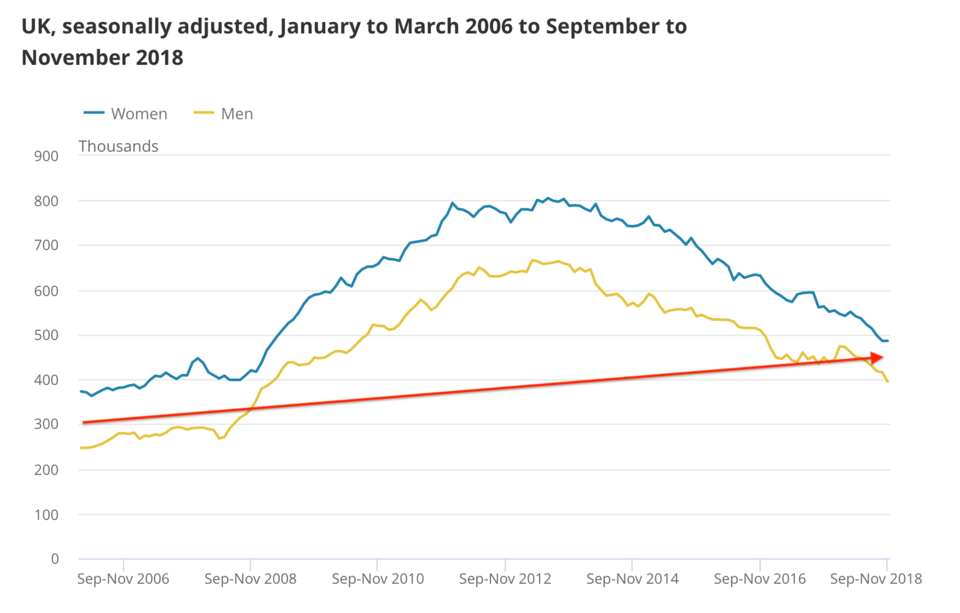
© ONSSince 2006, the number of people in "involuntary" part-time work has risen from 620,000 to 881,000 today — an increase of 42%.
This is not good news.
Four percent unemployment is technically "full employment." Anyone who wants a job should be able to get one. But 881,000 workers need full-time jobs - the kind that get people out of poverty - and those jobs are not available.
The average part-time employee in Britain works for about 16 hours a week, less than half the 40 hours that are generally considered to constitute "full-time" work, according to the ONS.
So, if "involuntary" part-timers were reclassified as "unemployed" - on the logic that they are unemployed for a majority of their week - then the UK unemployment rate would be 7%, based on a back-of-the-envelope calculation using numbers provided by the ONS. The total number of "unemployed" people would be 2.2 million, not 1.4 million.
This isn't just a thought experiment.
The labour market in the UK and the US (they're similar) has structurally changed since the early 2000s in a way that is poorly understood.
Here is the situation in America.
Involuntary part-time work is probably 40% higher than "normal" in the US.
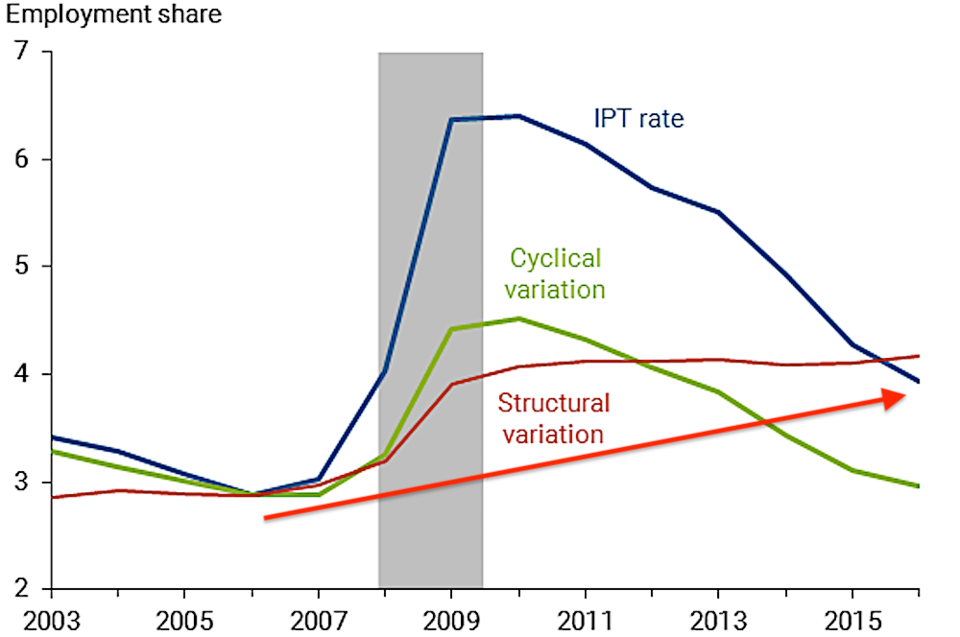
© Source: Valletta, Bengali, and van der List / SF Fed
Mass unemployment - the historic kind, with dole queues, unemployment benefits, and idle workers on street corners - has been replaced by low-paid, part-time, "gig economy" or "zero-hours" contract work.
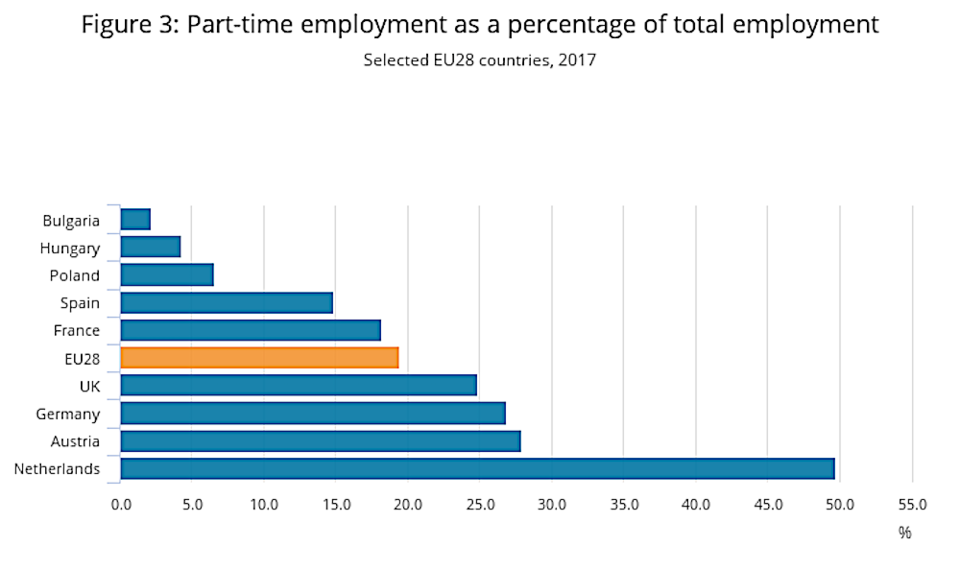
These charts show how part-time work has ramped up in the UK over the last decade.
25% of all British workers are currently only working part-time.
© Eurostat / ONS
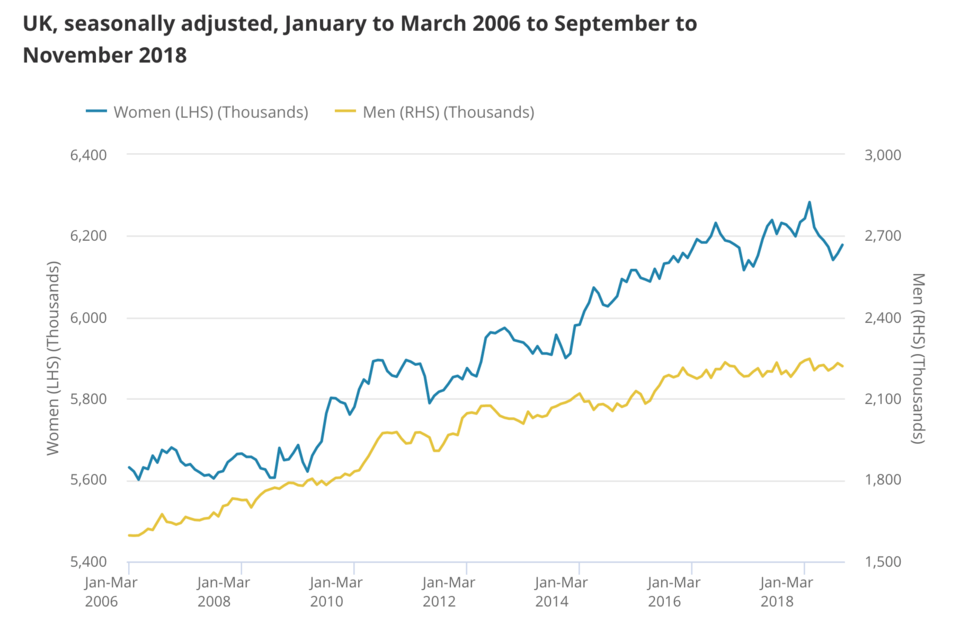
© ONS
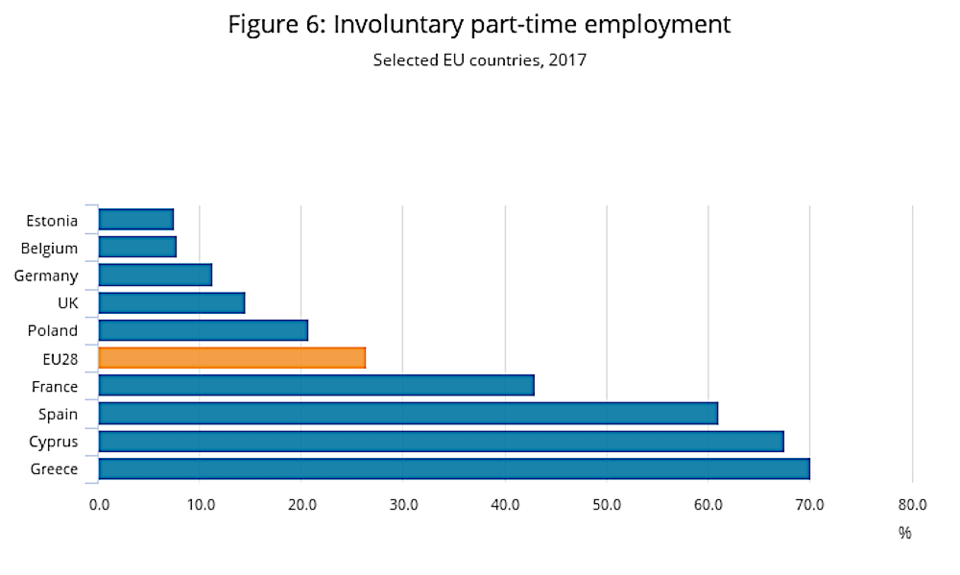
© ONS / Eurostat
Having a job is no longer a guaranteed way of getting ahead. Instead, work may keep you poor. You cannot get rich working for Uber. You cannot get rich working for Deliveroo.
Rob Valletta of the San Francisco Fed agrees: "The amount of IPT [involuntary part-time] work and informal 'gig' economy jobs tend to move in tandem at the state level."





There's nothing wrong with part-time work. Essential for students, parents and older people, but there's no reason not to give people the stability of a permanent contract, or even the offer of one...unless you are a lazy and greedy employer.