
The meeting, which was later confirmed by the State Department and a White House press release, came a day after Mattis instructed the U.S. Army to stand ready if North Korea diplomacy fails, and less than a week after Trump's cryptic "calm before the storm" comments about a previous meeting with top military commanders. Some have noted that the decision to have the meeting in the Situation Room, sometimes called the War Room, was significant, as it is often used to hold secure meetings regarding disasters, military conflicts, and other major crises both domestic and global.
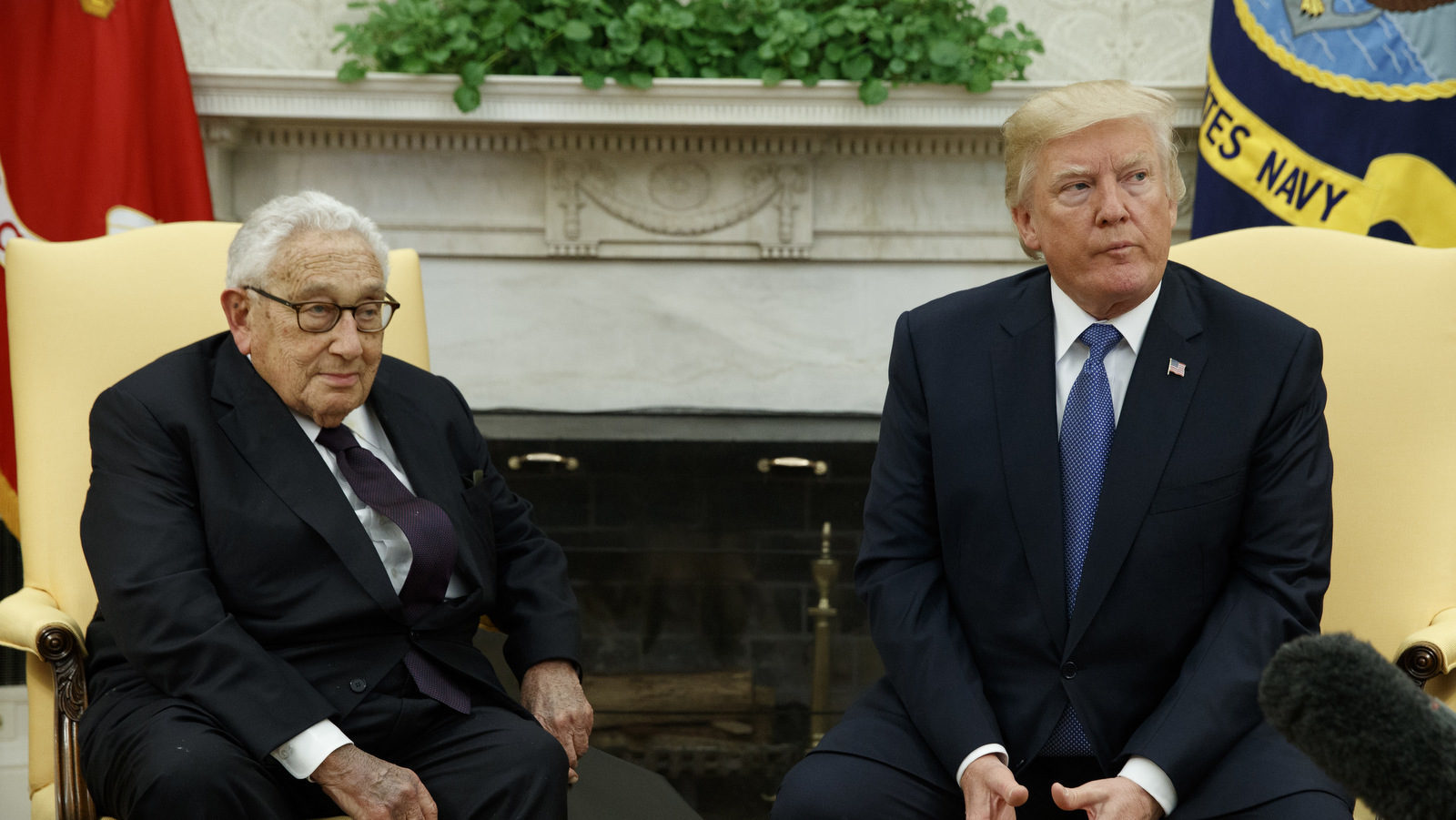
While most reporting gave some context to Trump's most recent meeting with top defense officials on tensions with Pyongyang, hardly any mentioned that the meeting had been immediately preceded by another. This meeting, also on the topic of North Korea, was held between the president and former Secretary of State and unindicted war criminal Henry Kissinger.
In his post-meeting remarks, Trump praised Kissinger's 'immense talent.' "Henry Kissinger has been a friend of mine," he added. "I've liked him. I've respected him. But we've been friends for a long time, long before my emergence into the world of politics, which has not been too long." Kissinger is also a long-time advisor and confidante of Trump's former rival for the presidency, Hillary Clinton.
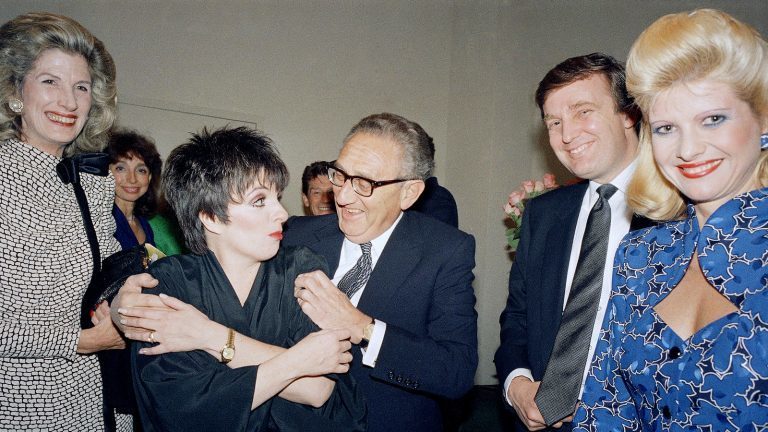
© AP/Ron FrehmHenry Kissinger and Nancy Kissinger, Donald Trump and wife Ivana Trump backstage at a Liza Minelli show in New York, June 11, 1987.
After their November meeting, Kissinger remarked that Trump would likely not be keeping all his campaign promises, as he was undergoing "the transition from being a campaigner to being a national strategist." This apparently included his promise of opening dialogue with North Korea.
While often characterized by the mainstream press as a leading "statesman" and "diplomat," Kissinger's record shows he is anything but. While serving as Richard Nixon's Secretary of State, Kissinger oversaw a bloody coup in Chile, an illegal bombing campaign in Cambodia, and millions dead in Vietnam.
Despite overseeing such actions, Kissinger ended up being awarded the Nobel Peace Prize, in the same year as the Chilean coup, for his role in bringing "peace" to Vietnam and ending the Vietnam war, though he had actually worked to extend it. The choice of Kissinger was so outrageous that several members of the Nobel committee resigned in protest. Kissinger is also credited with transforming U.S. foreign policy into one of perpetual, undeclared war - a policy that continues today and one that Trump has embraced since becoming President.
Given Trump's bellicose rhetoric and threats towards North Korea - as well as his rejection of diplomacy in resolving the crisis despite both Pyongyang's and his own State Department's apparent willingness to attempt it - Kissinger's timely guidance to the President during "the calm before the storm" should give the American public considerable cause for concern.

Reader Comments